About the Report
Base Year 2024Global Move to Earn Fitness Apps Market Overview
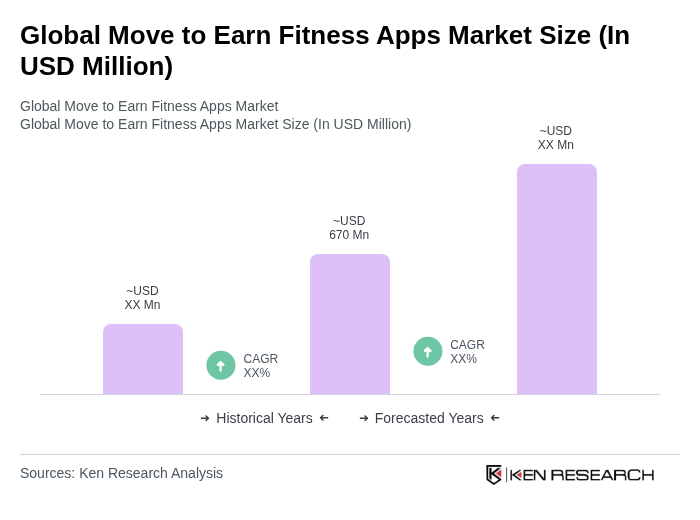
- The Global Move to Earn Fitness Apps Market is valued at USD 670 million, based on a five-year historical analysis. This growth is primarily driven by the increasing adoption of fitness technology, heightened health consciousness among consumers, and the integration of gamification and blockchain in fitness applications, which incentivize users to engage in physical activities and maintain healthier lifestyles .
- Key players in this market are concentrated in countries such as the United States, China, and India. The dominance of these regions is attributed to their large populations, high smartphone and wearable device penetration, and a growing trend towards health and wellness, which has led to a surge in demand for fitness-related applications .
- The 21st Century Cures Act, 2016, issued by the U.S. Congress, and subsequent guidance by the U.S. Food and Drug Administration (FDA), provide a regulatory framework for digital health technologies, including fitness apps. This framework encourages developers to create applications that support physical activity and wellness, with operational requirements for data privacy, interoperability, and voluntary certification, and includes grant and funding opportunities to foster innovation in the fitness technology sector .
Global Move to Earn Fitness Apps Market Segmentation
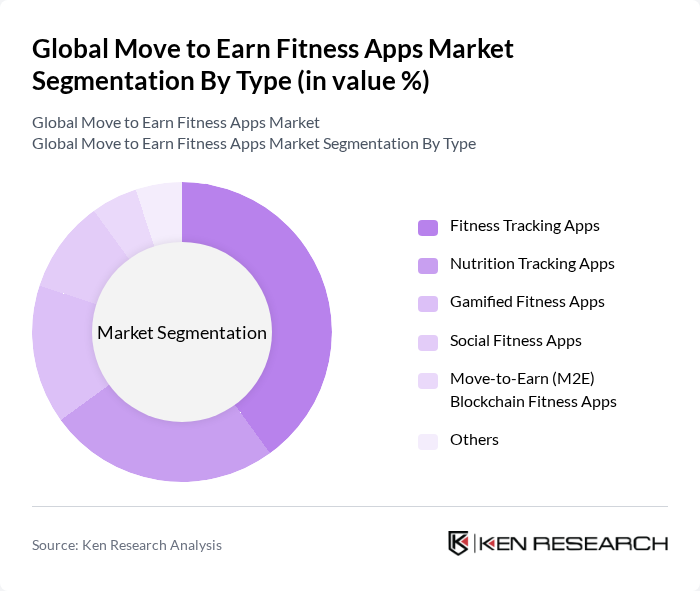
By Type:The market is segmented into various types of fitness applications, each catering to different user needs and preferences. The dominant sub-segment is Fitness Tracking Apps, which have gained popularity due to their ability to monitor physical activities and provide personalized feedback. Nutrition Tracking Apps are also significant, as they help users manage their dietary habits. Gamified Fitness Apps are increasingly attracting users by incorporating game-like elements, while Social Fitness Apps foster community engagement. Move-to-Earn (M2E) Blockchain Fitness Apps are emerging as a novel approach, leveraging blockchain technology to reward users for their physical activities .
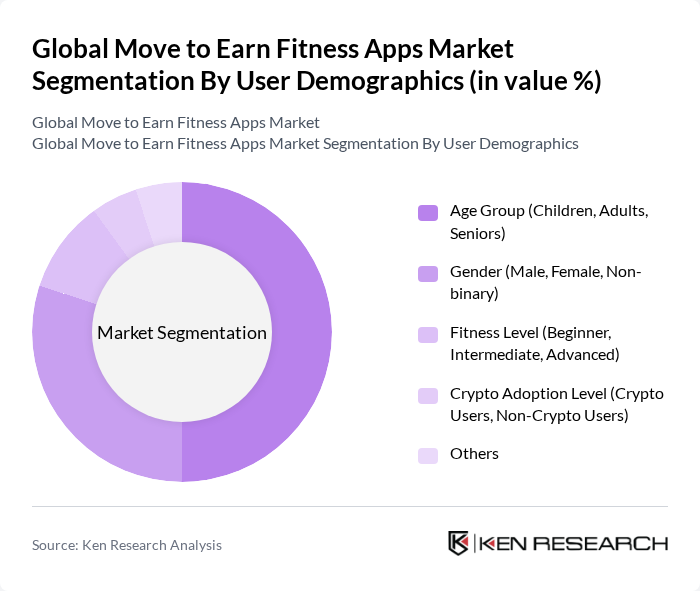
By User Demographics:This segmentation focuses on the characteristics of users engaging with fitness applications. The Age Group segment, particularly Adults, is the most significant, as this demographic is more health-conscious and tech-savvy. Gender segmentation shows a balanced interest among Male and Female users, while the Fitness Level segment indicates a growing trend among Beginners seeking guidance. The Crypto Adoption Level is also noteworthy, with Crypto Users increasingly exploring Move-to-Earn options, reflecting a shift in user engagement towards blockchain-based rewards .
Global Move to Earn Fitness Apps Market Competitive Landscape
The Global Move to Earn Fitness Apps Market is characterized by a dynamic mix of regional and international players. Leading participants such as Sweatcoin, STEPN, Step App, Fitmint, Evidation Health, Inc., HealthyWage LLC, DietBet, Outside Interactive, Inc. (MapMyRun, MapMyFitness), Vitality Group International, Inc., Charity Miles (Webtec), Winwalk, Strava, MyFitnessPal, Fitbit, Nike Training Club, Samsung Health, Google Fit, Apple Health, Runtastic (Adidas Running), Lose It!, JEFIT, 8fit, Fitbod contribute to innovation, geographic expansion, and service delivery in this space .
Global Move to Earn Fitness Apps Market Industry Analysis
Growth Drivers
- Increasing Health Awareness:The global health and wellness market is projected to reach $4.5 trillion in future, driven by a surge in health consciousness among consumers. This trend is reflected in the growing number of fitness app downloads, which reached 1.5 billion in future. As individuals prioritize physical fitness and mental well-being, the demand for move-to-earn fitness apps is expected to rise significantly, encouraging more users to engage in active lifestyles.
- Rise in Smartphone Penetration:As of future, there are approximately 6.8 billion smartphone users worldwide, representing a penetration rate of 85%. This widespread access to smartphones facilitates the adoption of fitness apps, allowing users to track their physical activities conveniently. The increasing availability of affordable smartphones in emerging markets further supports this trend, enabling a broader audience to engage with move-to-earn fitness applications and enhancing market growth.
- Gamification of Fitness:The gamification trend in fitness apps has led to a 30% increase in user engagement, as users are motivated by rewards and challenges. In future, over 60% of fitness app users reported that gamified features, such as leaderboards and achievement badges, significantly enhanced their workout experiences. This trend is expected to continue, driving user retention and attracting new users to move-to-earn fitness platforms, thereby expanding the market.
Market Challenges
- Data Privacy Concerns:With the rise of fitness apps, data privacy has become a critical issue. In future, 70% of users expressed concerns about how their personal health data is managed. Regulatory frameworks, such as the GDPR in Europe, impose strict guidelines on data handling, which can hinder app development and user trust. Addressing these concerns is essential for companies to maintain user engagement and comply with legal standards.
- User Retention Issues:The fitness app market faces significant user retention challenges, with studies indicating that 80% of users abandon apps within the first three months. Factors contributing to this trend include lack of personalized content and insufficient engagement strategies. Companies must innovate to enhance user experience and provide ongoing value to retain users, which is crucial for long-term success in the competitive landscape.
Global Move to Earn Fitness Apps Market Future Outlook
The future of move-to-earn fitness apps appears promising, driven by technological advancements and evolving consumer preferences. As artificial intelligence and machine learning become more integrated into app functionalities, personalized fitness experiences will enhance user engagement. Additionally, the growing emphasis on mental health will lead to the incorporation of wellness features, making these apps more holistic. Companies that adapt to these trends will likely capture a larger market share and foster user loyalty in the coming years.
Market Opportunities
- Expansion into Emerging Markets:Emerging markets, particularly in Asia and Africa, present significant growth opportunities. With a combined population of over 3 billion and increasing smartphone penetration, these regions are ripe for the introduction of move-to-earn fitness apps. Companies that tailor their offerings to local preferences can tap into this vast user base, driving substantial revenue growth.
- Partnerships with Fitness Centers:Collaborating with fitness centers can enhance app visibility and credibility. By integrating app functionalities with gym services, such as class bookings and personal training, companies can attract new users. In future, 45% of fitness centers reported interest in partnering with tech companies to enhance member engagement, indicating a strong potential for mutually beneficial collaborations.
Scope of the Report
| Segment | Sub-Segments |
|---|---|
| By Type | Fitness Tracking Apps Nutrition Tracking Apps Gamified Fitness Apps Social Fitness Apps Move-to-Earn (M2E) Blockchain Fitness Apps Others |
| By User Demographics | Age Group (Children, Adults, Seniors) Gender (Male, Female, Non-binary) Fitness Level (Beginner, Intermediate, Advanced) Crypto Adoption Level (Crypto Users, Non-Crypto Users) Others |
| By Device Compatibility | Smartphones Tablets Wearable Devices (Smartwatches, Fitness Bands) Others |
| By Monetization Model | Freemium Subscription In-App Purchases Advertisements NFT/Token Rewards Others |
| By Geographic Reach | Local National International Others |
| By Fitness Goals | Weight Loss Muscle Gain Endurance Training General Health Others |
| By User Engagement Features | Community Challenges Leaderboards Rewards Programs (Token/NFT/Fiat) Social Sharing Others |
Key Target Audience
Investors and Venture Capitalist Firms
Government and Regulatory Bodies (e.g., Federal Trade Commission, Health and Human Services)
Fitness App Developers
Health and Wellness Organizations
Insurance Companies
Corporate Wellness Program Managers
Marketing and Advertising Agencies
Telecommunications Companies
Players Mentioned in the Report:
Sweatcoin
STEPN
Step App
Fitmint
Evidation Health, Inc.
HealthyWage LLC
DietBet
Outside Interactive, Inc. (MapMyRun, MapMyFitness)
Vitality Group International, Inc.
Charity Miles (Webtec)
Winwalk
Strava
MyFitnessPal
Fitbit
Nike Training Club
Samsung Health
Google Fit
Apple Health
Runtastic (Adidas Running)
Lose It!
JEFIT
8fit
Fitbod
Table of Contents
Market Assessment Phase
1. Executive Summary and Approach
2. Global Move to Earn Fitness Apps Market Overview
2.1 Key Insights and Strategic Recommendations
2.2 Global Move to Earn Fitness Apps Market Overview
2.3 Definition and Scope
2.4 Evolution of Market Ecosystem
2.5 Timeline of Key Regulatory Milestones
2.6 Value Chain & Stakeholder Mapping
2.7 Business Cycle Analysis
2.8 Policy & Incentive Landscape
3. Global Move to Earn Fitness Apps Market Analysis
3.1 Growth Drivers
3.1.1 Increasing Health Awareness
3.1.2 Rise in Smartphone Penetration
3.1.3 Gamification of Fitness
3.1.4 Integration with Wearable Technology
3.2 Market Challenges
3.2.1 Data Privacy Concerns
3.2.2 High Competition
3.2.3 User Retention Issues
3.2.4 Technological Barriers
3.3 Market Opportunities
3.3.1 Expansion into Emerging Markets
3.3.2 Partnerships with Fitness Centers
3.3.3 Development of Personalized Fitness Plans
3.3.4 Integration with Corporate Wellness Programs
3.4 Market Trends
3.4.1 Increased Focus on Mental Health
3.4.2 Use of AI and Machine Learning
3.4.3 Social Media Integration
3.4.4 Subscription-Based Models
3.5 Government Regulation
3.5.1 Data Protection Regulations
3.5.2 Health and Safety Standards
3.5.3 Advertising Regulations
3.5.4 Incentives for Health Apps
4. SWOT Analysis
5. Stakeholder Analysis
6. Porter's Five Forces Analysis
7. Global Move to Earn Fitness Apps Market Market Size, 2019-2024
7.1 By Value
7.2 By Volume
7.3 By Average Selling Price
8. Global Move to Earn Fitness Apps Market Segmentation
8.1 By Type
8.1.1 Fitness Tracking Apps
8.1.2 Nutrition Tracking Apps
8.1.3 Gamified Fitness Apps
8.1.4 Social Fitness Apps
8.1.5 Move-to-Earn (M2E) Blockchain Fitness Apps
8.1.6 Others
8.2 By User Demographics
8.2.1 Age Group (Children, Adults, Seniors)
8.2.2 Gender (Male, Female, Non-binary)
8.2.3 Fitness Level (Beginner, Intermediate, Advanced)
8.2.4 Crypto Adoption Level (Crypto Users, Non-Crypto Users)
8.2.5 Others
8.3 By Device Compatibility
8.3.1 Smartphones
8.3.2 Tablets
8.3.3 Wearable Devices (Smartwatches, Fitness Bands)
8.3.4 Others
8.4 By Monetization Model
8.4.1 Freemium
8.4.2 Subscription
8.4.3 In-App Purchases
8.4.4 Advertisements
8.4.5 NFT/Token Rewards
8.4.6 Others
8.5 By Geographic Reach
8.5.1 Local
8.5.2 National
8.5.3 International
8.5.4 Others
8.6 By Fitness Goals
8.6.1 Weight Loss
8.6.2 Muscle Gain
8.6.3 Endurance Training
8.6.4 General Health
8.6.5 Others
8.7 By User Engagement Features
8.7.1 Community Challenges
8.7.2 Leaderboards
8.7.3 Rewards Programs (Token/NFT/Fiat)
8.7.4 Social Sharing
8.7.5 Others
9. Global Move to Earn Fitness Apps Market Competitive Analysis
9.1 Market Share of Key Players
9.2 Cross Comparison of Key Players
9.2.1 Company Name
9.2.2 Group Size (Large, Medium, or Small as per industry convention)
9.2.3 User Acquisition Cost (UAC)
9.2.4 Monthly Active Users (MAU)
9.2.5 Customer Lifetime Value (CLV)
9.2.6 Churn Rate
9.2.7 Engagement Rate (Daily/Weekly Active Users)
9.2.8 Pricing Strategy (Freemium, Subscription, NFT/Token Model)
9.2.9 Average Revenue Per User (ARPU)
9.2.10 Conversion Rate (Free to Paid/NFT to Fiat)
9.2.11 Reward Distribution Rate (Tokens/NFTs per User)
9.2.12 Blockchain Integration Level (Yes/No, Protocol Used)
9.2.13 Geographic Penetration (Top Markets)
9.3 SWOT Analysis of Top Players
9.4 Pricing Analysis
9.5 Detailed Profile of Major Companies
9.5.1 Sweatcoin
9.5.2 STEPN
9.5.3 Step App
9.5.4 Fitmint
9.5.5 Evidation Health, Inc.
9.5.6 HealthyWage LLC
9.5.7 DietBet
9.5.8 Outside Interactive, Inc. (MapMyRun, MapMyFitness)
9.5.9 Vitality Group International, Inc.
9.5.10 Charity Miles (Webtec)
9.5.11 Winwalk
9.5.12 Strava
9.5.13 MyFitnessPal
9.5.14 Fitbit
9.5.15 Nike Training Club
9.5.16 Samsung Health
9.5.17 Google Fit
9.5.18 Apple Health
9.5.19 Runtastic (Adidas Running)
9.5.20 Lose It!
9.5.21 JEFIT
9.5.22 8fit
9.5.23 Fitbod
10. Global Move to Earn Fitness Apps Market End-User Analysis
10.1 Procurement Behavior of Key Ministries
10.1.1 Engagement with Fitness Initiatives
10.1.2 Budget Allocation for Health Programs
10.1.3 Collaboration with Tech Providers
10.1.4 Others
10.2 Corporate Spend on Infrastructure & Energy
10.2.1 Investment in Employee Wellness Programs
10.2.2 Budget for Fitness App Subscriptions
10.2.3 Partnerships with Fitness Organizations
10.2.4 Others
10.3 Pain Point Analysis by End-User Category
10.3.1 Lack of User Engagement
10.3.2 Difficulty in Tracking Progress
10.3.3 Limited Customization Options
10.3.4 Others
10.4 User Readiness for Adoption
10.4.1 Awareness of Move to Earn Concept
10.4.2 Accessibility of Technology
10.4.3 Willingness to Invest in Fitness
10.4.4 Others
10.5 Post-Deployment ROI and Use Case Expansion
10.5.1 Measurement of User Engagement
10.5.2 Analysis of Health Outcomes
10.5.3 Expansion of Features Based on Feedback
10.5.4 Others
11. Global Move to Earn Fitness Apps Market Future Size, 2025-2030
11.1 By Value
11.2 By Volume
11.3 By Average Selling Price
Go-To-Market Strategy Phase
1. Whitespace Analysis + Business Model Canvas
1.1 Market Gaps Identification
1.2 Business Model Development
2. Marketing and Positioning Recommendations
2.1 Branding Strategies
2.2 Product USPs
3. Distribution Plan
3.1 Urban Retail vs Rural NGO Tie-ups
4. Channel & Pricing Gaps
4.1 Underserved Routes
4.2 Pricing Bands
5. Unmet Demand & Latent Needs
5.1 Category Gaps
5.2 Consumer Segments
6. Customer Relationship
6.1 Loyalty Programs
6.2 After-sales Service
7. Value Proposition
7.1 Sustainability
7.2 Integrated Supply Chains
8. Key Activities
8.1 Regulatory Compliance
8.2 Branding
8.3 Distribution Setup
9. Entry Strategy Evaluation
9.1 Domestic Market Entry Strategy
9.1.1 Product Mix
9.1.2 Pricing Band
9.1.3 Packaging
9.2 Export Entry Strategy
9.2.1 Target Countries
9.2.2 Compliance Roadmap
10. Entry Mode Assessment
10.1 JV
10.2 Greenfield
10.3 M&A
10.4 Distributor Model
11. Capital and Timeline Estimation
11.1 Capital Requirements
11.2 Timelines
12. Control vs Risk Trade-Off
12.1 Ownership vs Partnerships
13. Profitability Outlook
13.1 Breakeven Analysis
13.2 Long-term Sustainability
14. Potential Partner List
14.1 Distributors
14.2 JVs
14.3 Acquisition Targets
15. Execution Roadmap
15.1 Phased Plan for Market Entry
15.1.1 Market Setup
15.1.2 Market Entry
15.1.3 Growth Acceleration
15.1.4 Scale & Stabilize
15.2 Key Activities and Milestones
15.2.1 Milestone Planning
15.2.2 Activity Tracking
Research Methodology
Phase 1: Approach1
Desk Research
- Analysis of market reports from fitness and wellness industry publications
- Review of academic journals focusing on health technology and mobile applications
- Examination of user reviews and ratings on app stores to gauge consumer sentiment
Primary Research
- Interviews with product managers from leading fitness app developers
- Surveys targeting users of move-to-earn fitness applications
- Focus groups with fitness enthusiasts to understand app usage patterns
Validation & Triangulation
- Cross-validation of findings with industry expert opinions
- Triangulation of data from user surveys and app analytics
- Sanity checks through comparison with historical market growth rates
Phase 2: Market Size Estimation1
Top-down Assessment
- Estimation of total addressable market based on global fitness app revenue
- Segmentation by geographic regions and user demographics
- Incorporation of trends in health and fitness awareness among consumers
Bottom-up Modeling
- Analysis of subscription models and average revenue per user (ARPU) from leading apps
- Estimation of user growth rates based on fitness trends and technology adoption
- Calculation of market size based on user engagement metrics and retention rates
Forecasting & Scenario Analysis
- Multi-variable forecasting using trends in health consciousness and digital fitness
- Scenario analysis based on potential regulatory impacts on app functionalities
- Development of baseline, optimistic, and pessimistic growth scenarios through 2030
Phase 3: CATI Sample Composition1
| Scope Item/Segment | Sample Size | Target Respondent Profiles |
|---|---|---|
| General Fitness App Users | 150 | Active Users, Casual Users |
| Health and Wellness Influencers | 50 | Fitness Coaches, Nutritionists |
| Corporate Wellness Program Managers | 70 | HR Managers, Wellness Coordinators |
| Mobile App Developers | 40 | Product Managers, UX/UI Designers |
| Fitness Industry Analysts | 40 | Market Researchers, Industry Experts |
Frequently Asked Questions
What is the current value of the Global Move to Earn Fitness Apps Market?
The Global Move to Earn Fitness Apps Market is valued at approximately USD 670 million, driven by the increasing adoption of fitness technology and health consciousness among consumers, along with the integration of gamification and blockchain in fitness applications.
What factors are driving the growth of Move to Earn fitness apps?
Which regions dominate the Move to Earn fitness apps market?
What types of fitness applications are included in the market segmentation?
Other Regional/Country Reports
Indonesia Move to Earn Fitness Apps Market
Malaysia Move to Earn Fitness Apps Market
KSA Move to Earn Fitness Apps Market
APAC Move to Earn Fitness Apps Market
SEA Move to Earn Fitness Apps Market
Vietnam Move to Earn Fitness Apps Market
Other Adjacent Reports
Belgium Fitness Tracking Apps Market
Indonesia Wearable Devices Market Outlook to 2030Bahrain Health and Wellness Apps Market
APAC blockchain technology market Size, Share, Growth Drivers, Trends, Opportunities & Forecast 2025–2030Germany Gamification Software Market
Saudi Arabia Africa Digital Health Market Report Size Share Growth Drivers Trends Opportunities & Forecast 2025–2030Kuwait Mobile Fitness Platforms Market
Germany NFT Collectibles Market
Germany Cryptocurrency Rewards Market
Bahrain Virtual Reality Fitness Market
Why Buy From Us?

What makes us stand out is that our consultants follow Robust, Refine and Result (RRR) methodology. Robust for clear definitions, approaches and sanity checking, Refine for differentiating respondents' facts and opinions, and Result for presenting data with story.

We have set a benchmark in the industry by offering our clients with syndicated and customized market research reports featuring coverage of entire market as well as meticulous research and analyst insights.

While we don't replace traditional research, we flip the method upside down. Our dual approach of Top Bottom & Bottom Top ensures quality deliverable by not just verifying company fundamentals but also looking at the sector and macroeconomic factors.

With one step in the future, our research team constantly tries to show you the bigger picture. We help with some of the tough questions you may encounter along the way: How is the industry positioned? Best marketing channel? KPI's of competitors? By aligning every element, we help maximize success.

Our report gives you instant access to the answers and sources that other companies might choose to hide. We elaborate each steps of research methodology we have used and showcase you the sample size to earn your trust.

If you need any support, we are here! We pride ourselves on universe strength, data quality, and quick, friendly, and professional service.