Region:Global
Author(s):Rebecca
Product Code:KRAA2879
Pages:93
Published On:August 2025

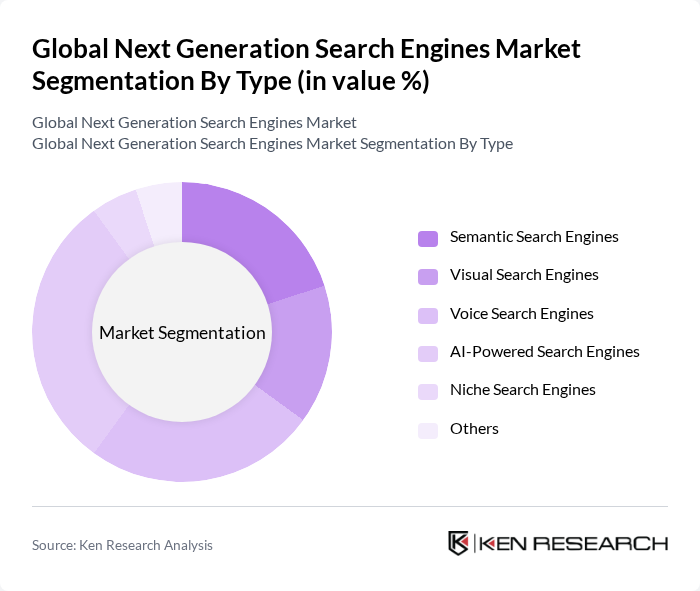
By Type:The market is segmented into various types of search engines, each catering to specific user needs and preferences. The dominant sub-segment is AI-Powered Search Engines, which leverage machine learning algorithms to provide personalized search results and improve user experience. Semantic Search Engines are also gaining traction as they understand user intent and context better, enhancing the relevance of search results. Visual and Voice Search Engines are emerging trends, driven by the increasing use of multimedia content and voice-activated devices. Privacy-focused and niche search engines are also expanding, reflecting growing consumer concerns about data protection and specialized information retrieval .
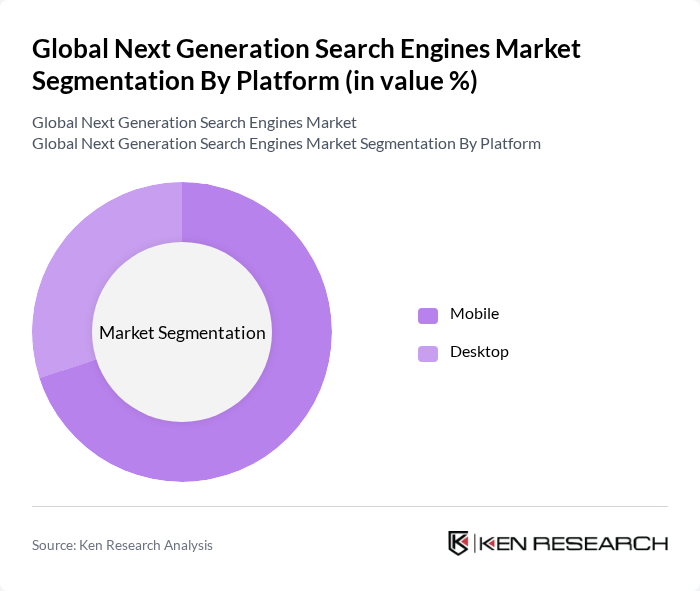
By Platform:The market is divided into mobile and desktop platforms. Mobile platforms are leading the market due to the increasing use of smartphones and the growing trend of mobile internet usage. The convenience of accessing search engines on-the-go has significantly boosted mobile search traffic, with mobile now representing the majority of global search queries. Desktop platforms, while still relevant for certain user segments and enterprise applications, are experiencing slower growth as users shift towards mobile devices for their search needs .
The Global Next Generation Search Engines Market is characterized by a dynamic mix of regional and international players. Leading participants such as Google LLC (Alphabet Inc.), Microsoft Corporation (Bing), Amazon.com Inc. (Alexa, Search), Apple Inc. (Spotlight, Siri Search), Baidu, Inc., Yandex N.V., DuckDuckGo, Inc., Yahoo! (Verizon Communications Inc.), Qwant SAS, Ecosia GmbH, StartPage.com, Searx, Wolfram Alpha LLC, Neeva, Inc., Mojeek Ltd., You.com, Search Encrypt, MetaGer, Ask.com (IAC), Alibaba Group (Amap, Aliyun Search), Facebook Inc. (Meta Platforms, Search), Xiaomi Inc. (Mi Search), Bose Corporation (Voice Search Tech) contribute to innovation, geographic expansion, and service delivery in this space .
The future of the next generation search engines market is poised for significant transformation, driven by technological advancements and evolving user expectations. As AI and machine learning continue to enhance search capabilities, personalization will become increasingly sophisticated, catering to individual user preferences. Additionally, the integration of decentralized solutions and augmented reality will reshape how users interact with search engines, creating new opportunities for engagement and innovation in the industry.
| Segment | Sub-Segments |
|---|---|
| By Type | Semantic Search Engines Visual Search Engines Voice Search Engines AI-Powered Search Engines Niche Search Engines Others |
| By Platform | Mobile Desktop |
| By End-User | Personal Commercial |
| By Application | E-commerce Research and Development Content Discovery Social Media Integration |
| By Distribution Channel | Online Offline |
| By Deployment Model | Cloud-Based On-Premises |
| By Search Modality | Text-Based Search Voice Search Image Search Video Search |
| By Vertical | Healthcare Finance Retail Media & Entertainment |
| By Geographic Focus | North America Asia-Pacific Europe Latin America Middle East & Africa |
| Scope Item/Segment | Sample Size | Target Respondent Profiles |
|---|---|---|
| Search Engine User Experience | 100 | Digital Marketers, UX Designers |
| AI Integration in Search Technologies | 60 | Data Scientists, AI Researchers |
| Market Trends in Search Advertising | 70 | Marketing Executives, Brand Managers |
| Consumer Behavior in Search Engine Usage | 50 | End Users, Tech Enthusiasts |
| Future of Search Algorithms | 40 | Software Engineers, Product Developers |
The Global Next Generation Search Engines Market is valued at approximately USD 36.5 billion, reflecting significant growth driven by advancements in artificial intelligence, increased demand for personalized search experiences, and the rising number of internet users and mobile devices.

What makes us stand out is that our consultants follow Robust, Refine and Result (RRR) methodology. Robust for clear definitions, approaches and sanity checking, Refine for differentiating respondents' facts and opinions, and Result for presenting data with story.

We have set a benchmark in the industry by offering our clients with syndicated and customized market research reports featuring coverage of entire market as well as meticulous research and analyst insights.

While we don't replace traditional research, we flip the method upside down. Our dual approach of Top Bottom & Bottom Top ensures quality deliverable by not just verifying company fundamentals but also looking at the sector and macroeconomic factors.

With one step in the future, our research team constantly tries to show you the bigger picture. We help with some of the tough questions you may encounter along the way: How is the industry positioned? Best marketing channel? KPI's of competitors? By aligning every element, we help maximize success.

Our report gives you instant access to the answers and sources that other companies might choose to hide. We elaborate each steps of research methodology we have used and showcase you the sample size to earn your trust.

If you need any support, we are here! We pride ourselves on universe strength, data quality, and quick, friendly, and professional service.













