Region:Global
Author(s):Shubham
Product Code:KRAA2713
Pages:86
Published On:August 2025
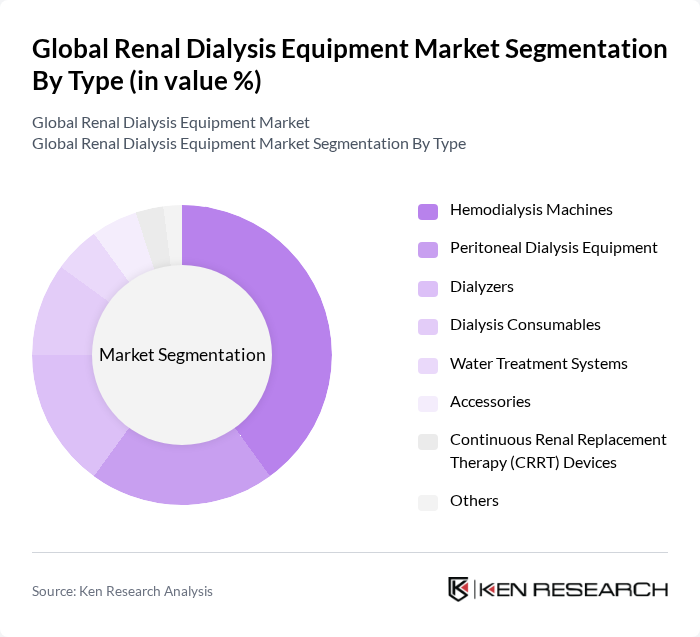
By Type:The market is segmented into various types of renal dialysis equipment, including Hemodialysis Machines, Peritoneal Dialysis Equipment, Dialyzers, Dialysis Consumables, Water Treatment Systems, Accessories, Continuous Renal Replacement Therapy (CRRT) Devices, and Others. Among these,Hemodialysis Machinesare the most widely used due to their effectiveness in treating patients with chronic kidney disease. Recent trends highlight the growing adoption of home hemodialysis and wearable dialysis devices, which are improving patient flexibility and quality of life .
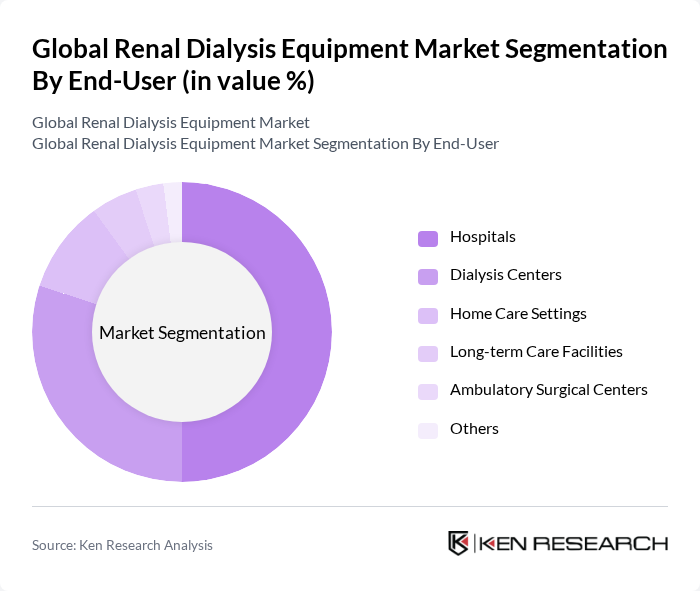
By End-User:The end-user segmentation includes Hospitals, Dialysis Centers, Home Care Settings, Long-term Care Facilities, Ambulatory Surgical Centers, and Others.Hospitalsare the leading end-users due to their capacity to provide comprehensive care and advanced treatment options for patients with renal diseases. The expansion of home care settings and specialized dialysis centers is also notable, driven by patient demand for convenience and the increasing availability of portable dialysis technologies .
The Global Renal Dialysis Equipment Market is characterized by a dynamic mix of regional and international players. Leading participants such as Fresenius Medical Care AG & Co. KGaA, Baxter International Inc., B. Braun Melsungen AG, DaVita Inc., Nipro Corporation, Medtronic plc, Asahi Kasei Corporation, Cantel Medical (a Steris company), Toray Medical Co., Ltd., Terumo Corporation, Dialysis Clinic, Inc., Rockwell Medical, Inc., U.S. Renal Care, Inc., Nikkiso Co., Ltd., JMS Co., Ltd. contribute to innovation, geographic expansion, and service delivery in this space.
The future of the renal dialysis equipment market appears promising, driven by ongoing technological innovations and an increasing focus on patient-centered care. As healthcare systems worldwide adapt to the growing prevalence of chronic kidney diseases, the integration of telehealth and home dialysis solutions is expected to enhance patient access and convenience. Additionally, collaborations between equipment manufacturers and healthcare providers will likely foster the development of tailored solutions that address specific patient needs, further propelling market growth.
| Segment | Sub-Segments |
|---|---|
| By Type | Hemodialysis Machines Peritoneal Dialysis Equipment Dialyzers Dialysis Consumables Water Treatment Systems Accessories Continuous Renal Replacement Therapy (CRRT) Devices Others |
| By End-User | Hospitals Dialysis Centers Home Care Settings Long-term Care Facilities Ambulatory Surgical Centers Others |
| By Application | Acute Kidney Injury Chronic Kidney Disease End-Stage Renal Disease Others |
| By Distribution Channel | Direct Sales Distributors Online Sales Others |
| By Region | North America Europe Asia-Pacific Latin America Middle East & Africa Others |
| By Price Range | Low Price Mid Price High Price Others |
| By Technology | Conventional Dialysis Automated Dialysis Portable Dialysis Wearable Dialysis Devices Others |
| Scope Item/Segment | Sample Size | Target Respondent Profiles |
|---|---|---|
| Hospital Dialysis Units | 100 | Nephrologists, Dialysis Unit Managers |
| Home Dialysis Patients | 60 | Patients, Caregivers |
| Dialysis Equipment Suppliers | 40 | Sales Representatives, Product Managers |
| Healthcare Policy Makers | 50 | Health Economists, Policy Analysts |
| Clinical Researchers in Nephrology | 70 | Research Scientists, Clinical Trial Coordinators |
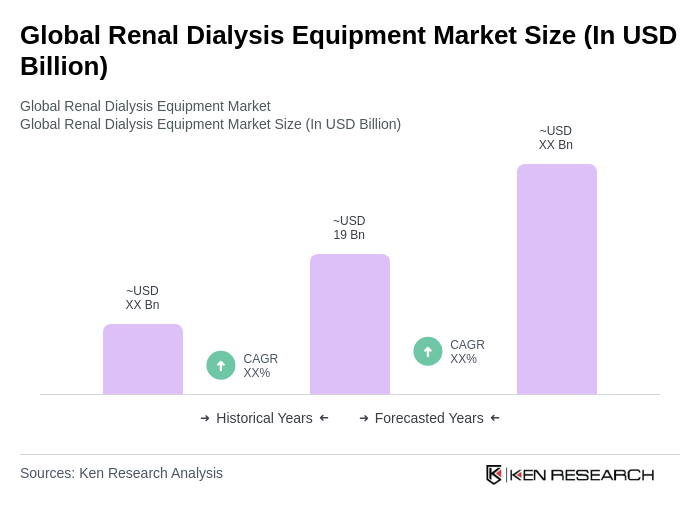
The Global Renal Dialysis Equipment Market is valued at approximately USD 19 billion, driven by the increasing prevalence of chronic kidney diseases, advancements in dialysis technology, and a growing aging population requiring renal care.

What makes us stand out is that our consultants follow Robust, Refine and Result (RRR) methodology. Robust for clear definitions, approaches and sanity checking, Refine for differentiating respondents' facts and opinions, and Result for presenting data with story.

We have set a benchmark in the industry by offering our clients with syndicated and customized market research reports featuring coverage of entire market as well as meticulous research and analyst insights.

While we don't replace traditional research, we flip the method upside down. Our dual approach of Top Bottom & Bottom Top ensures quality deliverable by not just verifying company fundamentals but also looking at the sector and macroeconomic factors.

With one step in the future, our research team constantly tries to show you the bigger picture. We help with some of the tough questions you may encounter along the way: How is the industry positioned? Best marketing channel? KPI's of competitors? By aligning every element, we help maximize success.

Our report gives you instant access to the answers and sources that other companies might choose to hide. We elaborate each steps of research methodology we have used and showcase you the sample size to earn your trust.

If you need any support, we are here! We pride ourselves on universe strength, data quality, and quick, friendly, and professional service.













