Region:Middle East
Author(s):Geetanshi
Product Code:KRAA0023
Pages:86
Published On:August 2025
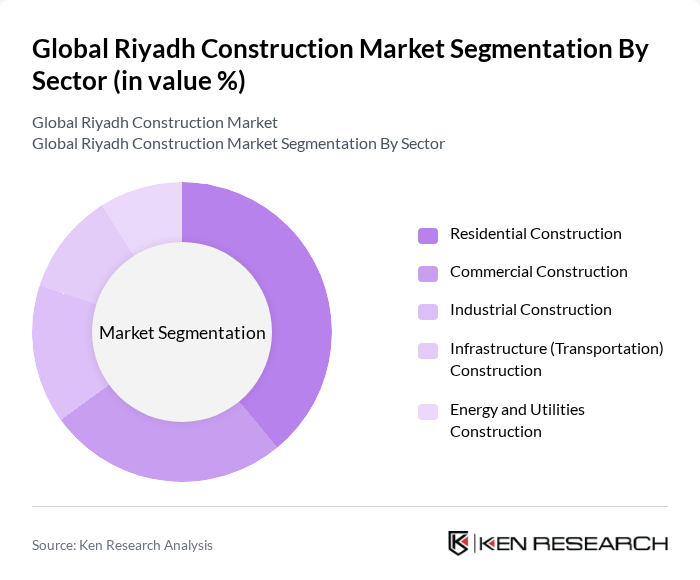
By Sector:The construction market is segmented into various sectors, including residential, commercial, industrial, infrastructure, and energy and utilities construction. Among these, residential construction remains the leading segment, driven by a growing population, government-backed homeownership initiatives, and increasing demand for housing. The commercial sector follows closely, fueled by the expansion of retail, hospitality, and office spaces, particularly in line with Vision 2030's Regional HQ Program. Infrastructure construction is rapidly gaining momentum due to large-scale government projects in transportation, smart cities, and utilities .
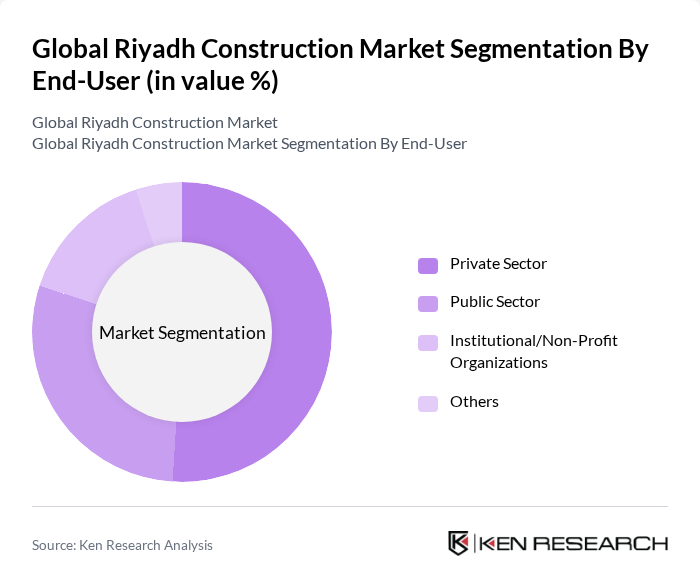
By End-User:The end-user segmentation includes private sector, public sector, institutional/non-profit organizations, and others. The private sector is the dominant end-user, driven by investments in residential and commercial projects. The public sector follows, with significant contributions from government-funded infrastructure and smart city projects. Institutional organizations are also emerging as key players, particularly in educational and healthcare construction .
The Global Riyadh Construction Market is characterized by a dynamic mix of regional and international players. Leading participants such as Saudi Binladin Group, Nesma & Partners Contracting Company, El Seif Engineering Contracting Company, Al Arrab Contracting Company, Al Rashid Trading & Contracting Company, Al Fouzan Trading & General Construction Company, Al Kifah Holding Company, Al Mabani General Contractors, Bechtel Corporation, China State Construction Engineering Corporation (CSCEC), Samsung C&T Corporation, Fluor Corporation, Shapoorji Pallonji Group, Larsen & Toubro (L&T) Construction, Consolidated Contractors Company (CCC) contribute to innovation, geographic expansion, and service delivery in this space.
The future of the construction market in Riyadh appears promising, driven by ongoing urbanization and substantial government investments in infrastructure. As the population continues to grow, the demand for housing and commercial spaces will likely increase, necessitating innovative construction solutions. Additionally, the integration of smart technologies and sustainable practices will shape the industry, enhancing efficiency and environmental responsibility. Overall, the construction sector is poised for significant transformation, aligning with national development goals and global trends.
| Segment | Sub-Segments |
|---|---|
| By Sector | Residential Construction Commercial Construction Industrial Construction Infrastructure (Transportation) Construction Energy and Utilities Construction |
| By End-User | Private Sector Public Sector Institutional/Non-Profit Organizations Others |
| By Project Size | Small Scale Projects Medium Scale Projects Large Scale Projects Mega Projects |
| By Construction Method | Traditional Construction Prefabricated/Modular Construction Sustainable/Green Construction Smart Construction (BIM, Digitalization) |
| By Material Type | Concrete Steel Wood Composite Materials Others |
| By Financing Type | Equity Financing Debt Financing Government Grants & PPPs Others |
| By Sustainability Focus | Green Buildings Energy-Efficient Designs Waste Reduction Practices Smart City Integration Others |
| Scope Item/Segment | Sample Size | Target Respondent Profiles |
|---|---|---|
| Residential Construction Projects | 100 | Project Managers, Site Supervisors |
| Commercial Building Developments | 80 | Architects, Construction Executives |
| Infrastructure Projects (Roads, Bridges) | 60 | Civil Engineers, Urban Planners |
| Green Building Initiatives | 50 | Sustainability Consultants, Project Leads |
| Public Sector Construction Contracts | 40 | Government Officials, Procurement Managers |
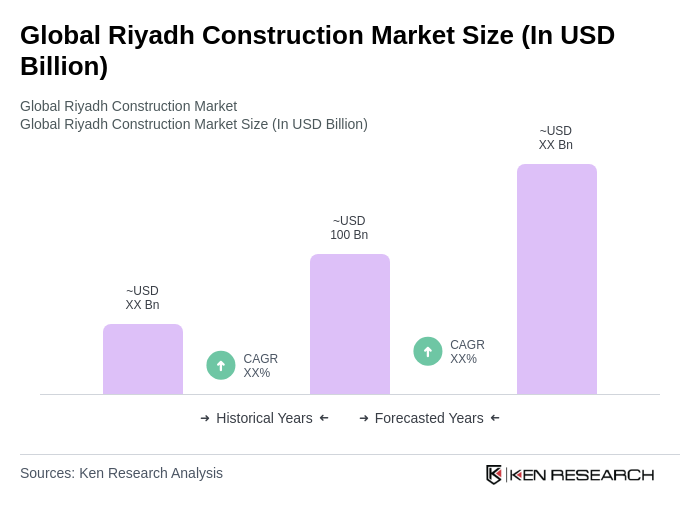
The Global Riyadh Construction Market is valued at approximately USD 100 billion, driven by rapid urbanization, government investments in infrastructure, and a growing real estate sector, particularly in alignment with the Kingdom's Vision 2030 initiative.

What makes us stand out is that our consultants follow Robust, Refine and Result (RRR) methodology. Robust for clear definitions, approaches and sanity checking, Refine for differentiating respondents' facts and opinions, and Result for presenting data with story.

We have set a benchmark in the industry by offering our clients with syndicated and customized market research reports featuring coverage of entire market as well as meticulous research and analyst insights.

While we don't replace traditional research, we flip the method upside down. Our dual approach of Top Bottom & Bottom Top ensures quality deliverable by not just verifying company fundamentals but also looking at the sector and macroeconomic factors.

With one step in the future, our research team constantly tries to show you the bigger picture. We help with some of the tough questions you may encounter along the way: How is the industry positioned? Best marketing channel? KPI's of competitors? By aligning every element, we help maximize success.

Our report gives you instant access to the answers and sources that other companies might choose to hide. We elaborate each steps of research methodology we have used and showcase you the sample size to earn your trust.

If you need any support, we are here! We pride ourselves on universe strength, data quality, and quick, friendly, and professional service.













