About the Report
Base Year 2024Listen to the audio summary
Global Rosacea Treatment Market Overview
- The Global Rosacea Treatment Market is valued at approximately USD 2.2 billion, based on a five-year historical analysis. This growth is primarily driven by the increasing prevalence of rosacea, heightened awareness of skin conditions, and advancements in treatment options. The market is also influenced by the rising demand for effective and safe therapies, as well as the growing focus on dermatological health.
- Key players in this market include the United States, Germany, and Japan, which dominate due to their advanced healthcare infrastructure, high disposable incomes, and significant investments in research and development. The presence of leading pharmaceutical companies and a growing number of dermatology clinics further contribute to the market's strength in these regions.
- The Minocycline Hydrochloride Extended-Release Capsules, 2022 issued by the U.S. Food and Drug Administration (FDA) approves oral antibiotic treatment for inflammatory lesions of rosacea, requiring clinical efficacy data and safety profiles for moderate-to-severe cases with compliance standards for manufacturing and labeling. This regulation is part of a broader initiative to enhance the availability of innovative therapies for skin conditions, ensuring that patients have access to safe and effective treatments.

Global Rosacea Treatment Market Segmentation
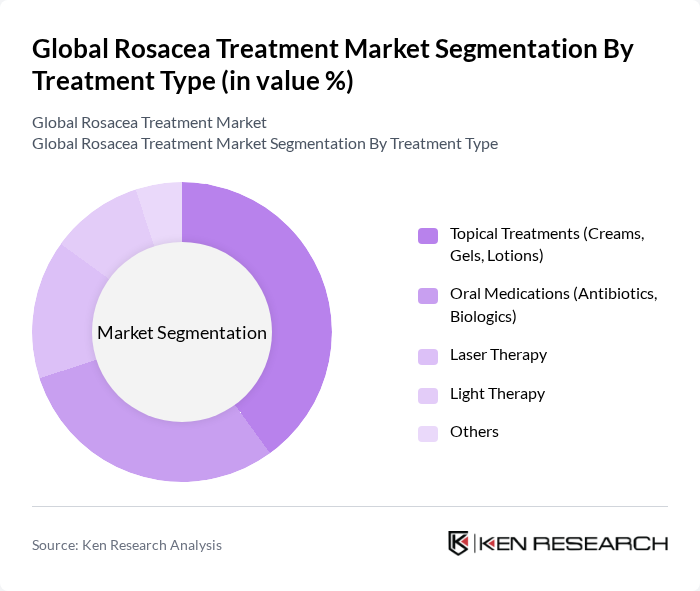
By Treatment Type:The treatment type segmentation includes various methods used to manage rosacea symptoms. Among these, topical treatments, which include creams, gels, and lotions, are the most widely used due to their ease of application and direct effect on the skin. Oral medications, such as antibiotics and biologics, are also significant, particularly for moderate to severe cases. Laser and light therapies are gaining traction as effective options for long-term management, while other treatments encompass a range of alternative therapies.
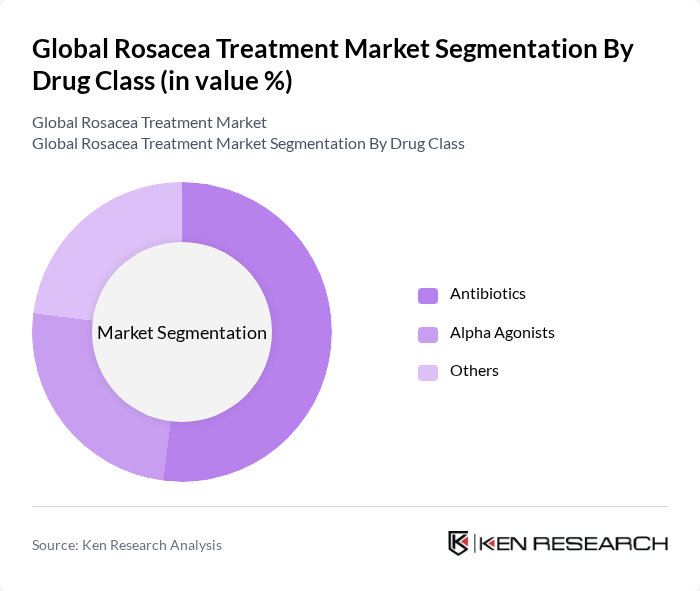
By Drug Class:The drug class segmentation includes various categories of medications used to treat rosacea. Antibiotics are the leading class due to their effectiveness in managing inflammation and bacterial growth associated with the condition. Alpha agonists are also notable for their role in reducing redness and flushing. Other drug classes include various topical agents and alternative treatments that cater to specific patient needs.
Global Rosacea Treatment Market Competitive Landscape
The Global Rosacea Treatment Market is characterized by a dynamic mix of regional and international players. Leading participants such as Nestle Skin Health, Teva Pharmaceutical Industries Ltd., Mylan N.V. (VIATRIS), Bayer AG, Sun Pharmaceutical Industries Ltd., Perrigo Company plc, Bausch Health Companies Inc., GlaxoSmithKline plc, Pfizer Inc., Allergan, Inc., Almirall, S.A., Lupin Ltd., Ajanta Pharma Ltd., LEO Pharma A/S, Galderma S.A. contribute to innovation, geographic expansion, and service delivery in this space.
Global Rosacea Treatment Market Industry Analysis
Growth Drivers
- Increasing Prevalence of Rosacea:The prevalence of rosacea is rising, with approximately 16 million people affected in the United States alone. This growing patient population drives demand for effective treatments. According to the American Academy of Dermatology, the condition affects about 10% of the adult population, particularly those aged 30-50. As awareness increases, more individuals seek medical advice, leading to a higher uptake of treatment options, thereby expanding the market significantly.
- Advancements in Treatment Options:The development of innovative therapies, including topical and oral medications, is enhancing treatment efficacy. For instance, the FDA approved new treatments like brimonidine and ivermectin, which have shown significant results in clinical trials. The global pharmaceutical industry invested over $1.5 billion in dermatological research recently, indicating a strong commitment to developing effective rosacea treatments, which is expected to boost market growth in the coming years.
- Rising Awareness and Education:Increased awareness about rosacea and its treatment options is driving market growth. Educational campaigns by organizations like the National Rosacea Society have reached over 1 million individuals, promoting early diagnosis and treatment. Furthermore, the rise of telemedicine has made consultations more accessible, allowing patients to seek treatment without geographical barriers. This trend is expected to enhance patient engagement and treatment adherence, further propelling market expansion.
Market Challenges
- High Treatment Costs:The cost of rosacea treatments can be a significant barrier for many patients. For instance, the average annual cost for prescription medications can exceed $1,200, which is unaffordable for a substantial portion of the population. According to the Bureau of Labor Statistics, healthcare costs in the U.S. rose by 5.6% recently, further straining patients' financial resources. This challenge may limit access to necessary treatments, hindering market growth.
- Regulatory Hurdles:The rosacea treatment market faces stringent regulatory requirements that can delay the introduction of new therapies. The FDA's approval process can take several years, with an average of 10 months for new drug applications. Recently, only 15% of dermatological drugs received expedited review, according to the FDA. These regulatory challenges can slow innovation and limit the availability of new treatment options, impacting market dynamics negatively.
Global Rosacea Treatment Market Future Outlook
The rosacea treatment market is poised for significant evolution, driven by ongoing research and technological advancements. The integration of artificial intelligence in dermatology is expected to enhance diagnostic accuracy and treatment personalization. Additionally, the growing trend of holistic and natural remedies may lead to the development of alternative treatment options. As healthcare systems increasingly prioritize dermatological conditions, the market is likely to witness a surge in investment and innovation, fostering a more comprehensive approach to rosacea management.
Market Opportunities
- Telemedicine Expansion:The rise of telemedicine presents a unique opportunity for the rosacea treatment market. With over 60% of patients expressing interest in virtual consultations, healthcare providers can reach a broader audience. This trend can facilitate timely diagnosis and treatment, ultimately improving patient outcomes and increasing market penetration for various treatment options.
- Development of Personalized Treatments:There is a growing demand for personalized treatment plans tailored to individual patient needs. With advancements in genomics and biotechnology, companies can develop targeted therapies that address specific rosacea subtypes. This approach not only enhances treatment efficacy but also fosters patient loyalty, creating a lucrative opportunity for market players to differentiate themselves in a competitive landscape.
Scope of the Report
| Segment | Sub-Segments |
|---|---|
| By Treatment Type | Topical Treatments (Creams, Gels, Lotions) Oral Medications (Antibiotics, Biologics) Laser Therapy Light Therapy Others |
| By Drug Class | Antibiotics Alpha Agonists Others |
| By Mode of Administration | Topical Oral Others |
| By End-User | Hospitals Dermatology Clinics Homecare Settings Others |
| By Distribution Channel | Online Pharmacies Retail Pharmacies Hospital Pharmacies Others |
| By Region | North America Europe Asia-Pacific Latin America Middle East & Africa |
| By Severity | Mild Moderate Severe |
| By Cross Comparison of Key Players | Company Name Company Size (Large, Medium, or Small) Revenue Growth Rate (CAGR %) Market Share (%) Product Portfolio Breadth (Treatment Types Offered) Geographic Presence (Number of Regions) R&D Investment as % of Revenue Pricing Strategy (Premium/Mid-tier/Budget) Distribution Network Reach Innovation Pipeline (New Drug Candidates in Development) |
| By Detailed Profile of Major Companies | Nestle Skin Health Teva Pharmaceutical Industries Ltd. Mylan N.V. (VIATRIS) Bayer AG Sun Pharmaceutical Industries Ltd. Perrigo Company plc Bausch Health Companies Inc. GlaxoSmithKline plc Pfizer Inc. Allergan, Inc. Almirall, S.A. Lupin Ltd. Ajanta Pharma Ltd. LEO Pharma A/S Galderma S.A. |
Key Target Audience
Investors and Venture Capitalist Firms
Government and Regulatory Bodies (e.g., Food and Drug Administration, European Medicines Agency)
Pharmaceutical Manufacturers
Biotechnology Companies
Healthcare Providers and Dermatologists
Medical Device Manufacturers
Insurance Companies and Payers
Market Analysts and Industry Experts
Players Mentioned in the Report:
Nestle Skin Health
Teva Pharmaceutical Industries Ltd.
Mylan N.V. (VIATRIS)
Bayer AG
Sun Pharmaceutical Industries Ltd.
Perrigo Company plc
Bausch Health Companies Inc.
GlaxoSmithKline plc
Pfizer Inc.
Allergan, Inc.
Almirall, S.A.
Lupin Ltd.
Ajanta Pharma Ltd.
LEO Pharma A/S
Galderma S.A.
Table of Contents
Research Methodology
Phase 1: Approach1
Desk Research
- Analysis of published market reports and white papers on rosacea treatment trends
- Review of clinical studies and medical journals focusing on rosacea therapies
- Examination of regulatory guidelines and approval processes from health authorities
Primary Research
- Interviews with dermatologists specializing in rosacea treatment
- Surveys with pharmaceutical representatives and healthcare providers
- Focus groups with patients diagnosed with rosacea to understand treatment experiences
Validation & Triangulation
- Cross-validation of findings through multiple expert interviews
- Triangulation of data from clinical studies, market reports, and expert opinions
- Sanity checks through peer reviews and feedback from industry stakeholders
Phase 2: Market Size Estimation1
Top-down Assessment
- Estimation of the global market size based on healthcare expenditure on dermatological conditions
- Segmentation of the market by treatment type, including topical and systemic therapies
- Incorporation of demographic data to assess prevalence rates of rosacea
Bottom-up Modeling
- Collection of sales data from leading pharmaceutical companies producing rosacea treatments
- Estimation of market share based on product availability and prescription rates
- Volume and pricing analysis of rosacea treatment products across different regions
Forecasting & Scenario Analysis
- Utilization of historical growth rates to project future market trends
- Scenario modeling based on potential changes in treatment guidelines and patient demographics
- Development of baseline, optimistic, and pessimistic forecasts through 2030
Phase 3: CATI Sample Composition1
| Scope Item/Segment | Sample Size | Target Respondent Profiles |
|---|---|---|
| Dermatology Clinics | 120 | Dermatologists, Nurse Practitioners |
| Pharmaceutical Distributors | 100 | Sales Representatives, Distribution Managers |
| Patient Advocacy Groups | 80 | Patient Advocates, Community Leaders |
| Healthcare Providers | 100 | General Practitioners, Family Physicians |
| Clinical Research Organizations | 70 | Clinical Researchers, Study Coordinators |
Frequently Asked Questions
What is the current value of the Global Rosacea Treatment Market?
The Global Rosacea Treatment Market is valued at approximately USD 2.2 billion, driven by the increasing prevalence of rosacea, advancements in treatment options, and heightened awareness of skin conditions among the population.
What factors are driving the growth of the rosacea treatment market?
Which regions dominate the Global Rosacea Treatment Market?
What types of treatments are available for rosacea?
Other Regional/Country Reports
Indonesia Rosacea Treatment Market
Malaysia Rosacea Treatment Market
KSA Rosacea Treatment Market
APAC Rosacea Treatment Market
SEA Rosacea Treatment Market
Vietnam Rosacea Treatment Market
Other Adjacent Reports
KSA Acne Treatment Market
Kuwait Eczema Treatment Market
Malaysia Psoriasis Treatment Market
Global Dermatology Devices Market Size, Share & Forecast, By Product Type, Application & End User, 2026–2031Australia Skincare Products Market Size, Share & Forecast, By Product Type, Price Tier & Distribution Channel, 2026–2031Brazil Anti-Inflammatory Drugs Market
Egypt Laser Therapy Market
Bahrain Telemedicine Dermatology Market
US personalized medicine market Size, Share, Growth Drivers, Trends, Opportunities & Forecast 2025–2030Kuwait Cosmetic Dermatology Market
Why Buy From Us?

What makes us stand out is that our consultants follow Robust, Refine and Result (RRR) methodology. Robust for clear definitions, approaches and sanity checking, Refine for differentiating respondents' facts and opinions, and Result for presenting data with story.

We have set a benchmark in the industry by offering our clients with syndicated and customized market research reports featuring coverage of entire market as well as meticulous research and analyst insights.

While we don't replace traditional research, we flip the method upside down. Our dual approach of Top Bottom & Bottom Top ensures quality deliverable by not just verifying company fundamentals but also looking at the sector and macroeconomic factors.

With one step in the future, our research team constantly tries to show you the bigger picture. We help with some of the tough questions you may encounter along the way: How is the industry positioned? Best marketing channel? KPI's of competitors? By aligning every element, we help maximize success.

Our report gives you instant access to the answers and sources that other companies might choose to hide. We elaborate each steps of research methodology we have used and showcase you the sample size to earn your trust.

If you need any support, we are here! We pride ourselves on universe strength, data quality, and quick, friendly, and professional service.