About the Report
Base Year 2024Listen to the audio summary
Global Smart Fabrics in Fashion and Entertainment Market Overview
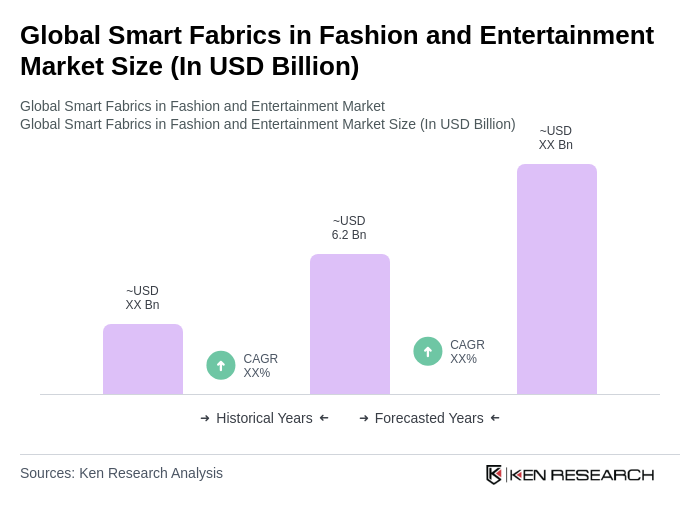
- The Global Smart Fabrics in Fashion and Entertainment Market is valued at USD 6.2 billion, based on a five-year historical analysis. This growth is primarily driven by advancements in miniaturized electronics, increasing consumer demand for functional and interactive textiles, and the rising popularity of wearable technology in both fashion and entertainment sectors. Key trends include the integration of IoT, AI, and energy-harvesting capabilities into textiles, as well as the expansion of online and direct-to-consumer distribution channels, which are accelerating adoption and innovation in the sector .
- Key players in this market include the United States, Germany, and Japan, which dominate due to their strong technological infrastructure, significant investments in research and development, and robust fashion and entertainment industries that embrace innovation and sustainability. North America leads the market, accounting for nearly half of global revenue, while Asia Pacific is emerging as a manufacturing hub due to cost advantages and rapid technological adoption .
- In 2023, the European Union implemented the “Regulation (EU) 2023/1115 of the European Parliament and of the Council on Ecodesign for Sustainable Products,” which sets binding environmental standards for textiles, including smart fabrics. This regulation requires manufacturers to ensure product durability, recyclability, and transparency regarding material composition, thereby encouraging the adoption of eco-friendly practices and materials across the smart fabrics value chain .
Global Smart Fabrics in Fashion and Entertainment Market Segmentation
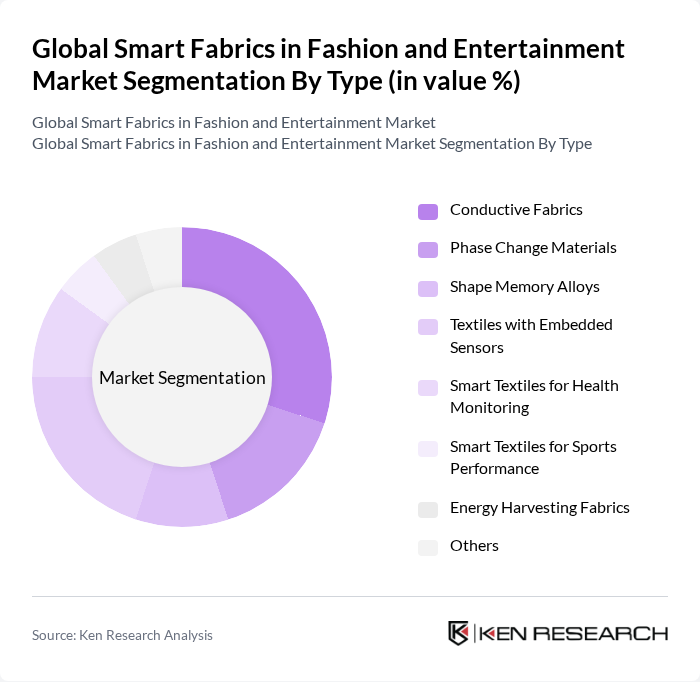
By Type:The market is segmented into various types of smart fabrics, each catering to specific needs and applications. The subsegments include Conductive Fabrics, Phase Change Materials, Shape Memory Alloys, Textiles with Embedded Sensors, Smart Textiles for Health Monitoring, Smart Textiles for Sports Performance, Energy Harvesting Fabrics, and Others. Among these, Conductive Fabrics are leading the market due to their versatility and widespread use in wearable technology, enabling functionalities such as touch sensitivity and data transmission. The increasing integration of technology in everyday clothing, especially through the use of conductive yarns and embedded sensors, is driving consumer interest and adoption .
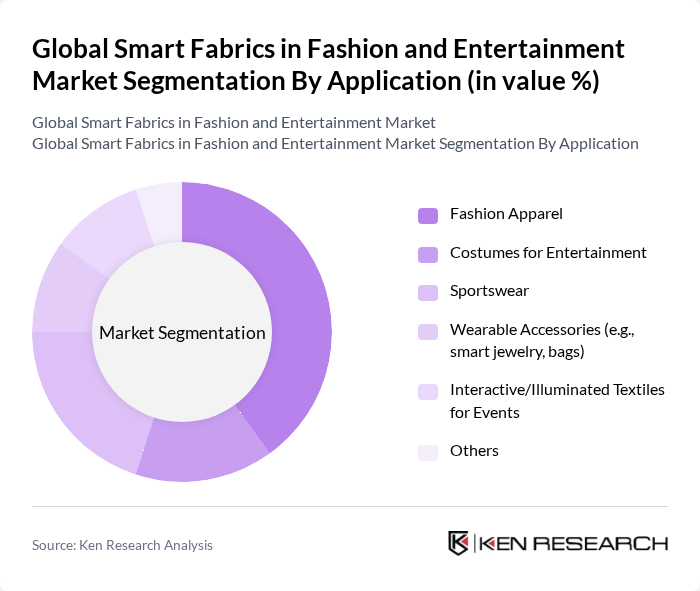
By Application:The applications of smart fabrics are diverse, including Fashion Apparel, Costumes for Entertainment, Sportswear, Wearable Accessories (e.g., smart jewelry, bags), Interactive/Illuminated Textiles for Events, and Others. Fashion Apparel is the leading application segment, driven by the growing trend of integrating technology into everyday clothing. Consumers are increasingly seeking apparel that not only looks good but also offers functionality, such as temperature regulation, biometric monitoring, and interactive features, which enhance their overall experience .
Global Smart Fabrics in Fashion and Entertainment Market Competitive Landscape
The Global Smart Fabrics in Fashion and Entertainment Market is characterized by a dynamic mix of regional and international players. Leading participants such as Wearable X, Google ATAP (Project Jacquard), Adidas AG, Under Armour, Inc., Hexoskin (Carré Technologies Inc.), Sensoria Inc., Lumo Bodytech Inc., Ralph Lauren Corporation, The North Face, Inc., DuPont de Nemours, Inc., Ohmatex ApS, Interactive Wear AG, Myant Inc., Spinnova Oyj, Textronics, Inc. contribute to innovation, geographic expansion, and service delivery in this space.
Global Smart Fabrics in Fashion and Entertainment Market Industry Analysis
Growth Drivers
- Increasing Demand for Wearable Technology:The global wearable technology market is projected to reach $116 billion by in future, driven by consumer interest in health and fitness tracking. This surge in demand is reflected in the 25% increase in sales of smartwatches and fitness trackers in future alone. As consumers seek multifunctional clothing that integrates technology, smart fabrics are becoming essential in fashion, enhancing user experience and functionality in everyday wear.
- Advancements in Textile Technology:The textile industry is witnessing significant innovations, with R&D spending reaching $1.5 billion in future. Breakthroughs in nanotechnology and conductive fibers are enabling the development of fabrics that can monitor health metrics and respond to environmental changes. These advancements are crucial for integrating smart fabrics into mainstream fashion, as they enhance durability and functionality, appealing to both consumers and manufacturers alike.
- Rising Consumer Interest in Sustainable Fashion:The sustainable fashion market is expected to grow to $8.25 billion by in future, reflecting a 20% increase from future. Consumers are increasingly prioritizing eco-friendly products, leading brands to adopt smart fabrics made from recycled materials. This shift not only meets consumer demand but also aligns with global sustainability goals, encouraging manufacturers to innovate in creating environmentally responsible smart textiles.
Market Challenges
- High Production Costs:The production costs for smart fabrics can be up to 30% higher than traditional textiles due to the integration of electronic components and advanced materials. This financial barrier limits accessibility for smaller brands and startups, hindering widespread adoption. As a result, many companies are hesitant to invest in smart fabric technology, which could slow down market growth and innovation in the sector.
- Limited Consumer Awareness:Despite the potential of smart fabrics, consumer awareness remains low, with only 15% of consumers familiar with the technology as of in future. This lack of understanding can lead to skepticism regarding the benefits and functionalities of smart textiles. To overcome this challenge, brands must invest in educational marketing strategies to inform consumers about the advantages of smart fabrics, thereby driving demand and acceptance in the market.
Global Smart Fabrics in Fashion and Entertainment Market Future Outlook
The future of smart fabrics in fashion and entertainment is poised for transformative growth, driven by technological advancements and changing consumer preferences. As the market evolves, we can expect increased collaboration between tech companies and fashion designers, leading to innovative applications. Additionally, the rise of e-commerce platforms will facilitate broader access to smart fabrics, allowing consumers to explore and purchase these products conveniently, thus enhancing market penetration and consumer engagement.
Market Opportunities
- Expansion in Emerging Markets:Emerging markets, particularly in Asia-Pacific, are projected to see a 15% annual growth in smart fabric adoption. This growth is driven by rising disposable incomes and increasing interest in wearable technology, presenting significant opportunities for brands to tap into new consumer bases and expand their market reach.
- Collaborations with Fashion Designers:Collaborations between tech firms and renowned fashion designers can lead to innovative product lines that attract attention. Such partnerships can leverage the designer's brand equity while introducing cutting-edge technology to fashion, potentially increasing sales by 20% in targeted demographics, thus creating a win-win scenario for both parties.
Scope of the Report
| Segment | Sub-Segments |
|---|---|
| By Type | Conductive Fabrics Phase Change Materials Shape Memory Alloys Textiles with Embedded Sensors Smart Textiles for Health Monitoring Smart Textiles for Sports Performance Energy Harvesting Fabrics Others |
| By Application | Fashion Apparel Costumes for Entertainment Sportswear Wearable Accessories (e.g., smart jewelry, bags) Interactive/Illuminated Textiles for Events Others |
| By End-User | Individual Consumers Fashion Designers & Brands Entertainment Industry (Film, Theater, Music) Sports Organizations Retailers Technology Integrators Others |
| By Distribution Channel | Online Retail Specialty Stores Department Stores Direct Sales Trade Shows and Exhibitions Others |
| By Price Range | Budget Mid-Range Premium Luxury Others |
| By Material | Natural Fibers Synthetic Fibers Blended Fabrics Nanomaterials & Advanced Polymers Others |
| By Region | North America Europe Asia-Pacific Latin America Middle East & Africa Others |
Key Target Audience
Investors and Venture Capitalist Firms
Government and Regulatory Bodies (e.g., U.S. Department of Commerce, European Commission)
Manufacturers and Producers of Smart Fabrics
Distributors and Retailers of Fashion and Entertainment Products
Fashion Designers and Brands
Entertainment Production Companies
Wearable Technology Developers
Textile Industry Associations
Players Mentioned in the Report:
Wearable X
Google ATAP (Project Jacquard)
Adidas AG
Under Armour, Inc.
Hexoskin (Carre Technologies Inc.)
Sensoria Inc.
Lumo Bodytech Inc.
Ralph Lauren Corporation
The North Face, Inc.
DuPont de Nemours, Inc.
Ohmatex ApS
Interactive Wear AG
Myant Inc.
Spinnova Oyj
Textronics, Inc.
Table of Contents
Market Assessment Phase
1. Executive Summary and Approach
2. Global Smart Fabrics in Fashion and Entertainment Market Overview
2.1 Key Insights and Strategic Recommendations
2.2 Global Smart Fabrics in Fashion and Entertainment Market Overview
2.3 Definition and Scope
2.4 Evolution of Market Ecosystem
2.5 Timeline of Key Regulatory Milestones
2.6 Value Chain & Stakeholder Mapping
2.7 Business Cycle Analysis
2.8 Policy & Incentive Landscape
3. Global Smart Fabrics in Fashion and Entertainment Market Analysis
3.1 Growth Drivers
3.1.1 Increasing Demand for Wearable Technology
3.1.2 Advancements in Textile Technology
3.1.3 Rising Consumer Interest in Sustainable Fashion
3.1.4 Integration of Smart Fabrics in Entertainment
3.2 Market Challenges
3.2.1 High Production Costs
3.2.2 Limited Consumer Awareness
3.2.3 Technical Limitations of Smart Fabrics
3.2.4 Regulatory Compliance Issues
3.3 Market Opportunities
3.3.1 Expansion in Emerging Markets
3.3.2 Collaborations with Fashion Designers
3.3.3 Development of New Applications in Sports
3.3.4 Growth in E-commerce for Fashion
3.4 Market Trends
3.4.1 Increasing Use of Augmented Reality in Fashion
3.4.2 Customization and Personalization of Smart Fabrics
3.4.3 Focus on Health Monitoring Features
3.4.4 Rise of Eco-friendly Smart Fabrics
3.5 Government Regulation
3.5.1 Standards for Textile Safety
3.5.2 Regulations on Electronic Components in Fabrics
3.5.3 Environmental Regulations for Textile Production
3.5.4 Trade Policies Affecting Smart Fabrics
4. SWOT Analysis
5. Stakeholder Analysis
6. Porter's Five Forces Analysis
7. Global Smart Fabrics in Fashion and Entertainment Market Market Size, 2019-2024
7.1 By Value
7.2 By Volume
7.3 By Average Selling Price
8. Global Smart Fabrics in Fashion and Entertainment Market Segmentation
8.1 By Type
8.1.1 Conductive Fabrics
8.1.2 Phase Change Materials
8.1.3 Shape Memory Alloys
8.1.4 Textiles with Embedded Sensors
8.1.5 Smart Textiles for Health Monitoring
8.1.6 Smart Textiles for Sports Performance
8.1.7 Energy Harvesting Fabrics
8.1.8 Others
8.2 By Application
8.2.1 Fashion Apparel
8.2.2 Costumes for Entertainment
8.2.3 Sportswear
8.2.4 Wearable Accessories (e.g., smart jewelry, bags)
8.2.5 Interactive/Illuminated Textiles for Events
8.2.6 Others
8.3 By End-User
8.3.1 Individual Consumers
8.3.2 Fashion Designers & Brands
8.3.3 Entertainment Industry (Film, Theater, Music)
8.3.4 Sports Organizations
8.3.5 Retailers
8.3.6 Technology Integrators
8.3.7 Others
8.4 By Distribution Channel
8.4.1 Online Retail
8.4.2 Specialty Stores
8.4.3 Department Stores
8.4.4 Direct Sales
8.4.5 Trade Shows and Exhibitions
8.4.6 Others
8.5 By Price Range
8.5.1 Budget
8.5.2 Mid-Range
8.5.3 Premium
8.5.4 Luxury
8.5.5 Others
8.6 By Material
8.6.1 Natural Fibers
8.6.2 Synthetic Fibers
8.6.3 Blended Fabrics
8.6.4 Nanomaterials & Advanced Polymers
8.6.5 Others
8.7 By Region
8.7.1 North America
8.7.2 Europe
8.7.3 Asia-Pacific
8.7.4 Latin America
8.7.5 Middle East & Africa
8.7.6 Others
9. Global Smart Fabrics in Fashion and Entertainment Market Competitive Analysis
9.1 Market Share of Key Players
9.2 Cross Comparison of Key Players
9.2.1 Company Name
9.2.2 Company Size (by Revenue/Employees)
9.2.3 Revenue Growth Rate (CAGR %)
9.2.4 Market Penetration (Geographic & Segment Reach)
9.2.5 R&D Investment as % of Revenue
9.2.6 Product Portfolio Breadth (Number of Smart Fabric SKUs)
9.2.7 Patent Count/Innovation Index
9.2.8 Strategic Partnerships/Collaborations
9.2.9 Distribution Channel Diversity
9.2.10 Brand Recognition Score
9.2.11 Customer Satisfaction Index
9.2.12 Sustainability Initiatives (ESG Metrics)
9.3 SWOT Analysis of Top Players
9.4 Pricing Analysis
9.5 Detailed Profile of Major Companies
9.5.1 Wearable X
9.5.2 Google ATAP (Project Jacquard)
9.5.3 Adidas AG
9.5.4 Under Armour, Inc.
9.5.5 Hexoskin (Carré Technologies Inc.)
9.5.6 Sensoria Inc.
9.5.7 Lumo Bodytech Inc.
9.5.8 Ralph Lauren Corporation
9.5.9 The North Face, Inc.
9.5.10 DuPont de Nemours, Inc.
9.5.11 Ohmatex ApS
9.5.12 Interactive Wear AG
9.5.13 Myant Inc.
9.5.14 Spinnova Oyj
9.5.15 Textronics, Inc.
10. Global Smart Fabrics in Fashion and Entertainment Market End-User Analysis
10.1 Procurement Behavior of Key Ministries
10.1.1 Government Contracts for Smart Fabrics
10.1.2 Budget Allocations for Innovation
10.1.3 Collaboration with Tech Firms
10.2 Corporate Spend on Infrastructure & Energy
10.2.1 Investment in Smart Fabric Technologies
10.2.2 Funding for Research and Development
10.2.3 Partnerships with Educational Institutions
10.3 Pain Point Analysis by End-User Category
10.3.1 Cost Constraints in Adoption
10.3.2 Technical Support Requirements
10.3.3 Integration with Existing Systems
10.4 User Readiness for Adoption
10.4.1 Awareness of Smart Fabric Benefits
10.4.2 Training and Support Needs
10.4.3 Willingness to Invest in New Technologies
10.5 Post-Deployment ROI and Use Case Expansion
10.5.1 Measurement of Performance Metrics
10.5.2 Case Studies of Successful Implementations
10.5.3 Future Use Cases for Smart Fabrics
11. Global Smart Fabrics in Fashion and Entertainment Market Future Size, 2025-2030
11.1 By Value
11.2 By Volume
11.3 By Average Selling Price
Go-To-Market Strategy Phase
1. Whitespace Analysis + Business Model Canvas
1.1 Market Gaps and Opportunities
1.2 Business Model Framework
2. Marketing and Positioning Recommendations
2.1 Branding Strategies
2.2 Product USPs
3. Distribution Plan
3.1 Urban Retail vs Rural NGO Tie-ups
4. Channel & Pricing Gaps
4.1 Underserved Routes
4.2 Pricing Bands
5. Unmet Demand & Latent Needs
5.1 Category Gaps
5.2 Consumer Segments
6. Customer Relationship
6.1 Loyalty Programs
6.2 After-sales Service
7. Value Proposition
7.1 Sustainability
7.2 Integrated Supply Chains
8. Key Activities
8.1 Regulatory Compliance
8.2 Branding
8.3 Distribution Setup
9. Entry Strategy Evaluation
9.1 Domestic Market Entry Strategy
9.1.1 Product Mix
9.1.2 Pricing Band
9.1.3 Packaging
9.2 Export Entry Strategy
9.2.1 Target Countries
9.2.2 Compliance Roadmap
10. Entry Mode Assessment
10.1 JV
10.2 Greenfield
10.3 M&A
10.4 Distributor Model
11. Capital and Timeline Estimation
11.1 Capital Requirements
11.2 Timelines
12. Control vs Risk Trade-Off
12.1 Ownership vs Partnerships
13. Profitability Outlook
13.1 Breakeven Analysis
13.2 Long-term Sustainability
14. Potential Partner List
14.1 Distributors
14.2 JVs
14.3 Acquisition Targets
15. Execution Roadmap
15.1 Phased Plan for Market Entry
15.1.1 Market Setup
15.1.2 Market Entry
15.1.3 Growth Acceleration
15.1.4 Scale & Stabilize
15.2 Key Activities and Milestones
15.2.1 Milestone Planning
15.2.2 Activity Tracking
Research Methodology
Phase 1: Approach1
Desk Research
- Industry reports from fashion and textile associations focusing on smart fabrics
- Market analysis publications detailing trends in wearable technology and smart textiles
- Academic journals and white papers on innovations in smart fabrics for fashion and entertainment
Primary Research
- Interviews with fashion designers and technologists specializing in smart fabrics
- Surveys with manufacturers of smart textiles and wearable technology
- Focus groups with consumers to gauge perceptions and acceptance of smart fabrics in fashion
Validation & Triangulation
- Cross-validation of findings through multiple industry expert interviews
- Triangulation of data from market reports, consumer surveys, and expert opinions
- Sanity checks through feedback from a panel of industry veterans and academic experts
Phase 2: Market Size Estimation1
Top-down Assessment
- Analysis of global fashion and entertainment market size to estimate smart fabric penetration
- Segmentation of market by application areas such as apparel, accessories, and performance wear
- Incorporation of growth rates from related sectors like IoT and wearable technology
Bottom-up Modeling
- Estimation of production volumes from leading smart fabric manufacturers
- Cost analysis based on material sourcing and production processes for smart textiles
- Volume x price modeling to derive revenue estimates for various smart fabric applications
Forecasting & Scenario Analysis
- Multi-variable forecasting using trends in consumer behavior and technological advancements
- Scenario analysis based on regulatory impacts and sustainability trends in fashion
- Development of baseline, optimistic, and pessimistic market growth projections through 2030
Phase 3: CATI Sample Composition1
| Scope Item/Segment | Sample Size | Target Respondent Profiles |
|---|---|---|
| Fashion Designers Utilizing Smart Fabrics | 60 | Fashion Designers, Product Developers |
| Manufacturers of Smart Textiles | 50 | Production Managers, R&D Managers |
| Retailers Selling Smart Fabric Products | 40 | Retail Managers, Merchandising Directors |
| Consumers of Wearable Technology | 100 | Tech-savvy Consumers, Fashion Enthusiasts |
| Experts in Textile Innovation | 40 | Academic Researchers, Industry Analysts |
Frequently Asked Questions
What is the current value of the Global Smart Fabrics in Fashion and Entertainment Market?
The Global Smart Fabrics in Fashion and Entertainment Market is valued at approximately USD 6.2 billion, driven by advancements in technology and increasing consumer demand for functional textiles, particularly in wearable technology.
What are the key drivers of growth in the smart fabrics market?
Which regions dominate the smart fabrics market?
What types of smart fabrics are available in the market?
Other Regional/Country Reports
Indonesia Smart Fabrics in Fashion and Entertainment Market
Malaysia Smart Fabrics in Fashion and Entertainment Market
APAC Smart Fabrics in Fashion and Entertainment Market
SEA Smart Fabrics in Fashion and Entertainment Market
Other Adjacent Reports
Philippines Entertainment Wearables Market
UAE IoT in Textiles Market
KSA Sustainable Fashion Market
Mexico Health Monitoring Wearables Market
Germany Sports Performance Fabrics Market
Japan Energy Harvesting Fabrics Market
South Korea Interactive Textiles Market
Why Buy From Us?

What makes us stand out is that our consultants follow Robust, Refine and Result (RRR) methodology. Robust for clear definitions, approaches and sanity checking, Refine for differentiating respondents' facts and opinions, and Result for presenting data with story.

We have set a benchmark in the industry by offering our clients with syndicated and customized market research reports featuring coverage of entire market as well as meticulous research and analyst insights.

While we don't replace traditional research, we flip the method upside down. Our dual approach of Top Bottom & Bottom Top ensures quality deliverable by not just verifying company fundamentals but also looking at the sector and macroeconomic factors.

With one step in the future, our research team constantly tries to show you the bigger picture. We help with some of the tough questions you may encounter along the way: How is the industry positioned? Best marketing channel? KPI's of competitors? By aligning every element, we help maximize success.

Our report gives you instant access to the answers and sources that other companies might choose to hide. We elaborate each steps of research methodology we have used and showcase you the sample size to earn your trust.

If you need any support, we are here! We pride ourselves on universe strength, data quality, and quick, friendly, and professional service.