Region:Asia
Author(s):Dev
Product Code:KRAA5153
Pages:98
Published On:September 2025
By Type:The market is segmented into various types, including Smart Home Devices, Proptech Software Solutions, Smart Building Technologies, Home Automation Systems, Security Systems, Energy Management Solutions, and Others. Each of these segments plays a crucial role in enhancing the overall efficiency and user experience in real estate.
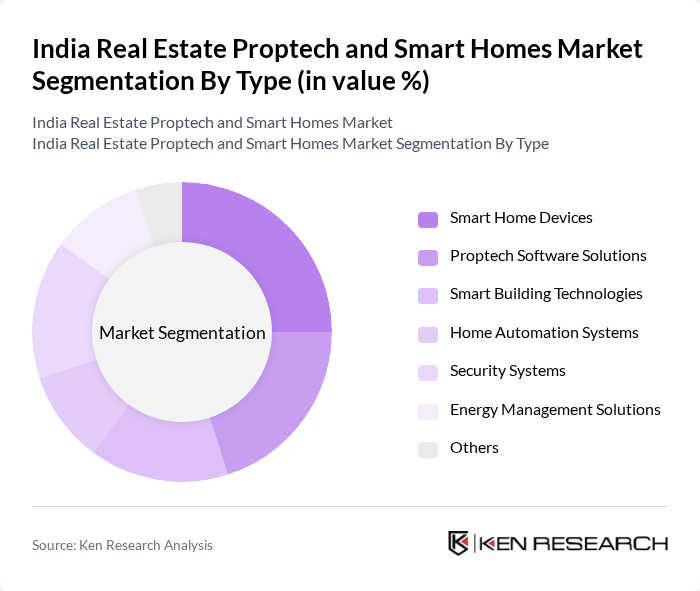
The Smart Home Devices segment is currently dominating the market due to the increasing consumer preference for convenience and security. Products such as smart locks, thermostats, and lighting systems are gaining traction among homeowners, driven by the desire for enhanced control and energy efficiency. The trend towards connected living is further supported by advancements in IoT technology, making smart home devices more accessible and user-friendly.
By End-User:The market is segmented into Residential, Commercial, Industrial, and Government & Utilities. Each end-user category has distinct requirements and applications for proptech and smart home solutions.
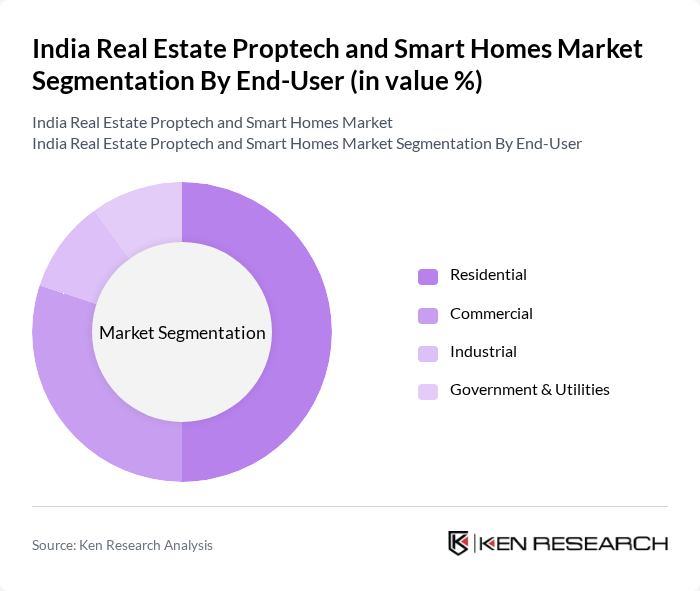
The Residential segment is the largest end-user category, driven by the growing trend of smart homes among consumers. Homeowners are increasingly investing in smart technologies to enhance comfort, security, and energy efficiency. The rise in disposable income and the increasing awareness of smart living solutions are key factors contributing to the growth of this segment.
The India Real Estate Proptech and Smart Homes Market is characterized by a dynamic mix of regional and international players. Leading participants such as PropTiger, NoBroker, Housing.com, MagicBricks, NestAway, OYO Life, SmartRent, HomeLane, Zolo Stays, Livspace, UrbanClap, Square Yards, 99acres, Foyr, PropertyGuru contribute to innovation, geographic expansion, and service delivery in this space.
The future of the India Real Estate Proptech and Smart Homes market appears promising, driven by ongoing urbanization and technological integration. As more consumers embrace smart home solutions, the demand for innovative housing options will likely increase. Additionally, the government's focus on sustainable development and smart city initiatives will further enhance market growth. By future, the convergence of technology and real estate is expected to create a more efficient, user-friendly environment, fostering a new era of living standards in urban India.
| Segment | Sub-Segments |
|---|---|
| By Type | Smart Home Devices Proptech Software Solutions Smart Building Technologies Home Automation Systems Security Systems Energy Management Solutions Others |
| By End-User | Residential Commercial Industrial Government & Utilities |
| By Region | North India South India East India West India |
| By Technology | IoT Solutions AI-Driven Analytics Cloud-Based Platforms Mobile Applications |
| By Application | Residential Automation Commercial Management Energy Efficiency Security Monitoring |
| By Investment Source | Domestic Investment Foreign Direct Investment (FDI) Public-Private Partnerships (PPP) Government Schemes |
| By Policy Support | Subsidies Tax Exemptions Regulatory Compliance Support Incentives for Green Technologies |
| Scope Item/Segment | Sample Size | Target Respondent Profiles |
|---|---|---|
| Residential Smart Home Adoption | 150 | Homeowners, Real Estate Agents |
| Commercial Real Estate Trends | 100 | Property Managers, Corporate Real Estate Executives |
| Proptech Startup Insights | 80 | Founders, Product Managers |
| Consumer Attitudes Towards Smart Homes | 120 | Potential Home Buyers, Tech Enthusiasts |
| Investment Trends in Proptech | 70 | Venture Capitalists, Investment Analysts |
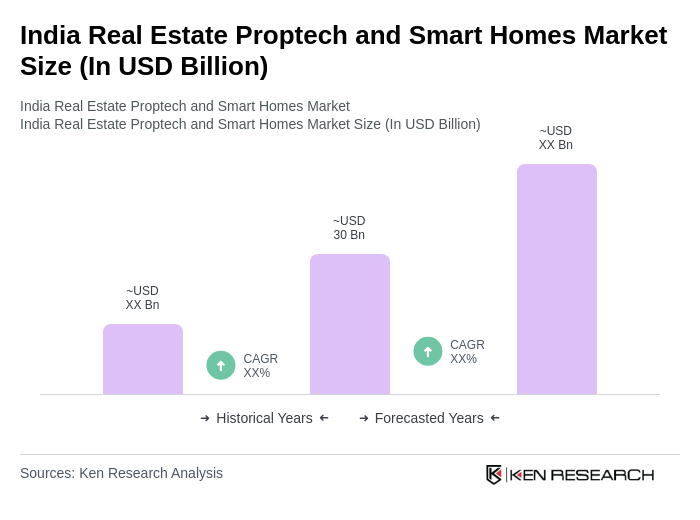
The India Real Estate Proptech and Smart Homes Market is valued at approximately USD 30 billion, driven by technological adoption, urbanization, and demand for smart living solutions. This market is expected to grow further as innovations continue to enhance operational efficiency and user experience.

What makes us stand out is that our consultants follow Robust, Refine and Result (RRR) methodology. Robust for clear definitions, approaches and sanity checking, Refine for differentiating respondents' facts and opinions, and Result for presenting data with story.

We have set a benchmark in the industry by offering our clients with syndicated and customized market research reports featuring coverage of entire market as well as meticulous research and analyst insights.

While we don't replace traditional research, we flip the method upside down. Our dual approach of Top Bottom & Bottom Top ensures quality deliverable by not just verifying company fundamentals but also looking at the sector and macroeconomic factors.

With one step in the future, our research team constantly tries to show you the bigger picture. We help with some of the tough questions you may encounter along the way: How is the industry positioned? Best marketing channel? KPI's of competitors? By aligning every element, we help maximize success.

Our report gives you instant access to the answers and sources that other companies might choose to hide. We elaborate each steps of research methodology we have used and showcase you the sample size to earn your trust.

If you need any support, we are here! We pride ourselves on universe strength, data quality, and quick, friendly, and professional service.













