Region:Asia
Author(s):Rebecca
Product Code:KRAB5901
Pages:97
Published On:October 2025
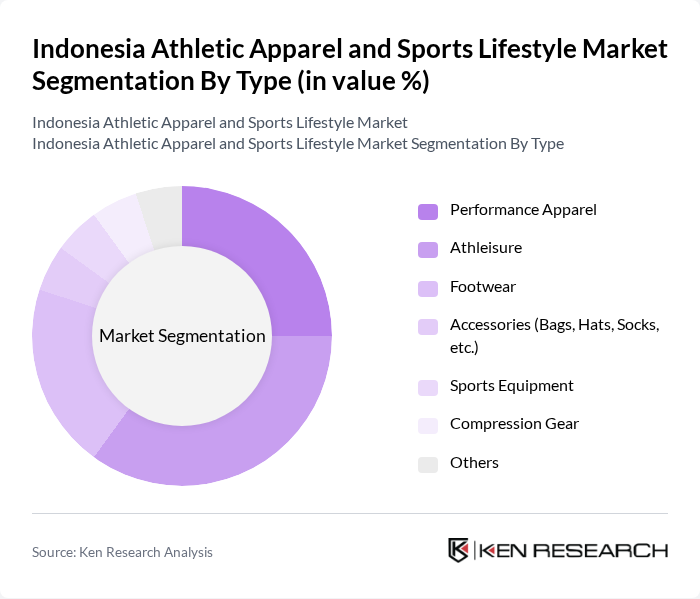
By Type:The market is segmented into various types of athletic apparel and lifestyle products, including Performance Apparel, Athleisure, Footwear, Accessories, Sports Equipment, Compression Gear, and Others. Among these, Athleisure has gained significant traction due to its versatility and comfort, appealing to consumers who seek both style and functionality in their daily wear. Performance Apparel is also prominent, driven by the increasing participation in sports and fitness activities. The growing adoption of branded sportswear for everyday use and the influence of social media trends have further accelerated demand for athleisure and performance categories .
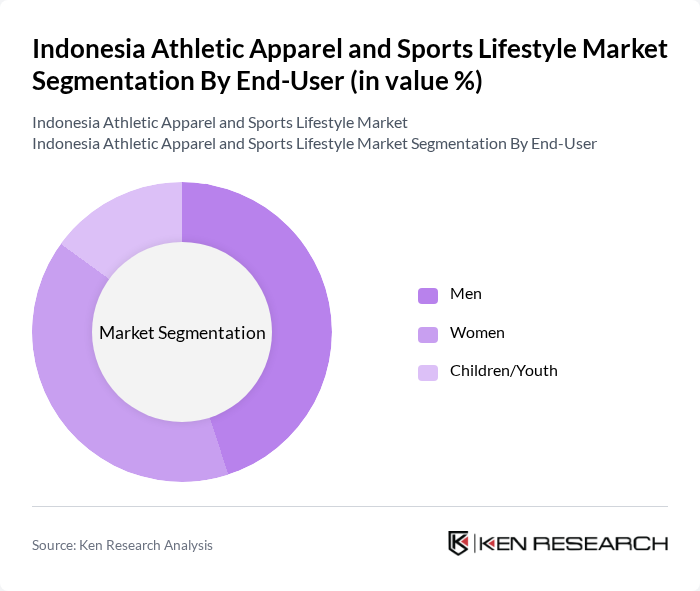
By End-User:The market is segmented by end-users into Men, Women, and Children/Youth. The Men’s segment is currently the largest, driven by a growing interest in fitness and sports among male consumers. However, the Women’s segment is rapidly expanding, fueled by the increasing participation of women in sports and fitness activities, as well as the popularity of athleisure wear among female consumers. Youth-centric marketing and the rise of school and community sports programs are also contributing to robust demand among younger consumers .
The Indonesia Athletic Apparel and Sports Lifestyle Market is characterized by a dynamic mix of regional and international players. Leading participants such as Nike, Inc., Adidas AG, Under Armour, Inc., Puma SE, Asics Corporation, New Balance Athletics, Inc., Skechers USA, Inc., Lululemon Athletica Inc., Reebok International Ltd., Champion Athleticwear, Fila Holdings Corp., Anta Sports Products Limited, Li-Ning Company Limited, Decathlon S.A., Mizuno Corporation, PT Eigerindo Multi Produk Industri (EIGER), PT League Indonesia (League), PT Berca Sportindo (Specs), PT Pan Brothers Tbk, PT Adidas Indonesia contribute to innovation, geographic expansion, and service delivery in this space.
The future of the Indonesian athletic apparel market appears promising, driven by a growing emphasis on health and fitness among consumers. As the market adapts to evolving consumer preferences, brands are likely to focus on innovative designs and sustainable practices. The integration of technology in apparel, such as smart fabrics, is expected to gain traction. Additionally, the rise of social media influencers will play a crucial role in shaping consumer choices, further enhancing brand visibility and engagement in the coming years.
| Segment | Sub-Segments |
|---|---|
| By Type | Performance Apparel Athleisure Footwear Accessories (Bags, Hats, Socks, etc.) Sports Equipment Compression Gear Others |
| By End-User | Men Women Children/Youth |
| By Distribution Channel | Online Retail/E-commerce Specialty Sports Stores Department Stores Supermarkets/Hypermarkets Brand Outlets/Flagship Stores Direct Sales |
| By Price Range | Budget Mid-range Premium |
| By Brand Loyalty | Brand Loyal Customers Brand Switchers |
| By Occasion | Everyday Use Sports Events Casual Outings |
| By Material | Synthetic Fabrics (Polyester, Nylon, etc.) Natural Fabrics (Cotton, Bamboo, etc.) Blended Fabrics Recycled/Eco-friendly Materials |
| Scope Item/Segment | Sample Size | Target Respondent Profiles |
|---|---|---|
| Consumer Preferences in Athletic Apparel | 120 | Active Individuals, Fitness Enthusiasts |
| Retail Insights from Sports Apparel Stores | 60 | Store Managers, Sales Associates |
| Market Trends in E-commerce for Sports Lifestyle | 70 | E-commerce Managers, Digital Marketing Specialists |
| Brand Perception Studies | 50 | Brand Managers, Marketing Executives |
| Fitness Trends and Consumer Behavior | 45 | Personal Trainers, Gym Owners |
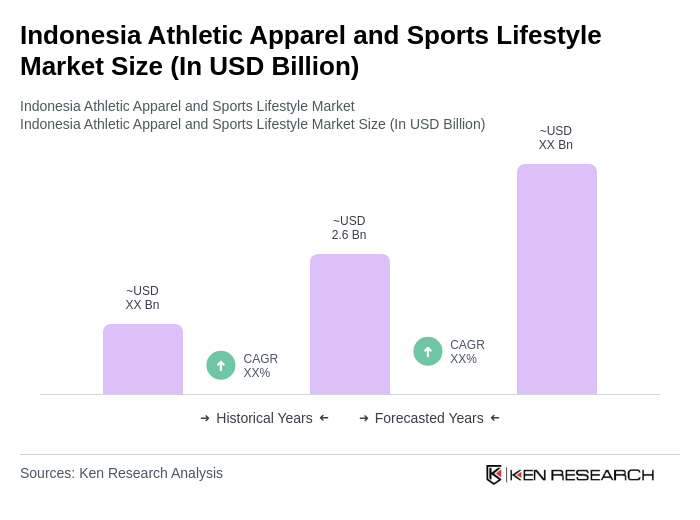
The Indonesia Athletic Apparel and Sports Lifestyle Market is valued at approximately USD 2.6 billion, driven by increasing health consciousness, sports participation, and the popularity of athleisure wear among consumers.

What makes us stand out is that our consultants follow Robust, Refine and Result (RRR) methodology. Robust for clear definitions, approaches and sanity checking, Refine for differentiating respondents' facts and opinions, and Result for presenting data with story.

We have set a benchmark in the industry by offering our clients with syndicated and customized market research reports featuring coverage of entire market as well as meticulous research and analyst insights.

While we don't replace traditional research, we flip the method upside down. Our dual approach of Top Bottom & Bottom Top ensures quality deliverable by not just verifying company fundamentals but also looking at the sector and macroeconomic factors.

With one step in the future, our research team constantly tries to show you the bigger picture. We help with some of the tough questions you may encounter along the way: How is the industry positioned? Best marketing channel? KPI's of competitors? By aligning every element, we help maximize success.

Our report gives you instant access to the answers and sources that other companies might choose to hide. We elaborate each steps of research methodology we have used and showcase you the sample size to earn your trust.

If you need any support, we are here! We pride ourselves on universe strength, data quality, and quick, friendly, and professional service.













