About the Report
Base Year 2024Listen to the audio summary
Italy Wine and Premium Alcohol Exports Market Overview
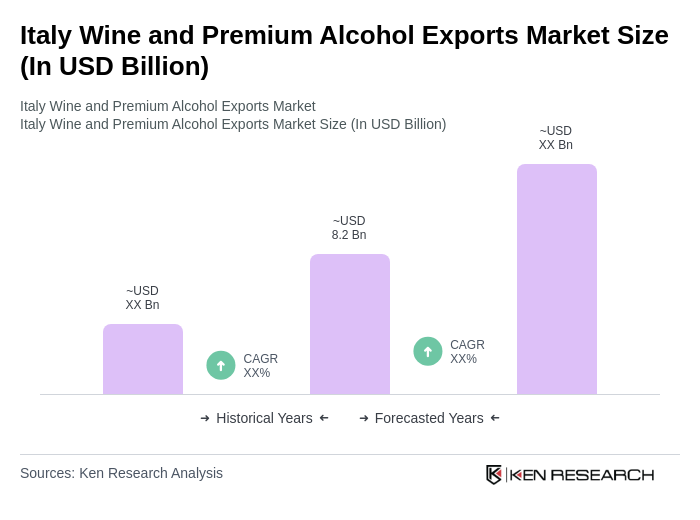
- The Italy Wine and Premium Alcohol Exports Market is valued at USD 8.2 billion, based on a five-year historical analysis. This figure reflects the aggregate value of Italian wine exports, which have shown resilience amid global challenges such as shifting consumer habits, climate pressures, and trade tariffs. Growth is primarily driven by the increasing global demand for high-quality Italian wines and spirits, the ongoing trend of premiumization, and Italy’s strong viticultural heritage and international brand recognition. The United States and Canada remain the leading export destinations, with sparkling wines—especially from Veneto—playing a pivotal role in sustaining export value.
- Key players in this market include regions such as Veneto, Tuscany, and Piedmont, which collectively account for approximately two-thirds of all Italian wine exports. Veneto leads with its renowned Prosecco, Valpolicella, and Pinot Grigio, followed by Tuscany’s Chianti Classico and Brunello di Montalcino, and Piedmont’s Barolo and Barbaresco. These regions dominate due to their unique terroirs, traditional winemaking techniques, and strong international branding, attracting both connoisseurs and casual consumers.
- In 2023, the Italian government enacted the “National Strategic Plan for the Common Agricultural Policy 2023–2027” (Piano Strategico Nazionale della PAC 2023–2027), issued by the Ministry of Agriculture, Food Sovereignty and Forests. This regulation requires all wine producers to comply with specific environmental standards, including reduced pesticide use, water conservation, and biodiversity protection. The initiative aims to enhance the quality and international competitiveness of Italian wines while ensuring the long-term sustainability of the viticulture sector.
Italy Wine and Premium Alcohol Exports Market Segmentation
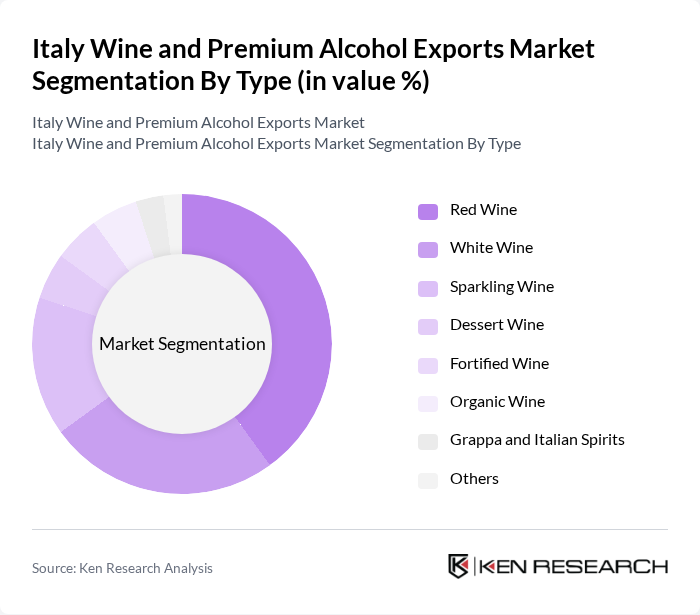
By Type:The market can be segmented into various types of wine and spirits, including Red Wine, White Wine, Sparkling Wine, Dessert Wine, Fortified Wine, Organic Wine, Grappa and Italian Spirits, and Others. Among these, Red Wine remains the most dominant segment, supported by continued popularity in both domestic and international markets. The rising consumer preference for premium and organic options has led to increased demand for Organic Wine and Grappa, reflecting a shift toward health-conscious and quality-driven consumption. Sparkling wines, particularly Prosecco, have also shown strong performance in export markets.
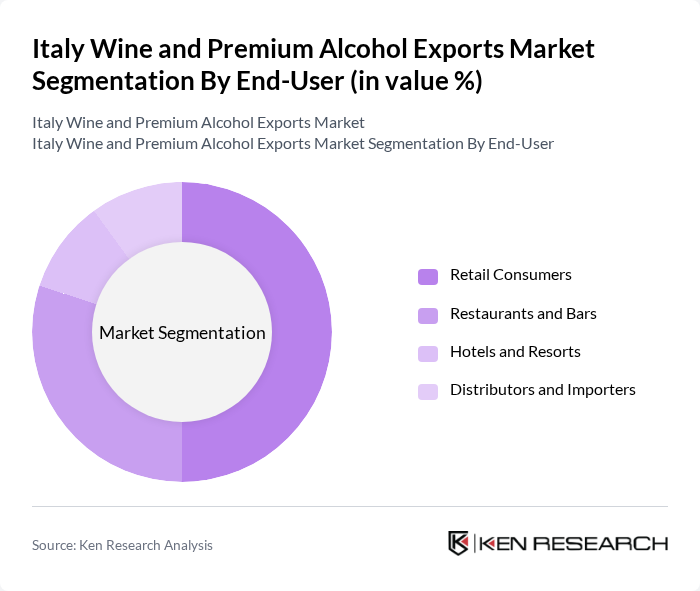
By End-User:The market is segmented by end-users, including Retail Consumers, Restaurants and Bars, Hotels and Resorts, and Distributors and Importers. Retail Consumers constitute the largest segment, driven by the increasing trend of wine consumption at home and growing interest in wine education. Restaurants and Bars also play a significant role, as they frequently feature premium Italian wines and spirits, catering to consumers seeking authentic and high-quality dining experiences.
Italy Wine and Premium Alcohol Exports Market Competitive Landscape
The Italy Wine and Premium Alcohol Exports Market is characterized by a dynamic mix of regional and international players. Leading participants such as Cantine Riunite & CIV, Argea, Italian Wine Brands (IWB), Caviro, Cavit, Marchesi Antinori, Ruffino, Zonin 1821, Santa Margherita Gruppo Vinicolo, La Marca, Herita Marzotto, Mionetto, Fantini Group, Pasqua Vini, and Campari Group contribute to innovation, geographic expansion, and service delivery in this space.
Italy Wine and Premium Alcohol Exports Market Industry Analysis
Growth Drivers
- Increasing Global Demand for Italian Wines:The global wine market is projected to reach approximately $423 billion by 2024, with Italian wines accounting for a significant share. In future, Italy exported around 2.2 billion liters of wine, valued at €7.8 billion. This demand is driven by the growing appreciation for quality wines, particularly in markets like the United States and China, where Italian wines have seen a 15% increase in sales over the past year, reflecting a robust consumer preference.
- Premiumization Trend in Alcohol Consumption:The premium segment of the alcohol market is experiencing substantial growth, with consumers increasingly willing to pay more for high-quality products. In future, the premium wine segment in Italy saw a 20% increase in sales, reaching €3 billion. This trend is supported by a shift in consumer behavior towards artisanal and craft products, with 60% of wine consumers in Italy preferring premium options, indicating a strong market for high-end Italian wines.
- Expansion of E-commerce Platforms:E-commerce sales of wine in Italy have surged, with online wine sales reaching €1.5 billion in future, a 30% increase from the previous year. This growth is fueled by the convenience of online shopping and the rise of digital marketing strategies. Additionally, 40% of Italian wine consumers reported purchasing wine online, highlighting the importance of e-commerce in reaching a broader audience and enhancing sales opportunities for Italian wine exporters.
Market Challenges
- Regulatory Compliance and Tariffs:The Italian wine export sector faces significant challenges due to stringent regulatory compliance and tariffs imposed by various countries. For instance, the U.S. has implemented tariffs on certain Italian wines, affecting exports valued at approximately €1 billion. Compliance with labeling and quality standards also adds complexity, as exporters must navigate different regulations in each market, potentially hindering growth and increasing operational costs.
- Competition from Other Wine-Producing Countries:Italy faces fierce competition from other wine-producing nations, particularly France, Spain, and Australia. In future, France exported €11.7 billion worth of wine, overshadowing Italian exports. This competitive landscape is intensified by aggressive marketing strategies and lower pricing from rival countries, which can undermine Italy's market share. As a result, Italian producers must innovate and differentiate their offerings to maintain their competitive edge.
Italy Wine and Premium Alcohol Exports Market Future Outlook
The future of the Italian wine and premium alcohol exports market appears promising, driven by evolving consumer preferences and increasing global demand. As health consciousness rises, consumers are gravitating towards organic and sustainable wine options, which are expected to gain traction. Additionally, the expansion of wine tourism is likely to enhance brand visibility and consumer engagement, further solidifying Italy's position as a leading wine exporter. The integration of technology in marketing and distribution will also play a crucial role in shaping the market landscape.
Market Opportunities
- Growth in Emerging Markets:Emerging markets, particularly in Asia and South America, present significant growth opportunities for Italian wine exports. In future, wine consumption in China increased by 10%, indicating a growing market. Targeting these regions with tailored marketing strategies can enhance brand presence and drive sales, capitalizing on the rising middle class and their increasing disposable income.
- Sustainable and Organic Wine Production:The demand for sustainable and organic wines is on the rise, with sales of organic wines in Italy reaching €500 million in future. This trend aligns with global consumer preferences for environmentally friendly products. By investing in sustainable practices and promoting organic certifications, Italian wine producers can attract health-conscious consumers and differentiate their products in a competitive market.
Scope of the Report
| Segment | Sub-Segments |
|---|---|
| By Type | Red Wine White Wine Sparkling Wine Dessert Wine Fortified Wine Organic Wine Grappa and Italian Spirits Others |
| By End-User | Retail Consumers Restaurants and Bars Hotels and Resorts Distributors and Importers |
| By Sales Channel | Direct Sales Online Retail Wholesale Export Markets |
| By Price Range | Premium Mid-Range Budget |
| By Packaging Type | Glass Bottles Tetra Packs Kegs Bag-in-Box |
| By Distribution Mode | On-Trade Off-Trade |
| By Region | Northern Italy Central Italy Southern Italy Islands |
Key Target Audience
Investors and Venture Capitalist Firms
Government and Regulatory Bodies (e.g., Italian Ministry of Agricultural, Food and Forestry Policies)
Manufacturers and Producers
Distributors and Retailers
Importers and Exporters
Industry Associations (e.g., Italian Wine Union)
Financial Institutions
Logistics and Supply Chain Companies
Players Mentioned in the Report:
Cantine Riunite & CIV
Argea
Italian Wine Brands (IWB)
Caviro
Cavit
Marchesi Antinori
Ruffino
Zonin 1821
Santa Margherita Gruppo Vinicolo
La Marca
Herita Marzotto
Mionetto
Fantini Group
Pasqua Vini
Campari Group
Table of Contents
Market Assessment Phase
1. Executive Summary and Approach
2. Italy Wine and Premium Alcohol Exports Market Overview
2.1 Key Insights and Strategic Recommendations
2.2 Italy Wine and Premium Alcohol Exports Market Overview
2.3 Definition and Scope
2.4 Evolution of Market Ecosystem
2.5 Timeline of Key Regulatory Milestones
2.6 Value Chain & Stakeholder Mapping
2.7 Business Cycle Analysis
2.8 Policy & Incentive Landscape
3. Italy Wine and Premium Alcohol Exports Market Analysis
3.1 Growth Drivers
3.1.1 Increasing Global Demand for Italian Wines
3.1.2 Premiumization Trend in Alcohol Consumption
3.1.3 Strong Brand Heritage and Quality Perception
3.1.4 Expansion of E-commerce Platforms
3.2 Market Challenges
3.2.1 Regulatory Compliance and Tariffs
3.2.2 Competition from Other Wine-Producing Countries
3.2.3 Fluctuating Exchange Rates
3.2.4 Supply Chain Disruptions
3.3 Market Opportunities
3.3.1 Growth in Emerging Markets
3.3.2 Innovative Packaging Solutions
3.3.3 Sustainable and Organic Wine Production
3.3.4 Collaborations with Local Distributors
3.4 Market Trends
3.4.1 Rise of Online Wine Retailing
3.4.2 Increasing Interest in Wine Tourism
3.4.3 Health Consciousness Influencing Consumption
3.4.4 Focus on Authenticity and Local Sourcing
3.5 Government Regulation
3.5.1 Labeling and Packaging Regulations
3.5.2 Import Tariffs and Trade Agreements
3.5.3 Quality Control Standards
3.5.4 Environmental Regulations on Production
4. SWOT Analysis
5. Stakeholder Analysis
6. Porter's Five Forces Analysis
7. Italy Wine and Premium Alcohol Exports Market Market Size, 2019-2024
7.1 By Value
7.2 By Volume
7.3 By Average Selling Price
8. Italy Wine and Premium Alcohol Exports Market Segmentation
8.1 By Type
8.1.1 Red Wine
8.1.2 White Wine
8.1.3 Sparkling Wine
8.1.4 Dessert Wine
8.1.5 Fortified Wine
8.1.6 Organic Wine
8.1.7 Grappa and Italian Spirits
8.1.8 Others
8.2 By End-User
8.2.1 Retail Consumers
8.2.2 Restaurants and Bars
8.2.3 Hotels and Resorts
8.2.4 Distributors and Importers
8.3 By Sales Channel
8.3.1 Direct Sales
8.3.2 Online Retail
8.3.3 Wholesale
8.3.4 Export Markets
8.4 By Price Range
8.4.1 Premium
8.4.2 Mid-Range
8.4.3 Budget
8.5 By Packaging Type
8.5.1 Glass Bottles
8.5.2 Tetra Packs
8.5.3 Kegs
8.5.4 Bag-in-Box
8.6 By Distribution Mode
8.6.1 On-Trade
8.6.2 Off-Trade
8.7 By Region
8.7.1 Northern Italy
8.7.2 Central Italy
8.7.3 Southern Italy
8.7.4 Islands
9. Italy Wine and Premium Alcohol Exports Market Competitive Analysis
9.1 Market Share of Key Players
9.2 Cross Comparison of Key Players
9.2.1 Company Name
9.2.2 Group Size (Large, Medium, or Small as per industry convention)
9.2.3 Export Revenue (EUR, latest FY)
9.2.4 Export Volume (million liters, latest FY)
9.2.5 Revenue Growth Rate (%)
9.2.6 Export Market Penetration (Number of Countries)
9.2.7 Share of Premium Products (%)
9.2.8 Operating Margin (%)
9.2.9 Distribution Network Breadth (No. of Distributors/Importers)
9.2.10 Brand Recognition (Global Ranking/Score)
9.2.11 Product Quality Index (Awards/Certifications)
9.2.12 Innovation Rate (New Product Launches per Year)
9.3 SWOT Analysis of Top Players
9.4 Pricing Analysis
9.5 Detailed Profile of Major Companies
9.5.1 Cantine Riunite & CIV
9.5.2 Argea
9.5.3 Italian Wine Brands (IWB)
9.5.4 Caviro
9.5.5 Cavit
9.5.6 Marchesi Antinori
9.5.7 Ruffino
9.5.8 Zonin 1821
9.5.9 Santa Margherita Gruppo Vinicolo
9.5.10 La Marca
9.5.11 Herita Marzotto
9.5.12 Mionetto
9.5.13 Fantini Group
9.5.14 Pasqua Vini
9.5.15 Campari Group
10. Italy Wine and Premium Alcohol Exports Market End-User Analysis
10.1 Procurement Behavior of Key Ministries
10.1.1 Government Procurement Policies
10.1.2 Budget Allocations for Alcohol Imports
10.1.3 Compliance with Quality Standards
10.2 Corporate Spend on Infrastructure & Energy
10.2.1 Investment in Wine Production Facilities
10.2.2 Expenditure on Marketing and Branding
10.2.3 Funding for Export Initiatives
10.3 Pain Point Analysis by End-User Category
10.3.1 Quality Assurance Issues
10.3.2 Supply Chain Inefficiencies
10.3.3 Regulatory Compliance Challenges
10.4 User Readiness for Adoption
10.4.1 Awareness of Italian Wine Varieties
10.4.2 Willingness to Pay for Premium Products
10.4.3 Adoption of E-commerce Platforms
10.5 Post-Deployment ROI and Use Case Expansion
10.5.1 Sales Growth Post-Implementation
10.5.2 Customer Feedback and Satisfaction
10.5.3 Opportunities for Product Line Expansion
11. Italy Wine and Premium Alcohol Exports Market Future Size, 2025-2030
11.1 By Value
11.2 By Volume
11.3 By Average Selling Price
Go-To-Market Strategy Phase
1. Whitespace Analysis + Business Model Canvas
1.1 Market Gaps Identification
1.2 Business Model Framework
2. Marketing and Positioning Recommendations
2.1 Branding Strategies
2.2 Product USPs
3. Distribution Plan
3.1 Urban Retail vs Rural NGO Tie-ups
4. Channel & Pricing Gaps
4.1 Underserved Routes
4.2 Pricing Bands
5. Unmet Demand & Latent Needs
5.1 Category Gaps
5.2 Consumer Segments
6. Customer Relationship
6.1 Loyalty Programs
6.2 After-sales Service
7. Value Proposition
7.1 Sustainability
7.2 Integrated Supply Chains
8. Key Activities
8.1 Regulatory Compliance
8.2 Branding
8.3 Distribution Setup
9. Entry Strategy Evaluation
9.1 Domestic Market Entry Strategy
9.1.1 Product Mix
9.1.2 Pricing Band
9.1.3 Packaging
9.2 Export Entry Strategy
9.2.1 Target Countries
9.2.2 Compliance Roadmap
10. Entry Mode Assessment
10.1 JV
10.2 Greenfield
10.3 M&A
10.4 Distributor Model
11. Capital and Timeline Estimation
11.1 Capital Requirements
11.2 Timelines
12. Control vs Risk Trade-Off
12.1 Ownership vs Partnerships
13. Profitability Outlook
13.1 Breakeven Analysis
13.2 Long-term Sustainability
14. Potential Partner List
14.1 Distributors
14.2 JVs
14.3 Acquisition Targets
15. Execution Roadmap
15.1 Phased Plan for Market Entry
15.1.1 Market Setup
15.1.2 Market Entry
15.1.3 Growth Acceleration
15.1.4 Scale & Stabilize
15.2 Key Activities and Milestones
15.2.1 Activity Timeline
15.2.2 Milestone Tracking
Research Methodology
Phase 1: Approach1
Desk Research
- Analysis of export data from the Italian National Institute of Statistics (ISTAT)
- Review of industry reports from trade associations such as the Italian Wine Union
- Examination of market trends and consumer preferences through publications from wine market analysts
Primary Research
- Interviews with key stakeholders in the Italian wine export sector, including exporters and distributors
- Surveys targeting sommeliers and wine buyers in premium markets across Europe and North America
- Field interviews with vineyard owners and winemakers to gather insights on production and export challenges
Validation & Triangulation
- Cross-validation of findings through multiple data sources, including trade statistics and expert opinions
- Triangulation of qualitative insights from interviews with quantitative data from market reports
- Sanity checks conducted through expert panel reviews comprising industry veterans and market analysts
Phase 2: Market Size Estimation1
Top-down Assessment
- Estimation of total market size based on national export figures and growth rates in premium alcohol segments
- Segmentation of the market by product type, including red, white, and sparkling wines
- Incorporation of macroeconomic factors influencing consumer spending on premium alcohol
Bottom-up Modeling
- Collection of sales data from leading Italian wine exporters to establish baseline volumes
- Analysis of pricing strategies and average selling prices across different export markets
- Volume x price calculations to derive revenue estimates for each product segment
Forecasting & Scenario Analysis
- Multi-factor regression analysis incorporating variables such as global wine consumption trends and economic indicators
- Scenario modeling based on potential changes in trade policies and tariffs affecting exports
- Development of baseline, optimistic, and pessimistic forecasts through 2030
Phase 3: CATI Sample Composition1
| Scope Item/Segment | Sample Size | Target Respondent Profiles |
|---|---|---|
| Italian Wine Exporters | 100 | Export Managers, Business Development Directors |
| Distributors in Premium Markets | 60 | Sales Managers, Category Managers |
| Retail Buyers for Fine Wines | 50 | Wine Buyers, Purchasing Agents |
| Sommelier Insights | 40 | Head Sommeliers, Wine Consultants |
| Vineyard Owners and Winemakers | 45 | Winery Owners, Production Managers |
Frequently Asked Questions
What is the current value of the Italy Wine and Premium Alcohol Exports Market?
The Italy Wine and Premium Alcohol Exports Market is valued at approximately USD 8.2 billion, reflecting the resilience of Italian wine exports amid global challenges and increasing demand for high-quality wines and spirits.
Which regions in Italy are the leading exporters of wine?
What are the main types of wine exported from Italy?
What factors are driving growth in the Italian wine export market?
Other Regional/Country Reports
Indonesia Wine and Premium Alcohol Exports Market
Malaysia Wine and Premium Alcohol Exports Market
KSA Wine and Premium Alcohol Exports Market
APAC Wine and Premium Alcohol Exports Market
SEA Wine and Premium Alcohol Exports Market
Vietnam Wine and Premium Alcohol Exports Market
Other Adjacent Reports
Kuwait Wine Production Equipment Market
Qatar Premium Spirits Production Market
Saudi Arabia Alcoholic Beverage Packaging Market Size Share Growth Drivers Trends Opportunities & Forecast 2025–2030South Africa Wine Export Logistics Market
South Africa Online Wine Sales Market
Oman Organic Wine Market Report Size Share Growth Drivers Trends Opportunities & Forecast 2025–2030Indonesia wine tourism market report size, share, growth drivers, trends, opportunities & forecast 2025–2030Singapore Alcohol Import Distribution Market
Bahrain Viticulture Technology Market
Vietnam Beverage Branding Market
Why Buy From Us?

What makes us stand out is that our consultants follow Robust, Refine and Result (RRR) methodology. Robust for clear definitions, approaches and sanity checking, Refine for differentiating respondents' facts and opinions, and Result for presenting data with story.

We have set a benchmark in the industry by offering our clients with syndicated and customized market research reports featuring coverage of entire market as well as meticulous research and analyst insights.

While we don't replace traditional research, we flip the method upside down. Our dual approach of Top Bottom & Bottom Top ensures quality deliverable by not just verifying company fundamentals but also looking at the sector and macroeconomic factors.

With one step in the future, our research team constantly tries to show you the bigger picture. We help with some of the tough questions you may encounter along the way: How is the industry positioned? Best marketing channel? KPI's of competitors? By aligning every element, we help maximize success.

Our report gives you instant access to the answers and sources that other companies might choose to hide. We elaborate each steps of research methodology we have used and showcase you the sample size to earn your trust.

If you need any support, we are here! We pride ourselves on universe strength, data quality, and quick, friendly, and professional service.