Region:Asia
Author(s):Dev
Product Code:KRAA5530
Pages:98
Published On:January 2026
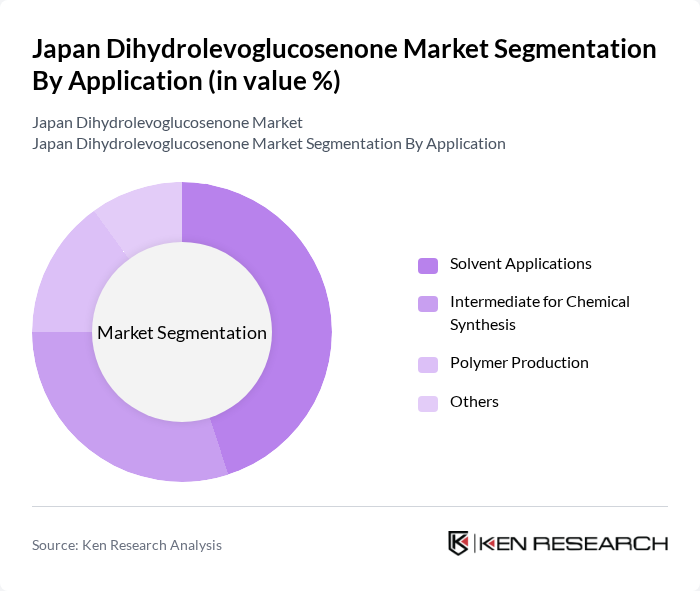
By Application:The market is segmented into various applications, including solvent applications, intermediate for chemical synthesis, polymer production, and others. Among these, solvent applications are the most dominant due to the increasing demand for eco-friendly solvents in industries such as paints, coatings, and adhesives. The trend towards sustainability has led to a significant shift in consumer preferences, favoring bio-based solvents over traditional options. This shift is further supported by regulatory frameworks promoting the use of green chemicals.
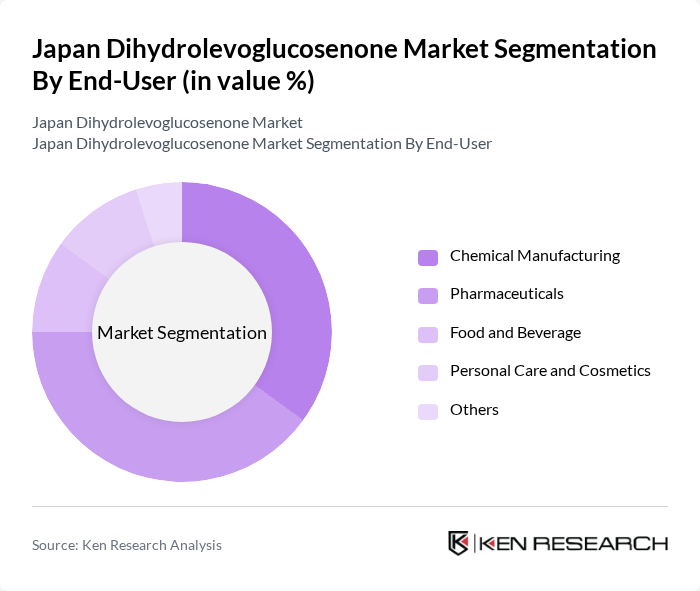
By End-User:The end-user segmentation includes chemical manufacturing, pharmaceuticals, food and beverage, personal care and cosmetics, and others. The pharmaceutical sector is the leading end-user, driven by the increasing demand for bio-based intermediates in drug formulation. The trend towards natural and organic ingredients in personal care products is also contributing to the growth of this segment, as manufacturers seek sustainable alternatives to synthetic chemicals.
The Japan Dihydrolevoglucosenone market is characterized by a dynamic mix of regional and international players. Leading participants such as Mitsubishi Chemical Corporation, Toray Industries, Inc., Asahi Kasei Corporation, Sumitomo Chemical Co., Ltd., Daicel Corporation, Showa Denko K.K., Nippon Shokubai Co., Ltd., Kuraray Co., Ltd., JNC Corporation, Chisso Corporation, Ube Industries, Ltd., Tosoh Corporation, Kanto Chemical Co., Inc., Kyoei Chemical Co., Ltd., Kureha Corporation contribute to innovation, geographic expansion, and service delivery in this space.
The future of the Japan dihydrolevoglucosenone market appears promising, driven by increasing regulatory support for sustainable practices and a growing consumer base that prioritizes eco-friendly products. As companies invest in innovative production technologies, the efficiency and affordability of bio-based chemicals are expected to improve. Furthermore, collaborations between industry players and research institutions will likely accelerate the development of new applications, enhancing market growth and sustainability in the chemical sector.
| Segment | Sub-Segments |
|---|---|
| By Application | Solvent Applications Intermediate for Chemical Synthesis Polymer Production Others |
| By End-User | Chemical Manufacturing Pharmaceuticals Food and Beverage Personal Care and Cosmetics Others |
| By Form | Liquid Solid Others |
| By Distribution Channel | Direct Sales Distributors Online Sales Others |
| By Region | Kanto Region Kansai/Kinki Region Central/Chubu Region Kyushu-Okinawa Region Tohoku Region Chugoku Region Hokkaido Region Shikoku Region |
| Scope Item/Segment | Sample Size | Target Respondent Profiles |
|---|---|---|
| Bioplastics Manufacturers | 100 | Production Managers, R&D Directors |
| Pharmaceutical Applications | 80 | Regulatory Affairs Specialists, Product Managers |
| Solvent Producers | 70 | Operations Managers, Quality Control Analysts |
| Research Institutions | 60 | Academic Researchers, Lab Managers |
| Government Regulatory Bodies | 50 | Policy Makers, Environmental Analysts |
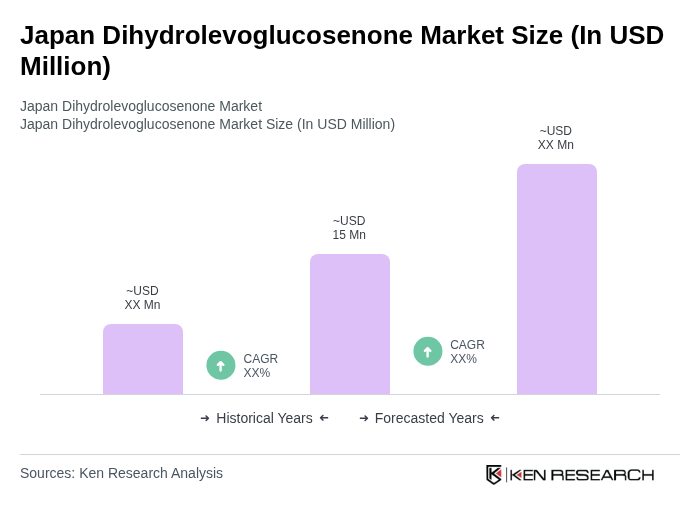
The Japan Dihydrolevoglucosenone market is valued at approximately USD 15 million, reflecting a growing demand for bio-based solvents and intermediates across various industries, including chemicals and pharmaceuticals.

What makes us stand out is that our consultants follow Robust, Refine and Result (RRR) methodology. Robust for clear definitions, approaches and sanity checking, Refine for differentiating respondents' facts and opinions, and Result for presenting data with story.

We have set a benchmark in the industry by offering our clients with syndicated and customized market research reports featuring coverage of entire market as well as meticulous research and analyst insights.

While we don't replace traditional research, we flip the method upside down. Our dual approach of Top Bottom & Bottom Top ensures quality deliverable by not just verifying company fundamentals but also looking at the sector and macroeconomic factors.

With one step in the future, our research team constantly tries to show you the bigger picture. We help with some of the tough questions you may encounter along the way: How is the industry positioned? Best marketing channel? KPI's of competitors? By aligning every element, we help maximize success.

Our report gives you instant access to the answers and sources that other companies might choose to hide. We elaborate each steps of research methodology we have used and showcase you the sample size to earn your trust.

If you need any support, we are here! We pride ourselves on universe strength, data quality, and quick, friendly, and professional service.













