Region:Global
Author(s):Dev
Product Code:KRAA5535
Pages:90
Published On:January 2026
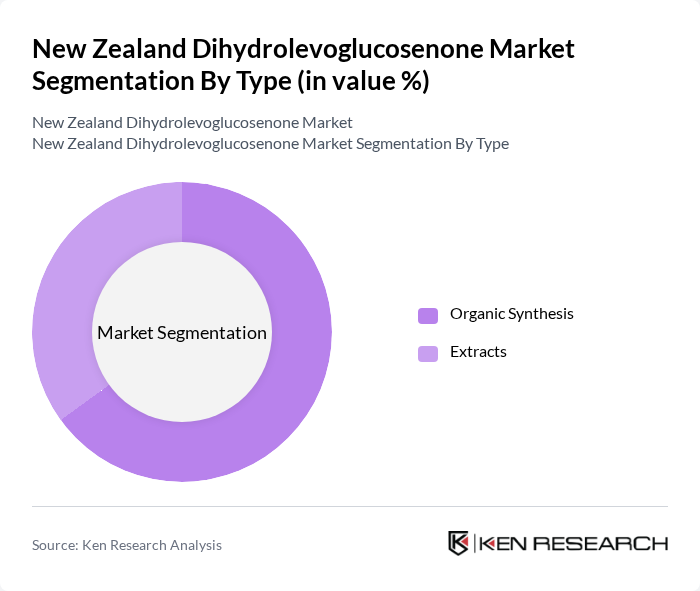
By Type:The market is segmented into Organic Synthesis and Extractions. Organic Synthesis is the leading sub-segment, driven by its extensive application in the pharmaceutical industry, where Dihydrolevoglucosenone is used as a key intermediate in drug formulation. The demand for organic synthesis is bolstered by the increasing focus on developing novel therapeutic agents and the growing trend of green chemistry, which emphasizes the use of sustainable and renewable resources. Dihydrolevoglucosenone (also known as Cyrene) has emerged as a safer, bio-based alternative to traditional solvents such as DMF and NMP, enhancing its adoption across synthesis applications.
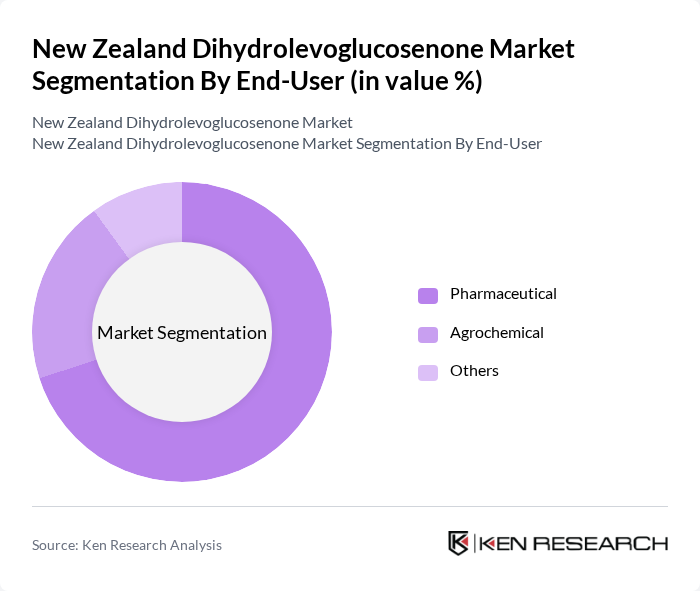
By End-User:The market is categorized into Pharmaceutical, Agrochemical, and Others. The Pharmaceutical sector dominates the market, as Dihydrolevoglucosenone is increasingly utilized in drug development and formulation processes. The rising prevalence of chronic diseases and the demand for innovative therapies are driving the pharmaceutical industry's growth, leading to a higher consumption of Dihydrolevoglucosenone as a critical ingredient in various medications. The agrochemical segment is also experiencing growth due to the industry's shift toward sustainable production methods and reduced environmental impact.
The New Zealand Dihydrolevoglucosenone Market is characterized by a dynamic mix of regional and international players. Leading participants such as Carl Roth, Circa Group AS, Haihang Industry Co. Ltd, Shandong Luba Chemical Co. Ltd, Solvay S.A., Tokyo Chemical Industry Co. Ltd, Brenntag AG, Univar Solutions Inc. contribute to innovation, geographic expansion, and service delivery in this space. Circa Group AS, established in 2006, is recognized as the original developer of Dihydrolevoglucosenone technology and continues to play a pivotal role in advancing its commercial applications globally.
The future of the New Zealand dihydrolevoglucosenone market appears promising, driven by increasing consumer demand for sustainable products and supportive government policies. As production technologies advance, the cost of bio-based chemicals is expected to decrease, enhancing competitiveness against traditional chemicals. Furthermore, the growing emphasis on environmental sustainability will likely lead to expanded applications in various sectors, including pharmaceuticals and agriculture, positioning New Zealand as a key player in the global bioeconomy landscape.
| Segment | Sub-Segments |
|---|---|
| By Type | Organic Synthesis Extractions |
| By End-User | Pharmaceutical Agrochemical Others |
| By Application | Solvent Intermediate in Chemical Synthesis Additive in Polymer Production Others |
| By Distribution Channel | Direct Sales Chemical Distributors Online Retail Others |
| By Region | North Island South Island |
| Scope Item/Segment | Sample Size | Target Respondent Profiles |
|---|---|---|
| Pharmaceutical Applications | 45 | Product Managers, R&D Directors |
| Cosmetic Industry Utilization | 40 | Formulation Chemists, Brand Managers |
| Food Additive Sector | 35 | Quality Assurance Managers, Regulatory Affairs Specialists |
| Industrial Applications | 30 | Operations Managers, Supply Chain Analysts |
| Research Institutions | 25 | Academic Researchers, Industry Analysts |
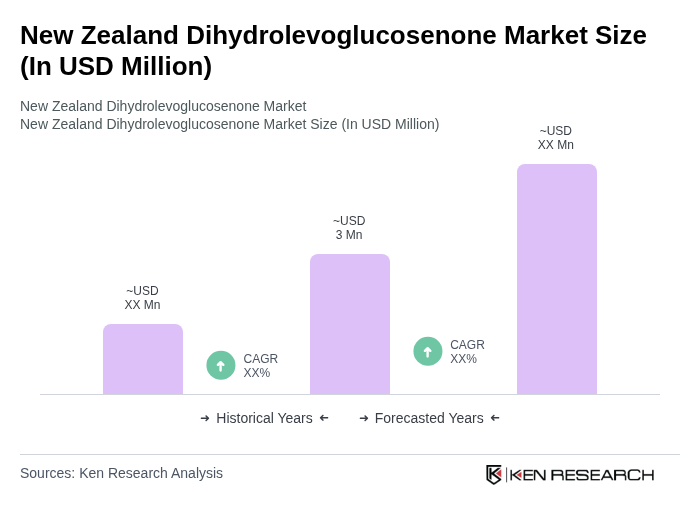
The New Zealand Dihydrolevoglucosenone market is valued at approximately USD 3 million, reflecting a growing demand for bio-based solvents and intermediates in industries such as pharmaceuticals and agrochemicals.

What makes us stand out is that our consultants follow Robust, Refine and Result (RRR) methodology. Robust for clear definitions, approaches and sanity checking, Refine for differentiating respondents' facts and opinions, and Result for presenting data with story.

We have set a benchmark in the industry by offering our clients with syndicated and customized market research reports featuring coverage of entire market as well as meticulous research and analyst insights.

While we don't replace traditional research, we flip the method upside down. Our dual approach of Top Bottom & Bottom Top ensures quality deliverable by not just verifying company fundamentals but also looking at the sector and macroeconomic factors.

With one step in the future, our research team constantly tries to show you the bigger picture. We help with some of the tough questions you may encounter along the way: How is the industry positioned? Best marketing channel? KPI's of competitors? By aligning every element, we help maximize success.

Our report gives you instant access to the answers and sources that other companies might choose to hide. We elaborate each steps of research methodology we have used and showcase you the sample size to earn your trust.

If you need any support, we are here! We pride ourselves on universe strength, data quality, and quick, friendly, and professional service.













