Region:Asia
Author(s):Geetanshi
Product Code:KRAE2198
Pages:85
Published On:February 2026
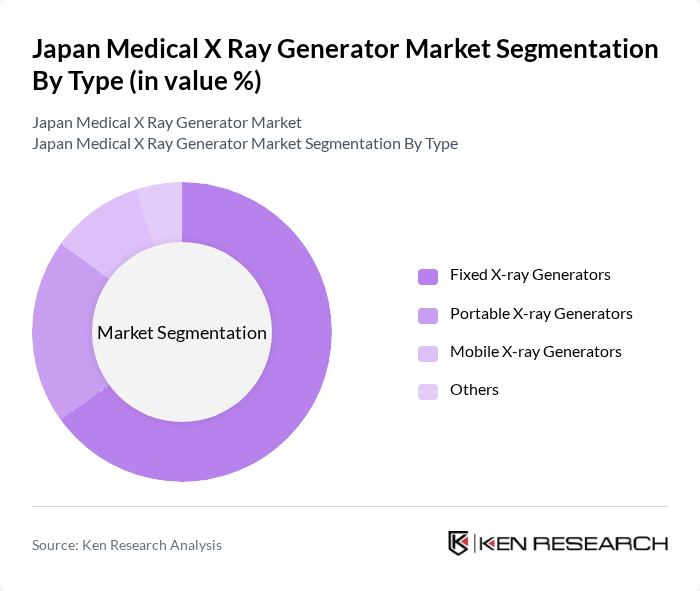
By Type:The market is segmented into Fixed X-ray Generators, Portable X-ray Generators, Mobile X-ray Generators, and Others. Among these, Fixed X-ray Generators dominate the market due to their widespread use in hospitals and diagnostic centers for routine imaging procedures. Their reliability, high image quality, and ability to handle a large volume of patients make them the preferred choice for healthcare providers. Portable and Mobile X-ray Generators are gaining traction, especially in emergency and rural healthcare settings, but Fixed X-ray Generators remain the leading segment.
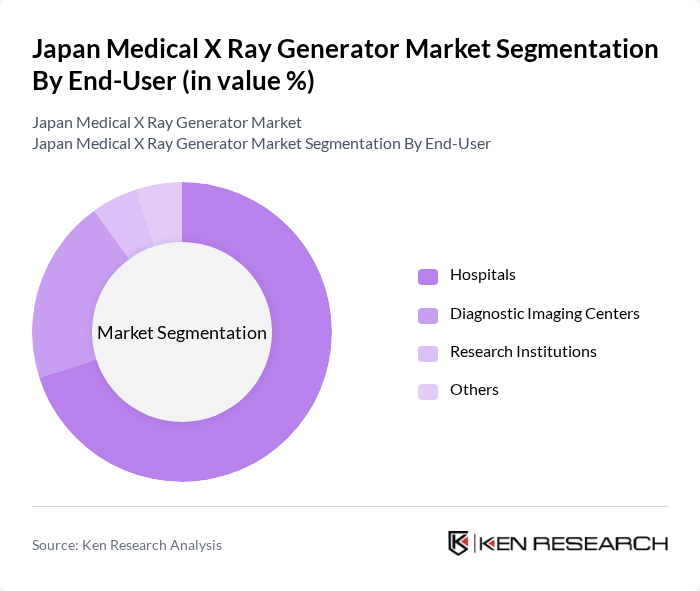
By End-User:The market is categorized into Hospitals, Diagnostic Imaging Centers, Research Institutions, and Others. Hospitals are the leading end-users, accounting for a significant share of the market due to their extensive imaging needs for patient diagnosis and treatment. The increasing number of hospitals and the expansion of existing facilities contribute to the high demand for medical X-ray generators. Diagnostic Imaging Centers also play a crucial role, providing specialized imaging services, but hospitals remain the dominant segment.
The Japan Medical X Ray Generator Market is characterized by a dynamic mix of regional and international players. Leading participants such as Siemens Healthineers, GE Healthcare, Philips Healthcare, Canon Medical Systems, Fujifilm Medical Systems, Hitachi Medical Corporation, Shimadzu Corporation, Toshiba Medical Systems, Carestream Health, Agfa HealthCare, Hologic, Inc., Mindray Medical International Limited, Varian Medical Systems, Neusoft Medical Systems, Samsung Medison contribute to innovation, geographic expansion, and service delivery in this space.
The future of the Japan Medical X-ray generator market appears promising, driven by ongoing technological innovations and a growing emphasis on patient-centered care. The integration of AI and machine learning in imaging processes is expected to enhance diagnostic capabilities significantly. Additionally, the expansion of telemedicine services will likely increase the demand for portable X-ray devices, facilitating remote diagnostics. As healthcare facilities continue to modernize, the market is poised for substantial growth, addressing the evolving needs of the population.
| Segment | Sub-Segments |
|---|---|
| By Type | Fixed X-ray Generators Portable X-ray Generators Mobile X-ray Generators Others |
| By End-User | Hospitals Diagnostic Imaging Centers Research Institutions Others |
| By Application | General Radiography Dental Imaging Mammography Others |
| By Technology | Digital X-ray Technology Analog X-ray Technology Computed Radiography Others |
| By Region | Kanto Region Kansai Region Chubu Region Others |
| By Distribution Channel | Direct Sales Distributors Online Sales Others |
| By Customer Type | Public Sector Private Sector Non-Profit Organizations Others |
| Scope Item/Segment | Sample Size | Target Respondent Profiles |
|---|---|---|
| Public Hospital Radiology Departments | 120 | Radiology Directors, Chief Technologists |
| Private Clinic Imaging Facilities | 80 | Clinic Owners, Imaging Technicians |
| Medical Equipment Distributors | 50 | Sales Managers, Product Specialists |
| Biomedical Engineering Firms | 60 | Lead Engineers, Product Development Managers |
| Healthcare Policy Makers | 40 | Health Administrators, Policy Analysts |
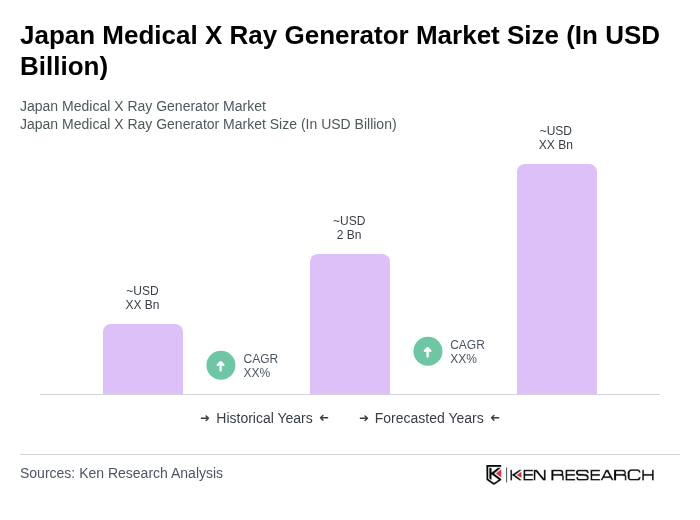
The Japan Medical X-ray Generator market is valued at approximately USD 2 billion, driven by advancements in medical imaging technology, an aging population, and the rising prevalence of chronic diseases necessitating diagnostic imaging services.

What makes us stand out is that our consultants follow Robust, Refine and Result (RRR) methodology. Robust for clear definitions, approaches and sanity checking, Refine for differentiating respondents' facts and opinions, and Result for presenting data with story.

We have set a benchmark in the industry by offering our clients with syndicated and customized market research reports featuring coverage of entire market as well as meticulous research and analyst insights.

While we don't replace traditional research, we flip the method upside down. Our dual approach of Top Bottom & Bottom Top ensures quality deliverable by not just verifying company fundamentals but also looking at the sector and macroeconomic factors.

With one step in the future, our research team constantly tries to show you the bigger picture. We help with some of the tough questions you may encounter along the way: How is the industry positioned? Best marketing channel? KPI's of competitors? By aligning every element, we help maximize success.

Our report gives you instant access to the answers and sources that other companies might choose to hide. We elaborate each steps of research methodology we have used and showcase you the sample size to earn your trust.

If you need any support, we are here! We pride ourselves on universe strength, data quality, and quick, friendly, and professional service.













