Region:Asia
Author(s):Geetanshi
Product Code:KRAE1607
Pages:99
Published On:March 2026
By Type:The market is segmented into various types of sequencing services, including Whole Genome Sequencing, Targeted Sequencing, RNA Sequencing, Metagenomic Sequencing, and Others. Each of these sub-segments plays a crucial role in addressing specific research and clinical needs.
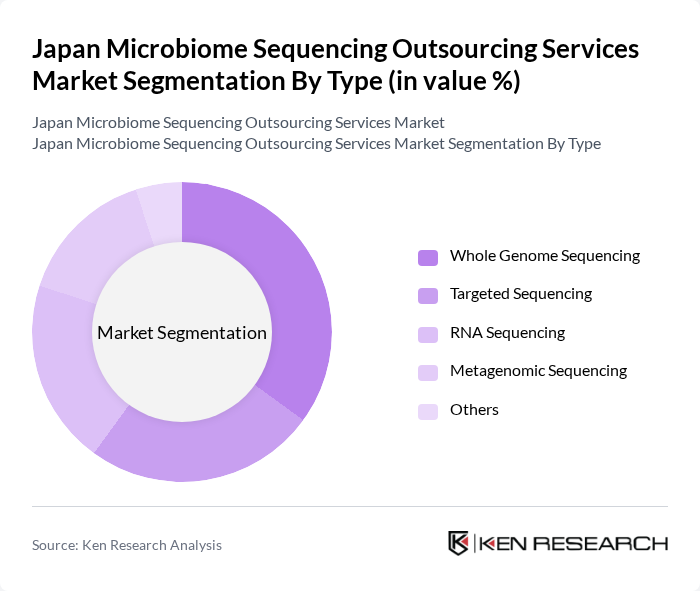
The Whole Genome Sequencing sub-segment dominates the market due to its comprehensive approach in analyzing entire genomes, which is essential for understanding complex diseases and developing targeted therapies. The increasing adoption of this technology in both academic and clinical settings, driven by advancements in sequencing technologies and decreasing costs, has led to its significant market share. Targeted Sequencing follows closely, as it provides focused insights into specific genes of interest, making it a preferred choice for many researchers and clinicians.
By End-User:The market is segmented based on end-users, including Academic Research Institutions, Pharmaceutical Companies, Clinical Laboratories, Biotechnology Firms, and Others. Each end-user category has distinct requirements and applications for microbiome sequencing services.
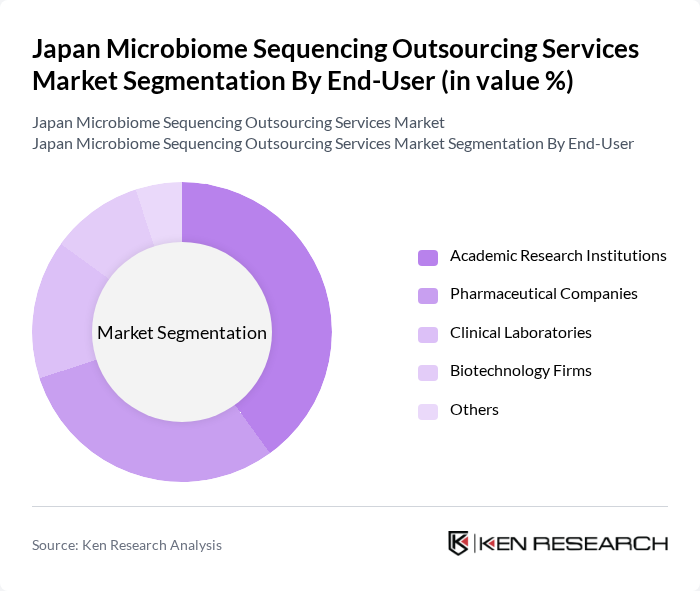
Academic Research Institutions lead the market as they are at the forefront of microbiome research, driving innovation and discovery. Their need for comprehensive sequencing services to explore microbial diversity and its implications in health and disease significantly contributes to their market share. Pharmaceutical Companies are also key players, utilizing microbiome data for drug development and personalized medicine, thus maintaining a substantial presence in the market.
The Japan Microbiome Sequencing Outsourcing Services Market is characterized by a dynamic mix of regional and international players. Leading participants such as Illumina, Inc., Thermo Fisher Scientific Inc., BGI Genomics Co., Ltd., QIAGEN N.V., Eurofins Scientific SE, Genomatix Software GmbH, Novogene Co., Ltd., Fulgent Genetics, Inc., Zymo Research Corp., BaseClear B.V., MedGenome Inc., Ginkgo Bioworks, Inc., 10x Genomics, Inc., Adaptive Biotechnologies Corporation, Genomatix Software GmbH contribute to innovation, geographic expansion, and service delivery in this space.
The future of the microbiome sequencing outsourcing services market in Japan appears promising, driven by ongoing technological advancements and increasing investment in research. As the healthcare sector continues to embrace personalized medicine, the demand for microbiome analysis is expected to rise. Furthermore, collaborations between academic institutions and private companies are likely to enhance research capabilities, leading to innovative applications in diagnostics and therapeutics, thereby expanding the market landscape significantly.
| Segment | Sub-Segments |
|---|---|
| By Type | Whole Genome Sequencing Targeted Sequencing RNA Sequencing Metagenomic Sequencing Others |
| By End-User | Academic Research Institutions Pharmaceutical Companies Clinical Laboratories Biotechnology Firms Others |
| By Application | Disease Diagnosis Drug Development Nutritional Analysis Environmental Monitoring Others |
| By Sample Type | Stool Samples Blood Samples Saliva Samples Tissue Samples Others |
| By Service Type | Data Analysis Services Sequencing Services Consultation Services Bioinformatics Services Others |
| By Region | Kanto Kansai Chubu Kyushu Others |
| By Research Focus | Clinical Microbiology Environmental Microbiology Industrial Microbiology Agricultural Microbiology Others |
| Scope Item/Segment | Sample Size | Target Respondent Profiles |
|---|---|---|
| Clinical Microbiome Research | 100 | Clinical Researchers, Lab Directors |
| Biotechnology Firms | 80 | Business Development Managers, R&D Heads |
| Academic Institutions | 70 | Professors, Graduate Researchers |
| Healthcare Providers | 60 | Healthcare Administrators, Pathologists |
| Government Research Bodies | 50 | Policy Makers, Research Coordinators |
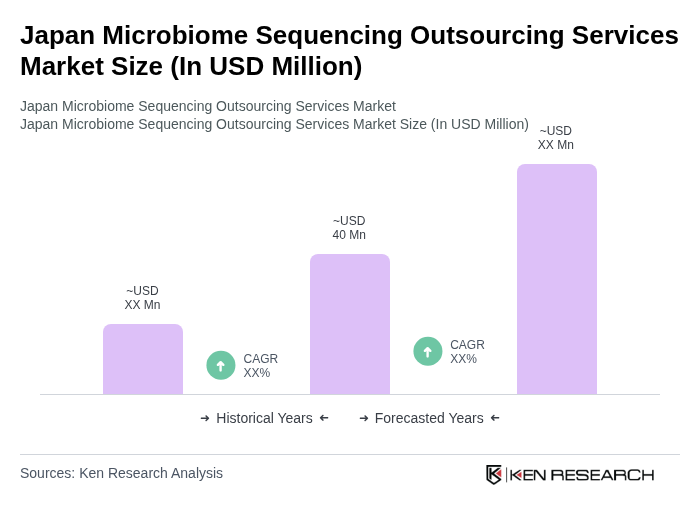
The Japan Microbiome Sequencing Outsourcing Services Market is valued at approximately USD 40 million, reflecting a five-year historical analysis that highlights growth driven by chronic disease prevalence and advancements in sequencing technologies.

What makes us stand out is that our consultants follow Robust, Refine and Result (RRR) methodology. Robust for clear definitions, approaches and sanity checking, Refine for differentiating respondents' facts and opinions, and Result for presenting data with story.

We have set a benchmark in the industry by offering our clients with syndicated and customized market research reports featuring coverage of entire market as well as meticulous research and analyst insights.

While we don't replace traditional research, we flip the method upside down. Our dual approach of Top Bottom & Bottom Top ensures quality deliverable by not just verifying company fundamentals but also looking at the sector and macroeconomic factors.

With one step in the future, our research team constantly tries to show you the bigger picture. We help with some of the tough questions you may encounter along the way: How is the industry positioned? Best marketing channel? KPI's of competitors? By aligning every element, we help maximize success.

Our report gives you instant access to the answers and sources that other companies might choose to hide. We elaborate each steps of research methodology we have used and showcase you the sample size to earn your trust.

If you need any support, we are here! We pride ourselves on universe strength, data quality, and quick, friendly, and professional service.













