Region:Asia
Author(s):Geetanshi
Product Code:KRAA5434
Pages:89
Published On:January 2026
By Type:
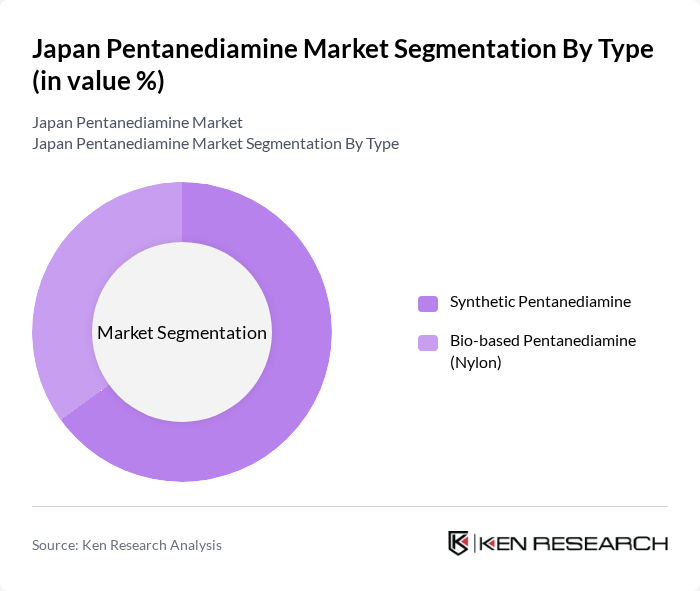
The pentanediamine market is segmented into two primary types: Synthetic Pentanediamine and Bio-based Pentanediamine (Nylon). Synthetic Pentanediamine is widely used due to its cost-effectiveness and availability, making it the dominant subsegment. The demand for Bio-based Pentanediamine is growing as consumers and industries shift towards sustainable practices, particularly in the production of eco-friendly nylon products. This trend is driven by increasing environmental awareness and regulatory pressures, leading to a balanced growth between both types.
By Application:
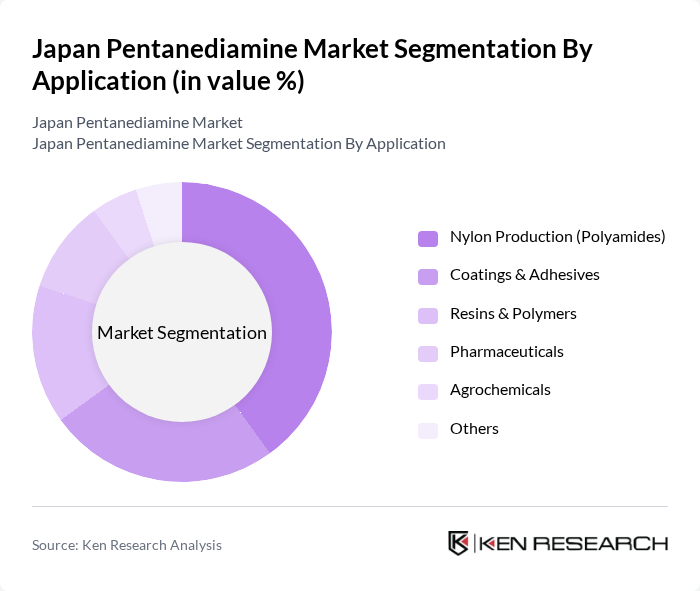
The applications of pentanediamine include Nylon Production (Polyamides), Coatings & Adhesives, Resins & Polymers, Pharmaceuticals, Agrochemicals, and Others. The Nylon Production segment is the largest, driven by the textile and automotive industries' demand for high-performance materials. Coatings & Adhesives and Resins & Polymers are also significant, as they cater to various industrial needs. The growing pharmaceutical and agrochemical sectors further enhance the market's diversity, with increasing applications in drug formulation and crop protection.
The Japan Pentanediamine Market is characterized by a dynamic mix of regional and international players. Leading participants such as Mitsubishi Gas Chemical Company, Toray Industries, Inc., Asahi Kasei Corporation, BASF Japan Ltd., Ube Industries, Ltd., Sumitomo Chemical Co., Ltd., Nippon Shokubai Co., Ltd., Daicel Corporation, Kyoei Chemical Co., Ltd., Showa Denko K.K., Kureha Corporation, Chisso Corporation, JNC Corporation, Tosoh Corporation, Kuraray Co., Ltd. contribute to innovation, geographic expansion, and service delivery in this space.
The future of the pentanediamine market in Japan appears promising, driven by technological advancements and a growing emphasis on sustainability. As manufacturers invest in innovative production methods, the efficiency and cost-effectiveness of pentanediamine production are expected to improve. Additionally, the increasing collaboration between industry players and research institutions will likely lead to the development of new applications, further expanding the market. The focus on eco-friendly products will also shape the industry's trajectory, aligning with global sustainability goals.
| Segment | Sub-Segments |
|---|---|
| By Type | Synthetic Pentanediamine Bio-based Pentanediamine (Nylon) |
| By Application | Nylon Production (Polyamides) Coatings & Adhesives Resins & Polymers Pharmaceuticals Agrochemicals Others |
| By End-Use Industry | Automotive Electronics Textile Construction Chemical Healthcare Others |
| By Function | Intermediate Corrosion Inhibitor |
| Scope Item/Segment | Sample Size | Target Respondent Profiles |
|---|---|---|
| Pentanediamine in Textile Applications | 120 | Textile Manufacturers, Product Development Managers |
| Pentanediamine in Automotive Coatings | 100 | Automotive Engineers, Quality Control Managers |
| Pentanediamine in Pharmaceutical Formulations | 80 | Pharmaceutical R&D Managers, Regulatory Affairs Specialists |
| Pentanediamine in Adhesives and Sealants | 110 | Adhesive Manufacturers, Application Engineers |
| Pentanediamine Supply Chain Insights | 70 | Supply Chain Managers, Procurement Officers |
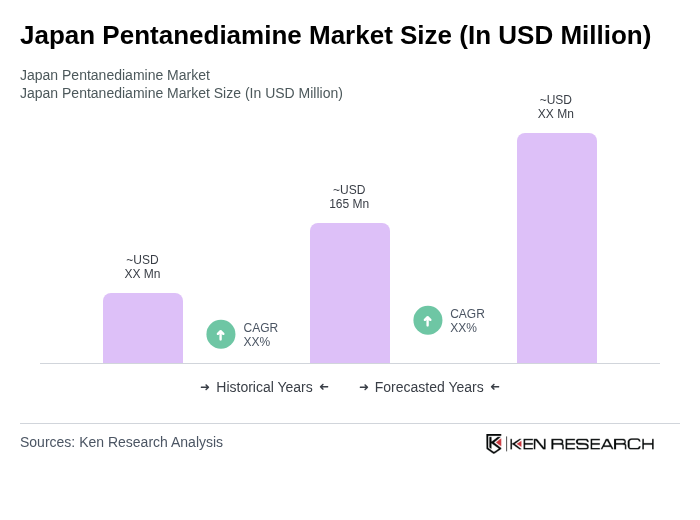
The Japan Pentanediamine market is valued at approximately USD 165 million, reflecting a five-year historical analysis. This growth is largely driven by the increasing demand for polyamides in various applications, particularly in textiles and automotive components.

What makes us stand out is that our consultants follow Robust, Refine and Result (RRR) methodology. Robust for clear definitions, approaches and sanity checking, Refine for differentiating respondents' facts and opinions, and Result for presenting data with story.

We have set a benchmark in the industry by offering our clients with syndicated and customized market research reports featuring coverage of entire market as well as meticulous research and analyst insights.

While we don't replace traditional research, we flip the method upside down. Our dual approach of Top Bottom & Bottom Top ensures quality deliverable by not just verifying company fundamentals but also looking at the sector and macroeconomic factors.

With one step in the future, our research team constantly tries to show you the bigger picture. We help with some of the tough questions you may encounter along the way: How is the industry positioned? Best marketing channel? KPI's of competitors? By aligning every element, we help maximize success.

Our report gives you instant access to the answers and sources that other companies might choose to hide. We elaborate each steps of research methodology we have used and showcase you the sample size to earn your trust.

If you need any support, we are here! We pride ourselves on universe strength, data quality, and quick, friendly, and professional service.













