Region:Middle East
Author(s):Rebecca
Product Code:KRAC8466
Pages:87
Published On:November 2025
By Type:
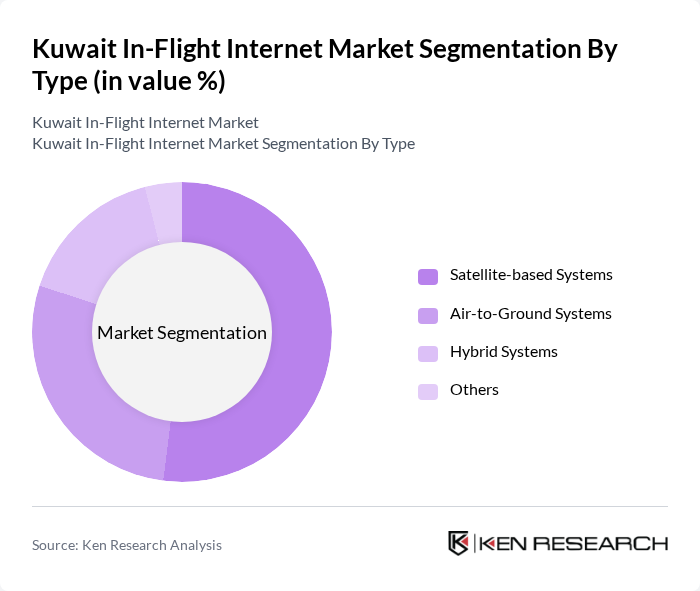
The segmentation by type includes Satellite-based Systems, Air-to-Ground Systems, Hybrid Systems, and Others. Among these, Satellite-based Systems dominate the market due to their ability to provide global coverage and high-speed internet connectivity, which is essential for long-haul flights. The increasing demand for uninterrupted internet access during flights has led airlines to invest heavily in satellite technology, making it the preferred choice for in-flight internet services. Air-to-Ground Systems are gaining traction as a cost-effective alternative for regional flights, while hybrid systems combining both technologies are emerging as a balanced solution for enhanced coverage and speed.
By End-User:
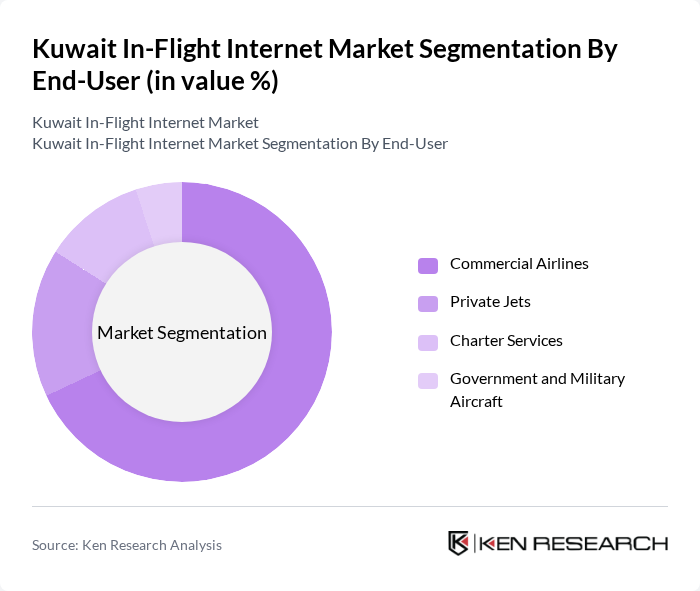
This segmentation includes Commercial Airlines, Private Jets, Charter Services, and Government and Military Aircraft. The Commercial Airlines segment leads the market, driven by the increasing number of passengers seeking connectivity during flights. Airlines are focusing on enhancing customer experience by offering reliable in-flight internet services, which has resulted in a significant investment in this segment. Business travelers increasingly demand seamless internet access to maintain productivity during flights, further strengthening this segment's dominance.
The Kuwait In-Flight Internet Market is characterized by a dynamic mix of regional and international players. Leading participants such as Kuwait Airways, Jazeera Airways, Ooredoo Kuwait, Zain Group, Viasat Inc., Gogo Inc., Inmarsat, Honeywell Aerospace, Thales Group, Panasonic Avionics Corporation, SITAONAIR, Global Eagle Entertainment, SES S.A., Intelsat, Hughes Network Systems contribute to innovation, geographic expansion, and service delivery in this space.
The future of the in-flight internet market in Kuwait appears promising, driven by technological advancements and increasing passenger expectations. As airlines invest in modern aircraft equipped with advanced connectivity solutions, the demand for high-speed internet is expected to rise. Additionally, the integration of 5G technology will enhance service delivery, providing passengers with seamless connectivity. However, addressing regulatory challenges and infrastructure costs will be crucial for sustained growth in this sector, ensuring that airlines can meet evolving consumer needs effectively.
| Segment | Sub-Segments |
|---|---|
| By Type | Satellite-based Systems Air-to-Ground Systems Hybrid Systems Others |
| By End-User | Commercial Airlines Private Jets Charter Services Government and Military Aircraft |
| By Service Model | Subscription-based Services Pay-per-Use Services Bundled Services (Wi-Fi + Entertainment) Freemium Models |
| By Customer Segment | Business Travelers Leisure Travelers Government and Military Airline Crew and Staff |
| By Geographic Coverage | Domestic Flights International Flights Regional Flights (GCC and MENA) Long-haul Flights |
| By Pricing Strategy | Premium Pricing Competitive Pricing Value-based Pricing Freemium and Sponsored Access |
| By Technology Integration | In-flight Entertainment Systems Integration Mobile Connectivity Solutions (Wi-Fi & GSM) IoT Integration (Aircraft Operations) Cybersecurity Solutions |
| Scope Item/Segment | Sample Size | Target Respondent Profiles |
|---|---|---|
| Airline Executives | 50 | Chief Technology Officers, In-Flight Service Managers |
| Frequent Flyers | 120 | Business Travelers, Leisure Travelers |
| IT Managers from Airlines | 40 | Network Engineers, Systems Administrators |
| Telecommunications Providers | 40 | Business Development Managers, Technical Sales Representatives |
| Regulatory Authorities | 20 | Policy Makers, Compliance Officers |
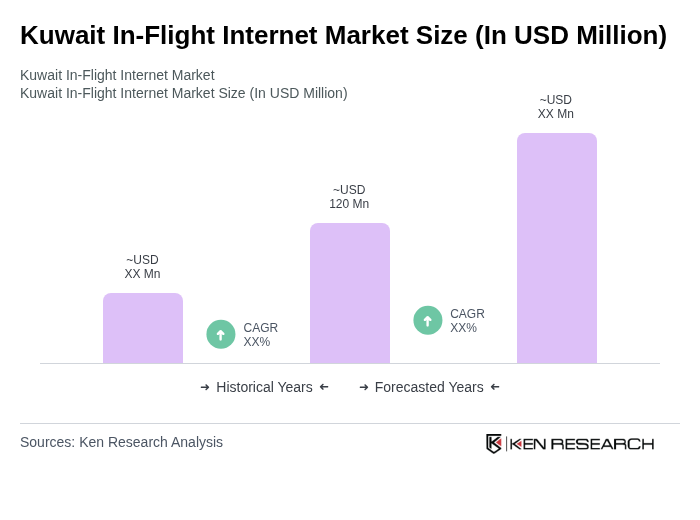
The Kuwait In-Flight Internet Market is valued at approximately USD 120 million, reflecting a significant growth driven by increasing demand for connectivity among travelers, advancements in technology, and rising air travel in the region.

What makes us stand out is that our consultants follow Robust, Refine and Result (RRR) methodology. Robust for clear definitions, approaches and sanity checking, Refine for differentiating respondents' facts and opinions, and Result for presenting data with story.

We have set a benchmark in the industry by offering our clients with syndicated and customized market research reports featuring coverage of entire market as well as meticulous research and analyst insights.

While we don't replace traditional research, we flip the method upside down. Our dual approach of Top Bottom & Bottom Top ensures quality deliverable by not just verifying company fundamentals but also looking at the sector and macroeconomic factors.

With one step in the future, our research team constantly tries to show you the bigger picture. We help with some of the tough questions you may encounter along the way: How is the industry positioned? Best marketing channel? KPI's of competitors? By aligning every element, we help maximize success.

Our report gives you instant access to the answers and sources that other companies might choose to hide. We elaborate each steps of research methodology we have used and showcase you the sample size to earn your trust.

If you need any support, we are here! We pride ourselves on universe strength, data quality, and quick, friendly, and professional service.













