Region:Middle East
Author(s):Geetanshi
Product Code:KRAC9573
Pages:85
Published On:November 2025
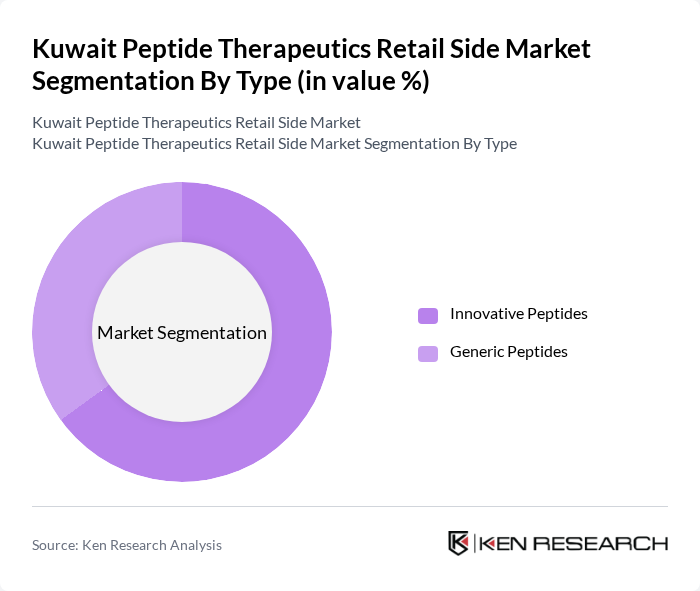
By Type:The market is segmented into Innovative Peptides and Generic Peptides. Innovative peptides are gaining traction due to their targeted therapeutic effects, increasing adoption in personalized medicine, and the growing pipeline of novel peptide drugs. Generic peptides remain significant as cost-effective alternatives, but face increasing competition from new, branded therapies as the market shifts toward advanced treatment modalities.
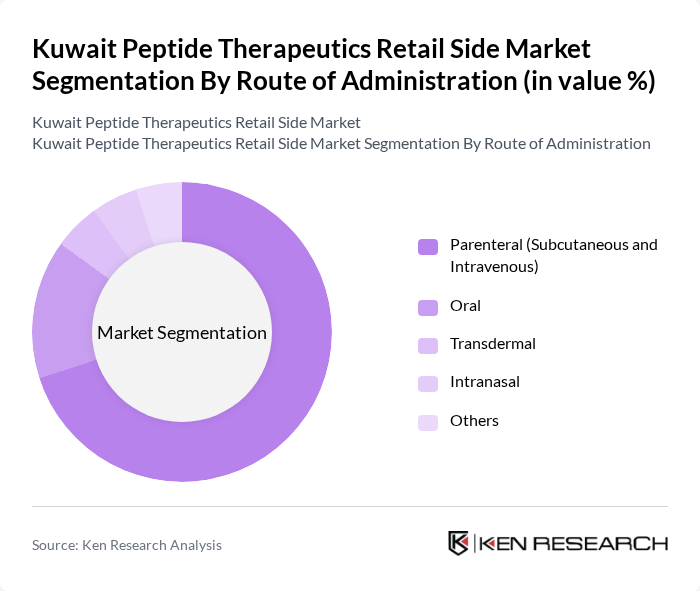
By Route of Administration:The market is categorized into Parenteral (Subcutaneous and Intravenous), Oral, Transdermal, Intranasal, and Others. Parenteral administration remains the most prevalent due to its rapid onset and high bioavailability, particularly for acute and hospital-based therapies. However, oral peptide therapeutics are gaining momentum, driven by advancements in formulation technologies that improve stability and patient compliance. Transdermal and intranasal routes are emerging as alternatives for specific indications, reflecting ongoing innovation in drug delivery.
The Kuwait Peptide Therapeutics Retail Side Market is characterized by a dynamic mix of regional and international players. Leading participants such as Kuwait Pharmaceutical Industries Company (KPI), Gulf Pharmaceutical Industries (Julphar), Hikma Pharmaceuticals, Pharmazone Pharmacy, United Pharmaceuticals Company (UPC), Kuwait Life Sciences Company (KLSC), Al-Dawaa Pharmacies, Al-Salam International Hospital, Kuwait Hospital, Al-Bayan Medical Company, Advanced Technology Company (ATC), YIACO Medical Company, Kuwait University Health Sciences Center, Al-Farwaniya Hospital, and Kuwait Institute for Scientific Research (KISR) contribute to innovation, geographic expansion, and service delivery in this space.
The future of the peptide therapeutics market in Kuwait appears promising, driven by increasing healthcare investments and a growing emphasis on innovative treatment solutions. As the government enhances healthcare infrastructure, the market is expected to witness a surge in the availability of peptide therapies. Additionally, the integration of digital health technologies is likely to facilitate better patient engagement and adherence, further propelling market growth. The focus on preventive healthcare will also encourage the development of novel peptide formulations tailored to specific health needs.
| Segment | Sub-Segments |
|---|---|
| By Type | Innovative Peptides Generic Peptides |
| By Route of Administration | Parenteral (Subcutaneous and Intravenous) Oral Transdermal Intranasal Others |
| By Therapeutic Area | Oncology Metabolic Disorders Cardiovascular Diseases Infectious Diseases Gastrointestinal Disorders Neurological Disorders Dermatological Disorders Others |
| By Distribution Channel | Retail Pharmacies Online Pharmacies Hospital Pharmacies Direct Sales Specialized Distributors Others |
| By Synthesis Technology | Solid-Phase Peptide Synthesis (SPPS) Hybrid Synthesis Methods Recombinant Technology Others |
| Scope Item/Segment | Sample Size | Target Respondent Profiles |
|---|---|---|
| Retail Pharmacy Insights | 100 | Pharmacy Managers, Retail Pharmacists |
| Healthcare Provider Perspectives | 80 | Physicians, Nurse Practitioners |
| Patient Experience with Peptide Therapies | 60 | Patients using peptide therapeutics, Caregivers |
| Market Access and Reimbursement | 50 | Health Economists, Policy Makers |
| Clinical Research Feedback | 40 | Clinical Researchers, Academic Professionals |
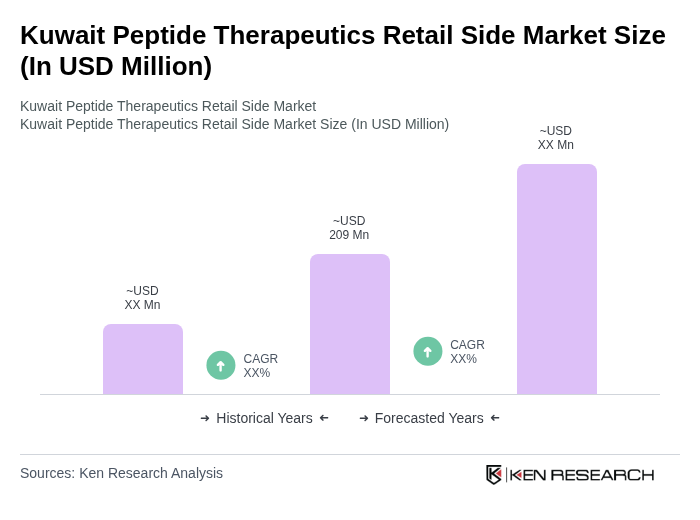
The Kuwait Peptide Therapeutics Retail Side Market is valued at approximately USD 209 million, reflecting a five-year historical analysis. This growth is driven by the increasing prevalence of chronic diseases and advancements in peptide synthesis technologies.

What makes us stand out is that our consultants follow Robust, Refine and Result (RRR) methodology. Robust for clear definitions, approaches and sanity checking, Refine for differentiating respondents' facts and opinions, and Result for presenting data with story.

We have set a benchmark in the industry by offering our clients with syndicated and customized market research reports featuring coverage of entire market as well as meticulous research and analyst insights.

While we don't replace traditional research, we flip the method upside down. Our dual approach of Top Bottom & Bottom Top ensures quality deliverable by not just verifying company fundamentals but also looking at the sector and macroeconomic factors.

With one step in the future, our research team constantly tries to show you the bigger picture. We help with some of the tough questions you may encounter along the way: How is the industry positioned? Best marketing channel? KPI's of competitors? By aligning every element, we help maximize success.

Our report gives you instant access to the answers and sources that other companies might choose to hide. We elaborate each steps of research methodology we have used and showcase you the sample size to earn your trust.

If you need any support, we are here! We pride ourselves on universe strength, data quality, and quick, friendly, and professional service.













