Region:Middle East
Author(s):Dev
Product Code:KRAC4881
Pages:81
Published On:October 2025
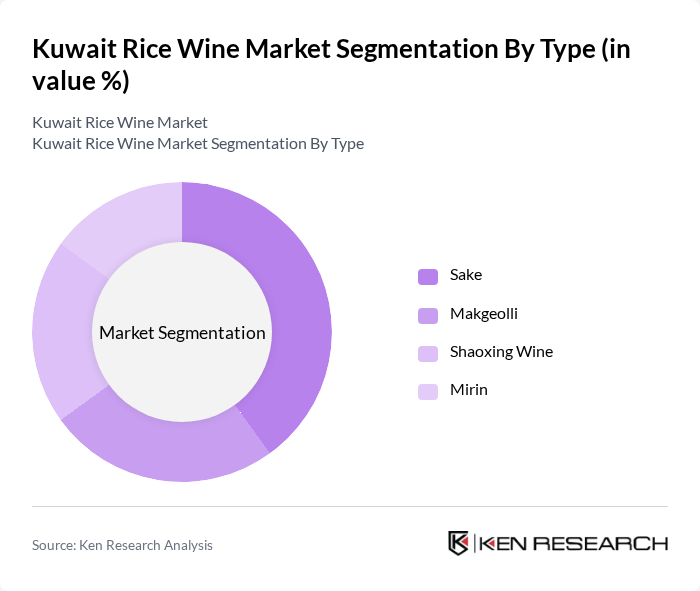
By Type:The rice wine market can be segmented into various types, including Sake, Makgeolli, Shaoxing Wine, and Mirin. Each type has unique characteristics and caters to different consumer preferences. Sake, a Japanese rice wine, is particularly popular among consumers looking for premium alcoholic beverages, while Makgeolli, a Korean rice wine, appeals to those seeking a more traditional and rustic experience. Shaoxing Wine, a Chinese rice wine, is often used in cooking, and Mirin, a sweet rice wine, is favored for its culinary applications.
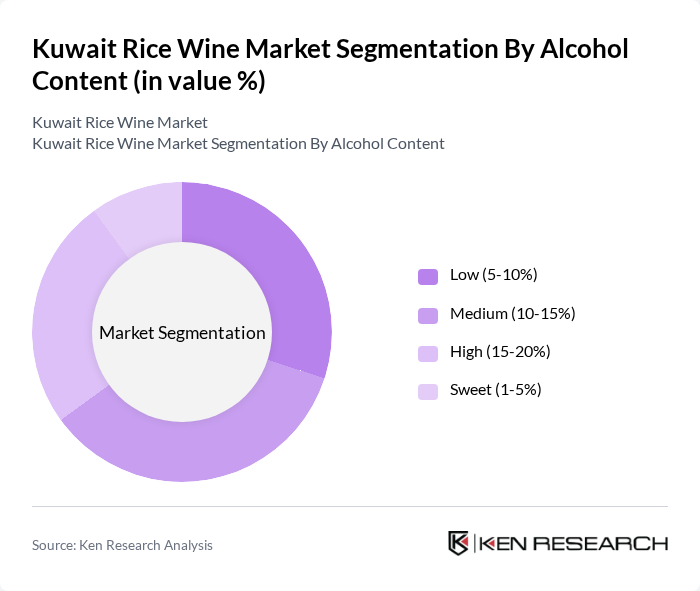
By Alcohol Content:The market can also be segmented based on alcohol content, which includes Low (5-10%), Medium (10-15%), High (15-20%), and Sweet (1-5%). Low alcohol content wines are gaining popularity among health-conscious consumers, while medium and high alcohol content wines cater to those seeking a stronger beverage experience. Sweet rice wines are often used in desserts and culinary applications, appealing to a niche market.
The Kuwait Rice Wine Market is characterized by a dynamic mix of regional and international players. Leading participants such as Gekkeikan Sake Co., Ltd., Kikkoman Corporation, Ozeki Corporation, Takara Sake USA Inc., Chongqing Jiangxiaobai Liquor Co., Ltd., Zhejiang Guyuelongshan Shaoxing Wine Co., Ltd., Kooksoondang Brewery Co., Ltd., Lotte Chilsung Beverage Co., Ltd., Jinro Co., Ltd., SakeOne Corporation, HiteJinro Co., Ltd., Asahi Shuzo Co., Ltd. (Dassai), Hakutsuru Sake Brewing Co., Ltd., Sudo Honke, Inc., Kato Kichibee Shoten Co., Ltd. contribute to innovation, geographic expansion, and service delivery in this space.
The future of the rice wine market in Kuwait appears promising, driven by evolving consumer preferences and a growing appreciation for diverse alcoholic beverages. As disposable incomes rise and the hospitality sector expands, rice wine is likely to gain traction among both locals and expatriates. Additionally, innovative marketing strategies and collaborations with local establishments can enhance visibility, while educational campaigns can bridge the awareness gap, fostering a more informed consumer base eager to explore this unique beverage.
| Segment | Sub-Segments |
|---|---|
| By Type | Sake Makgeolli Shaoxing Wine Mirin |
| By Alcohol Content | Low (5-10%) Medium (10-15%) High (15-20%) Sweet (1-5%) |
| By End-Use | Culinary Applications Beverage Consumption |
| By Packaging Type | Bottles Cans Tetra Packs |
| By Distribution Channel | Supermarkets and Hypermarkets Specialty Stores Online Retail |
| By Price Segment | Premium Mid-priced Mass/Economy |
| By Others | Niche Products Seasonal Offerings |
| Scope Item/Segment | Sample Size | Target Respondent Profiles |
|---|---|---|
| Consumer Preferences for Rice Wine | 120 | Regular Alcohol Consumers, Cultural Enthusiasts |
| Retail Distribution Channels | 60 | Retail Managers, Beverage Buyers |
| Production Insights from Local Manufacturers | 40 | Production Managers, Quality Control Officers |
| Market Trends and Regulatory Impact | 50 | Industry Analysts, Regulatory Experts |
| Consumer Awareness and Education | 70 | Marketing Professionals, Brand Managers |
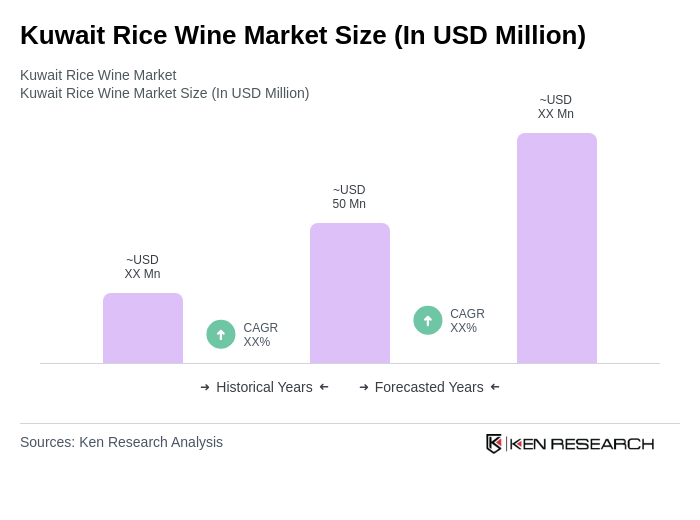
The Kuwait Rice Wine Market is valued at approximately USD 50 million, reflecting a growing interest in diverse alcoholic beverages, particularly among expatriates and the younger population in Kuwait.

What makes us stand out is that our consultants follow Robust, Refine and Result (RRR) methodology. Robust for clear definitions, approaches and sanity checking, Refine for differentiating respondents' facts and opinions, and Result for presenting data with story.

We have set a benchmark in the industry by offering our clients with syndicated and customized market research reports featuring coverage of entire market as well as meticulous research and analyst insights.

While we don't replace traditional research, we flip the method upside down. Our dual approach of Top Bottom & Bottom Top ensures quality deliverable by not just verifying company fundamentals but also looking at the sector and macroeconomic factors.

With one step in the future, our research team constantly tries to show you the bigger picture. We help with some of the tough questions you may encounter along the way: How is the industry positioned? Best marketing channel? KPI's of competitors? By aligning every element, we help maximize success.

Our report gives you instant access to the answers and sources that other companies might choose to hide. We elaborate each steps of research methodology we have used and showcase you the sample size to earn your trust.

If you need any support, we are here! We pride ourselves on universe strength, data quality, and quick, friendly, and professional service.













