About the Report
Base Year 2024Indonesia Beverage Packaging Market Overview
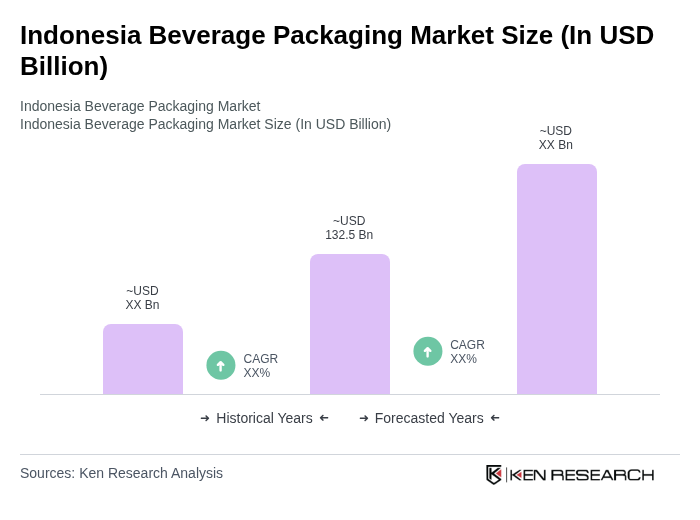
- The Indonesia Beverage Packaging Market is valued at USD 132.5 billion, based on a five-year historical analysis. This growth is primarily driven by the increasing demand for packaged beverages, urbanization, and a shift towards convenience in consumer lifestyles. The rise in disposable income, rapid expansion of convenience retail, and changing consumer preferences towards ready-to-drink products have further fueled the market's expansion. Additionally, the growth of e-commerce and direct-to-consumer beverage channels is driving demand for durable and innovative packaging solutions that can withstand shipping and handling requirements .
- Key cities such as Jakarta, Surabaya, and Bandung dominate the market due to their high population density and significant consumer spending power. Jakarta, being the capital, serves as a central hub for beverage manufacturers and distributors, while Surabaya and Bandung contribute to the growing demand for diverse beverage options, including soft drinks, bottled water, and health beverages. The concentration of urban consumers in these cities accelerates the adoption of new packaging formats and sustainability initiatives .
- The Regulation of the Minister of Environment and Forestry Number 75 of 2019 on Roadmap of Waste Reduction by Producers, issued by the Ministry of Environment and Forestry, mandates beverage producers to implement eco-friendly packaging strategies. This regulation requires manufacturers to transition towards biodegradable and recyclable packaging solutions, including the use of paper, glass, and aluminum-based materials, and to develop waste reduction programs, thereby enhancing environmental responsibility within the sector .
Indonesia Beverage Packaging Market Segmentation
By Type:The beverage packaging market can be segmented into various types, including Plastic (PET, HDPE, LDPE), Glass, Metal (Aluminum, Steel), Paperboard, and Others (Flexible, Composite). Each type serves different consumer needs and preferences, with plastic packaging being the most widely used due to its lightweight and cost-effective nature. The market is witnessing a shift towards lightweight and flexible packaging formats, such as pouches and thin-wall containers, which offer reduced material use, lower logistics costs, and improved portability for on-the-go consumption .
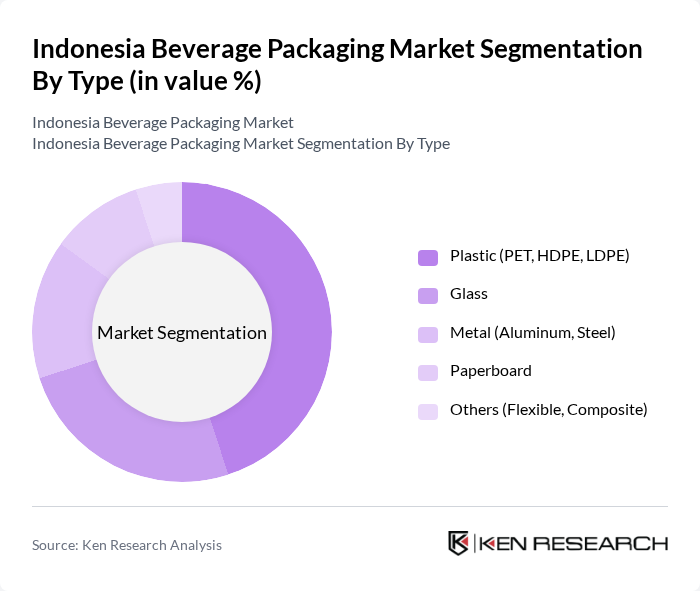
The dominant sub-segment in the beverage packaging market is Plastic (PET, HDPE, LDPE), which accounts for a significant portion of the market share. This dominance is attributed to the lightweight, durable, and cost-effective nature of plastic materials, making them ideal for various beverage types. Additionally, the convenience of plastic packaging aligns with the fast-paced lifestyle of consumers, further driving its popularity. The versatility of plastic in design and functionality also contributes to its leading position in the market. The market is also seeing rapid adoption of recyclable PET bottles and compostable alternatives in response to sustainability trends .
By End-User:The beverage packaging market is segmented by end-user into Soft Drinks, Alcoholic Beverages, Dairy Products, Juices and Non-Alcoholic Beverages, and Functional and Health Beverages. Each segment reflects the diverse preferences of consumers and the growing trend towards health-conscious products. The rise in functional beverages and plant-based drinks is driving the need for specialized packaging solutions that offer enhanced protection and shelf appeal .
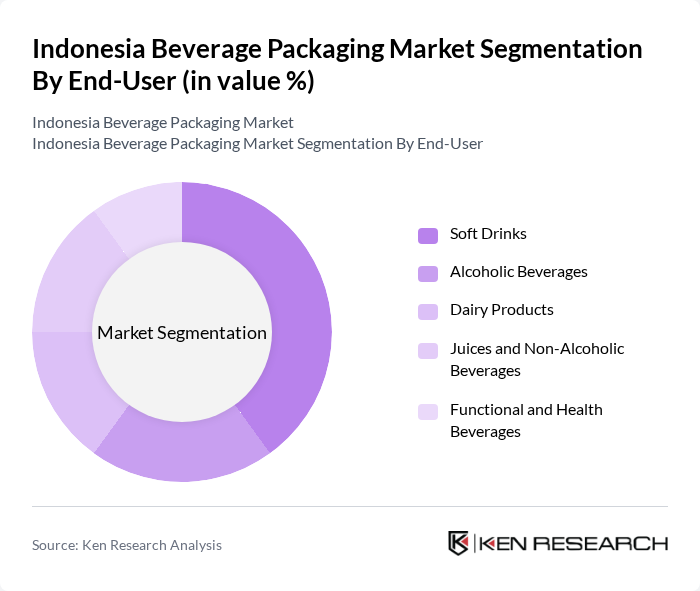
The Soft Drinks segment is the leading sub-segment in the beverage packaging market, driven by the high consumption rates of carbonated and non-carbonated drinks among consumers. The increasing trend of on-the-go consumption and the popularity of convenience packaging have significantly contributed to the growth of this segment. Additionally, the introduction of innovative flavors and healthier options in the soft drinks category has further enhanced its market presence. The segment also benefits from the expansion of e-commerce and direct-to-consumer channels, which require robust and attractive packaging solutions .
Indonesia Beverage Packaging Market Competitive Landscape
The Indonesia Beverage Packaging Market is characterized by a dynamic mix of regional and international players. Leading participants such as Tetra Pak Indonesia, Amcor Indonesia, Coca-Cola Amatil Indonesia, Danone Indonesia, Nestlé Indonesia, Unilever Indonesia, Oji Fibre Solutions Indonesia, Mondi Indonesia, Ball Corporation Indonesia, Huhtamäki Indonesia, Sealed Air Indonesia, Smurfit Kappa Indonesia, Berry Global Indonesia, Crown Holdings Indonesia, PT. Trias Sentosa Tbk, PT. Indah Kiat Pulp & Paper Tbk, PT. Sinar Sosro, PT. Mayora Indah Tbk, PT. Indofood Sukses Makmur Tbk, PT. Garudafood Putra Putri Jaya Tbk contribute to innovation, geographic expansion, and service delivery in this space.
Indonesia Beverage Packaging Market Industry Analysis
Growth Drivers
- Increasing Demand for Sustainable Packaging Solutions:The Indonesian beverage packaging market is witnessing a significant shift towards sustainable solutions, driven by a growing consumer preference for eco-friendly products. In future, the demand for biodegradable packaging is projected to reach 1.3 million tons, reflecting a 15% increase from previous periods. This trend is supported by government initiatives promoting sustainability, with the Ministry of Environment and Forestry allocating approximately IDR 600 billion for waste management programs, further encouraging the adoption of sustainable materials.
- Growth in the Beverage Industry:The beverage industry in Indonesia is expected to grow substantially, with production volumes projected to reach 22 billion liters in future, up from 18 billion liters previously. This growth is fueled by rising disposable incomes, which are anticipated to increase by 7% annually, leading to higher consumption of packaged beverages. Additionally, the expansion of local and international beverage brands is driving demand for innovative packaging solutions that cater to diverse consumer preferences.
- Rising Consumer Awareness about Packaging Safety:As health consciousness rises among Indonesian consumers, there is an increasing demand for safe and non-toxic packaging materials. In future, it is estimated that 75% of consumers will prioritize packaging safety when purchasing beverages, up from 60% previously. This shift is prompting manufacturers to invest in safer packaging technologies, with an estimated IDR 350 billion allocated for research and development in safe packaging materials, ensuring compliance with health regulations.
Market Challenges
- High Cost of Sustainable Materials:The transition to sustainable packaging materials poses a significant challenge due to their higher costs compared to traditional options. In future, the average cost of biodegradable materials is expected to be 35% higher than conventional plastics. This price disparity can hinder small and medium-sized enterprises from adopting eco-friendly solutions, limiting their competitiveness in the market. Consequently, many companies may opt for cheaper, less sustainable alternatives, undermining environmental efforts.
- Regulatory Compliance Complexities:Navigating the regulatory landscape in Indonesia presents challenges for beverage packaging manufacturers. In future, over 60 new regulations related to packaging safety and environmental impact are anticipated to be introduced. Compliance with these regulations requires significant investment in quality control and documentation processes, which can strain resources, particularly for smaller firms. This complexity may deter innovation and slow down the adoption of advanced packaging technologies in the market.
Indonesia Beverage Packaging Market Future Outlook
The future of the Indonesian beverage packaging market appears promising, driven by a strong emphasis on sustainability and technological innovation. As consumer preferences continue to evolve, companies are likely to invest in advanced packaging solutions that enhance product safety and environmental responsibility. The integration of smart packaging technologies is expected to gain traction, providing brands with opportunities to engage consumers more effectively. Additionally, the collaboration between packaging manufacturers and beverage producers will foster customized solutions that meet specific market demands, further propelling growth.
Market Opportunities
- Expansion of E-commerce and Online Beverage Sales:The rise of e-commerce in Indonesia presents a significant opportunity for beverage packaging. With online beverage sales projected to reach IDR 12 trillion in future, packaging solutions that ensure product integrity during transit will be in high demand. This trend encourages innovation in packaging design, focusing on durability and convenience for consumers purchasing beverages online.
- Innovations in Biodegradable Packaging:The increasing focus on sustainability is driving innovations in biodegradable packaging materials. In future, investments in research and development for biodegradable solutions are expected to exceed IDR 250 billion. This investment will likely lead to the introduction of new materials that offer comparable performance to traditional plastics, creating a competitive edge for companies that prioritize eco-friendly packaging options.
Scope of the Report
| Segment | Sub-Segments |
|---|---|
| By Type | Plastic (PET, HDPE, LDPE) Glass Metal (Aluminum, Steel) Paperboard Others (Flexible, Composite) |
| By End-User | Soft Drinks Alcoholic Beverages Dairy Products Juices and Non-Alcoholic Beverages Functional and Health Beverages |
| By Material | Recyclable Materials Biodegradable Materials Composite Materials Others |
| By Design | Rigid Packaging Flexible Packaging Others |
| By Distribution Channel | Online Retail Supermarkets/Hypermarkets Convenience Stores Specialty Beverage Shops Foodservice and Vending |
| By Region | Java Sumatra Bali Kalimantan Others |
| By Application | Retail Packaging Bulk Packaging Industrial Packaging Others |
Key Target Audience
Investors and Venture Capitalist Firms
Government and Regulatory Bodies (e.g., Ministry of Industry, Ministry of Trade)
Manufacturers and Producers
Distributors and Retailers
Packaging Material Suppliers
Environmental Organizations
Logistics and Supply Chain Companies
Trade Associations and Industry Groups
Players Mentioned in the Report:
Tetra Pak Indonesia
Amcor Indonesia
Coca-Cola Amatil Indonesia
Danone Indonesia
Nestle Indonesia
Unilever Indonesia
Oji Fibre Solutions Indonesia
Mondi Indonesia
Ball Corporation Indonesia
Huhtamaki Indonesia
Sealed Air Indonesia
Smurfit Kappa Indonesia
Berry Global Indonesia
Crown Holdings Indonesia
PT. Trias Sentosa Tbk
PT. Indah Kiat Pulp & Paper Tbk
PT. Sinar Sosro
PT. Mayora Indah Tbk
PT. Indofood Sukses Makmur Tbk
PT. Garudafood Putra Putri Jaya Tbk
Table of Contents
Market Assessment Phase
1. Executive Summary and Approach
2. Indonesia Beverage Packaging Market Overview
2.1 Key Insights and Strategic Recommendations
2.2 Indonesia Beverage Packaging Market Overview
2.3 Definition and Scope
2.4 Evolution of Market Ecosystem
2.5 Timeline of Key Regulatory Milestones
2.6 Value Chain & Stakeholder Mapping
2.7 Business Cycle Analysis
2.8 Policy & Incentive Landscape
3. Indonesia Beverage Packaging Market Analysis
3.1 Growth Drivers
3.1.1 Increasing demand for sustainable packaging solutions
3.1.2 Growth in the beverage industry
3.1.3 Rising consumer awareness about packaging safety
3.1.4 Technological advancements in packaging materials
3.2 Market Challenges
3.2.1 High cost of sustainable materials
3.2.2 Regulatory compliance complexities
3.2.3 Competition from alternative packaging solutions
3.2.4 Fluctuating raw material prices
3.3 Market Opportunities
3.3.1 Expansion of e-commerce and online beverage sales
3.3.2 Innovations in biodegradable packaging
3.3.3 Increasing investment in recycling technologies
3.3.4 Collaborations with beverage manufacturers for customized solutions
3.4 Market Trends
3.4.1 Shift towards eco-friendly packaging materials
3.4.2 Growth of smart packaging technologies
3.4.3 Increased focus on brand differentiation through packaging
3.4.4 Adoption of lightweight packaging solutions
3.5 Government Regulation
3.5.1 Implementation of plastic waste management policies
3.5.2 Regulations on food safety and packaging standards
3.5.3 Incentives for using recyclable materials
3.5.4 Compliance requirements for import/export of packaging materials
4. SWOT Analysis
5. Stakeholder Analysis
6. Porter's Five Forces Analysis
7. Indonesia Beverage Packaging Market Size, 2019-2024
7.1 By Value
7.2 By Volume
7.3 By Average Selling Price
8. Indonesia Beverage Packaging Market Segmentation
8.1 By Type
8.1.1 Plastic (PET, HDPE, LDPE)
8.1.2 Glass
8.1.3 Metal (Aluminum, Steel)
8.1.4 Paperboard
8.1.5 Others (Flexible, Composite)
8.2 By End-User
8.2.1 Soft Drinks
8.2.2 Alcoholic Beverages
8.2.3 Dairy Products
8.2.4 Juices and Non-Alcoholic Beverages
8.2.5 Functional and Health Beverages
8.3 By Material
8.3.1 Recyclable Materials
8.3.2 Biodegradable Materials
8.3.3 Composite Materials
8.3.4 Others
8.4 By Design
8.4.1 Rigid Packaging
8.4.2 Flexible Packaging
8.4.3 Others
8.5 By Distribution Channel
8.5.1 Online Retail
8.5.2 Supermarkets/Hypermarkets
8.5.3 Convenience Stores
8.5.4 Specialty Beverage Shops
8.5.5 Foodservice and Vending
8.6 By Region
8.6.1 Java
8.6.2 Sumatra
8.6.3 Bali
8.6.4 Kalimantan
8.6.5 Others
8.7 By Application
8.7.1 Retail Packaging
8.7.2 Bulk Packaging
8.7.3 Industrial Packaging
8.7.4 Others
9. Indonesia Beverage Packaging Market Competitive Analysis
9.1 Market Share of Key Players
9.2 Cross Comparison of Key Players
9.2.1 Company Name
9.2.2 Group Size (Large, Medium, or Small as per industry convention)
9.2.3 Revenue Growth Rate (YoY %)
9.2.4 Market Penetration Rate (%)
9.2.5 Customer Retention Rate (%)
9.2.6 Pricing Strategy (Premium, Value, Economy)
9.2.7 Product Diversification Index (Number of SKUs/Segments)
9.2.8 Supply Chain Efficiency (Lead Time, Inventory Turnover)
9.2.9 Brand Recognition Score (Consumer Survey Index)
9.2.10 Sustainability Index (Certifications, % Recycled Content, ESG Score)
9.3 SWOT Analysis of Top Players
9.4 Pricing Analysis
9.5 Detailed Profile of Major Companies
9.5.1 Tetra Pak Indonesia
9.5.2 Amcor Indonesia
9.5.3 Coca-Cola Amatil Indonesia
9.5.4 Danone Indonesia
9.5.5 Nestlé Indonesia
9.5.6 Unilever Indonesia
9.5.7 Oji Fibre Solutions Indonesia
9.5.8 Mondi Indonesia
9.5.9 Ball Corporation Indonesia
9.5.10 Huhtamäki Indonesia
9.5.11 Sealed Air Indonesia
9.5.12 Smurfit Kappa Indonesia
9.5.13 Berry Global Indonesia
9.5.14 Crown Holdings Indonesia
9.5.15 PT. Trias Sentosa Tbk
9.5.16 PT. Indah Kiat Pulp & Paper Tbk
9.5.17 PT. Sinar Sosro
9.5.18 PT. Mayora Indah Tbk
9.5.19 PT. Indofood Sukses Makmur Tbk
9.5.20 PT. Garudafood Putra Putri Jaya Tbk
10. Indonesia Beverage Packaging Market End-User Analysis
10.1 Procurement Behavior of Key Ministries
10.1.1 Government procurement policies
10.1.2 Budget allocation for beverage packaging
10.1.3 Supplier selection criteria
10.1.4 Compliance with sustainability goals
10.2 Corporate Spend on Infrastructure & Energy
10.2.1 Investment in packaging technology
10.2.2 Budget for sustainable packaging initiatives
10.2.3 Spending on recycling programs
10.2.4 Partnerships with packaging suppliers
10.3 Pain Point Analysis by End-User Category
10.3.1 Cost pressures in packaging
10.3.2 Quality assurance challenges
10.3.3 Regulatory compliance issues
10.3.4 Supply chain disruptions
10.4 User Readiness for Adoption
10.4.1 Awareness of sustainable packaging options
10.4.2 Willingness to invest in new technologies
10.4.3 Training needs for staff
10.4.4 Feedback mechanisms for improvement
10.5 Post-Deployment ROI and Use Case Expansion
10.5.1 Measurement of cost savings
10.5.2 Impact on brand image
10.5.3 Customer satisfaction metrics
10.5.4 Opportunities for product line expansion
11. Indonesia Beverage Packaging Market Future Size, 2025-2030
11.1 By Value
11.2 By Volume
11.3 By Average Selling Price
Go-To-Market Strategy Phase
1. Whitespace Analysis + Business Model Canvas
1.1 Market gaps identification
1.2 Value proposition development
1.3 Revenue model exploration
1.4 Customer segmentation analysis
1.5 Competitive landscape overview
1.6 Key partnerships identification
1.7 Risk assessment
2. Marketing and Positioning Recommendations
2.1 Branding strategies
2.2 Product USPs
2.3 Target audience definition
2.4 Communication strategy
2.5 Digital marketing approach
2.6 Trade marketing initiatives
2.7 Performance metrics
3. Distribution Plan
3.1 Urban retail strategies
3.2 Rural NGO tie-ups
3.3 E-commerce distribution channels
3.4 Logistics and supply chain management
3.5 Partnership with distributors
3.6 Inventory management practices
3.7 Performance tracking
4. Channel & Pricing Gaps
4.1 Underserved routes
4.2 Pricing bands analysis
4.3 Competitor pricing strategies
4.4 Customer willingness to pay
4.5 Price elasticity assessment
4.6 Discounting strategies
4.7 Pricing optimization techniques
5. Unmet Demand & Latent Needs
5.1 Category gaps identification
5.2 Consumer segments analysis
5.3 Product development opportunities
5.4 Market entry strategies
5.5 Customer feedback integration
5.6 Innovation pipeline development
5.7 Future trends forecasting
6. Customer Relationship
6.1 Loyalty programs design
6.2 After-sales service strategies
6.3 Customer engagement initiatives
6.4 Feedback collection methods
6.5 Relationship management tools
6.6 Performance evaluation
6.7 Customer retention strategies
7. Value Proposition
7.1 Sustainability initiatives
7.2 Integrated supply chains
7.3 Cost-benefit analysis
7.4 Unique selling points
7.5 Customer value creation
7.6 Competitive advantage development
7.7 Market positioning
8. Key Activities
8.1 Regulatory compliance
8.2 Branding efforts
8.3 Distribution setup
8.4 Marketing campaigns
8.5 Training and development
8.6 Performance monitoring
8.7 Continuous improvement processes
9. Entry Strategy Evaluation
9.1 Domestic Market Entry Strategy
9.1.1 Product mix considerations
9.1.2 Pricing band analysis
9.1.3 Packaging innovations
9.2 Export Entry Strategy
9.2.1 Target countries identification
9.2.2 Compliance roadmap development
10. Entry Mode Assessment
10.1 Joint Ventures
10.2 Greenfield Investments
10.3 Mergers & Acquisitions
10.4 Distributor Model
10.5 Risk assessment
10.6 Strategic fit evaluation
10.7 Long-term sustainability considerations
11. Capital and Timeline Estimation
11.1 Capital requirements analysis
11.2 Timelines for market entry
11.3 Budget allocation strategies
11.4 Financial forecasting
11.5 Funding sources identification
11.6 Cost management strategies
11.7 Performance metrics
12. Control vs Risk Trade-Off
12.1 Ownership considerations
12.2 Partnerships evaluation
12.3 Risk management strategies
12.4 Control mechanisms
12.5 Long-term implications
12.6 Stakeholder engagement
12.7 Performance tracking
13. Profitability Outlook
13.1 Breakeven analysis
13.2 Long-term sustainability strategies
13.3 Financial health assessment
13.4 Revenue growth projections
13.5 Cost reduction strategies
13.6 Market share growth
13.7 Investment returns
14. Potential Partner List
14.1 Distributors identification
14.2 Joint Ventures opportunities
14.3 Acquisition targets
14.4 Strategic alliances
14.5 Partnership evaluation criteria
14.6 Risk assessment
14.7 Long-term collaboration strategies
15. Execution Roadmap
15.1 Phased Plan for Market Entry
15.1.1 Market Setup
1
Research Methodology
Phase 1: Approach1
Desk Research
- Analysis of industry reports from local beverage associations and market research firms
- Review of government publications on packaging regulations and sustainability initiatives
- Examination of trade journals and articles focusing on innovations in beverage packaging
Primary Research
- Interviews with packaging engineers and product managers from leading beverage companies
- Surveys with distributors and retailers to understand packaging preferences and trends
- Field visits to manufacturing plants to observe packaging processes and technologies
Validation & Triangulation
- Cross-validation of findings through multiple data sources including sales data and consumer surveys
- Triangulation of insights from industry experts and market analysts
- Sanity checks through feedback from focus groups comprising industry stakeholders
Phase 2: Market Size Estimation1
Top-down Assessment
- Estimation of total beverage market size and segmentation by packaging type (e.g., glass, plastic, metal)
- Analysis of historical growth rates and trends in beverage consumption and packaging
- Incorporation of macroeconomic factors influencing packaging demand, such as urbanization and disposable income
Bottom-up Modeling
- Collection of data on production volumes from major beverage manufacturers
- Cost analysis of packaging materials and their impact on overall product pricing
- Volume x cost calculations to derive revenue estimates for each packaging segment
Forecasting & Scenario Analysis
- Development of forecasting models based on historical data and market trends
- Scenario analysis considering factors such as environmental regulations and consumer preferences for sustainable packaging
- Projections for market growth through 2030 under various economic conditions
Phase 3: CATI Sample Composition1
| Scope Item/Segment | Sample Size | Target Respondent Profiles |
|---|---|---|
| Soft Drink Packaging Trends | 120 | Product Managers, Marketing Directors |
| Alcoholic Beverage Packaging Innovations | 100 | Brand Managers, Packaging Engineers |
| Dairy and Juice Packaging Solutions | 80 | Operations Managers, Quality Assurance Heads |
| Eco-friendly Packaging Initiatives | 70 | Sustainability Officers, R&D Managers |
| Retail Packaging Preferences | 90 | Retail Buyers, Supply Chain Managers |
Frequently Asked Questions
What is the current value of the Indonesia Beverage Packaging Market?
The Indonesia Beverage Packaging Market is valued at approximately USD 132.5 billion, driven by increasing demand for packaged beverages, urbanization, and consumer preferences for convenience and ready-to-drink products.
What factors are driving growth in the Indonesia Beverage Packaging Market?
Which cities are the main contributors to the Indonesia Beverage Packaging Market?
What regulations impact the Indonesia Beverage Packaging Market?
Other Regional/Country Reports
Malaysia Beverage Packaging Market
KSA Beverage Packaging Market
APAC Beverage Packaging Market
SEA Beverage Packaging Market
Other Adjacent Reports
Kuwait Beverage Manufacturing Market
KSA sustainable packaging market report Size, Share, Growth Drivers, Trends, Opportunities & Forecast 2025–2030Bahrain Plastic Packaging Market Report Size Share Growth Drivers Trends Opportunities & Forecast 2025–2030Qatar glass packaging market analysis size, share, growth drivers, trends, opportunities & forecast 2025–2030Asia Pacific Metal Packaging Market Outlook to 2030: Size, Share, Growth and TrendsUS Paperboard Packaging Market Outlook to 2020 - Expanding E-tail industry and Usage of Recycled Paper to Fuel the Demand for Paper ProductsKSA food packaging market size, share, growth drivers, trends, opportunities & forecast 2025–2030UAE E-commerce Packaging Market
Singapore Recycling and Waste Management Market
Singapore Labeling and Printing Market
Why Buy From Us?

What makes us stand out is that our consultants follow Robust, Refine and Result (RRR) methodology. Robust for clear definitions, approaches and sanity checking, Refine for differentiating respondents' facts and opinions, and Result for presenting data with story.

We have set a benchmark in the industry by offering our clients with syndicated and customized market research reports featuring coverage of entire market as well as meticulous research and analyst insights.

While we don't replace traditional research, we flip the method upside down. Our dual approach of Top Bottom & Bottom Top ensures quality deliverable by not just verifying company fundamentals but also looking at the sector and macroeconomic factors.

With one step in the future, our research team constantly tries to show you the bigger picture. We help with some of the tough questions you may encounter along the way: How is the industry positioned? Best marketing channel? KPI's of competitors? By aligning every element, we help maximize success.

Our report gives you instant access to the answers and sources that other companies might choose to hide. We elaborate each steps of research methodology we have used and showcase you the sample size to earn your trust.

If you need any support, we are here! We pride ourselves on universe strength, data quality, and quick, friendly, and professional service.