Region:Asia
Author(s):Rebecca
Product Code:KRAE4264
Pages:88
Published On:March 2026
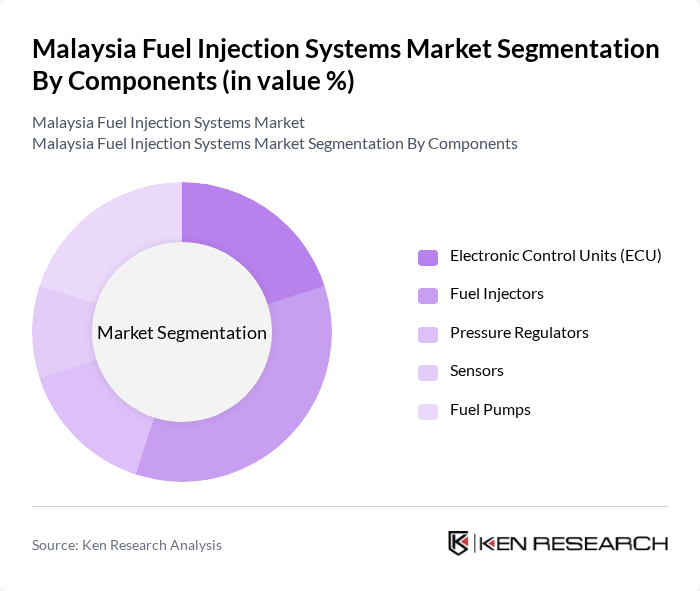
By Components:The components of fuel injection systems include Electronic Control Units (ECU), Fuel Injectors, Pressure Regulators, Sensors, and Fuel Pumps. Among these, Fuel Injectors are the most significant sub-segment, driven by the increasing demand for high-performance engines and the need for precise fuel delivery. With the growing use of electronic fuel injection and gasoline direct injection systems globally, injectors and high-pressure pumps are key focus areas as OEMs seek better combustion efficiency and lower emissions in line with energy-efficient and low-emission vehicle trends.
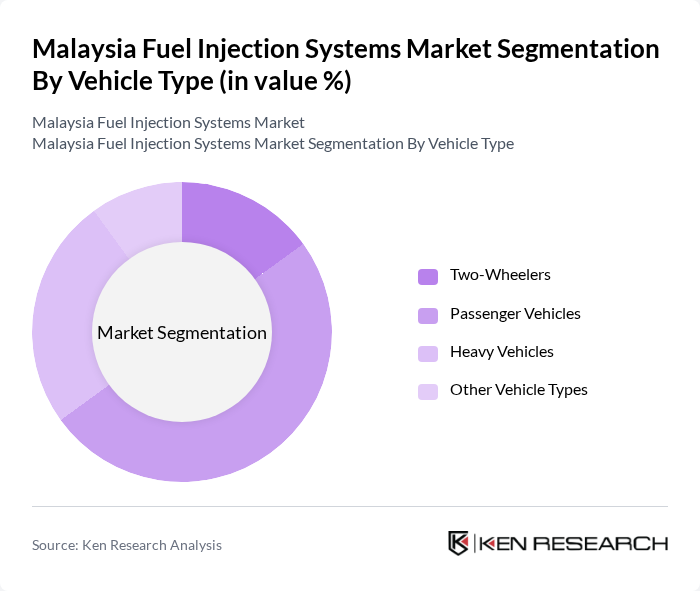
By Vehicle Type:The market is segmented into Two-Wheelers, Passenger Vehicles, Heavy Vehicles, and Other Vehicle Types. Passenger Vehicles dominate the market due to the high volume of sales and the increasing consumer preference for personal mobility. Rising urbanization, higher disposable income, and supportive national policies for Energy Efficient Vehicles have led to growth in passenger car ownership, reinforcing demand for electronically controlled fuel injection systems in this segment.
The Malaysia Fuel Injection Systems Market is characterized by a dynamic mix of regional and international players. Leading participants such as Bosch, Denso, Delphi Technologies, Continental, Hitachi Automotive Systems, Magneti Marelli, Siemens, Weichai Power, Caterpillar, Valeo, Parker Hannifin, Eaton Corporation, Woodward, Inc., Infineon Technologies, Standard Motor Products contribute to innovation, geographic expansion, and service delivery in this space.
The future of the Malaysia fuel injection systems market appears promising, driven by a growing emphasis on sustainability and technological advancements. As the automotive industry shifts towards hybrid and electric vehicles, the demand for innovative fuel injection technologies is expected to rise. Additionally, government support for research and development in cleaner technologies will likely foster further advancements, creating a conducive environment for market growth and attracting investments in the sector.
| Segment | Sub-Segments |
|---|---|
| By Components | Electronic Control Units (ECU) Fuel Injectors Pressure Regulators Sensors Fuel Pumps |
| By Vehicle Type | Two-Wheelers Passenger Vehicles Heavy Vehicles Other Vehicle Types |
| By Engine Type | Gasoline Engines Diesel Engines Other Engine Types |
| By Technology | Direct Injection Multi-Point Injection |
| By Sales Channel | Original Equipment Manufacturer (OEM) Aftermarket |
| By Region | Central Region Northern Region Southern Region Eastern Region Others |
| Scope Item/Segment | Sample Size | Target Respondent Profiles |
|---|---|---|
| OEM Fuel Injection Systems | 120 | Product Managers, R&D Engineers |
| Aftermarket Fuel Injection Solutions | 90 | Service Center Owners, Automotive Technicians |
| Fuel Injection Technology Trends | 60 | Industry Analysts, Automotive Engineers |
| Regulatory Impact on Fuel Systems | 50 | Compliance Officers, Policy Makers |
| Consumer Preferences in Fuel Efficiency | 80 | Car Owners, Automotive Enthusiasts |
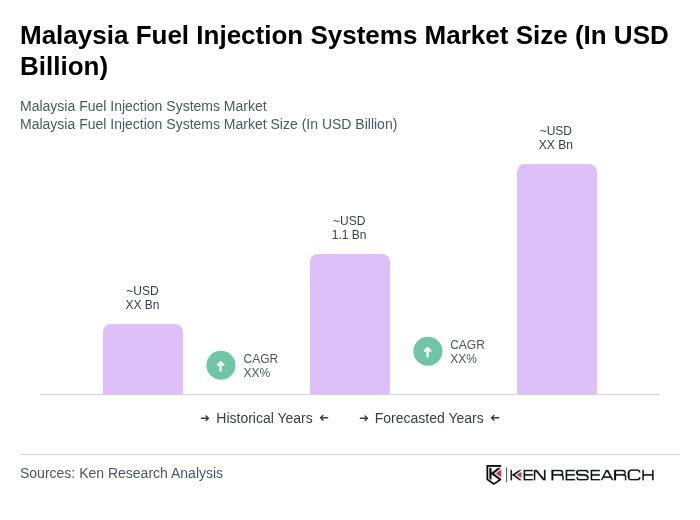
The Malaysia Fuel Injection Systems Market is valued at approximately USD 1.1 billion, reflecting a significant growth trend driven by the demand for fuel-efficient vehicles and advancements in automotive technology.

What makes us stand out is that our consultants follow Robust, Refine and Result (RRR) methodology. Robust for clear definitions, approaches and sanity checking, Refine for differentiating respondents' facts and opinions, and Result for presenting data with story.

We have set a benchmark in the industry by offering our clients with syndicated and customized market research reports featuring coverage of entire market as well as meticulous research and analyst insights.

While we don't replace traditional research, we flip the method upside down. Our dual approach of Top Bottom & Bottom Top ensures quality deliverable by not just verifying company fundamentals but also looking at the sector and macroeconomic factors.

With one step in the future, our research team constantly tries to show you the bigger picture. We help with some of the tough questions you may encounter along the way: How is the industry positioned? Best marketing channel? KPI's of competitors? By aligning every element, we help maximize success.

Our report gives you instant access to the answers and sources that other companies might choose to hide. We elaborate each steps of research methodology we have used and showcase you the sample size to earn your trust.

If you need any support, we are here! We pride ourselves on universe strength, data quality, and quick, friendly, and professional service.













