About the Report
Base Year 2024Malaysia Recycled Copper Market Overview
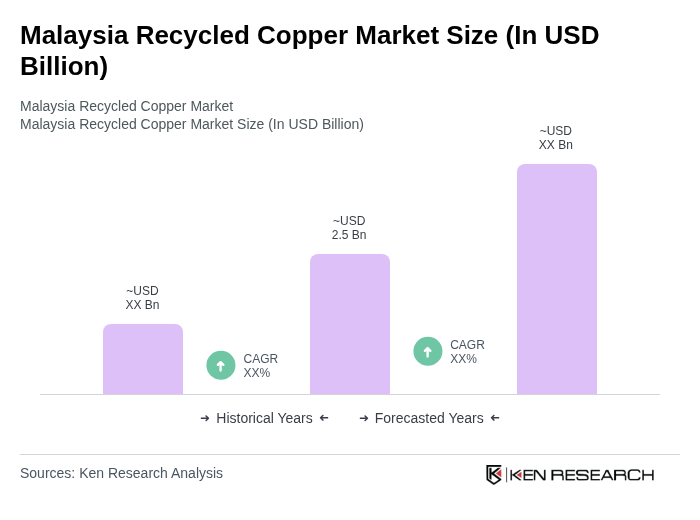
- The Malaysia Recycled Copper Market was valued at USD 2.5 billion, based on a five-year historical analysis. This growth is primarily driven by the increasing demand for sustainable materials in various industries, coupled with the rising awareness of environmental issues, including surging e-waste generation from consumer durables such as mobile phones, televisions, washing machines, and refrigerators. The market is also supported by the government's initiatives to promote recycling and reduce waste, which have led to a surge in the collection and processing of copper scrap.
- Key players in this market include Selangor, Penang, and Johor, which dominate due to their strategic locations and robust industrial infrastructure. These regions are hubs for manufacturing and construction, leading to higher demand for recycled copper in electrical and electronic applications, as well as in building and construction projects.
- The Copper Scrap Import Standards, enforced by SIRIM (Standards and Industrial Research Institute of Malaysia) since 2021, require imported copper scrap to contain a minimum of 94.75% copper, with ferrous and non-ferrous materials not exceeding 5% and other recoverable materials below 0.25%, alongside a strict radiation threshold not exceeding background value + 0.25 µSv/h. Importers must undergo SIRIM inspection and certification prior to customs clearance, ensuring compliance through detailed testing of purity, contamination levels, and radiation, which applies to all copper scrap imports to prevent environmental risks and illegal waste dumping.
Malaysia Recycled Copper Market Segmentation
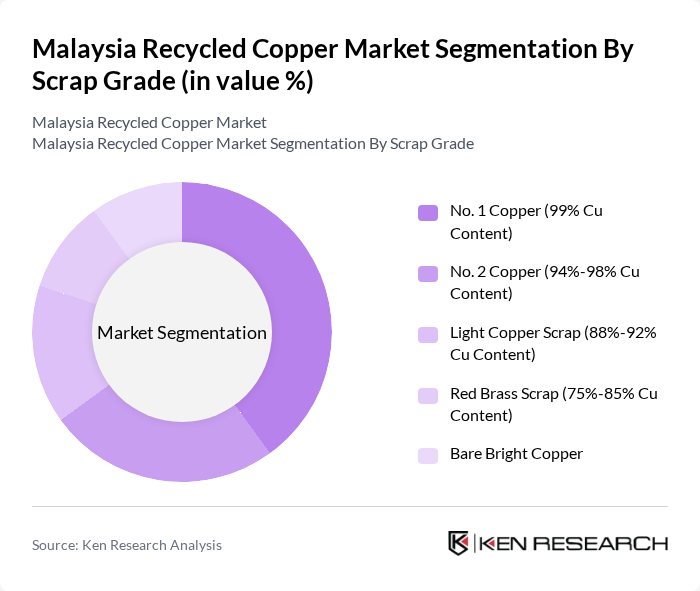
By Scrap Grade:The recycled copper market is segmented by scrap grade, which includes various types of copper scrap based on their purity levels. The subsegments include No. 1 Copper (99% Cu Content), No. 2 Copper (94%-98% Cu Content), Light Copper Scrap (88%-92% Cu Content), Red Brass Scrap (75%-85% Cu Content), and Bare Bright Copper. Each of these grades serves different applications, with No. 1 Copper being the most sought after due to its high purity and value in manufacturing processes.
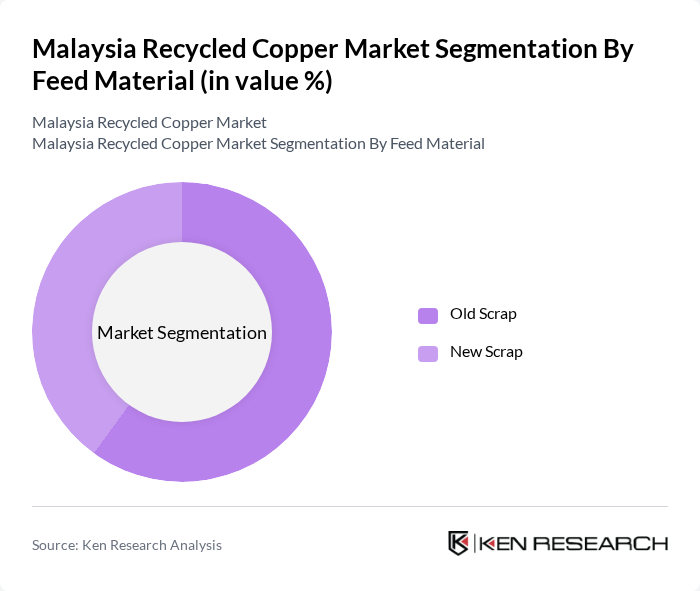
By Feed Material:The market is also segmented by feed material, which includes Old Scrap and New Scrap. Old Scrap refers to recycled materials collected from end-of-life products, while New Scrap is generated from manufacturing processes. The increasing focus on sustainability and resource conservation has led to a higher demand for Old Scrap, as it is often more cost-effective and environmentally friendly compared to sourcing new materials.
Malaysia Recycled Copper Market Competitive Landscape
The Malaysia Recycled Copper Market is characterized by a dynamic mix of regional and international players. Leading participants such as Commercial Metals Co, Norsk Hydro ASA, Tata Steel Ltd, European Metal Recycling, GFG Alliance, Novelis, K.K. Metal Recycling Sdn Bhd, Tanjung Agas Metal Industries Sdn Bhd, TCM Metal Recycling Sdn Bhd, Kian Joo Can Factory Berhad, Mewah Group, Aurubis, Umicore, Dowa Holdings, Tanjung Agas Recycling Sdn Bhd contribute to innovation, geographic expansion, and service delivery in this space.
Malaysia Recycled Copper Market Industry Analysis
Growth Drivers
- Increasing Demand for Sustainable Materials:The global shift towards sustainability has significantly impacted the recycled copper market in Malaysia. In future, the demand for sustainable materials is projected to reach 1.6 million tons, driven by industries such as construction and electronics. The Malaysian government aims to increase the recycling rate to 45% in future, aligning with global sustainability goals. This growing demand is further supported by the rising consumer preference for eco-friendly products, which is expected to boost recycled copper consumption.
- Government Initiatives for Recycling:The Malaysian government has implemented various initiatives to promote recycling, including the National Recycling Program, which aims to enhance recycling rates across the country. In future, the government allocated RM 250 million for recycling infrastructure development. These initiatives are expected to create a more favorable environment for recycled copper businesses, encouraging investments and innovations in recycling technologies, thereby increasing the overall market size and competitiveness.
- Rising Prices of Virgin Copper:The price of virgin copper has seen a significant increase, reaching RM 50,000 per ton in future, driven by supply chain disruptions and increased global demand. This price surge makes recycled copper a more attractive alternative for manufacturers, as it offers cost savings without compromising quality. As companies seek to mitigate costs, the recycled copper market is poised for growth, with an expected increase in demand from sectors such as electronics and construction, which heavily rely on copper.
Market Challenges
- Fluctuating Raw Material Prices:The recycled copper market faces challenges due to the volatility of raw material prices. In future, the price of scrap copper fluctuated between RM 35,000 and RM 45,000 per ton, creating uncertainty for recyclers. This instability can lead to difficulties in pricing strategies and profit margins, making it challenging for businesses to maintain consistent operations and invest in necessary technologies for efficient recycling processes.
- Regulatory Compliance Costs:Compliance with environmental regulations in Malaysia can impose significant costs on recycled copper businesses. In future, companies are expected to spend approximately RM 20 million collectively on compliance-related expenses, including waste management and emissions control. These costs can strain smaller recyclers, limiting their ability to compete with larger firms that have more resources to absorb such expenses, ultimately affecting market dynamics and growth potential.
Malaysia Recycled Copper Market Future Outlook
The future of the recycled copper market in Malaysia appears promising, driven by increasing investments in green technologies and a growing emphasis on sustainable practices. As the government continues to support recycling initiatives, the market is expected to witness enhanced infrastructure and technological advancements. Additionally, the rising consumer preference for recycled products will likely create new opportunities for businesses, fostering innovation and collaboration within the industry, ultimately contributing to a more circular economy.
Market Opportunities
- Expansion of Electric Vehicle Market:The electric vehicle (EV) market in Malaysia is projected to grow significantly, with an expected increase in EV sales to 120,000 units in future. This growth presents a substantial opportunity for recycled copper, as EVs require high amounts of copper for wiring and components, driving demand for sustainable sourcing and recycling practices within the automotive sector.
- Growth in Renewable Energy Sector:The renewable energy sector in Malaysia is anticipated to expand, with investments reaching RM 60 billion in future. This growth will increase the demand for copper in solar panels and wind turbines, creating a robust market for recycled copper. As companies seek sustainable materials, the recycled copper market stands to benefit significantly from this trend, enhancing its role in the energy transition.
Scope of the Report
| Segment | Sub-Segments |
|---|---|
| By Scrap Grade | No. 1 Copper (99% Cu Content) No. 2 Copper (94%-98% Cu Content) Light Copper Scrap (88%-92% Cu Content) Red Brass Scrap (75%-85% Cu Content) Bare Bright Copper |
| By Feed Material | Old Scrap New Scrap |
| By Application | Wire Rod Mills Brass Mills Ingot Makers Foundries Others |
| By End-User Industry | Building & Construction Electrical & Electronics Industrial Machinery & Equipment Transportation Equipment Consumer & General Products |
| By Source of Scrap | Industrial Scrap Post-Consumer Scrap Demolition Scrap E-Waste |
| By Distribution Channel | Direct Sales Distributors Online Sales Others |
| By Region | Central Region Northern Region Southern Region Eastern Region Others |
Key Target Audience
Investors and Venture Capitalist Firms
Government and Regulatory Bodies (e.g., Ministry of International Trade and Industry, Department of Environment)
Manufacturers and Producers of Recycled Copper
Recycling Facilities and Operators
Metal Traders and Brokers
Industry Associations (e.g., Malaysian Metal Traders Association)
Financial Institutions and Banks
Logistics and Supply Chain Companies
Players Mentioned in the Report:
Commercial Metals Co
Norsk Hydro ASA
Tata Steel Ltd
European Metal Recycling
GFG Alliance
Novelis
K.K. Metal Recycling Sdn Bhd
Tanjung Agas Metal Industries Sdn Bhd
TCM Metal Recycling Sdn Bhd
Kian Joo Can Factory Berhad
Mewah Group
Aurubis
Umicore
Dowa Holdings
Tanjung Agas Recycling Sdn Bhd
Table of Contents
Market Assessment Phase
1. Executive Summary and Approach
2. Malaysia Recycled Copper Market Overview
2.1 Key Insights and Strategic Recommendations
2.2 Malaysia Recycled Copper Market Overview
2.3 Definition and Scope
2.4 Evolution of Market Ecosystem
2.5 Timeline of Key Regulatory Milestones
2.6 Value Chain & Stakeholder Mapping
2.7 Business Cycle Analysis
2.8 Policy & Incentive Landscape
3. Malaysia Recycled Copper Market Analysis
3.1 Growth Drivers
3.1.1 Increasing Demand for Sustainable Materials
3.1.2 Government Initiatives for Recycling
3.1.3 Rising Prices of Virgin Copper
3.1.4 Technological Advancements in Recycling Processes
3.2 Market Challenges
3.2.1 Fluctuating Raw Material Prices
3.2.2 Regulatory Compliance Costs
3.2.3 Competition from Virgin Copper Suppliers
3.2.4 Limited Awareness of Recycling Benefits
3.3 Market Opportunities
3.3.1 Expansion of Electric Vehicle Market
3.3.2 Growth in Renewable Energy Sector
3.3.3 Development of Smart Cities
3.3.4 Increasing Export Potential
3.4 Market Trends
3.4.1 Shift Towards Circular Economy
3.4.2 Innovations in Recycling Technologies
3.4.3 Increased Investment in Green Technologies
3.4.4 Rising Consumer Preference for Recycled Products
3.5 Government Regulation
3.5.1 E-Waste Management Regulations
3.5.2 Environmental Protection Policies
3.5.3 Import and Export Regulations for Scrap Metal
3.5.4 Incentives for Recycling Initiatives
4. SWOT Analysis
5. Stakeholder Analysis
6. Porter's Five Forces Analysis
7. Malaysia Recycled Copper Market Market Size, 2019-2024
7.1 By Value
7.2 By Volume
7.3 By Average Selling Price
8. Malaysia Recycled Copper Market Segmentation
8.1 By Scrap Grade
8.1.1 No. 1 Copper (99% Cu Content)
8.1.2 No. 2 Copper (94%-98% Cu Content)
8.1.3 Light Copper Scrap (88%-92% Cu Content)
8.1.4 Red Brass Scrap (75%-85% Cu Content)
8.1.5 Bare Bright Copper
8.2 By Feed Material
8.2.1 Old Scrap
8.2.2 New Scrap
8.3 By Application
8.3.1 Wire Rod Mills
8.3.2 Brass Mills
8.3.3 Ingot Makers
8.3.4 Foundries
8.3.5 Others
8.4 By End-User Industry
8.4.1 Building & Construction
8.4.2 Electrical & Electronics
8.4.3 Industrial Machinery & Equipment
8.4.4 Transportation Equipment
8.4.5 Consumer & General Products
8.5 By Source of Scrap
8.5.1 Industrial Scrap
8.5.2 Post-Consumer Scrap
8.5.3 Demolition Scrap
8.5.4 E-Waste
8.6 By Distribution Channel
8.6.1 Direct Sales
8.6.2 Distributors
8.6.3 Online Sales
8.6.4 Others
8.7 By Region
8.7.1 Central Region
8.7.2 Northern Region
8.7.3 Southern Region
8.7.4 Eastern Region
8.7.5 Others
9. Malaysia Recycled Copper Market Competitive Analysis
9.1 Market Share of Key Players
9.2 Cross Comparison of Key Players
9.2.1 Company Name
9.2.2 Group Size (Large, Medium, or Small as per industry convention)
9.2.3 Revenue Growth Rate (CAGR %)
9.2.4 Market Penetration Rate (%)
9.2.5 Customer Retention Rate (%)
9.2.6 Pricing Strategy (Premium/Mid-Market/Value)
9.2.7 Production Efficiency (Capacity Utilization %)
9.2.8 Supply Chain Efficiency (Days Inventory Outstanding)
9.2.9 Innovation Rate (R&D Spend as % of Revenue)
9.2.10 Sustainability Index (Certifications & Environmental Compliance Score)
9.3 SWOT Analysis of Top Players
9.4 Pricing Analysis
9.5 Detailed Profile of Major Companies
9.5.1 Commercial Metals Co
9.5.2 Norsk Hydro ASA
9.5.3 Tata Steel Ltd
9.5.4 European Metal Recycling
9.5.5 GFG Alliance
9.5.6 Novelis
9.5.7 K.K. Metal Recycling Sdn Bhd
9.5.8 Tanjung Agas Metal Industries Sdn Bhd
9.5.9 TCM Metal Recycling Sdn Bhd
9.5.10 Kian Joo Can Factory Berhad
9.5.11 Mewah Group
9.5.12 Aurubis
9.5.13 Umicore
9.5.14 Dowa Holdings
9.5.15 Tanjung Agas Recycling Sdn Bhd
10. Malaysia Recycled Copper Market End-User Analysis
10.1 Procurement Behavior of Key Ministries
10.1.1 Ministry of Energy and Natural Resources
10.1.2 Ministry of Environment and Water
10.1.3 Ministry of International Trade and Industry
10.1.4 Ministry of Finance
10.2 Corporate Spend on Infrastructure & Energy
10.2.1 Investment in Renewable Energy Projects
10.2.2 Budget Allocation for Recycling Initiatives
10.2.3 Corporate Social Responsibility Spending
10.2.4 Infrastructure Development Budgets
10.3 Pain Point Analysis by End-User Category
10.3.1 Cost of Raw Materials
10.3.2 Supply Chain Disruptions
10.3.3 Regulatory Compliance Challenges
10.3.4 Quality of Recycled Materials
10.4 User Readiness for Adoption
10.4.1 Awareness of Recycling Benefits
10.4.2 Availability of Infrastructure
10.4.3 Financial Incentives
10.4.4 Training and Education Programs
10.5 Post-Deployment ROI and Use Case Expansion
10.5.1 Measurement of Cost Savings
10.5.2 Expansion into New Markets
10.5.3 Long-term Sustainability Goals
10.5.4 Customer Satisfaction Metrics
11. Malaysia Recycled Copper Market Future Size, 2025-2030
11.1 By Value
11.2 By Volume
11.3 By Average Selling Price
Go-To-Market Strategy Phase
1. Whitespace Analysis + Business Model Canvas
1.1 Market Gaps Identification
1.2 Business Model Development
2. Marketing and Positioning Recommendations
2.1 Branding Strategies
2.2 Product USPs
3. Distribution Plan
3.1 Urban Retail vs Rural NGO Tie-ups
4. Channel & Pricing Gaps
4.1 Underserved Routes
4.2 Pricing Bands
5. Unmet Demand & Latent Needs
5.1 Category Gaps
5.2 Consumer Segments
6. Customer Relationship
6.1 Loyalty Programs
6.2 After-sales Service
7. Value Proposition
7.1 Sustainability
7.2 Integrated Supply Chains
8. Key Activities
8.1 Regulatory Compliance
8.2 Branding
8.3 Distribution Setup
9. Entry Strategy Evaluation
9.1 Domestic Market Entry Strategy
9.1.1 Product Mix
9.1.2 Pricing Band
9.1.3 Packaging
9.2 Export Entry Strategy
9.2.1 Target Countries
9.2.2 Compliance Roadmap
10. Entry Mode Assessment
10.1 JV
10.2 Greenfield
10.3 M&A
10.4 Distributor Model
11. Capital and Timeline Estimation
11.1 Capital Requirements
11.2 Timelines
12. Control vs Risk Trade-Off
12.1 Ownership vs Partnerships
13. Profitability Outlook
13.1 Breakeven Analysis
13.2 Long-term Sustainability
14. Potential Partner List
14.1 Distributors
14.2 JVs
14.3 Acquisition Targets
15. Execution Roadmap
15.1 Phased Plan for Market Entry
15.1.1 Market Setup
15.1.2 Market Entry
15.1.3 Growth Acceleration
15.1.4 Scale & Stabilize
15.2 Key Activities and Milestones
15.2.1 Activity Planning
15.2.2 Milestone Tracking
Research Methodology
Phase 1: Approach1
Desk Research
- Analysis of industry reports from Malaysian government agencies and trade associations
- Review of academic journals and publications focusing on copper recycling and sustainability
- Examination of market trends and statistics from international copper recycling organizations
Primary Research
- Interviews with industry experts, including copper recyclers and manufacturers
- Surveys targeting procurement managers in the electronics and construction sectors
- Field visits to recycling facilities to gather firsthand operational insights
Validation & Triangulation
- Cross-validation of findings through multiple data sources, including trade statistics and expert opinions
- Triangulation of market data with insights from regulatory bodies and industry stakeholders
- Sanity checks conducted through expert panel discussions to ensure data reliability
Phase 2: Market Size Estimation1
Top-down Assessment
- Estimation of total copper consumption in Malaysia and its recycling rates
- Segmentation of the market by end-use applications such as electrical, construction, and automotive
- Incorporation of government policies promoting recycling and sustainability initiatives
Bottom-up Modeling
- Collection of data on operational capacities and output from major recycling facilities
- Cost analysis based on the pricing of recycled copper versus virgin copper
- Volume estimates derived from historical data on copper scrap generation and processing
Forecasting & Scenario Analysis
- Development of predictive models using historical growth rates and market drivers
- Scenario planning based on potential regulatory changes and market demand shifts
- Creation of baseline, optimistic, and pessimistic forecasts through 2030
Phase 3: CATI Sample Composition1
| Scope Item/Segment | Sample Size | Target Respondent Profiles |
|---|---|---|
| Industrial Copper Recycling | 45 | Operations Managers, Recycling Facility Owners |
| Construction Sector Copper Usage | 40 | Project Managers, Procurement Officers |
| Electronics Manufacturing Returns | 35 | Supply Chain Managers, Quality Control Inspectors |
| Automotive Recycling Processes | 30 | Logistics Coordinators, Environmental Compliance Officers |
| Government Policy Impact Assessment | 25 | Regulatory Affairs Specialists, Policy Analysts |
Frequently Asked Questions
What is the current value of the Malaysia Recycled Copper Market?
The Malaysia Recycled Copper Market is valued at approximately USD 2.5 billion, reflecting a significant growth trend driven by increasing demand for sustainable materials and government initiatives promoting recycling and waste reduction.
What factors are driving the growth of the recycled copper market in Malaysia?
Which regions in Malaysia are leading in recycled copper production?
What are the Copper Scrap Import Standards in Malaysia?
Other Regional/Country Reports
Other Adjacent Reports
Vietnam Recycled Steel Market
Oman E-Waste Recycling Market
Germany Metal Scrap Market
Singapore Sustainable Materials Market
Singapore Electric Vehicle Components Market
Kuwait Renewable Energy Equipment Market
India Construction Materials Market Size, Share & Forecast, By Material Type, Application & End User, 2026-2031Kuwait Electronics Manufacturing Market
Global copper wire market report size, share, growth drivers, trends, opportunities & forecast 2025–2030Why Buy From Us?

What makes us stand out is that our consultants follow Robust, Refine and Result (RRR) methodology. Robust for clear definitions, approaches and sanity checking, Refine for differentiating respondents' facts and opinions, and Result for presenting data with story.

We have set a benchmark in the industry by offering our clients with syndicated and customized market research reports featuring coverage of entire market as well as meticulous research and analyst insights.

While we don't replace traditional research, we flip the method upside down. Our dual approach of Top Bottom & Bottom Top ensures quality deliverable by not just verifying company fundamentals but also looking at the sector and macroeconomic factors.

With one step in the future, our research team constantly tries to show you the bigger picture. We help with some of the tough questions you may encounter along the way: How is the industry positioned? Best marketing channel? KPI's of competitors? By aligning every element, we help maximize success.

Our report gives you instant access to the answers and sources that other companies might choose to hide. We elaborate each steps of research methodology we have used and showcase you the sample size to earn your trust.

If you need any support, we are here! We pride ourselves on universe strength, data quality, and quick, friendly, and professional service.