About the Report
Base Year 2024Listen to the audio summary
Middle East Anime Market Overview
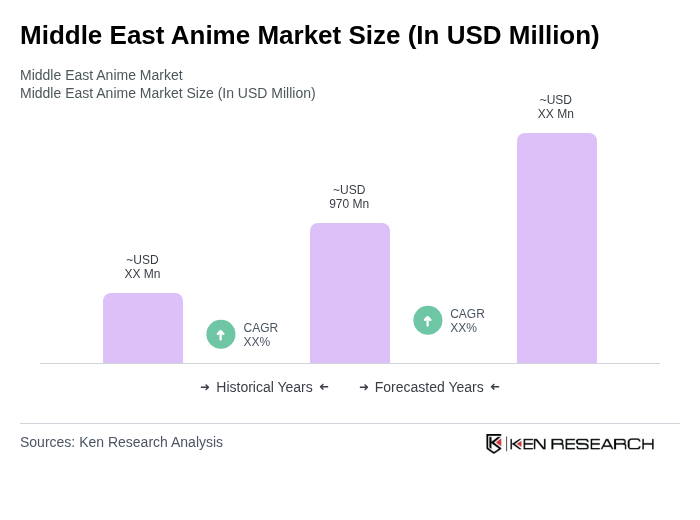
- The Middle East Anime Market is valued at USD 970 million, based on a five-year historical analysis. This growth is primarily driven by the increasing popularity of anime among diverse demographics, fueled by the rise of streaming platforms and social media engagement. The market has seen a surge in demand for both localized and original content, reflecting a growing acceptance and appreciation of anime culture in the region. The expansion of internet distribution and merchandising has further accelerated market development, with streaming services and online fan communities playing a pivotal role in audience engagement .
- Countries such as the United Arab Emirates, Saudi Arabia, and Egypt dominate the Middle East Anime Market due to their robust entertainment infrastructure and high internet penetration rates. The UAE, in particular, has become a hub for anime events and conventions, attracting fans and creators alike. This cultural enthusiasm, combined with significant investments in media and entertainment, positions these countries as leaders in the anime sector. Saudi Arabia stands out for its large anime fanbase and active support for local industry development, while the UAE and Egypt continue to host major conventions and foster vibrant fan communities .
- In 2023, the Saudi Arabian government implemented the "Saudi Anime Initiative" under the General Entertainment Authority, aimed at promoting local content production in the anime sector. This initiative includes a funding program of USD 200 million to support local creators and studios, encouraging the development of original anime series that reflect regional culture and narratives. The regulation, as outlined in the Saudi Vision 2030 framework and the General Entertainment Authority’s official guidelines, mandates operational standards for local content production, licensing requirements for studios, and eligibility criteria for funding access. This aims to enhance the domestic entertainment landscape and reduce reliance on imported content .
Middle East Anime Market Segmentation
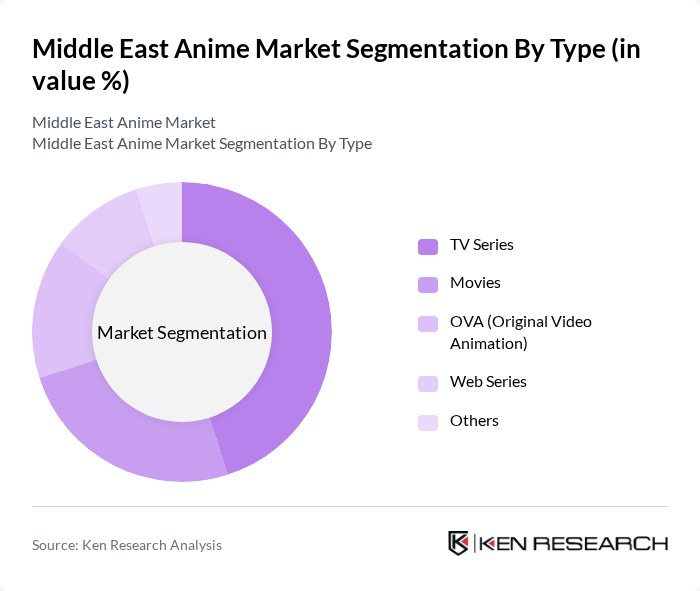
By Type:The market is segmented into various types, including TV Series, Movies, OVA (Original Video Animation), Web Series, and Others. Among these, TV Series has emerged as the dominant segment, driven by the binge-watching culture fostered by streaming platforms. The demand for serialized content allows for deeper storytelling and character development, appealing to a wide audience. Movies and OVAs also contribute significantly, but the episodic nature of TV Series keeps viewers engaged over longer periods, solidifying its leadership in the market. Internet distribution is the largest revenue-generating channel, reflecting the shift in consumer viewing habits towards digital platforms .
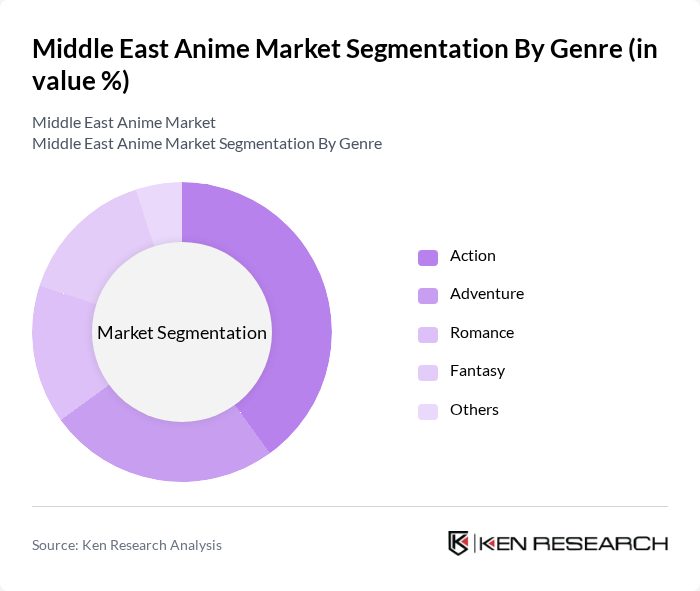
By Genre:The anime market is also categorized by genre, including Action, Adventure, Romance, Fantasy, and Others. Action is the leading genre, appealing to a broad audience with its dynamic storytelling and engaging visuals. The popularity of action-packed series is further amplified by their adaptation into video games and merchandise, creating a comprehensive entertainment ecosystem. Adventure and Fantasy genres follow closely, attracting viewers with imaginative worlds and compelling narratives, while Romance caters to a niche audience, contributing to the overall diversity of the market. The region also sees strong demand for genres that integrate fantasy and adventure elements, reflecting local preferences for immersive and visually rich content .
Middle East Anime Market Competitive Landscape
The Middle East Anime Market is characterized by a dynamic mix of regional and international players. Leading participants such as Crunchyroll, Toonz Media Group, Manga Productions, Aniplex, Bandai Namco Arts, Toei Animation, Pierrot, Studio Ghibli, Bioworld, Sunrise, Bones Studio, Kyoto Animation, Madhouse, Sony Pictures Entertainment, Good Smile Company, Sentai Holdings, VIZ Media, Eleven Arts, AnimeLab, OLM, Inc. contribute to innovation, geographic expansion, and service delivery in this space.
Middle East Anime Market Industry Analysis
Growth Drivers
- Increasing Popularity of Anime Culture:The Middle East has seen a significant rise in anime viewership, with over 1.5 million viewers tuning into popular anime series on streaming platforms in future. This surge is attributed to the growing acceptance of anime as a mainstream entertainment form, particularly among youth aged 15-30, who represent approximately 30% of the region's population. The cultural shift is further supported by social media platforms, where anime-related content garners millions of views, enhancing its visibility and appeal.
- Rise of Streaming Platforms:The proliferation of streaming services has transformed anime accessibility in the Middle East. In future, subscriptions to platforms like Crunchyroll and Netflix increased by 40%, with over 2 million new subscribers reported. This growth is driven by localized content offerings and the availability of dubbed and subtitled versions, catering to diverse linguistic demographics. The convenience of on-demand viewing has further solidified anime's position in the entertainment landscape, attracting a broader audience.
- Expansion of Anime Conventions and Events:The number of anime conventions in the Middle East has doubled since 2020, with over 20 major events held in future, attracting more than 500,000 attendees collectively. These events foster community engagement and provide platforms for local artists and creators. The increasing participation of international guests and industry professionals enhances the region's reputation as a burgeoning hub for anime culture, stimulating interest and investment in local anime projects.
Market Challenges
- Limited Local Content Production:Despite the growing interest in anime, local production remains underdeveloped, with only 5% of anime content consumed in the region being produced locally. This reliance on imported content limits the diversity of narratives and cultural representation. The lack of investment in local talent and infrastructure hampers the potential for homegrown anime, which could resonate more deeply with regional audiences and reflect local cultures and values.
- Cultural Sensitivity Issues:Cultural sensitivity poses a significant challenge for anime distribution in the Middle East. Content that may be acceptable in Japan can face backlash due to differing cultural norms and values. For instance, approximately 30% of anime titles face censorship or modification before release in the region. This can lead to dissatisfaction among fans and limit the authenticity of the content, potentially hindering the growth of the anime market.
Middle East Anime Market Future Outlook
The future of the Middle East anime market appears promising, driven by increasing investments in local production and the growing influence of digital platforms. As more creators emerge and collaborate with international studios, the region is likely to see a rise in culturally relevant content. Additionally, the integration of technology, such as augmented reality experiences, will enhance viewer engagement. The market is poised for expansion, with a focus on nurturing local talent and fostering community-driven initiatives to sustain growth.
Market Opportunities
- Collaborations with Local Creators:Collaborating with local creators presents a significant opportunity to develop culturally resonant anime content. By investing in local talent, international studios can create narratives that reflect regional values, potentially increasing viewership. This approach could lead to a 25% increase in local content production in future, fostering a more vibrant anime culture in the Middle East.
- Merchandise and Licensing Potential:The anime merchandise market in the Middle East is projected to reach $200 million in future, driven by the popularity of anime characters and franchises. This growth presents opportunities for licensing agreements and partnerships with local retailers. By tapping into this lucrative market, companies can enhance brand visibility and create additional revenue streams, further supporting the anime ecosystem in the region.
Scope of the Report
| Segment | Sub-Segments |
|---|---|
| By Type | TV Series Movies OVA (Original Video Animation) Web Series Others |
| By Genre | Action Adventure Romance Fantasy Others |
| By Distribution Channel | Streaming Services Television Broadcast DVD/Blu-ray Sales Merchandise Sales Others |
| By Audience Demographics | Age Groups (Children, Teens, Adults) Gender Geographic Distribution Others |
| By Format | Subtitled Dubbed Original Language Others |
| By Engagement Type | Passive Viewing Interactive Viewing (e.g., watch parties) Community Engagement (forums, social media) Others |
| By Merchandise Type | Apparel Collectibles Toys and Figures Art Books Others |
Key Target Audience
Investors and Venture Capitalist Firms
Government and Regulatory Bodies (e.g., Ministry of Culture and Knowledge Development, Saudi Arabia; Dubai Film and TV Commission)
Anime Production Studios
Streaming Platforms and Content Distributors
Event Organizers and Convention Planners
Merchandise Manufacturers and Retailers
Media and Entertainment Companies
Advertising Agencies and Marketing Firms
Players Mentioned in the Report:
Crunchyroll
Toonz Media Group
Manga Productions
Aniplex
Bandai Namco Arts
Toei Animation
Pierrot
Studio Ghibli
Bioworld
Sunrise
Bones Studio
Kyoto Animation
Madhouse
Sony Pictures Entertainment
Good Smile Company
Sentai Holdings
VIZ Media
Eleven Arts
AnimeLab
OLM, Inc.
Table of Contents
Market Assessment Phase
1. Executive Summary and Approach
2. Middle East Anime Market Overview
2.1 Key Insights and Strategic Recommendations
2.2 Middle East Anime Market Overview
2.3 Definition and Scope
2.4 Evolution of Market Ecosystem
2.5 Timeline of Key Regulatory Milestones
2.6 Value Chain & Stakeholder Mapping
2.7 Business Cycle Analysis
2.8 Policy & Incentive Landscape
3. Middle East Anime Market Analysis
3.1 Growth Drivers
3.1.1 Increasing Popularity of Anime Culture
3.1.2 Rise of Streaming Platforms
3.1.3 Growing Youth Demographic
3.1.4 Expansion of Anime Conventions and Events
3.2 Market Challenges
3.2.1 Limited Local Content Production
3.2.2 Cultural Sensitivity Issues
3.2.3 Competition from Western Animation
3.2.4 Regulatory Restrictions on Content
3.3 Market Opportunities
3.3.1 Collaborations with Local Creators
3.3.2 Merchandise and Licensing Potential
3.3.3 Growth of E-sports and Gaming Integration
3.3.4 Expansion into Untapped Markets
3.4 Market Trends
3.4.1 Increased Investment in Anime Production
3.4.2 Rise of Anime Influencers and Content Creators
3.4.3 Integration of Virtual Reality Experiences
3.4.4 Growth of Anime-related Tourism
3.5 Government Regulation
3.5.1 Content Rating Systems
3.5.2 Copyright and Intellectual Property Laws
3.5.3 Import Regulations for Anime Merchandise
3.5.4 Support for Local Animation Initiatives
4. SWOT Analysis
5. Stakeholder Analysis
6. Porter's Five Forces Analysis
7. Middle East Anime Market Market Size, 2019-2024
7.1 By Value
7.2 By Volume
7.3 By Average Selling Price
8. Middle East Anime Market Segmentation
8.1 By Type
8.1.1 TV Series
8.1.2 Movies
8.1.3 OVA (Original Video Animation)
8.1.4 Web Series
8.1.5 Others
8.2 By Genre
8.2.1 Action
8.2.2 Adventure
8.2.3 Romance
8.2.4 Fantasy
8.2.5 Others
8.3 By Distribution Channel
8.3.1 Streaming Services
8.3.2 Television Broadcast
8.3.3 DVD/Blu-ray Sales
8.3.4 Merchandise Sales
8.3.5 Others
8.4 By Audience Demographics
8.4.1 Age Groups (Children, Teens, Adults)
8.4.2 Gender
8.4.3 Geographic Distribution
8.4.4 Others
8.5 By Format
8.5.1 Subtitled
8.5.2 Dubbed
8.5.3 Original Language
8.5.4 Others
8.6 By Engagement Type
8.6.1 Passive Viewing
8.6.2 Interactive Viewing (e.g., watch parties)
8.6.3 Community Engagement (forums, social media)
8.6.4 Others
8.7 By Merchandise Type
8.7.1 Apparel
8.7.2 Collectibles
8.7.3 Toys and Figures
8.7.4 Art Books
8.7.5 Others
9. Middle East Anime Market Competitive Analysis
9.1 Market Share of Key Players
9.2 Cross Comparison of Key Players
9.2.1 Company Name
9.2.2 Group Size (Large, Medium, or Small as per industry convention)
9.2.3 Revenue Growth Rate (YoY)
9.2.4 Market Penetration Rate (by country/region)
9.2.5 Customer Retention Rate
9.2.6 Content Acquisition Cost (per title/series)
9.2.7 Pricing Strategy (subscription, pay-per-view, bundled)
9.2.8 Brand Recognition Score (based on regional surveys)
9.2.9 Social Media Engagement Rate (likes, shares, comments)
9.2.10 Distribution Network Efficiency (reach, speed, reliability)
9.3 SWOT Analysis of Top Players
9.4 Pricing Analysis
9.5 Detailed Profile of Major Companies
9.5.1 Crunchyroll
9.5.2 Toonz Media Group
9.5.3 Manga Productions
9.5.4 Aniplex
9.5.5 Bandai Namco Arts
9.5.6 Toei Animation
9.5.7 Pierrot
9.5.8 Studio Ghibli
9.5.9 Bioworld
9.5.10 Sunrise
9.5.11 Bones Studio
9.5.12 Kyoto Animation
9.5.13 Madhouse
9.5.14 Sony Pictures Entertainment
9.5.15 Good Smile Company
9.5.16 Sentai Holdings
9.5.17 VIZ Media
9.5.18 Eleven Arts
9.5.19 AnimeLab
9.5.20 OLM, Inc.
10. Middle East Anime Market End-User Analysis
10.1 Procurement Behavior of Key Ministries
10.1.1 Ministry of Culture
10.1.2 Ministry of Education
10.1.3 Ministry of Youth Affairs
10.1.4 Others
10.2 Corporate Spend on Infrastructure & Energy
10.2.1 Investment in Animation Studios
10.2.2 Funding for Anime Festivals
10.2.3 Sponsorship of Local Anime Projects
10.2.4 Others
10.3 Pain Point Analysis by End-User Category
10.3.1 Content Accessibility
10.3.2 Quality of Local Dubbing
10.3.3 Availability of Merchandise
10.3.4 Others
10.4 User Readiness for Adoption
10.4.1 Awareness of Anime Culture
10.4.2 Access to Streaming Services
10.4.3 Engagement in Anime Communities
10.4.4 Others
10.5 Post-Deployment ROI and Use Case Expansion
10.5.1 Viewer Retention Rates
10.5.2 Merchandise Sales Growth
10.5.3 Community Engagement Metrics
10.5.4 Others
11. Middle East Anime Market Future Size, 2025-2030
11.1 By Value
11.2 By Volume
11.3 By Average Selling Price
Go-To-Market Strategy Phase
1. Whitespace Analysis + Business Model Canvas
1.1 Market Gaps Identification
1.2 Business Model Framework
2. Marketing and Positioning Recommendations
2.1 Branding Strategies
2.2 Product USPs
3. Distribution Plan
3.1 Urban Retail Strategies
3.2 Rural NGO Tie-ups
4. Channel & Pricing Gaps4.1 Underserved Routes4.2 Pricing Bands5. Unmet Demand & Latent Needs5.1 Category Gaps5.2 Consumer Segments6. Customer Relationship6.1 Loyalty Programs6.2 After-sales Service7. Value Proposition7.1 Sustainability7.2 Integrated Supply Chains8. Key Activities8.1 Regulatory Compliance8.2 Branding8.3 Distribution Setup9. Entry Strategy Evaluation9.1 Domestic Market Entry Strategy9.1.1 Product Mix9.1.2 Pricing Band9.1.3 Packaging9.2 Export Entry Strategy9.2.1 Target Countries9.2.2 Compliance Roadmap10. Entry Mode Assessment10.1 JV10.2 Greenfield10.3 M&A10.4 Distributor Model11. Capital and Timeline Estimation11.1 Capital Requirements11.2 Timelines12. Control vs Risk Trade-Off12.1 Ownership vs Partnerships13. Profitability Outlook13.1 Breakeven Analysis13.2 Long-term Sustainability14. Potential Partner List14.1 Distributors14.2 JVs14.3 Acquisition Targets15. Execution Roadmap15.1 Phased Plan for Market Entry15.1.1 Market Setup15.1.2 Market Entry15.1.3 Growth Acceleration15.1.4 Scale & Stabilize15.2 Key Activities and Milestones15.2.1 Activity Timeline15.2.2 Milestone TrackingDisclaimerContact Us
Research Methodology
Phase 1: Approach1
Desk Research
- Analysis of market reports from regional anime conventions and events
- Review of industry publications and articles focusing on anime trends in the Middle East
- Examination of social media analytics and engagement metrics related to anime fandoms
Primary Research
- Interviews with key stakeholders in the anime distribution and retail sectors
- Surveys targeting anime content creators and local production studios
- Focus groups with anime fans to understand viewing habits and preferences
Validation & Triangulation
- Cross-validation of findings with data from streaming platforms and viewership statistics
- Triangulation of insights from industry experts and consumer feedback
- Sanity checks through expert panel discussions and feedback loops
Phase 2: Market Size Estimation1
Top-down Assessment
- Estimation of total market size based on regional entertainment spending trends
- Segmentation of the market by genre, including shonen, shojo, and seinen
- Incorporation of growth rates from related sectors such as gaming and merchandise
Bottom-up Modeling
- Collection of sales data from local anime merchandise retailers
- Estimation of viewership numbers from streaming services and TV networks
- Analysis of ticket sales from anime screenings and conventions
Forecasting & Scenario Analysis
- Multi-factor regression analysis incorporating demographic shifts and cultural trends
- Scenario planning based on potential regulatory changes affecting content distribution
- Baseline, optimistic, and pessimistic projections for market growth through 2030
Phase 3: CATI Sample Composition1
| Scope Item/Segment | Sample Size | Target Respondent Profiles |
|---|---|---|
| Anime Merchandise Retailers | 100 | Store Owners, Retail Managers |
| Streaming Service Subscribers | 120 | Anime Viewers, Subscription Managers |
| Anime Event Organizers | 60 | Event Coordinators, Marketing Directors |
| Content Creators and Influencers | 50 | Animators, YouTubers, Social Media Influencers |
| Anime Production Studios | 40 | Producers, Directors, Scriptwriters |
Frequently Asked Questions
What is the current value of the Middle East Anime Market?
The Middle East Anime Market is valued at approximately USD 970 million, reflecting significant growth driven by the increasing popularity of anime across diverse demographics and the rise of streaming platforms and social media engagement.
Which countries dominate the Middle East Anime Market?
What is the "Saudi Anime Initiative"?
What types of anime content are most popular in the Middle East?
Other Regional/Country Reports
Other Adjacent Reports
Qatar Manga Publishing Market
Belgium Video Game Development Market
Kuwait OTT Streaming Platform Market
Philippines Merchandise Licensing Market
Thailand Cosplay Apparel Market
UAE Animation Studio Market
Vietnam Entertainment Event Market
Belgium Digital Content Distribution Market
Japan Fan Community Platform Market
Mexico Intellectual Property Licensing Market
Why Buy From Us?

What makes us stand out is that our consultants follow Robust, Refine and Result (RRR) methodology. Robust for clear definitions, approaches and sanity checking, Refine for differentiating respondents' facts and opinions, and Result for presenting data with story.

We have set a benchmark in the industry by offering our clients with syndicated and customized market research reports featuring coverage of entire market as well as meticulous research and analyst insights.

While we don't replace traditional research, we flip the method upside down. Our dual approach of Top Bottom & Bottom Top ensures quality deliverable by not just verifying company fundamentals but also looking at the sector and macroeconomic factors.

With one step in the future, our research team constantly tries to show you the bigger picture. We help with some of the tough questions you may encounter along the way: How is the industry positioned? Best marketing channel? KPI's of competitors? By aligning every element, we help maximize success.

Our report gives you instant access to the answers and sources that other companies might choose to hide. We elaborate each steps of research methodology we have used and showcase you the sample size to earn your trust.

If you need any support, we are here! We pride ourselves on universe strength, data quality, and quick, friendly, and professional service.