Region:Middle East
Author(s):Dev
Product Code:KRAA8208
Pages:98
Published On:November 2025
By Type:The market is segmented into various types of textiles, including Non-Woven Fabrics, Woven Fabrics, Knitted Fabrics, Coated Fabrics, and Others. Each type serves different applications and end-user needs, with specific characteristics that cater to the requirements of antimicrobial properties. Non-woven fabrics are particularly prominent in medical and hygiene applications due to their lightweight, cost-effectiveness, and suitability for disposable products, while woven and knitted fabrics are used in apparel and home textiles for durability and comfort .
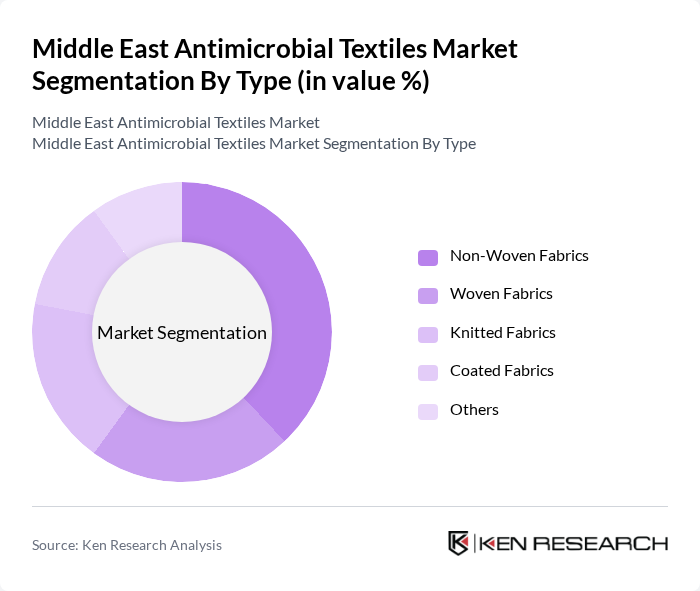
The Non-Woven Fabrics segment is currently leading the market due to its widespread use in medical applications, such as surgical gowns, masks, and disposable hygiene products, which require high levels of hygiene and infection control. The lightweight and cost-effective nature of non-woven fabrics makes them a preferred choice in healthcare settings. Additionally, the growing trend of disposable products in the healthcare sector further supports the dominance of this segment .
By End-User:The market is segmented by end-users, including Healthcare, Hospitality, Sports and Activewear, Home Textiles, Industrial, and Others. Each end-user category has unique requirements for antimicrobial textiles, influencing the demand and growth of specific segments. Healthcare leads due to stringent infection control protocols, while hospitality and sportswear segments are growing as hygiene and odor control become priorities for consumers and service providers .
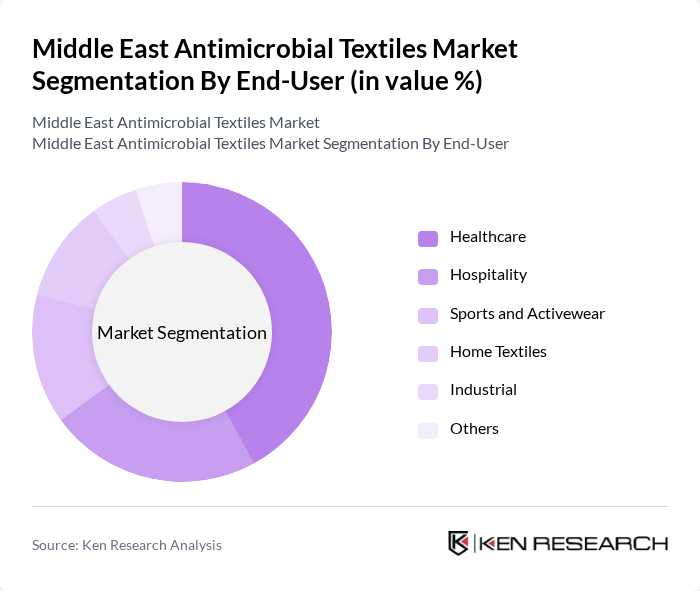
The Healthcare segment is the largest end-user of antimicrobial textiles, driven by the need for infection control in hospitals and clinics. The increasing prevalence of healthcare-associated infections (HAIs) has led to a surge in demand for antimicrobial products in medical settings. This segment's growth is further supported by government regulations promoting the use of such textiles in healthcare facilities .
The Middle East Antimicrobial Textiles Market is characterized by a dynamic mix of regional and international players. Leading participants such as Ahlstrom-Munksjö, DuPont, BASF, Trevira GmbH, HeiQ Materials AG, Microban International, Sanitized AG, The Dow Chemical Company, 3M, Hohenstein Institute, Lenzing AG, TENCEL™ (Lenzing Group), Invista, Asahi Kasei Corporation, Eastman Chemical Company, Milliken & Company, Alok Industries Ltd., Welspun Group, Arvind Limited, Balavigna Weaving Mills Pvt. Ltd. contribute to innovation, geographic expansion, and service delivery in this space.
The future of the Middle East antimicrobial textiles market appears promising, driven by increasing health awareness and technological advancements. As the healthcare and hospitality sectors continue to expand, the demand for innovative antimicrobial solutions is expected to rise. Additionally, the integration of smart textiles with antimicrobial properties is likely to gain traction, enhancing functionality and consumer appeal. Companies that invest in sustainable practices and consumer education will be well-positioned to capitalize on emerging trends and market opportunities.
| Segment | Sub-Segments |
|---|---|
| By Type | Non-Woven Fabrics Woven Fabrics Knitted Fabrics Coated Fabrics Others |
| By End-User | Healthcare Hospitality Sports and Activewear Home Textiles Industrial Others |
| By Application | Medical Textiles (surgical gowns, drapes, wound dressings) Apparel Upholstery Bedding Industrial Textiles Others |
| By Material | Cotton Polyester Polyamide (Nylon) Blends (e.g., cotton-polyester) Others (e.g., Tencel, specialty fibers) |
| By Treatment Method | Chemical Treatment (silver, quaternary ammonium, triclosan, etc.) Physical Treatment (coatings, plasma, etc.) Bio-based Treatment (chitosan, plant-based agents) Others |
| By Distribution Channel | Direct Sales Offline Retail Online Retail Others |
| By Region | GCC Countries (Saudi Arabia, UAE, Qatar, etc.) Levant Region (Jordan, Lebanon, etc.) North Africa (Egypt, Morocco, etc.) Others |
| Scope Item/Segment | Sample Size | Target Respondent Profiles |
|---|---|---|
| Healthcare Sector Adoption | 100 | Hospital Administrators, Infection Control Specialists |
| Consumer Preferences in Apparel | 120 | Fashion Retail Buyers, Textile Designers |
| Industrial Applications of Antimicrobial Textiles | 80 | Manufacturing Managers, Quality Assurance Officers |
| Market Trends in Home Textiles | 90 | Home Goods Retailers, Product Development Managers |
| Regulatory Impact Assessment | 60 | Compliance Officers, Regulatory Affairs Managers |
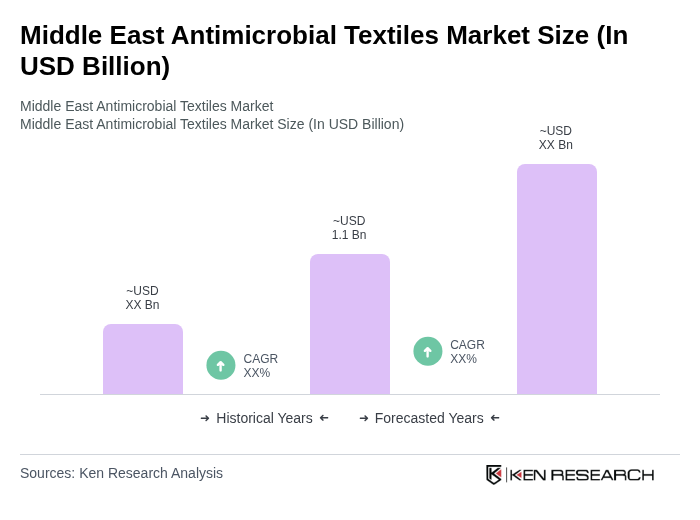
The Middle East Antimicrobial Textiles Market is valued at approximately USD 1.1 billion, driven by increasing hygiene awareness and demand for antimicrobial properties in textiles across various applications, particularly in healthcare and hospitality sectors.

What makes us stand out is that our consultants follow Robust, Refine and Result (RRR) methodology. Robust for clear definitions, approaches and sanity checking, Refine for differentiating respondents' facts and opinions, and Result for presenting data with story.

We have set a benchmark in the industry by offering our clients with syndicated and customized market research reports featuring coverage of entire market as well as meticulous research and analyst insights.

While we don't replace traditional research, we flip the method upside down. Our dual approach of Top Bottom & Bottom Top ensures quality deliverable by not just verifying company fundamentals but also looking at the sector and macroeconomic factors.

With one step in the future, our research team constantly tries to show you the bigger picture. We help with some of the tough questions you may encounter along the way: How is the industry positioned? Best marketing channel? KPI's of competitors? By aligning every element, we help maximize success.

Our report gives you instant access to the answers and sources that other companies might choose to hide. We elaborate each steps of research methodology we have used and showcase you the sample size to earn your trust.

If you need any support, we are here! We pride ourselves on universe strength, data quality, and quick, friendly, and professional service.













