Region:Middle East
Author(s):Geetanshi
Product Code:KRAE1435
Pages:87
Published On:March 2026
By Asset Type:
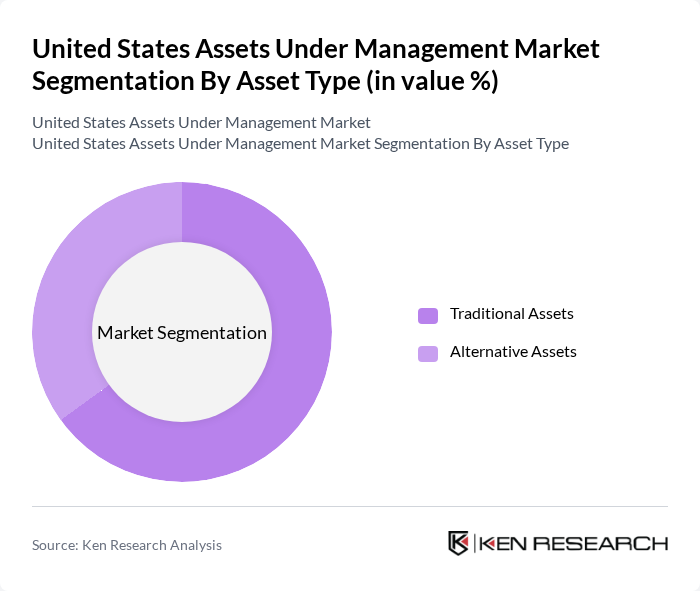
The market is segmented into Traditional Assets and Alternative Assets. Traditional Assets, which include equities, fixed income, and cash equivalents, dominate the market due to their established nature and widespread acceptance among investors. These assets are favored for their liquidity and historical performance, making them a staple in many investment portfolios. On the other hand, Alternative Assets, such as private equity, hedge funds, and real estate, are gaining traction as investors seek diversification and higher returns. The growing interest in alternative investments is driven by their potential to provide uncorrelated returns compared to traditional asset classes.
By Client Type:
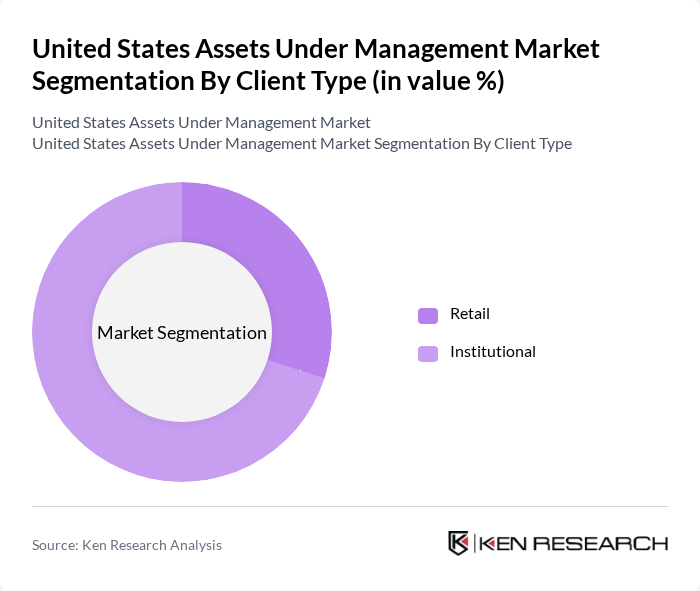
The market is divided into Retail and Institutional clients. Institutional clients, including pension funds, endowments, and insurance companies, represent a significant portion of the market due to their large capital bases and long-term investment horizons. These clients often seek tailored investment strategies and have the resources to engage in complex investment vehicles. Retail clients, while smaller in terms of capital, are increasingly participating in the market, driven by the rise of digital investment platforms, rising smartphone penetration, financial literacy, and a growing interest in personal finance. The shift towards self-directed investing has empowered retail clients to seek professional asset management services.
The United States Assets Under Management Market is characterized by a dynamic mix of regional and international players. Leading participants such as BlackRock, Inc., Vanguard Group, Inc., Fidelity Investments, State Street Global Advisors, J.P. Morgan Asset Management, Charles Schwab Investment Management, T. Rowe Price Group, Inc., Invesco Ltd., Franklin Templeton Investments, Northern Trust Corporation, Dimensional Fund Advisors, AllianceBernstein Holding L.P., Legg Mason, Wells Fargo Asset Management, Columbia Threadneedle Investments contribute to innovation, geographic expansion, and service delivery in this space.
The U.S. assets under management market is poised for significant evolution, driven by technological integration and changing investor preferences. As digital platforms continue to expand, more investors will likely engage with asset management services, enhancing overall market participation. Furthermore, the increasing focus on sustainable and responsible investing will shape investment strategies, compelling firms to adapt. This dynamic environment presents both challenges and opportunities for asset managers as they navigate evolving market conditions and investor expectations.
| Segment | Sub-Segments |
|---|---|
| By Asset Type | Traditional Assets Alternative Assets |
| By Client Type | Retail Institutional |
| By Strategy | Active Passive |
| By Vertical | Energy Manufacturing BFSI Retail Government Others |
| Scope Item/Segment | Sample Size | Target Respondent Profiles |
|---|---|---|
| Retail Investment Advisors | 120 | Financial Advisors, Wealth Managers |
| Institutional Investors | 100 | Pension Fund Managers, Endowment Fund Directors |
| Mutual Fund Managers | 80 | Portfolio Managers, Research Analysts |
| Hedge Fund Executives | 70 | Fund Managers, Risk Management Officers |
| Private Equity Firms | 60 | Investment Directors, Deal Analysts |
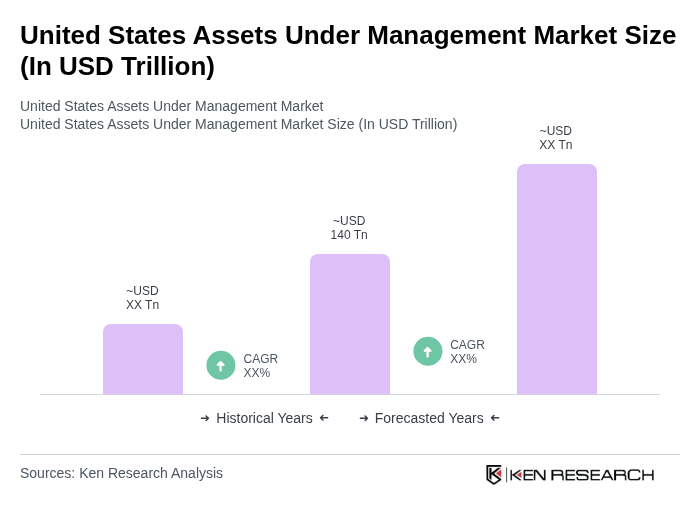
The United States Assets Under Management market is valued at approximately USD 140 trillion, driven by increasing demand for investment management services and a growing number of both institutional and retail investors seeking professional asset management.

What makes us stand out is that our consultants follow Robust, Refine and Result (RRR) methodology. Robust for clear definitions, approaches and sanity checking, Refine for differentiating respondents' facts and opinions, and Result for presenting data with story.

We have set a benchmark in the industry by offering our clients with syndicated and customized market research reports featuring coverage of entire market as well as meticulous research and analyst insights.

While we don't replace traditional research, we flip the method upside down. Our dual approach of Top Bottom & Bottom Top ensures quality deliverable by not just verifying company fundamentals but also looking at the sector and macroeconomic factors.

With one step in the future, our research team constantly tries to show you the bigger picture. We help with some of the tough questions you may encounter along the way: How is the industry positioned? Best marketing channel? KPI's of competitors? By aligning every element, we help maximize success.

Our report gives you instant access to the answers and sources that other companies might choose to hide. We elaborate each steps of research methodology we have used and showcase you the sample size to earn your trust.

If you need any support, we are here! We pride ourselves on universe strength, data quality, and quick, friendly, and professional service.













