Region:Middle East
Author(s):Geetanshi
Product Code:KRAE7602
Pages:90
Published On:December 2025

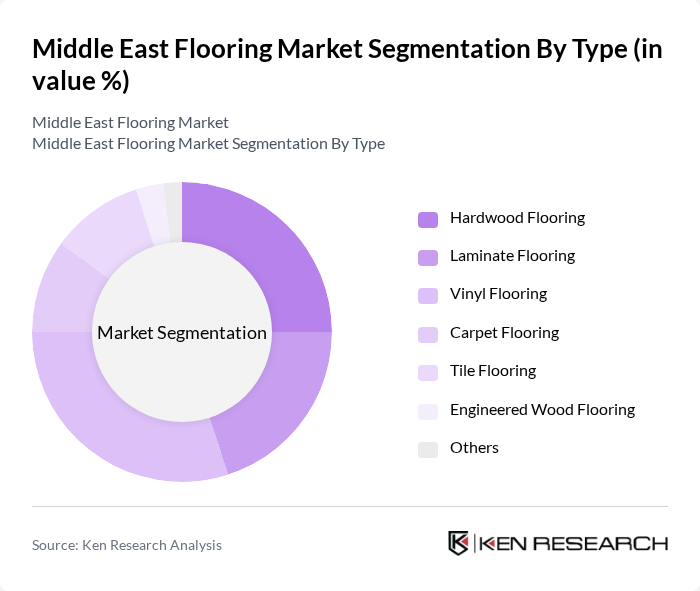
By Type:The flooring market can be segmented into various types, including hardwood flooring, laminate flooring, vinyl flooring, carpet flooring, tile flooring, engineered wood flooring, and others. Each type caters to different consumer preferences and applications, with specific advantages in terms of durability, aesthetics, cost, and sustainability features like eco-friendly laminates and porcelain tiles.
By End-User:The flooring market is segmented by end-user categories, including residential, commercial, industrial, government & utilities, and others. Each segment has unique requirements and preferences, influencing the types of flooring materials chosen for specific applications such as resilient options for commercial durability and carpets for residential comfort.

The Middle East Flooring Market is characterized by a dynamic mix of regional and international players. Leading participants such as Mohawk Industries, Shaw Industries, Tarkett, Armstrong Flooring, Gerflor, Interface, Inc., Forbo Flooring Systems, Beaulieu International Group, LG Hausys, Boral Limited, Daltile, Karndean Designflooring, Mohawk Group, Polyflor, RAK Ceramics contribute to innovation, geographic expansion, and service delivery in this space.
The Middle East flooring market is poised for significant transformation, driven by technological advancements and evolving consumer preferences. As urbanization accelerates, the demand for innovative flooring solutions will increase, particularly those that integrate smart technology. Additionally, the focus on sustainability will continue to shape product offerings, with manufacturers investing in eco-friendly materials. By the future, the market is expected to see a notable shift towards modular flooring systems, catering to the growing need for flexibility and customization in residential and commercial spaces.
| Segment | Sub-Segments |
|---|---|
| By Type | Hardwood Flooring Laminate Flooring Vinyl Flooring Carpet Flooring Tile Flooring Engineered Wood Flooring Others |
| By End-User | Residential Commercial Industrial Government & Utilities Others |
| By Region | GCC Countries Levant Region North Africa Others |
| By Application | Residential Buildings Commercial Spaces Industrial Facilities Hospitality Sector Others |
| By Material | Natural Materials Synthetic Materials Recycled Materials Others |
| By Installation Type | Glue-down Installation Floating Installation Nail-down Installation Others |
| By Price Range | Budget Mid-range Premium Others |
| Scope Item/Segment | Sample Size | Target Respondent Profiles |
|---|---|---|
| Residential Flooring Market | 120 | Homeowners, Interior Designers |
| Commercial Flooring Solutions | 95 | Facility Managers, Architects |
| Industrial Flooring Applications | 75 | Plant Managers, Procurement Officers |
| Retail Flooring Trends | 65 | Retail Managers, Store Managers |
| Flooring Installation Services | 85 | Contractors, Service Providers |
The Middle East Flooring Market is valued at approximately USD 18 billion, driven by rapid urbanization, increasing construction activities, and a growing demand for aesthetic and eco-friendly flooring solutions in both residential and commercial sectors.

What makes us stand out is that our consultants follow Robust, Refine and Result (RRR) methodology. Robust for clear definitions, approaches and sanity checking, Refine for differentiating respondents' facts and opinions, and Result for presenting data with story.

We have set a benchmark in the industry by offering our clients with syndicated and customized market research reports featuring coverage of entire market as well as meticulous research and analyst insights.

While we don't replace traditional research, we flip the method upside down. Our dual approach of Top Bottom & Bottom Top ensures quality deliverable by not just verifying company fundamentals but also looking at the sector and macroeconomic factors.

With one step in the future, our research team constantly tries to show you the bigger picture. We help with some of the tough questions you may encounter along the way: How is the industry positioned? Best marketing channel? KPI's of competitors? By aligning every element, we help maximize success.

Our report gives you instant access to the answers and sources that other companies might choose to hide. We elaborate each steps of research methodology we have used and showcase you the sample size to earn your trust.

If you need any support, we are here! We pride ourselves on universe strength, data quality, and quick, friendly, and professional service.













