Region:Middle East
Author(s):Rebecca
Product Code:KRAC3940
Pages:82
Published On:October 2025
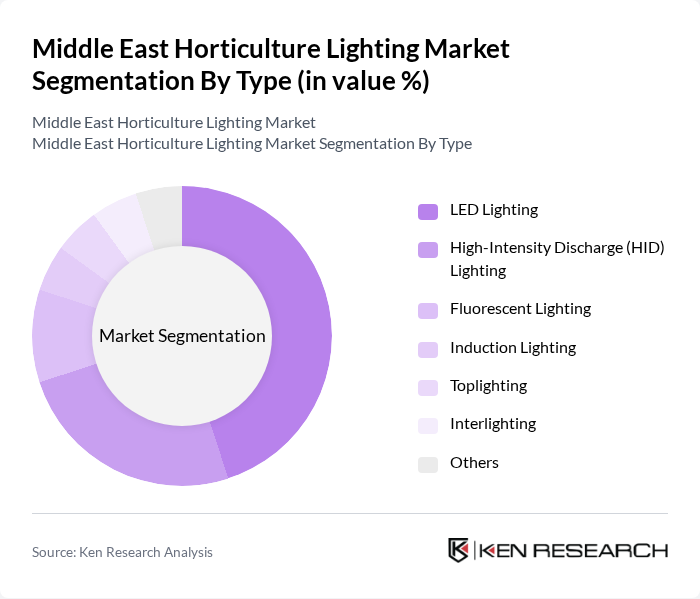
By Type:The market is segmented into various types of lighting technologies, including LED Lighting, High-Intensity Discharge (HID) Lighting, Fluorescent Lighting, Induction Lighting, Toplighting, Interlighting, and Others. Among these, LED Lighting is the most dominant segment due to its superior energy efficiency, long operational lifespan, and rapidly declining costs, making it the preferred choice for commercial horticulture applications. LED technology accounts for the majority share of the market, as growers increasingly replace traditional lighting systems to optimize crop yield and reduce operational expenses .
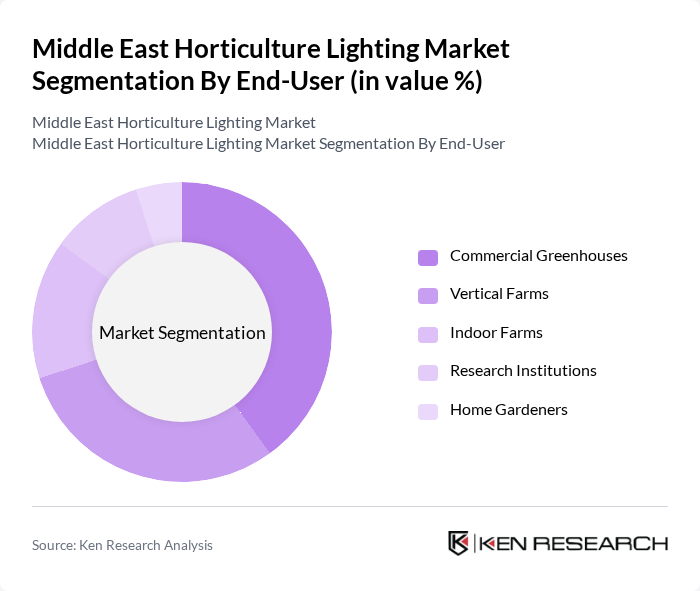
By End-User:The end-user segmentation includes Commercial Greenhouses, Vertical Farms, Indoor Farms, Research Institutions, and Home Gardeners. Commercial Greenhouses are the leading segment, driven by the increasing need for year-round crop production and the adoption of advanced horticultural practices. The trend towards urban agriculture and local food production has also contributed to the growth of vertical farms, which are rapidly expanding in urban centers to address food security and sustainability concerns .
The Middle East Horticulture Lighting Market is characterized by a dynamic mix of regional and international players. Leading participants such as Signify N.V. (Philips Lighting), Osram GmbH, Fluence Bioengineering, Inc., Gavita International B.V., Hortilux Schréder B.V., Heliospectra AB, Valoya Oy, Current Lighting Solutions, LLC (formerly GE Lighting), LEDVANCE GmbH, Parus Lighting, Aqualux International, Agrolux, Illumitex Inc., LumiGrow Inc., Growers Supply, Inc. contribute to innovation, geographic expansion, and service delivery in this space.
The future of the horticulture lighting market in the Middle East appears promising, driven by increasing investments in agricultural technology and a growing emphasis on sustainable practices. As urbanization accelerates, the demand for efficient indoor farming solutions is expected to rise, leading to greater adoption of advanced lighting systems. Additionally, the integration of IoT technologies will enhance operational efficiency, allowing farmers to monitor and optimize lighting conditions in real-time, ultimately improving crop yields and resource management.
| Segment | Sub-Segments |
|---|---|
| By Type | LED Lighting High-Intensity Discharge (HID) Lighting Fluorescent Lighting Induction Lighting Toplighting Interlighting Others |
| By End-User | Commercial Greenhouses Vertical Farms Indoor Farms Research Institutions Home Gardeners |
| By Application | Vegetables Fruits Flowers and Ornamentals Herbs Cannabis (where permitted) |
| By Distribution Channel | Online Retail Direct Sales Distributors and Wholesalers |
| By Region | GCC Countries (Saudi Arabia, UAE, Qatar, Kuwait, Bahrain, Oman) Levant Region (Jordan, Lebanon, Syria, Iraq, Palestine) North Africa (Egypt, Morocco, Algeria, Tunisia, Libya) |
| By Price Range | Budget Mid-Range Premium |
| By Technology | Smart Lighting Systems Automated Lighting Controls Energy Management Systems Spectrum-Tuning Solutions |
| Scope Item/Segment | Sample Size | Target Respondent Profiles |
|---|---|---|
| Greenhouse Operators | 100 | Farm Managers, Horticulturists |
| Indoor Farming Facilities | 70 | Facility Managers, Agronomists |
| Retail Horticulture Suppliers | 50 | Sales Managers, Product Buyers |
| Lighting Technology Manufacturers | 60 | Product Development Engineers, Marketing Directors |
| Agricultural Policy Makers | 40 | Government Officials, Agricultural Advisors |
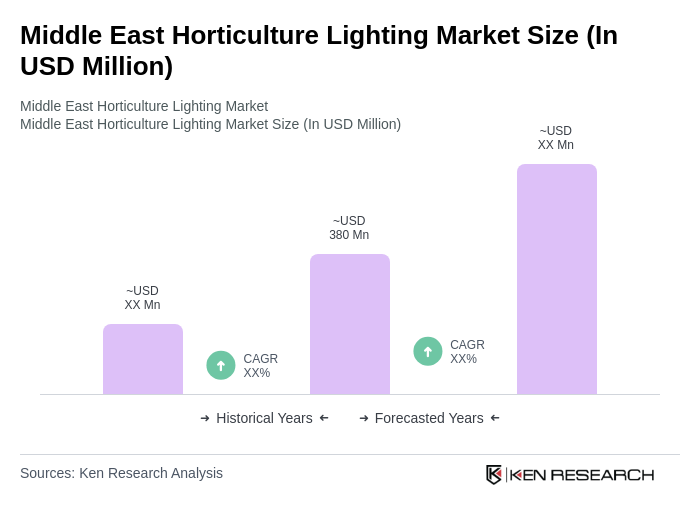
The Middle East Horticulture Lighting Market is valued at approximately USD 380 million, driven by the increasing demand for sustainable agricultural practices and advanced lighting technologies, particularly in commercial greenhouses and vertical farms.

What makes us stand out is that our consultants follow Robust, Refine and Result (RRR) methodology. Robust for clear definitions, approaches and sanity checking, Refine for differentiating respondents' facts and opinions, and Result for presenting data with story.

We have set a benchmark in the industry by offering our clients with syndicated and customized market research reports featuring coverage of entire market as well as meticulous research and analyst insights.

While we don't replace traditional research, we flip the method upside down. Our dual approach of Top Bottom & Bottom Top ensures quality deliverable by not just verifying company fundamentals but also looking at the sector and macroeconomic factors.

With one step in the future, our research team constantly tries to show you the bigger picture. We help with some of the tough questions you may encounter along the way: How is the industry positioned? Best marketing channel? KPI's of competitors? By aligning every element, we help maximize success.

Our report gives you instant access to the answers and sources that other companies might choose to hide. We elaborate each steps of research methodology we have used and showcase you the sample size to earn your trust.

If you need any support, we are here! We pride ourselves on universe strength, data quality, and quick, friendly, and professional service.













