Region:Middle East
Author(s):Geetanshi
Product Code:KRAD8255
Pages:91
Published On:December 2025
By Type:
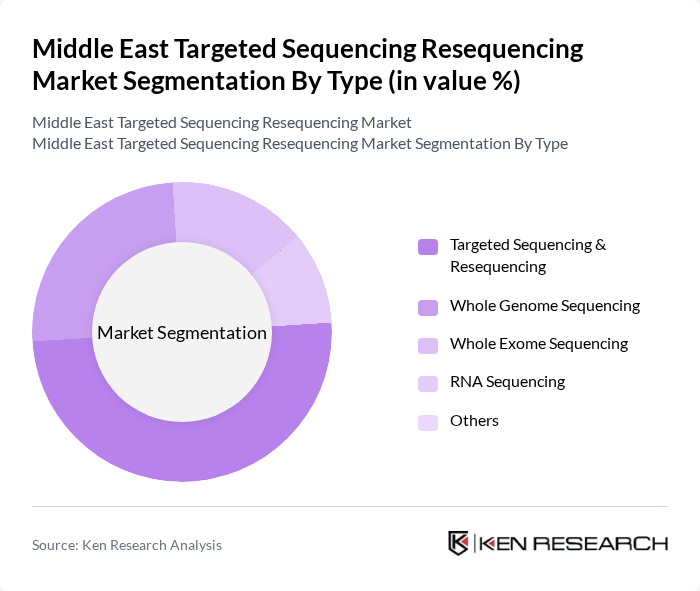
The segmentation by type includes Targeted Sequencing & Resequencing, Whole Genome Sequencing, and Whole Exome Sequencing. Among these, Targeted Sequencing & Resequencing is the leading sub-segment, driven by its cost-effectiveness and precision in identifying specific genetic mutations. This method is increasingly favored in clinical diagnostics and research settings, as it allows for focused analysis of genes associated with various diseases, particularly cancer. The growing trend towards personalized medicine further supports the dominance of this sub-segment.
By End-User:
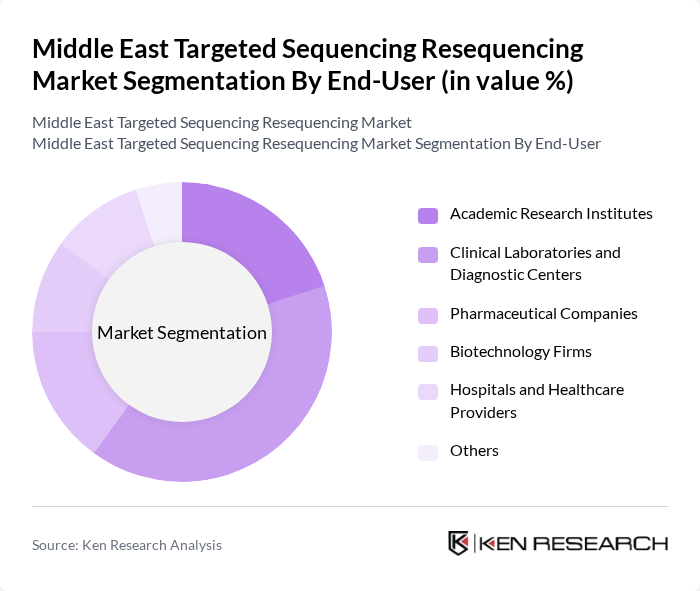
This segmentation includes Academic and Research Laboratories, Pharmaceutical and Biotechnology Companies, Hospitals and Diagnostic Centers, Clinical Diagnostics Facilities, and Others. The Pharmaceutical and Biotechnology Companies segment is currently the dominant player, as these organizations are heavily investing in genomic research and drug development. The increasing focus on precision medicine and the need for advanced diagnostic tools are driving the demand for targeted sequencing solutions in this sector.
The Middle East Targeted Sequencing Resequencing Market is characterized by a dynamic mix of regional and international players. Leading participants such as Illumina, Inc., Thermo Fisher Scientific Inc., Roche Sequencing Solutions, Agilent Technologies, Inc., BGI Genomics, QIAGEN N.V., PerkinElmer, Inc., Eurofins Scientific, Oxford Nanopore Technologies, 10x Genomics, Inc., Bio-Rad Laboratories, Inc., Myriad Genetics, Inc., Genomics BioSci & Tech (Taiwan), Adaptive Biotechnologies, Fulgent Genetics, Inc. contribute to innovation, geographic expansion, and service delivery in this space.
The future of the Middle East targeted sequencing resequencing market appears promising, driven by ongoing technological advancements and increasing investments in healthcare infrastructure. As awareness of genomic medicine grows, healthcare providers are likely to adopt these technologies more widely. Additionally, collaborations between public and private sectors will enhance research capabilities, leading to innovative solutions in personalized medicine. The integration of artificial intelligence in genomic data analysis is expected to further streamline processes and improve diagnostic accuracy, shaping the market's trajectory.
| Segment | Sub-Segments |
|---|---|
| By Type | Targeted Sequencing & Resequencing Whole Genome Sequencing Whole Exome Sequencing |
| By End-User | Academic and Research Laboratories Pharmaceutical and Biotechnology Companies Hospitals and Diagnostic Centers Clinical Diagnostics Facilities Others |
| By Application | Oncology Rare Genetic Disorders Infectious Diseases Immunology Others |
| By Technology | Amplicon-Based Sequencing Hybridization-Based Sequencing Single-Molecule Real-Time Sequencing Others |
| By Region | GCC Countries (Saudi Arabia, UAE, Kuwait, Qatar, Bahrain) Levant Region (Israel, Turkey) North Africa (South Africa) Others |
| By Research Funding Source | Government Grants Private Investments Academic Funding Others |
| By Data Management Solutions | Cloud-Based Solutions On-Premise Solutions Hybrid Solutions Others |
| Scope Item/Segment | Sample Size | Target Respondent Profiles |
|---|---|---|
| Clinical Laboratories | 120 | Laboratory Directors, Genetic Counselors |
| Healthcare Providers | 100 | Oncologists, Primary Care Physicians |
| Biotechnology Firms | 80 | R&D Managers, Product Development Leads |
| Regulatory Bodies | 50 | Policy Makers, Compliance Officers |
| Academic Institutions | 70 | Research Scientists, Professors in Genomics |
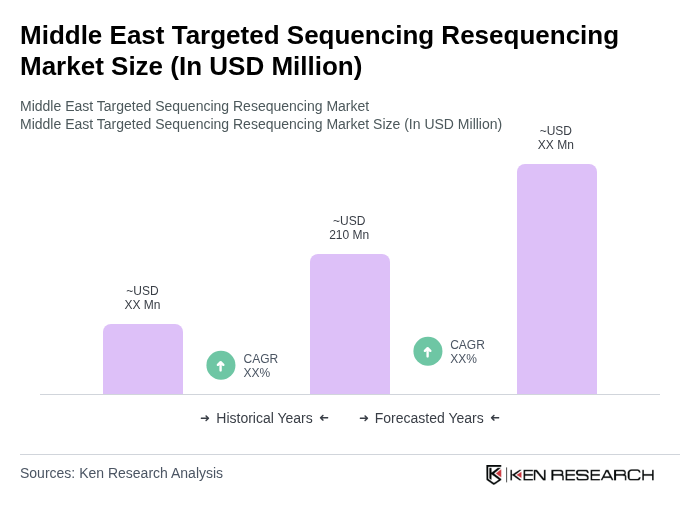
The Middle East Targeted Sequencing Resequencing Market is valued at approximately USD 210 million, reflecting significant growth driven by advancements in genomic technologies and increasing prevalence of genetic disorders.

What makes us stand out is that our consultants follow Robust, Refine and Result (RRR) methodology. Robust for clear definitions, approaches and sanity checking, Refine for differentiating respondents' facts and opinions, and Result for presenting data with story.

We have set a benchmark in the industry by offering our clients with syndicated and customized market research reports featuring coverage of entire market as well as meticulous research and analyst insights.

While we don't replace traditional research, we flip the method upside down. Our dual approach of Top Bottom & Bottom Top ensures quality deliverable by not just verifying company fundamentals but also looking at the sector and macroeconomic factors.

With one step in the future, our research team constantly tries to show you the bigger picture. We help with some of the tough questions you may encounter along the way: How is the industry positioned? Best marketing channel? KPI's of competitors? By aligning every element, we help maximize success.

Our report gives you instant access to the answers and sources that other companies might choose to hide. We elaborate each steps of research methodology we have used and showcase you the sample size to earn your trust.

If you need any support, we are here! We pride ourselves on universe strength, data quality, and quick, friendly, and professional service.













