About the Report
Base Year 2024New Zealand Advanced Persistent Threat Protection Market Overview
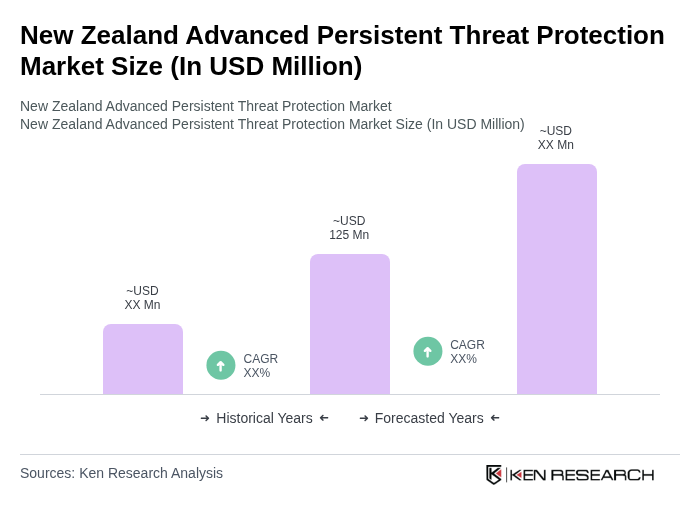
- The New Zealand Advanced Persistent Threat Protection Market is valued at USD 155 million, based on a five-year historical analysis. This growth is primarily driven by the increasing frequency of cyberattacks, the rising awareness of cybersecurity among organizations, and the surge in AI-powered threat detection technologies. The demand for advanced threat protection solutions has surged as businesses seek to safeguard their sensitive data and maintain operational integrity in a digital-first environment.
- Auckland and Wellington are the dominant cities in the New Zealand Advanced Persistent Threat Protection Market. Auckland, being the largest city, hosts numerous technology firms and startups, fostering innovation and investment in cybersecurity solutions. Wellington, as the political capital, has a strong focus on government and defense sectors, which are critical in driving demand for advanced persistent threat protection services.
- The Cyber Security Strategy 2023-2028, issued by the Department of the Prime Minister and Cabinet, mandates organizations to implement robust incident response plans and report significant cyber incidents within 72 hours to the New Zealand Computer Emergency Response Team (CERT NZ). This strategy requires critical infrastructure operators to meet minimum cybersecurity standards, including APT detection capabilities, and establishes compliance thresholds for sectors handling sensitive data.
New Zealand Advanced Persistent Threat Protection Market Segmentation
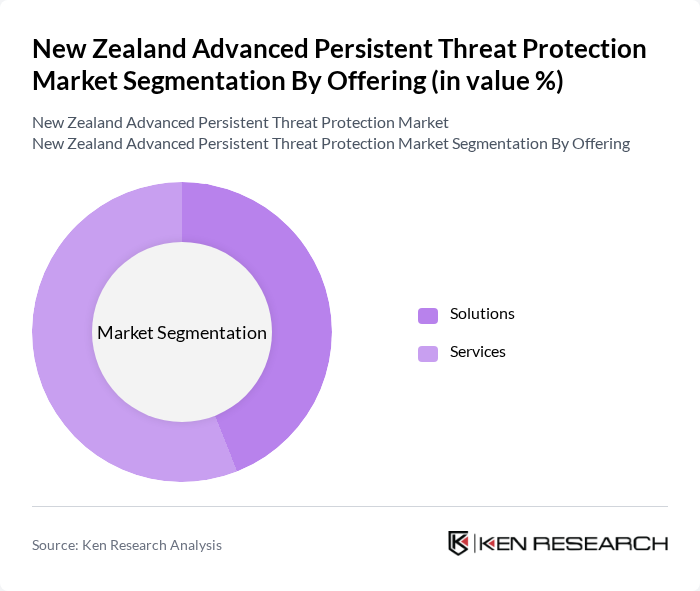
By Offering:This segmentation includes solutions and services that cater to the needs of organizations seeking advanced persistent threat protection. Solutions encompass various technologies designed to detect, prevent, and respond to cyber threats, while services provide the necessary support and expertise to implement these solutions effectively.
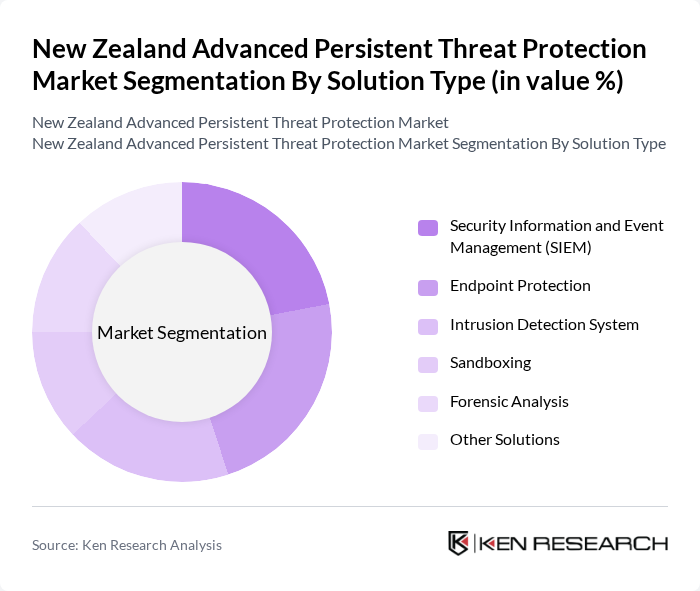
By Solution Type:This segmentation focuses on the various types of solutions available in the market, including Security Information and Event Management (SIEM), Endpoint Protection, Intrusion Detection Systems, Sandboxing, Forensic Analysis, and other solutions. Each type plays a crucial role in addressing specific cybersecurity challenges faced by organizations.
By Service Type:This segmentation includes the various services offered to support the deployment and maintenance of advanced persistent threat protection solutions. Key service types include Integration and Deployment, Support and Maintenance, and Consulting, each essential for ensuring the effectiveness of cybersecurity measures.
By Deployment Mode:This segmentation categorizes the market based on how advanced persistent threat protection solutions are deployed. The primary modes include On-Premises, Cloud, and Hybrid deployments, each offering different advantages depending on organizational needs and infrastructure.
By Enterprise Size:This segmentation distinguishes between Large Enterprises and Small and Medium Enterprises (SMEs) based on their specific cybersecurity needs and budget allocations for advanced persistent threat protection solutions.
By Vertical:This segmentation categorizes the market based on the industries that utilize advanced persistent threat protection solutions. Key verticals include BFSI, Government and Defense, Healthcare and Life Sciences, IT and Telecom, Retail and E-Commerce, Energy and Utilities, Manufacturing, Media and Entertainment, and Construction and Engineering.
By Region:This segmentation divides the market based on geographical regions, specifically focusing on the North Island and South Island of New Zealand, which have distinct cybersecurity needs and market dynamics.
New Zealand Advanced Persistent Threat Protection Market Competitive Landscape
The New Zealand Advanced Persistent Threat Protection Market is characterized by a dynamic mix of regional and international players. Leading participants such as IBM Security, Palo Alto Networks, Cisco Systems, Fortinet, Check Point Software Technologies, McAfee, Trend Micro, CrowdStrike, Mandiant (FireEye), Sophos, RSA Security, CyberArk, Splunk, Darktrace, Zscaler contribute to innovation, geographic expansion, and service delivery in this space.
New Zealand Advanced Persistent Threat Protection Market Industry Analysis
Growth Drivers
- Increasing Cybersecurity Threats:The New Zealand cybersecurity landscape is increasingly threatened, with reported incidents rising to over 5,000 in the future, a significant increase from previous years. The New Zealand Cyber Security Strategy emphasizes the need for robust defenses against advanced persistent threats (APTs). The economic impact of cybercrime in New Zealand is estimated at NZD 1.5 billion annually, driving organizations to invest in advanced threat protection solutions to safeguard their assets and data.
- Government Initiatives for Cyber Defense:The New Zealand government has allocated NZD 20 million for cybersecurity initiatives in the future, focusing on enhancing national cyber resilience. This funding supports the development of advanced persistent threat protection frameworks and encourages public-private partnerships. Additionally, the Cyber Security Strategy 2019-2023 aims to bolster the nation’s defenses, creating a favorable environment for the growth of advanced cybersecurity solutions in the market.
- Rising Adoption of Cloud Services:The cloud services market in New Zealand is projected to reach NZD 3.2 billion in the future, reflecting a growing trend among businesses to migrate to cloud-based solutions. This shift necessitates advanced persistent threat protection to secure sensitive data stored in the cloud. As organizations increasingly rely on cloud infrastructure, the demand for comprehensive security solutions to mitigate risks associated with cloud adoption is expected to surge significantly.
Market Challenges
- Shortage of Skilled Cybersecurity Professionals:New Zealand faces a critical shortage of cybersecurity professionals, with an estimated gap of 3,000 skilled workers in the future. This shortage hampers organizations' ability to implement and manage advanced persistent threat protection solutions effectively. The lack of qualified personnel leads to increased vulnerability to cyber threats, as businesses struggle to maintain adequate security measures amidst rising attack frequencies.
- High Costs of Advanced Security Solutions:The financial burden of implementing advanced persistent threat protection solutions is significant, with costs averaging NZD 150,000 per organization annually. Many small to medium-sized enterprises (SMEs) find it challenging to allocate budgets for these essential security measures. This financial barrier limits the adoption of advanced security technologies, leaving many organizations exposed to potential cyber threats and attacks.
New Zealand Advanced Persistent Threat Protection Market Future Outlook
The future of the New Zealand advanced persistent threat protection market appears promising, driven by increasing investments in cybersecurity and a heightened awareness of cyber threats. As organizations prioritize security, the demand for innovative solutions, particularly those leveraging artificial intelligence and machine learning, is expected to grow. Furthermore, the ongoing evolution of regulatory frameworks will likely compel businesses to adopt more robust security measures, ensuring a proactive approach to threat management and compliance.
Market Opportunities
- Growth in Managed Security Services:The managed security services market in New Zealand is anticipated to expand significantly, with an expected value of NZD 500 million in the future. This growth presents opportunities for advanced persistent threat protection providers to offer tailored solutions, enabling organizations to enhance their security posture without the need for extensive in-house resources.
- Development of AI-Driven Security Solutions:The integration of artificial intelligence in cybersecurity is gaining traction, with investments in AI-driven security solutions projected to reach NZD 200 million in the future. This trend offers a substantial opportunity for companies to innovate and develop advanced persistent threat protection technologies that can adapt to evolving threats, enhancing overall security effectiveness.
Scope of the Report
| Segment | Sub-Segments |
|---|---|
| By Offering | Solutions Services |
| By Solution Type | Security Information and Event Management (SIEM) Endpoint Protection Intrusion Detection System Sandboxing Forensic Analysis Other Solutions |
| By Service Type | Integration and Deployment Support and Maintenance Consulting |
| By Deployment Mode | On-Premises Cloud Hybrid |
| By Enterprise Size | Large Enterprises Small and Medium Enterprises (SMEs) |
| By Vertical | BFSI Government and Defense Healthcare and Life Sciences IT and Telecom Retail and E-Commerce Energy and Utilities Manufacturing Media and Entertainment Construction and Engineering |
| By Region | North Island South Island |
Key Target Audience
Investors and Venture Capitalist Firms
Government and Regulatory Bodies (e.g., New Zealand Security Intelligence Service, Department of Internal Affairs)
Cybersecurity Solution Providers
Telecommunications Companies
Financial Institutions
Critical Infrastructure Operators
Insurance Companies
Law Enforcement Agencies
Players Mentioned in the Report:
IBM Security
Palo Alto Networks
Cisco Systems
Fortinet
Check Point Software Technologies
McAfee
Trend Micro
CrowdStrike
Mandiant (FireEye)
Sophos
RSA Security
CyberArk
Splunk
Darktrace
Zscaler
Table of Contents
Market Assessment Phase
1. Executive Summary and Approach
2. New Zealand Advanced Persistent Threat Protection Market Overview
2.1 Key Insights and Strategic Recommendations
2.2 New Zealand Advanced Persistent Threat Protection Market Overview
2.3 Definition and Scope
2.4 Evolution of Market Ecosystem
2.5 Timeline of Key Regulatory Milestones
2.6 Value Chain & Stakeholder Mapping
2.7 Business Cycle Analysis
2.8 Policy & Incentive Landscape
3. New Zealand Advanced Persistent Threat Protection Market Analysis
3.1 Growth Drivers
3.1.1 Increasing Cybersecurity Threats
3.1.2 Government Initiatives for Cyber Defense
3.1.3 Rising Adoption of Cloud Services
3.1.4 Demand for Compliance with Data Protection Regulations
3.2 Market Challenges
3.2.1 Shortage of Skilled Cybersecurity Professionals
3.2.2 High Costs of Advanced Security Solutions
3.2.3 Rapidly Evolving Threat Landscape
3.2.4 Integration Issues with Legacy Systems
3.3 Market Opportunities
3.3.1 Growth in Managed Security Services
3.3.2 Increasing Investment in Cybersecurity Startups
3.3.3 Expansion of IoT Devices and Security Needs
3.3.4 Development of AI-Driven Security Solutions
3.4 Market Trends
3.4.1 Shift Towards Proactive Threat Hunting
3.4.2 Adoption of Zero Trust Security Models
3.4.3 Increased Focus on Endpoint Security
3.4.4 Growing Importance of Cybersecurity Awareness Training
3.5 Government Regulation
3.5.1 Privacy Act Compliance
3.5.2 Cyber Security Strategy 2019-2023
3.5.3 Critical Infrastructure Protection Regulations
3.5.4 Data Breach Notification Requirements
4. SWOT Analysis
5. Stakeholder Analysis
6. Porter's Five Forces Analysis
7. New Zealand Advanced Persistent Threat Protection Market Market Size, 2019-2024
7.1 By Value
7.2 By Volume
7.3 By Average Selling Price
8. New Zealand Advanced Persistent Threat Protection Market Segmentation
8.1 By Offering
8.1.1 Solutions
8.1.2 Services
8.2 By Solution Type
8.2.1 Security Information and Event Management (SIEM)
8.2.2 Endpoint Protection
8.2.3 Intrusion Detection System
8.2.4 Sandboxing
8.2.5 Forensic Analysis
8.2.6 Other Solutions
8.3 By Service Type
8.3.1 Integration and Deployment
8.3.2 Support and Maintenance
8.3.3 Consulting
8.4 By Deployment Mode
8.4.1 On-Premises
8.4.2 Cloud
8.4.3 Hybrid
8.5 By Enterprise Size
8.5.1 Large Enterprises
8.5.2 Small and Medium Enterprises (SMEs)
8.6 By Vertical
8.6.1 BFSI
8.6.2 Government and Defense
8.6.3 Healthcare and Life Sciences
8.6.4 IT and Telecom
8.6.5 Retail and E-Commerce
8.6.6 Energy and Utilities
8.6.7 Manufacturing
8.6.8 Media and Entertainment
8.6.9 Construction and Engineering
8.7 By Region
8.7.1 North Island
8.7.2 South Island
9. New Zealand Advanced Persistent Threat Protection Market Competitive Analysis
9.1 Market Share of Key Players
9.2 Cross Comparison of Key Players
9.2.1 Company Name
9.2.2 Enterprise Value
9.2.3 Revenue Growth Rate (YoY)
9.2.4 EBITDA Margin
9.2.5 Market Share (%)
9.2.6 Customer Lifetime Value (CLV)
9.2.7 Total Addressable Market (TAM) Penetration
9.2.8 Return on Invested Capital (ROIC)
9.2.9 Net Promoter Score (NPS)
9.2.10 R&D Spend as % of Revenue
9.3 SWOT Analysis of Top Players
9.4 Pricing Analysis
9.5 Detailed Profile of Major Companies
9.5.1 IBM Security
9.5.2 Palo Alto Networks
9.5.3 Cisco Systems
9.5.4 Fortinet
9.5.5 Check Point Software Technologies
9.5.6 McAfee
9.5.7 Trend Micro
9.5.8 CrowdStrike
9.5.9 Mandiant (FireEye)
9.5.10 Sophos
9.5.11 RSA Security
9.5.12 CyberArk
9.5.13 Splunk
9.5.14 Darktrace
9.5.15 Zscaler
10. New Zealand Advanced Persistent Threat Protection Market End-User Analysis
10.1 Procurement Behavior of Key Ministries
10.1.1 Budget Allocation Trends
10.1.2 Decision-Making Processes
10.1.3 Preferred Vendors
10.1.4 Compliance Requirements
10.2 Corporate Spend on Infrastructure & Energy
10.2.1 Investment Trends in Cybersecurity
10.2.2 Budget Prioritization
10.2.3 Long-term Contracts
10.2.4 Technology Upgrades
10.3 Pain Point Analysis by End-User Category
10.3.1 Security Breaches
10.3.2 Compliance Challenges
10.3.3 Resource Limitations
10.3.4 Integration Difficulties
10.4 User Readiness for Adoption
10.4.1 Awareness Levels
10.4.2 Training Needs
10.4.3 Technology Acceptance
10.4.4 Budget Readiness
10.5 Post-Deployment ROI and Use Case Expansion
10.5.1 Performance Metrics
10.5.2 Use Case Diversification
10.5.3 Customer Feedback
10.5.4 Long-term Value Realization
11. New Zealand Advanced Persistent Threat Protection Market Future Size, 2025-2030
11.1 By Value
11.2 By Volume
11.3 By Average Selling Price
Go-To-Market Strategy Phase
1. Whitespace Analysis + Business Model Canvas
1.1 Market Gaps Identification
1.2 Value Proposition Development
1.3 Revenue Streams
1.4 Cost Structure Analysis
1.5 Key Partnerships
1.6 Customer Segments
1.7 Channels
2. Marketing and Positioning Recommendations
2.1 Branding Strategies
2.2 Product USPs
2.3 Target Audience Identification
2.4 Communication Strategy
2.5 Digital Marketing Tactics
3. Distribution Plan
3.1 Urban Retail Strategies
3.2 Rural NGO Tie-ups
3.3 Online Distribution Channels
3.4 Direct Sales Approaches
4. Channel & Pricing Gaps
4.1 Underserved Routes
4.2 Pricing Bands Analysis
4.3 Competitor Pricing Comparison
5. Unmet Demand & Latent Needs
5.1 Category Gaps
5.2 Consumer Segments
5.3 Emerging Trends
6. Customer Relationship
6.1 Loyalty Programs
6.2 After-sales Service
6.3 Customer Engagement Strategies
7. Value Proposition
7.1 Sustainability Initiatives
7.2 Integrated Supply Chains
7.3 Customer-Centric Solutions
8. Key Activities
8.1 Regulatory Compliance
8.2 Branding Efforts
8.3 Distribution Setup
9. Entry Strategy Evaluation
9.1 Domestic Market Entry Strategy
9.1.1 Product Mix
9.1.2 Pricing Band
9.1.3 Packaging
9.2 Export Entry Strategy
9.2.1 Target Countries
9.2.2 Compliance Roadmap
10. Entry Mode Assessment
10.1 Joint Ventures
10.2 Greenfield Investments
10.3 Mergers & Acquisitions
10.4 Distributor Model
11. Capital and Timeline Estimation
11.1 Capital Requirements
11.2 Timelines
12. Control vs Risk Trade-Off
12.1 Ownership vs Partnerships
13. Profitability Outlook
13.1 Breakeven Analysis
13.2 Long-term Sustainability
14. Potential Partner List
14.1 Distributors
14.2 Joint Ventures
14.3 Acquisition Targets
15. Execution Roadmap
15.1 Phased Plan for Market Entry
15.1.1 Market Setup
15.1.2 Market Entry
15.1.3 Growth Acceleration
15.1.4 Scale & Stabilize
15.2 Key Activities and Milestones
15.2.1 Milestone Planning
15.2.2 Activity Tracking
Research Methodology
Phase 1: Approach1
Desk Research
- Analysis of government publications and cybersecurity frameworks from New Zealand's National Cyber Security Centre
- Review of industry reports and white papers from cybersecurity associations and think tanks
- Examination of market trends and forecasts from reputable market research databases
Primary Research
- Interviews with cybersecurity experts and analysts specializing in advanced persistent threats (APTs)
- Surveys targeting IT security managers and CISO roles across various sectors
- Field interviews with incident response teams and threat intelligence analysts
Validation & Triangulation
- Cross-validation of findings through multiple data sources, including government and private sector reports
- Triangulation of qualitative insights from interviews with quantitative data from surveys
- Sanity checks conducted through expert panel reviews and feedback sessions
Phase 2: Market Size Estimation1
Top-down Assessment
- Estimation of the market size based on national cybersecurity spending and budget allocations
- Segmentation of the market by industry verticals such as finance, healthcare, and government
- Incorporation of growth rates from historical data and projected increases in cyber threats
Bottom-up Modeling
- Collection of firm-level data from leading cybersecurity service providers in New Zealand
- Operational cost analysis based on service offerings and pricing models
- Volume x cost calculations for various APT protection services and solutions
Forecasting & Scenario Analysis
- Multi-factor regression analysis incorporating variables such as digital transformation and remote work trends
- Scenario modeling based on potential regulatory changes and evolving threat landscapes
- Development of baseline, optimistic, and pessimistic forecasts through 2030
Phase 3: CATI Sample Composition1
| Scope Item/Segment | Sample Size | Target Respondent Profiles |
|---|---|---|
| Financial Sector Cybersecurity | 100 | CISOs, IT Security Managers |
| Healthcare Data Protection | 80 | Compliance Officers, IT Directors |
| Government Cyber Defense Strategies | 70 | Policy Makers, Cybersecurity Analysts |
| Retail Sector Threat Mitigation | 60 | Operations Managers, Risk Management Officers |
| Telecommunications Security Measures | 90 | Network Security Engineers, Incident Response Teams |
Frequently Asked Questions
What is the current value of the New Zealand Advanced Persistent Threat Protection Market?
The New Zealand Advanced Persistent Threat Protection Market is valued at approximately USD 155 million, reflecting a significant increase driven by the rising frequency of cyberattacks and the growing demand for advanced cybersecurity solutions among organizations.
Which cities are the primary hubs for the Advanced Persistent Threat Protection Market in New Zealand?
What are the key drivers of growth in the New Zealand Advanced Persistent Threat Protection Market?
What challenges does the New Zealand Advanced Persistent Threat Protection Market face?
Other Regional/Country Reports
Other Adjacent Reports
Egypt Endpoint Protection Market
South Africa Intrusion Detection System Market
UAE Security Information and Event Management MarketBahrain cloud security market Size, Share, Growth Drivers, Trends, Opportunities & Forecast 2025–2030Ksa Managed Security Services Market Size, Share, Growth Drivers, Trends, Opportunities & Forecast 2025–2030Bahrain threat intelligence market size, share, growth drivers, trends, opportunities & forecast 2025–2030Thailand Network Firewall Market
Mexico AI-Driven Security Market
Qatar Incident Response Market Report Size, Share, Growth Drivers, Trends, Opportunities & Forecast 2025–2030Why Buy From Us?

What makes us stand out is that our consultants follow Robust, Refine and Result (RRR) methodology. Robust for clear definitions, approaches and sanity checking, Refine for differentiating respondents' facts and opinions, and Result for presenting data with story.

We have set a benchmark in the industry by offering our clients with syndicated and customized market research reports featuring coverage of entire market as well as meticulous research and analyst insights.

While we don't replace traditional research, we flip the method upside down. Our dual approach of Top Bottom & Bottom Top ensures quality deliverable by not just verifying company fundamentals but also looking at the sector and macroeconomic factors.

With one step in the future, our research team constantly tries to show you the bigger picture. We help with some of the tough questions you may encounter along the way: How is the industry positioned? Best marketing channel? KPI's of competitors? By aligning every element, we help maximize success.

Our report gives you instant access to the answers and sources that other companies might choose to hide. We elaborate each steps of research methodology we have used and showcase you the sample size to earn your trust.

If you need any support, we are here! We pride ourselves on universe strength, data quality, and quick, friendly, and professional service.