Region:Global
Author(s):Geetanshi
Product Code:KRAA4208
Pages:80
Published On:January 2026
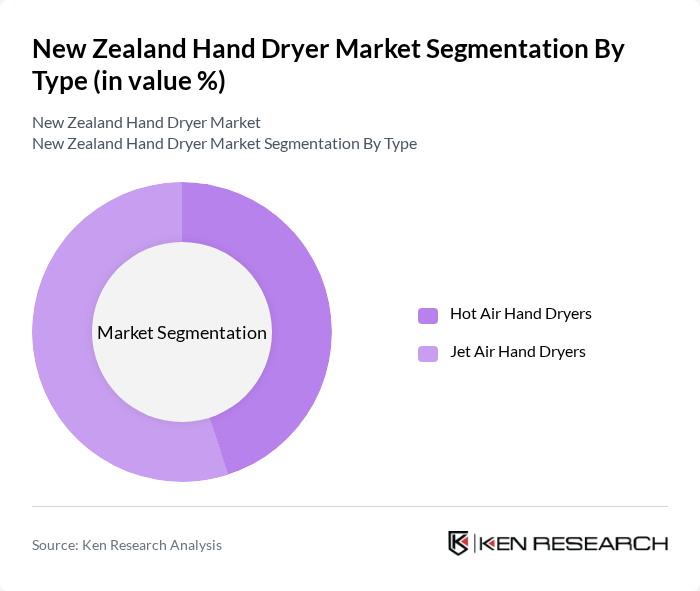
By Type:The market is segmented into two main types: Hot Air Hand Dryers and Jet Air Hand Dryers. Hot Air Hand Dryers are widely used due to their affordability, simpler technology, and ease of installation, particularly in small and mid-sized facilities. Jet Air Hand Dryers are gaining popularity for their faster drying times, lower energy consumption per use, and modern designs, and they account for the larger share of new installations in many developed markets. The increasing preference for energy-efficient and high-speed solutions is driving the demand for Jet Air Hand Dryers, which are perceived as more hygienic, user?friendly, and environmentally friendly, especially when combined with HEPA filtration and touchless activation.
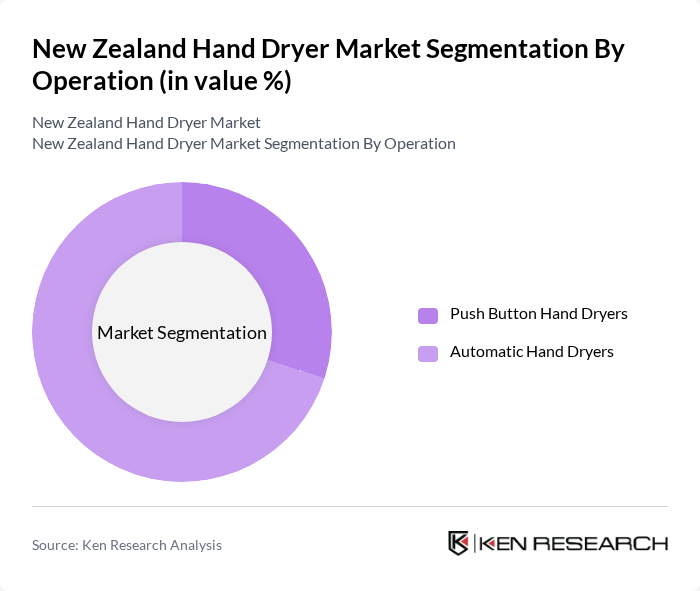
By Operation:The market is divided into Push Button Hand Dryers and Automatic Hand Dryers. Automatic Hand Dryers are increasingly preferred due to their touchless, sensor?based operation, which enhances hygiene, reduces cross?contamination risk, and improves user convenience in high?traffic restrooms. The growing awareness of infection control in public spaces, accelerated by recent global health events, along with facility managers’ preference for low?contact fixtures, is driving the shift towards automatic models, making them the leading segment in the market. Push Button Hand Dryers remain present in cost?sensitive or legacy installations but are gradually being replaced during refurbishment cycles.
The New Zealand Hand Dryer Market is characterized by a dynamic mix of regional and international players. Leading participants such as Dyson Ltd., Mitsubishi Electric Corporation, World Dryer Corporation, Bobrick Washroom Equipment, Inc., TOTO Ltd., Saniflow Corporation, American Dryer Corp. (World Dryer), Excel Dryer, Inc., Airdri Ltd., Veltia (Veltia Hand Dryers), Ecoway / EcoFast Hand Dryers, Hand Dryers Australia, Sunkist, Kresta, Airdry contribute to innovation, geographic expansion, and service delivery in this space.
The New Zealand hand dryer market is poised for growth, driven by increasing hygiene awareness and technological advancements. As businesses and public facilities prioritize sanitation, the demand for efficient, eco-friendly hand dryers will rise. Additionally, the shift towards touchless technology and energy-efficient models will shape product offerings. With government regulations supporting sustainability, the market is expected to evolve, presenting opportunities for innovation and partnerships that enhance user experience and operational efficiency.
| Segment | Sub-Segments |
|---|---|
| By Type | Hot Air Hand Dryers Jet Air Hand Dryers |
| By Operation | Push Button Hand Dryers Automatic Hand Dryers |
| By Mounting Technique | Surface-Mounted Wall-Mounted |
| By End-User | Hotels & Restaurants Commercial Complexes & Shopping Malls Office Buildings & Corporate Facilities Hospitals & Healthcare Facilities Airports & Transport Hubs Educational Institutions Public Restrooms & Government Buildings Others |
| By Distribution Channel | Offline (Distributors, Dealers, Project Channels) Online (E-commerce, Direct Digital Sales) |
| Scope Item/Segment | Sample Size | Target Respondent Profiles |
|---|---|---|
| Commercial Building Management | 100 | Facility Managers, Building Owners |
| Healthcare Facilities | 90 | Hospital Administrators, Infection Control Officers |
| Educational Institutions | 80 | School Administrators, Maintenance Supervisors |
| Hospitality Sector | 90 | Hotel Managers, Restaurant Owners |
| Public Restroom Facilities | 70 | Municipal Facility Managers, Sanitation Supervisors |
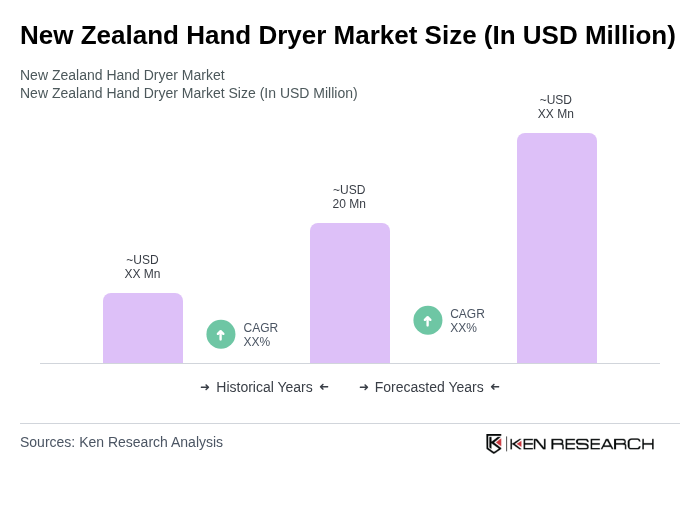
The New Zealand Hand Dryer Market is valued at approximately USD 20 million, reflecting a significant increase driven by heightened hygiene awareness, sustainability initiatives, and the adoption of touchless technology in public and commercial restrooms.

What makes us stand out is that our consultants follow Robust, Refine and Result (RRR) methodology. Robust for clear definitions, approaches and sanity checking, Refine for differentiating respondents' facts and opinions, and Result for presenting data with story.

We have set a benchmark in the industry by offering our clients with syndicated and customized market research reports featuring coverage of entire market as well as meticulous research and analyst insights.

While we don't replace traditional research, we flip the method upside down. Our dual approach of Top Bottom & Bottom Top ensures quality deliverable by not just verifying company fundamentals but also looking at the sector and macroeconomic factors.

With one step in the future, our research team constantly tries to show you the bigger picture. We help with some of the tough questions you may encounter along the way: How is the industry positioned? Best marketing channel? KPI's of competitors? By aligning every element, we help maximize success.

Our report gives you instant access to the answers and sources that other companies might choose to hide. We elaborate each steps of research methodology we have used and showcase you the sample size to earn your trust.

If you need any support, we are here! We pride ourselves on universe strength, data quality, and quick, friendly, and professional service.













