Region:Global
Author(s):Geetanshi
Product Code:KRAE0530
Pages:90
Published On:February 2026
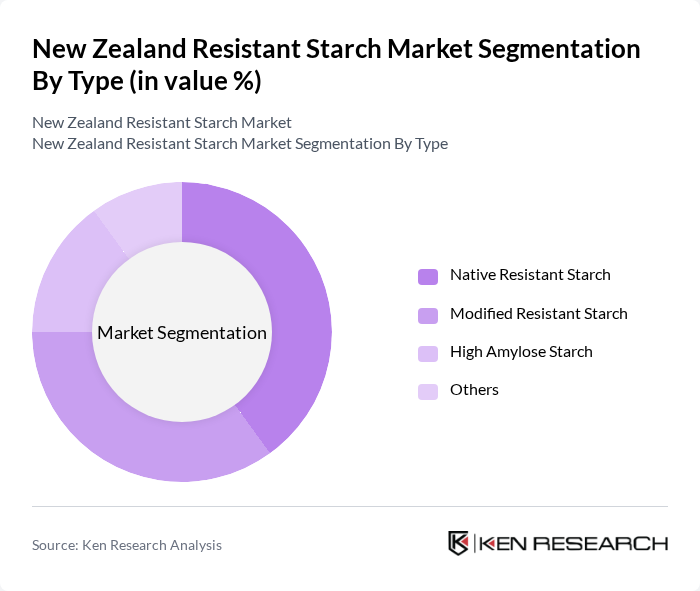
By Type:The market is segmented into Native Resistant Starch, Modified Resistant Starch, High Amylose Starch, and Others. Native Resistant Starch is derived from natural sources and is widely used in food applications due to its health benefits. Modified Resistant Starch is processed to enhance its functional properties, making it popular in various food formulations. High Amylose Starch is recognized for its unique health benefits, particularly in weight management and blood sugar control. The "Others" category includes various starch types that do not fit into the primary classifications.
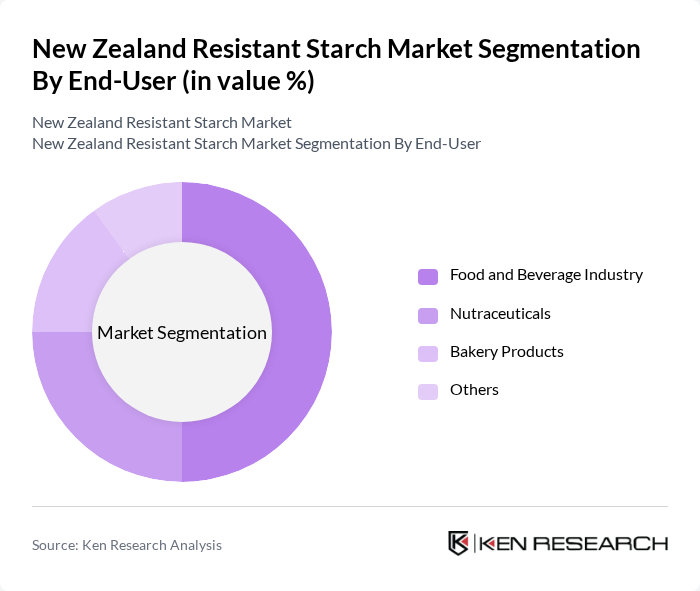
By End-User:The end-user segmentation includes the Food and Beverage Industry, Nutraceuticals, Bakery Products, and Others. The Food and Beverage Industry is the largest consumer of resistant starch, utilizing it in various products to enhance health benefits. Nutraceuticals are gaining traction as consumers increasingly seek supplements that support health. Bakery Products are also significant, as resistant starch is used to improve texture and nutritional value. The "Others" category encompasses various niche applications.
The New Zealand Resistant Starch Market is characterized by a dynamic mix of regional and international players. Leading participants such as The Food Innovation Network, Cereals New Zealand, New Zealand Starch Limited, Health Ingredients New Zealand, Pure Food Company, New Zealand Functional Foods, Starch Solutions, Kiwi Starch Co., BioStarch New Zealand, Green Starch Innovations, Starch & Co., NutraStarch NZ, StarchTech New Zealand, Food Starch Solutions, Starch Innovations Ltd. contribute to innovation, geographic expansion, and service delivery in this space.
The future of the New Zealand resistant starch market appears promising, driven by increasing health consciousness and a shift towards functional foods. As consumers continue to prioritize health and wellness, the demand for resistant starch is expected to rise, particularly in gluten-free and plant-based products. Innovations in product development and sustainable sourcing practices will likely play a crucial role in shaping the market landscape, enabling manufacturers to meet evolving consumer preferences while addressing environmental concerns.
| Segment | Sub-Segments |
|---|---|
| By Type | Native Resistant Starch Modified Resistant Starch High Amylose Starch Others |
| By End-User | Food and Beverage Industry Nutraceuticals Bakery Products Others |
| By Source | Corn Potato Wheat Others |
| By Application | Food Additives Dietary Supplements Functional Foods Others |
| By Distribution Channel | Online Retail Supermarkets/Hypermarkets Specialty Stores Others |
| By Region | North Island South Island Others |
| By Consumer Demographics | Age Group Health Conscious Consumers Fitness Enthusiasts Others |
| Scope Item/Segment | Sample Size | Target Respondent Profiles |
|---|---|---|
| Health Food Retailers | 100 | Store Managers, Product Buyers |
| Food Manufacturers | 80 | Product Development Managers, Quality Assurance Officers |
| Nutrition Experts | 60 | Registered Dietitians, Nutrition Researchers |
| Consumer Focus Groups | 75 | Health-Conscious Consumers, Fitness Enthusiasts |
| Market Analysts | 50 | Industry Analysts, Market Research Professionals |
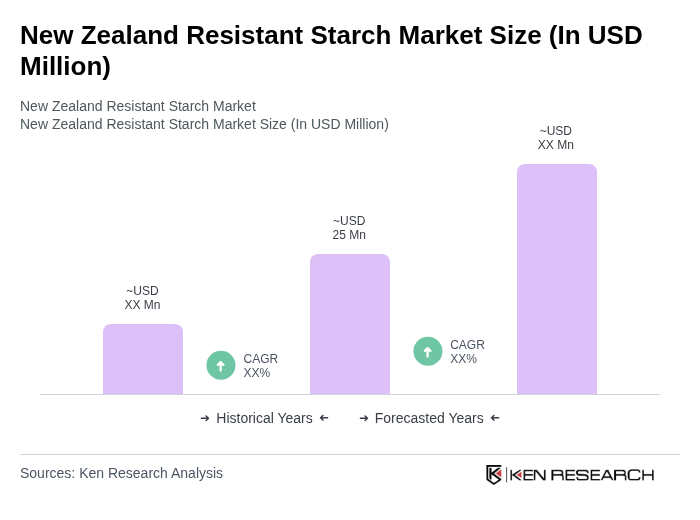
The New Zealand Resistant Starch Market is valued at approximately USD 25 million, reflecting a growing consumer interest in health benefits associated with resistant starch, such as improved gut health and weight management.

What makes us stand out is that our consultants follow Robust, Refine and Result (RRR) methodology. Robust for clear definitions, approaches and sanity checking, Refine for differentiating respondents' facts and opinions, and Result for presenting data with story.

We have set a benchmark in the industry by offering our clients with syndicated and customized market research reports featuring coverage of entire market as well as meticulous research and analyst insights.

While we don't replace traditional research, we flip the method upside down. Our dual approach of Top Bottom & Bottom Top ensures quality deliverable by not just verifying company fundamentals but also looking at the sector and macroeconomic factors.

With one step in the future, our research team constantly tries to show you the bigger picture. We help with some of the tough questions you may encounter along the way: How is the industry positioned? Best marketing channel? KPI's of competitors? By aligning every element, we help maximize success.

Our report gives you instant access to the answers and sources that other companies might choose to hide. We elaborate each steps of research methodology we have used and showcase you the sample size to earn your trust.

If you need any support, we are here! We pride ourselves on universe strength, data quality, and quick, friendly, and professional service.













