Region:Global
Author(s):Dev
Product Code:KRAA6764
Pages:87
Published On:January 2026
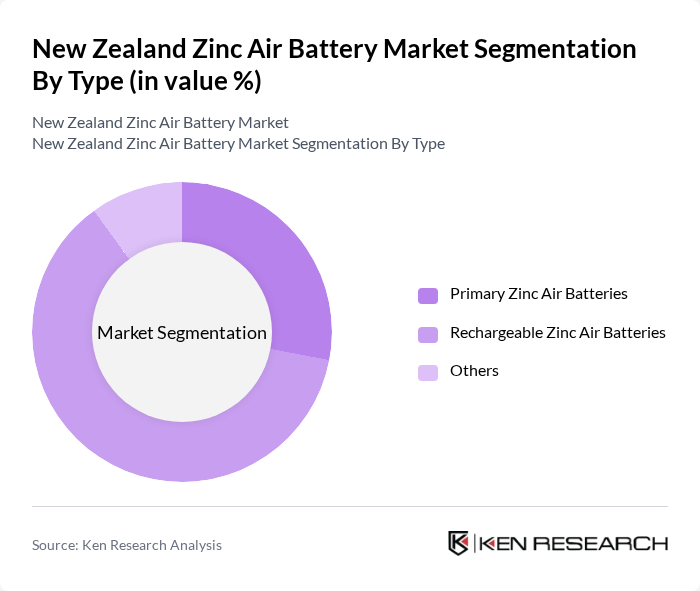
By Type:The market can be segmented into three main types: Primary Zinc Air Batteries, Rechargeable Zinc Air Batteries, and Others. Primary Zinc Air Batteries are widely used in hearing aids and other small electronic devices due to their high energy density and lightweight characteristics. Rechargeable Zinc Air Batteries are gaining significant traction in applications requiring longer life cycles and sustainability, with the rechargeable segment projected to hold approximately 72% of the global market share, fueled by long shelf life, durability, and growing environmental concerns. The "Others" category includes specialized batteries used in niche applications.
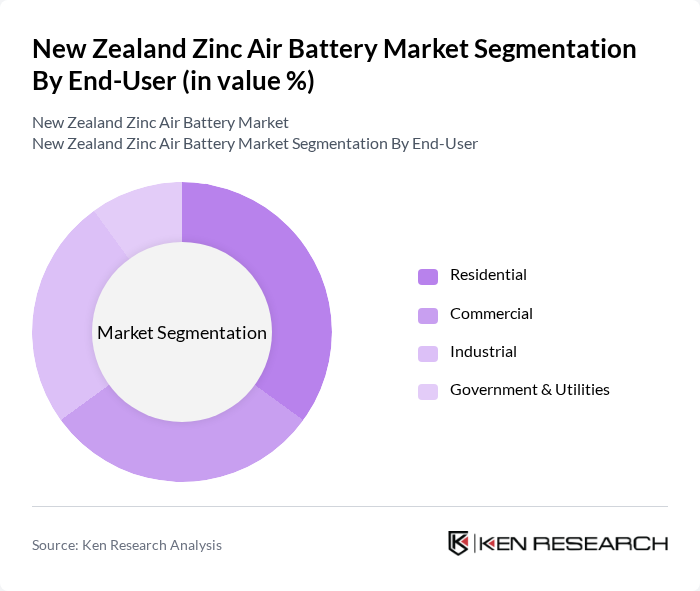
By End-User:The end-user segmentation includes Residential, Commercial, Industrial, and Government & Utilities. The Residential segment is experiencing significant growth as homeowners increasingly adopt energy storage solutions for solar power systems. The Commercial sector is also expanding, driven by businesses seeking to enhance energy efficiency and reduce operational costs. Industrial applications are growing due to the need for reliable power sources in manufacturing processes, while Government & Utilities are investing in large-scale energy storage projects.
The New Zealand Zinc Air Battery Market is characterized by a dynamic mix of regional and international players. Leading participants such as Powertech Systems, ZINC Air Technologies, EnerSys, Panasonic Corporation, Duracell, VARTA AG, Exide Technologies, Toshiba Corporation, A123 Systems, Saft Groupe S.A., GS Yuasa Corporation, NEC Energy Solutions, BYD Company Limited, LG Chem, Samsung SDI contribute to innovation, geographic expansion, and service delivery in this space.
The future of the New Zealand zinc air battery market appears promising, driven by increasing investments in renewable energy and technological advancements. As the government continues to support clean energy initiatives, the market is likely to see enhanced collaboration between battery manufacturers and technology firms. Additionally, the growing trend towards decentralized energy systems will further bolster the demand for efficient energy storage solutions, positioning zinc air batteries as a viable option for both residential and commercial applications.
| Segment | Sub-Segments |
|---|---|
| By Type | Primary Zinc Air Batteries Rechargeable Zinc Air Batteries Others |
| By End-User | Residential Commercial Industrial Government & Utilities |
| By Application | Energy Storage Systems Electric Vehicles Portable Electronics Others |
| By Distribution Channel | Direct Sales Online Retail Distributors Others |
| By Technology | Conventional Zinc Air Technology Advanced Zinc Air Technology Others |
| By Market Segment | Utility-Scale Commercial Scale Residential Scale Others |
| By Policy Support | Subsidies Tax Exemptions Renewable Energy Certificates (RECs) Others |
| Scope Item/Segment | Sample Size | Target Respondent Profiles |
|---|---|---|
| Automotive Battery Applications | 100 | Product Managers, R&D Engineers |
| Consumer Electronics Integration | 80 | Supply Chain Managers, Product Development Leads |
| Renewable Energy Storage Solutions | 90 | Energy Analysts, Project Managers |
| Industrial Applications of Zinc Air Batteries | 70 | Operations Managers, Procurement Specialists |
| Research Institutions and Academia | 60 | Research Scientists, Professors in Energy Studies |
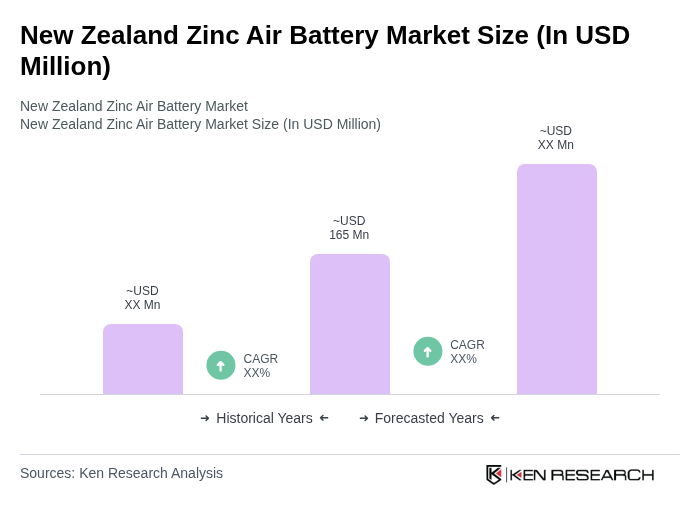
The New Zealand Zinc Air Battery market is valued at approximately USD 165 million, driven by the increasing demand for sustainable energy solutions and advancements in battery technology, particularly in electric vehicles and renewable energy systems.

What makes us stand out is that our consultants follow Robust, Refine and Result (RRR) methodology. Robust for clear definitions, approaches and sanity checking, Refine for differentiating respondents' facts and opinions, and Result for presenting data with story.

We have set a benchmark in the industry by offering our clients with syndicated and customized market research reports featuring coverage of entire market as well as meticulous research and analyst insights.

While we don't replace traditional research, we flip the method upside down. Our dual approach of Top Bottom & Bottom Top ensures quality deliverable by not just verifying company fundamentals but also looking at the sector and macroeconomic factors.

With one step in the future, our research team constantly tries to show you the bigger picture. We help with some of the tough questions you may encounter along the way: How is the industry positioned? Best marketing channel? KPI's of competitors? By aligning every element, we help maximize success.

Our report gives you instant access to the answers and sources that other companies might choose to hide. We elaborate each steps of research methodology we have used and showcase you the sample size to earn your trust.

If you need any support, we are here! We pride ourselves on universe strength, data quality, and quick, friendly, and professional service.













