Region:North America
Author(s):Rebecca
Product Code:KRAA2414
Pages:89
Published On:August 2025
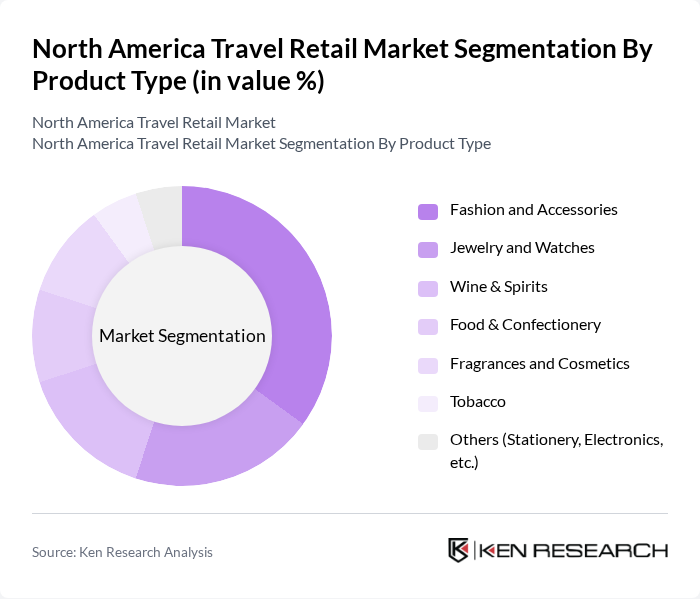
By Product Type:The product type segmentation includes various categories such as Fashion and Accessories, Jewelry and Watches, Wine & Spirits, Food & Confectionery, Fragrances and Cosmetics, Tobacco, and Others (Stationery, Electronics, etc.). Among these, Fashion and Accessories have emerged as the leading subsegment, driven by consumer preferences for luxury items and branded products during travel. The growing trend of personalized shopping experiences, the influence of social media on fashion choices, and the increasing availability of exclusive travel retail collections have further propelled this segment's growth .
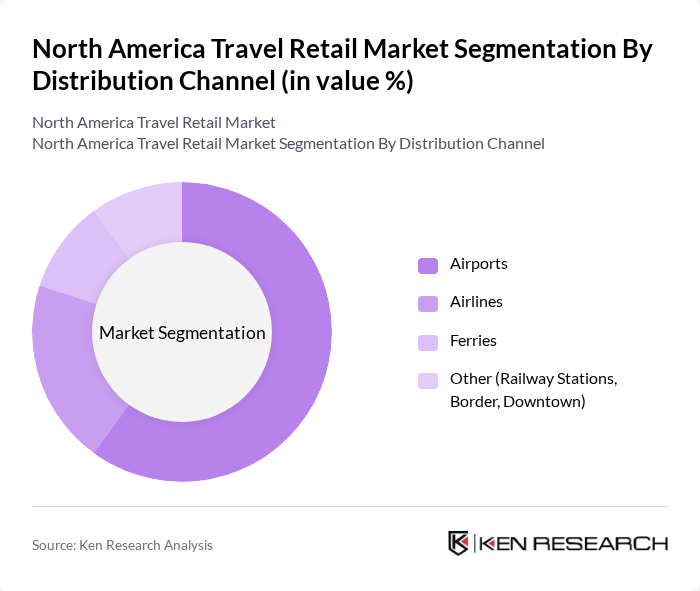
By Distribution Channel:The distribution channel segmentation includes Airports, Airlines, Ferries, and Other (Railway Stations, Border, Downtown). Airports are the dominant distribution channel, accounting for a significant portion of travel retail sales. The convenience of shopping at airports, coupled with the wide range of products available, makes it a preferred choice for travelers. Additionally, the increasing number of international flights, the expansion of airport retail spaces, and the integration of digital retail solutions contribute to the growth of this channel .
The North America Travel Retail Market is characterized by a dynamic mix of regional and international players. Leading participants such as Dufry AG, Lagardère Travel Retail, DFS Group Limited, Gebr. Heinemann SE & Co. KG, Duty Free Americas Inc., World Duty Free Group, Aer Rianta International, The Estée Lauder Companies Inc., L'Oréal Group, Bacardi Limited, Pernod Ricard, Moët Hennessy Louis Vuitton (LVMH), Coty Inc., Philip Morris International Inc., British American Tobacco plc contribute to innovation, geographic expansion, and service delivery in this space.
The North America travel retail market is poised for significant transformation, driven by evolving consumer preferences and technological advancements. As travelers increasingly seek personalized shopping experiences, retailers will need to leverage data analytics to tailor offerings. Additionally, sustainability initiatives will play a crucial role in attracting environmentally conscious consumers. The integration of digital payment solutions will streamline transactions, enhancing customer satisfaction and potentially increasing sales in the coming years.
| Segment | Sub-Segments |
|---|---|
| By Product Type | Fashion and Accessories Jewelry and Watches Wine & Spirits Food & Confectionery Fragrances and Cosmetics Tobacco Others (Stationery, Electronics, etc.) |
| By Distribution Channel | Airports Airlines Ferries Other (Railway Stations, Border, Downtown) |
| By Geography | United States Canada |
| Scope Item/Segment | Sample Size | Target Respondent Profiles |
|---|---|---|
| Airport Retail Purchases | 120 | Frequent Travelers, Airport Retail Managers |
| Luxury Goods Sales | 90 | Luxury Brand Representatives, High-Value Travelers |
| Duty-Free Alcohol Sales | 60 | Duty-Free Shop Managers, Beverage Brand Executives |
| Cosmetics and Fragrances Market | 50 | Cosmetics Brand Managers, Retail Buyers |
| Travel Retail Trends | 70 | Travel Industry Analysts, Market Research Professionals |
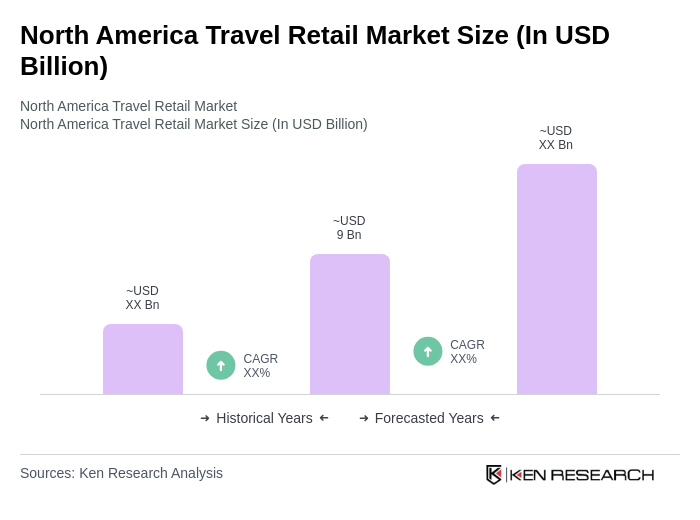
The North America Travel Retail Market is valued at approximately USD 9 billion, reflecting a significant growth driven by increased international travel, rising disposable incomes, and a trend towards luxury shopping among consumers in airports and travel hubs.

What makes us stand out is that our consultants follow Robust, Refine and Result (RRR) methodology. Robust for clear definitions, approaches and sanity checking, Refine for differentiating respondents' facts and opinions, and Result for presenting data with story.

We have set a benchmark in the industry by offering our clients with syndicated and customized market research reports featuring coverage of entire market as well as meticulous research and analyst insights.

While we don't replace traditional research, we flip the method upside down. Our dual approach of Top Bottom & Bottom Top ensures quality deliverable by not just verifying company fundamentals but also looking at the sector and macroeconomic factors.

With one step in the future, our research team constantly tries to show you the bigger picture. We help with some of the tough questions you may encounter along the way: How is the industry positioned? Best marketing channel? KPI's of competitors? By aligning every element, we help maximize success.

Our report gives you instant access to the answers and sources that other companies might choose to hide. We elaborate each steps of research methodology we have used and showcase you the sample size to earn your trust.

If you need any support, we are here! We pride ourselves on universe strength, data quality, and quick, friendly, and professional service.













