About the Report
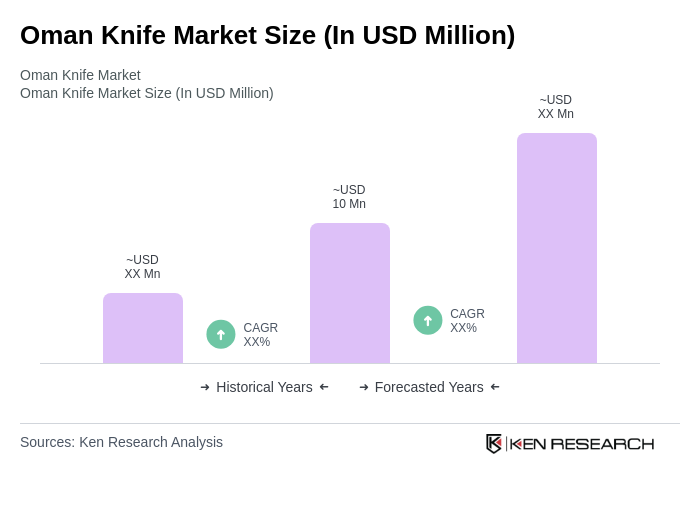
Base Year 2024Oman Knife Market Overview
- The Oman Knife Market is valued at USD 10 million, based on a five-year historical analysis. This growth is primarily driven by the increasing demand for both traditional and modern knives, influenced by cultural significance, the popularity of the traditional Omani Khanjar, and the expansion of outdoor and culinary activities. The rise in tourism and outdoor recreational activities continues to fuel the market, as knives are essential tools for both culinary and adventure purposes. The growing trend of premium and specialty knives, as well as the expansion of online retail channels, are further contributing to market growth .
- Key cities such as Muscat, Salalah, and Sohar dominate the market due to their rich cultural heritage and tourism appeal. Muscat, being the capital, serves as a hub for both local artisans and international brands, while Salalah attracts tourists interested in traditional Omani craftsmanship, especially during the Khareef season. Sohar, with its historical significance in trade and artisanal crafts, also contributes to the market's growth through both local production and distribution networks .
- The Omani government regulates the manufacture and sale of knives under the “Oman Standard Specification for Cutlery and Knives, OSS 1234:2023,” issued by the Ministry of Commerce, Industry and Investment Promotion. This regulation mandates that a minimum of 30% of knives sold in the domestic market must be produced locally, with compliance monitored through annual reporting and random inspections. The regulation aims to support local artisans, preserve traditional craftsmanship, and promote the domestic knife industry.
Oman Knife Market Segmentation
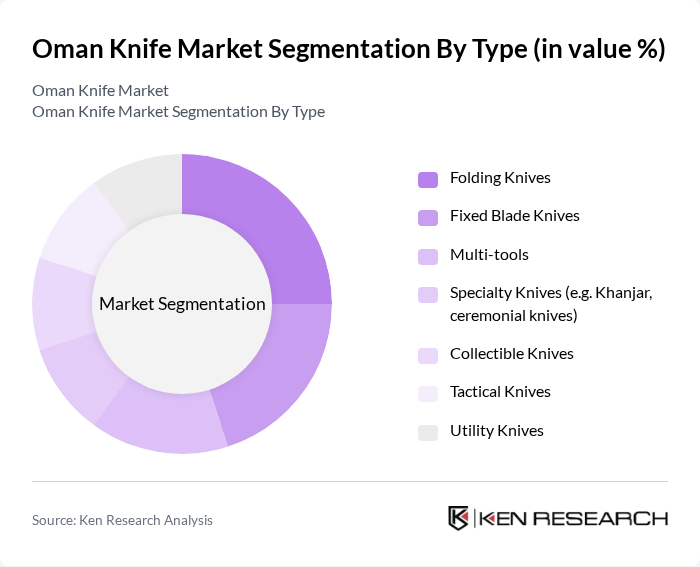
By Type:The market is segmented into various types of knives, including Folding Knives, Fixed Blade Knives, Multi-tools, Specialty Knives (such as the traditional Khanjar and ceremonial knives), Collectible Knives, Tactical Knives, and Utility Knives. Each type serves different consumer needs, from everyday utility and culinary use to specialized outdoor, ceremonial, and collectible purposes. The prominence of the Khanjar as a cultural symbol continues to drive demand for specialty and collectible knives, while folding and fixed blade knives remain popular for general and outdoor use .
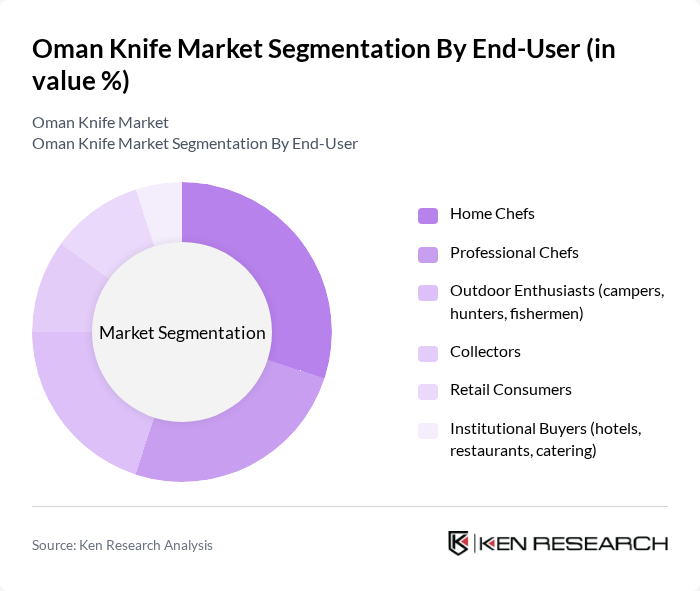
By End-User:The end-user segmentation includes Home Chefs, Professional Chefs, Outdoor Enthusiasts (campers, hunters, fishermen), Collectors, Retail Consumers, and Institutional Buyers (hotels, restaurants, catering). Each segment has unique requirements and preferences that influence their purchasing decisions. The growth in tourism and hospitality is increasing demand from institutional buyers, while the popularity of outdoor activities and culinary trends is driving purchases among home and professional chefs .
Oman Knife Market Competitive Landscape
The Oman Knife Market is characterized by a dynamic mix of regional and international players. Leading participants such as Al Marjan Knives, Al Khamis Knives, Al Shams Knives, Muscat Knives, Oman Knife Factory, Al Harthy Knives, Al Farsi Knives, Al Jazeera Knives, Al Batinah Knives, Al Dhahirah Knives, Al Dakhiliyah Knives, Al Sharqiyah Knives, Al Wusta Knives, Al Musandam Knives, TFI Co. Industrial Knife, Saeed Juma Trading, Saleh Ishaq Trading Co. LLC, Sealmech Trading LLC, Alpha Standard Trading LLC contribute to innovation, geographic expansion, and service delivery in this space.
Oman Knife Market Industry Analysis
Growth Drivers
- Increasing Demand for Traditional and Artisanal Knives:The Oman knife market is experiencing a surge in demand for traditional and artisanal knives, driven by cultural heritage and craftsmanship. In the future, the artisanal knife segment is expected to account for approximately 30,000 units sold, reflecting a 15% increase from the previous year. This growth is supported by a rising interest in local craftsmanship, with the Ministry of Heritage and Culture reporting a 20% increase in workshops promoting traditional knife-making techniques, enhancing consumer appreciation for these products.
- Growth in Outdoor and Adventure Activities:The outdoor and adventure activities sector in Oman has seen significant growth, with participation rates increasing by 25% in the future. This trend has led to a heightened demand for durable and reliable knives suitable for camping, hiking, and fishing. The Oman Tourism Ministry reported that outdoor tourism generated over $500 million in revenue last year, further driving the need for high-quality knives among adventure enthusiasts, thereby positively impacting the knife market.
- Rising Interest in Culinary Arts and Gourmet Cooking:The culinary arts sector in Oman is flourishing, with a reported 40% increase in culinary school enrollments in the future. This trend has spurred demand for high-quality kitchen knives, as aspiring chefs seek professional-grade tools. The Oman Culinary Association noted that gourmet cooking events have increased by 30%, further driving consumer interest in premium knives, which are essential for culinary precision and creativity in both professional and home kitchens.
Market Challenges
- Stringent Regulations on Knife Sales:The Oman knife market faces challenges due to stringent regulations governing knife sales, particularly concerning blade length and usage. The Ministry of Interior has implemented regulations that restrict the sale of knives exceeding 10 cm in blade length without proper licensing. This has resulted in a 10% decline in sales for certain knife categories, as retailers struggle to comply with these regulations while meeting consumer demand for larger, more versatile knives.
- Competition from Low-Cost Imports:The influx of low-cost imported knives from countries like China has created significant competition in the Oman market. In the future, imports are expected to account for 60% of the total knife sales, with many consumers opting for cheaper alternatives. This trend has pressured local manufacturers, leading to a 15% decrease in market share for domestic brands. The challenge lies in differentiating quality products from low-cost imports while maintaining competitive pricing.
Oman Knife Market Future Outlook
The Oman knife market is poised for growth, driven by increasing consumer interest in outdoor activities and culinary arts. As tourism continues to expand, particularly in adventure tourism, the demand for high-quality knives is expected to rise. Additionally, the trend towards sustainable materials and eco-friendly production methods will likely shape consumer preferences. Local manufacturers may benefit from focusing on quality and craftsmanship to compete effectively against imports, while e-commerce platforms will enhance accessibility for consumers seeking specialized products.
Market Opportunities
- Growth in Tourism Boosting Demand for Souvenir Knives:The increase in tourism, projected to reach 3 million visitors in the future, presents a significant opportunity for souvenir knife sales. Local artisans can capitalize on this trend by offering unique, culturally significant knives that appeal to tourists seeking authentic Omani products, potentially increasing sales by 20% in this segment.
- Increasing Popularity of Knife-Making Workshops:The rise of knife-making workshops, with participation growing by 50% in the future, offers a unique market opportunity. These workshops not only educate consumers but also create a direct channel for selling customized knives. This trend could lead to a 15% increase in sales for local manufacturers who engage participants in the crafting process, fostering brand loyalty and appreciation for quality craftsmanship.
Scope of the Report
| Segment | Sub-Segments |
|---|---|
| By Type | Folding Knives Fixed Blade Knives Multi-tools Specialty Knives (e.g. Khanjar, ceremonial knives) Collectible Knives Tactical Knives Utility Knives |
| By End-User | Home Chefs Professional Chefs Outdoor Enthusiasts (campers, hunters, fishermen) Collectors Retail Consumers Institutional Buyers (hotels, restaurants, catering) |
| By Sales Channel | Online Retail Specialty Stores (knife shops, outdoor gear stores) Department Stores Direct Sales (artisan workshops, exhibitions) Wholesale Distributors |
| By Price Range | Budget Knives Mid-Range Knives Premium Knives Luxury Knives Custom/Bespoke Knives |
| By Material | Stainless Steel Carbon Steel Ceramic Damascus Steel Titanium Alloy |
| By Brand | Local Omani Brands International Brands (e.g. Victorinox, Wüsthof, Global) Artisan Brands (custom knife makers) Private Label/Store Brands |
| By Usage | Culinary Use Outdoor Use Collecting Tactical Use Ceremonial/Souvenir Use |
Key Target Audience
Investors and Venture Capitalist Firms
Government and Regulatory Bodies (e.g., Ministry of Commerce, Industry and Investment Promotion)
Manufacturers and Producers
Distributors and Retailers
Importers and Exporters
Trade Associations (e.g., Oman Chamber of Commerce and Industry)
Outdoor and Sporting Goods Retailers
Hospitality and Culinary Institutions
Players Mentioned in the Report:
Al Marjan Knives
Al Khamis Knives
Al Shams Knives
Muscat Knives
Oman Knife Factory
Al Harthy Knives
Al Farsi Knives
Al Jazeera Knives
Al Batinah Knives
Al Dhahirah Knives
Al Dakhiliyah Knives
Al Sharqiyah Knives
Al Wusta Knives
Al Musandam Knives
TFI Co. Industrial Knife
Saeed Juma Trading
Saleh Ishaq Trading Co. LLC
Sealmech Trading LLC
Alpha Standard Trading LLC
Table of Contents
Market Assessment Phase
1. Executive Summary and Approach
2. Oman Knife Market Overview
2.1 Key Insights and Strategic Recommendations
2.2 Oman Knife Market Overview
2.3 Definition and Scope
2.4 Evolution of Market Ecosystem
2.5 Timeline of Key Regulatory Milestones
2.6 Value Chain & Stakeholder Mapping
2.7 Business Cycle Analysis
2.8 Policy & Incentive Landscape
3. Oman Knife Market Analysis
3.1 Growth Drivers
3.1.1 Increasing demand for traditional and artisanal knives
3.1.2 Growth in outdoor and adventure activities
3.1.3 Rising interest in culinary arts and gourmet cooking
3.1.4 Expansion of e-commerce platforms for knife sales
3.2 Market Challenges
3.2.1 Stringent regulations on knife sales
3.2.2 Competition from low-cost imports
3.2.3 Limited awareness of quality knife brands
3.2.4 Economic fluctuations affecting consumer spending
3.3 Market Opportunities
3.3.1 Growth in tourism boosting demand for souvenir knives
3.3.2 Increasing popularity of knife-making workshops
3.3.3 Potential for customization and personalization of knives
3.3.4 Expansion into international markets
3.4 Market Trends
3.4.1 Rising popularity of sustainable and eco-friendly materials
3.4.2 Increased focus on knife safety and education
3.4.3 Growth of online communities and forums for knife enthusiasts
3.4.4 Emergence of smart knives with integrated technology
3.5 Government Regulation
3.5.1 Regulations on knife blade length and usage
3.5.2 Import tariffs on foreign knife products
3.5.3 Licensing requirements for knife retailers
3.5.4 Safety standards for knife manufacturing
4. SWOT Analysis
5. Stakeholder Analysis
6. Porter's Five Forces Analysis
7. Oman Knife Market Market Size, 2019-2024
7.1 By Value
7.2 By Volume
7.3 By Average Selling Price
8. Oman Knife Market Segmentation
8.1 By Type
8.1.1 Folding Knives
8.1.2 Fixed Blade Knives
8.1.3 Multi-tools
8.1.4 Specialty Knives (e.g. Khanjar, ceremonial knives)
8.1.5 Collectible Knives
8.1.6 Tactical Knives
8.1.7 Utility Knives
8.2 By End-User
8.2.1 Home Chefs
8.2.2 Professional Chefs
8.2.3 Outdoor Enthusiasts (campers, hunters, fishermen)
8.2.4 Collectors
8.2.5 Retail Consumers
8.2.6 Institutional Buyers (hotels, restaurants, catering)
8.3 By Sales Channel
8.3.1 Online Retail
8.3.2 Specialty Stores (knife shops, outdoor gear stores)
8.3.3 Department Stores
8.3.4 Direct Sales (artisan workshops, exhibitions)
8.3.5 Wholesale Distributors
8.4 By Price Range
8.4.1 Budget Knives
8.4.2 Mid-Range Knives
8.4.3 Premium Knives
8.4.4 Luxury Knives
8.4.5 Custom/Bespoke Knives
8.5 By Material
8.5.1 Stainless Steel
8.5.2 Carbon Steel
8.5.3 Ceramic
8.5.4 Damascus Steel
8.5.5 Titanium Alloy
8.6 By Brand
8.6.1 Local Omani Brands
8.6.2 International Brands (e.g. Victorinox, Wüsthof, Global)
8.6.3 Artisan Brands (custom knife makers)
8.6.4 Private Label/Store Brands
8.7 By Usage
8.7.1 Culinary Use
8.7.2 Outdoor Use
8.7.3 Collecting
8.7.4 Tactical Use
8.7.5 Ceremonial/Souvenir Use
9. Oman Knife Market Competitive Analysis
9.1 Market Share of Key Players
9.2 Cross Comparison of Key Players
9.2.1 Company Name
9.2.2 Group Size (Large, Medium, Small)
9.2.3 Annual Revenue (USD or OMR)
9.2.4 Market Share (%)
9.2.5 Product Portfolio Breadth (number of knife types offered)
9.2.6 Distribution Reach (number of retail outlets, online presence)
9.2.7 Brand Recognition (local and international awards, certifications)
9.2.8 Customer Satisfaction Score (survey-based or review-based)
9.2.9 Innovation Index (new product launches, patents, design awards)
9.2.10 Export Ratio (share of sales outside Oman)
9.3 SWOT Analysis of Top Players
9.4 Pricing Analysis
9.5 Detailed Profile of Major Companies
9.5.1 Al Marjan Knives
9.5.2 Al Khamis Knives
9.5.3 Al Shams Knives
9.5.4 Muscat Knives
9.5.5 Oman Knife Factory
9.5.6 Al Harthy Knives
9.5.7 Al Farsi Knives
9.5.8 Al Jazeera Knives
9.5.9 Al Batinah Knives
9.5.10 Al Dhahirah Knives
9.5.11 Al Dakhiliyah Knives
9.5.12 Al Sharqiyah Knives
9.5.13 Al Wusta Knives
9.5.14 Al Musandam Knives
9.5.15 TFI Co. Industrial Knife
9.5.16 Saeed Juma Trading
9.5.17 Saleh Ishaq Trading Co. LLC
9.5.18 Sealmech Trading LLC
9.5.19 Alpha Standard Trading LLC
10. Oman Knife Market End-User Analysis
10.1 Procurement Behavior of Key Ministries
10.1.1 Ministry of Tourism
10.1.2 Ministry of Agriculture
10.1.3 Ministry of Commerce
10.2 Corporate Spend on Infrastructure & Energy
10.2.1 Investment in Culinary Schools
10.2.2 Funding for Outdoor Adventure Programs
10.3 Pain Point Analysis by End-User Category
10.3.1 Quality Concerns
10.3.2 Availability of Specialized Knives
10.4 User Readiness for Adoption
10.4.1 Awareness of Knife Safety
10.4.2 Interest in Knife Maintenance Workshops
10.5 Post-Deployment ROI and Use Case Expansion
10.5.1 Increased Sales from Custom Orders
10.5.2 Expansion into New Markets
11. Oman Knife Market Future Size, 2025-2030
11.1 By Value
11.2 By Volume
11.3 By Average Selling Price
Go-To-Market Strategy Phase
1. Whitespace Analysis + Business Model Canvas
1.1 Market Gaps Identification
1.2 Business Model Framework
2. Marketing and Positioning Recommendations
2.1 Branding Strategies
2.2 Product USPs
3. Distribution Plan
3.1 Urban Retail Strategies
3.2 Rural NGO Tie-ups
4. Channel & Pricing Gaps
4.1 Underserved Routes
4.2 Pricing Bands
5. Unmet Demand & Latent Needs
5.1 Category Gaps
5.2 Consumer Segments
6. Customer Relationship
6.1 Loyalty Programs
6.2 After-sales Service
7. Value Proposition
7.1 Sustainability Initiatives
7.2 Integrated Supply Chains
8. Key Activities
8.1 Regulatory Compliance
8.2 Branding Efforts
8.3 Distribution Setup
9. Entry Strategy Evaluation
9.1 Domestic Market Entry Strategy
9.1.1 Product Mix
9.1.2 Pricing Band
9.1.3 Packaging
9.2 Export Entry Strategy
9.2.1 Target Countries
9.2.2 Compliance Roadmap
10. Entry Mode Assessment
10.1 JV
10.2 Greenfield
10.3 M&A
10.4 Distributor Model
11. Capital and Timeline Estimation
11.1 Capital Requirements
11.2 Timelines
12. Control vs Risk Trade-Off
12.1 Ownership vs Partnerships
13. Profitability Outlook
13.1 Breakeven Analysis
13.2 Long-term Sustainability
14. Potential Partner List
14.1 Distributors
14.2 JVs
14.3 Acquisition Targets
15. Execution Roadmap
15.1 Phased Plan for Market Entry
15.1.1 Market Setup
15.1.2 Market Entry
15.1.3 Growth Acceleration
15.1.4 Scale & Stabilize
15.2 Key Activities and Milestones
15.2.1 Milestone Planning
15.2.2 Activity Tracking
Research Methodology
Phase 1: Approach1
Desk Research
- Analysis of trade statistics from the Oman Chamber of Commerce and Industry
- Review of market reports and publications from local and international trade associations
- Examination of consumer behavior studies and cultural insights related to knife usage in Oman
Primary Research
- Interviews with local artisans and manufacturers of traditional Omani knives
- Surveys with retailers and distributors in the knife market
- Focus group discussions with consumers to understand preferences and buying behavior
Validation & Triangulation
- Cross-validation of findings through multiple data sources, including sales data and consumer feedback
- Triangulation of qualitative insights from interviews with quantitative data from surveys
- Sanity checks conducted through expert reviews from industry specialists and market analysts
Phase 2: Market Size Estimation1
Top-down Assessment
- Estimation of the overall knife market size based on national import/export data
- Segmentation of the market by product type, including traditional, modern, and specialty knives
- Incorporation of demographic trends and cultural factors influencing knife usage in Oman
Bottom-up Modeling
- Collection of sales data from key retailers and manufacturers in the Omani knife market
- Estimation of average selling prices and volume sold across different knife categories
- Analysis of production capacity and output from local artisans and factories
Forecasting & Scenario Analysis
- Development of market forecasts based on historical growth rates and emerging trends
- Scenario analysis considering factors such as economic growth, tourism impact, and cultural shifts
- Creation of baseline, optimistic, and pessimistic projections for market growth through 2030
Phase 3: CATI Sample Composition1
| Scope Item/Segment | Sample Size | Target Respondent Profiles |
|---|---|---|
| Retail Knife Sales | 100 | Store Managers, Retail Buyers |
| Manufacturing Insights | 60 | Production Managers, Quality Control Officers |
| Consumer Preferences | 120 | End Consumers, Hobbyists, Collectors |
| Export Market Analysis | 40 | Export Managers, Trade Analysts |
| Artisan Perspectives | 50 | Local Artisans, Craftsmanship Experts |
Frequently Asked Questions
What is the current value of the Oman Knife Market?
The Oman Knife Market is valued at approximately USD 10 million, reflecting a five-year historical analysis. This growth is driven by the increasing demand for both traditional and modern knives, influenced by cultural significance and the rise in outdoor and culinary activities.
What types of knives are popular in Oman?
How does tourism impact the Oman Knife Market?
What regulations govern knife sales in Oman?
Other Regional/Country Reports
Indonesia Knife Market
Malaysia Knife Market
KSA Knife Market
APAC Knife Market
SEA Knife Market
Vietnam Knife Market
Other Adjacent Reports
Egypt Cutlery Market
APAC kitchenware market report size, share, growth drivers, trends, opportunities & forecast 2025–2030Indonesia Outdoor Equipment Market Outlook to 2030South Africa Tourism Souvenirs Market
UAE Artisanal Crafts Market
Japan Culinary Tools Market
Belgium Hunting Gear Market
Indonesia Camping Supplies Market
Indonesia Collectibles Market
Vietnam Tactical Knives Market
Why Buy From Us?

What makes us stand out is that our consultants follow Robust, Refine and Result (RRR) methodology. Robust for clear definitions, approaches and sanity checking, Refine for differentiating respondents' facts and opinions, and Result for presenting data with story.

We have set a benchmark in the industry by offering our clients with syndicated and customized market research reports featuring coverage of entire market as well as meticulous research and analyst insights.

While we don't replace traditional research, we flip the method upside down. Our dual approach of Top Bottom & Bottom Top ensures quality deliverable by not just verifying company fundamentals but also looking at the sector and macroeconomic factors.

With one step in the future, our research team constantly tries to show you the bigger picture. We help with some of the tough questions you may encounter along the way: How is the industry positioned? Best marketing channel? KPI's of competitors? By aligning every element, we help maximize success.

Our report gives you instant access to the answers and sources that other companies might choose to hide. We elaborate each steps of research methodology we have used and showcase you the sample size to earn your trust.

If you need any support, we are here! We pride ourselves on universe strength, data quality, and quick, friendly, and professional service.