Region:Middle East
Author(s):Shubham
Product Code:KRAC2143
Pages:84
Published On:October 2025
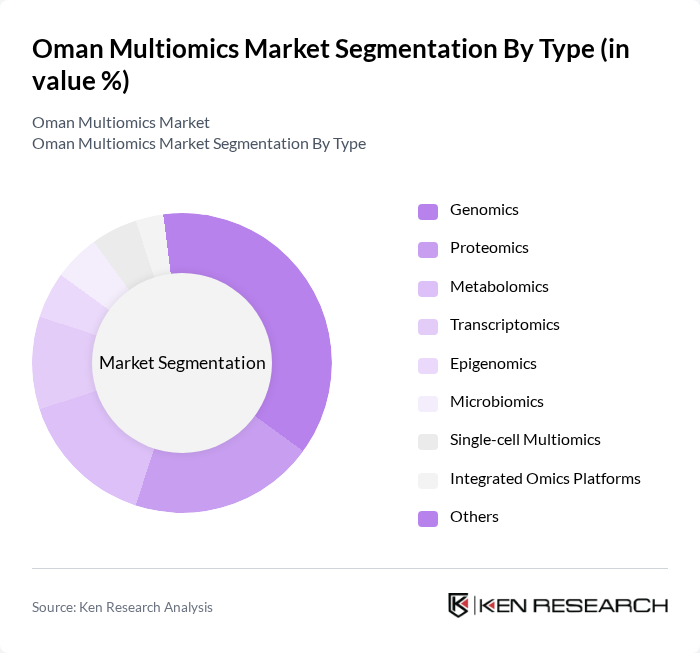
By Type:The market is segmented into various types, including Genomics, Proteomics, Metabolomics, Transcriptomics, Epigenomics, Microbiomics, Single-cell Multiomics, Integrated Omics Platforms, and Others. Among these,Genomicsis currently the leading sub-segment due to its critical role in understanding genetic disorders and its application in personalized medicine. The increasing demand for genetic testing and advancements in sequencing technologies are driving the growth of this segment. Additionally, integrated omics platforms and single-cell multiomics are witnessing rapid adoption, supported by AI-driven analytics and the need for comprehensive disease profiling .
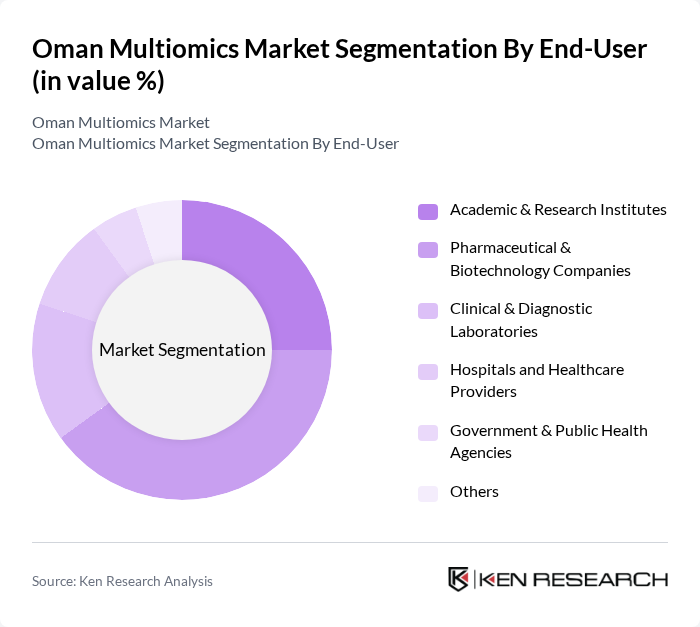
By End-User:The end-user segmentation includes Academic & Research Institutes, Pharmaceutical & Biotechnology Companies, Clinical & Diagnostic Laboratories, Hospitals and Healthcare Providers, Government & Public Health Agencies, and Others. ThePharmaceutical & Biotechnology Companiessegment is leading due to the increasing focus on drug discovery and development, which heavily relies on multiomics technologies for understanding disease mechanisms and therapeutic targets. Academic and research institutes also represent a significant share, driven by government funding and collaborative research projects .
The Oman Multiomics Market is characterized by a dynamic mix of regional and international players. Leading participants such as Illumina, Inc., Thermo Fisher Scientific Inc., Agilent Technologies, Inc., QIAGEN N.V., Bio-Rad Laboratories, Inc., PerkinElmer, Inc., BGI Genomics Co., Ltd., Roche Holding AG, Merck KGaA, Genomatix Software GmbH, 10x Genomics, Inc., Pacific Biosciences of California, Inc., Oxford Nanopore Technologies Ltd., Bioinformatics Solutions Inc., Zymo Research Corporation, Bruker Corporation, CENTOGENE N.V., Element Biosciences, Inc., Shimadzu Corporation, BD (Becton, Dickinson and Company) contribute to innovation, geographic expansion, and service delivery in this space .
The Oman multiomics market is poised for significant transformation, driven by technological advancements and increasing healthcare investments. In future, the integration of artificial intelligence in multiomics analysis is expected to enhance data interpretation and patient outcomes. Additionally, the shift towards preventive healthcare will likely encourage the adoption of multiomics solutions, as healthcare providers focus on early disease detection and management, ultimately improving public health and reducing healthcare costs in the region.
| Segment | Sub-Segments |
|---|---|
| By Type | Genomics Proteomics Metabolomics Transcriptomics Epigenomics Microbiomics Single-cell Multiomics Integrated Omics Platforms Others |
| By End-User | Academic & Research Institutes Pharmaceutical & Biotechnology Companies Clinical & Diagnostic Laboratories Hospitals and Healthcare Providers Government & Public Health Agencies Others |
| By Application | Drug Discovery & Development Disease Diagnosis & Prognosis Biomarker Identification Personalized Medicine Oncology Population Health Studies Nutritional Genomics Others |
| By Component | Instruments Consumables & Reagents Software & Analytics Services Others |
| By Sales Channel | Direct Sales Distributors Online Sales Others |
| By Investment Source | Government Funding Private Investments Venture Capital Grants Others |
| By Policy Support | Subsidies for Research Tax Incentives Regulatory Support Others |
| Scope Item/Segment | Sample Size | Target Respondent Profiles |
|---|---|---|
| Clinical Diagnostics | 45 | Laboratory Managers, Clinical Pathologists |
| Biotechnology Research | 38 | Research Scientists, Lab Technicians |
| Pharmaceutical Applications | 42 | Pharmaceutical Researchers, Regulatory Affairs Specialists |
| Healthcare Providers | 50 | Healthcare Administrators, Medical Directors |
| Genomic Data Analysis | 35 | Bioinformaticians, Data Scientists |
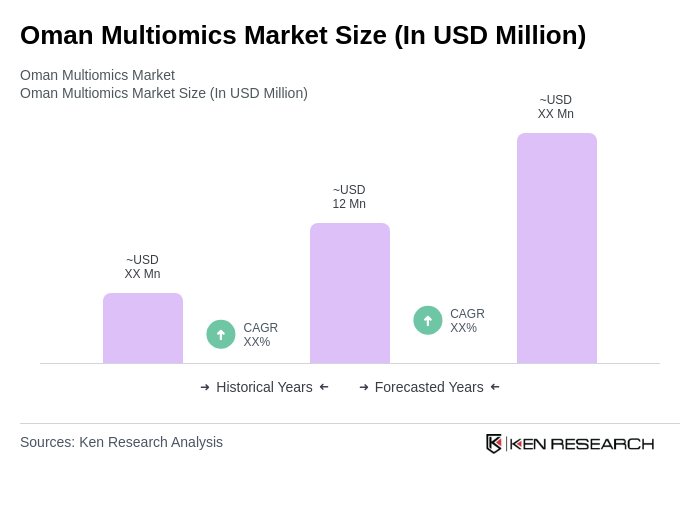
The Oman Multiomics Market is valued at approximately USD 12 million, reflecting growth driven by advancements in biotechnology, increased healthcare research investments, and the rising prevalence of chronic diseases necessitating personalized medicine approaches.

What makes us stand out is that our consultants follow Robust, Refine and Result (RRR) methodology. Robust for clear definitions, approaches and sanity checking, Refine for differentiating respondents' facts and opinions, and Result for presenting data with story.

We have set a benchmark in the industry by offering our clients with syndicated and customized market research reports featuring coverage of entire market as well as meticulous research and analyst insights.

While we don't replace traditional research, we flip the method upside down. Our dual approach of Top Bottom & Bottom Top ensures quality deliverable by not just verifying company fundamentals but also looking at the sector and macroeconomic factors.

With one step in the future, our research team constantly tries to show you the bigger picture. We help with some of the tough questions you may encounter along the way: How is the industry positioned? Best marketing channel? KPI's of competitors? By aligning every element, we help maximize success.

Our report gives you instant access to the answers and sources that other companies might choose to hide. We elaborate each steps of research methodology we have used and showcase you the sample size to earn your trust.

If you need any support, we are here! We pride ourselves on universe strength, data quality, and quick, friendly, and professional service.













