Oman Residential Hobs Market Size Share Growth Drivers Trends Opportunities & Forecast 2025–2030

Oman residential hobs market grows with urbanization and energy-efficient demand, valued at $100M.

Region:Middle East

Author(s):Rebecca

Product Code:KRAB0898

Pages:81

Published On:December 2025
About the Report

Base Year 2024

Oman Residential Hobs Market Overview

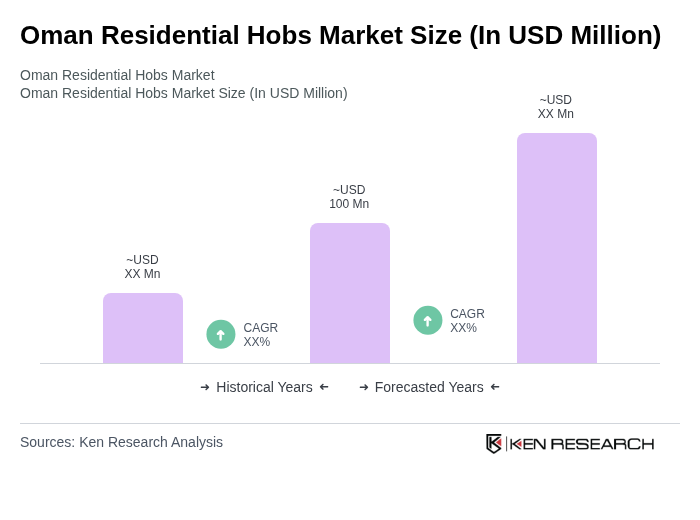
  • The Oman Residential Hobs Market is valued at USD 100 million, based on a five?year historical analysis. Growth is driven by rising urbanization, increasing demand for energy-efficient and smart cooking appliances, and a shift toward modern kitchen solutions. Consumers in Oman are favoring premium, low-noise, and sustainable products, reflecting evolving lifestyle preferences and sustainability awareness.
  • Key players in this market include global and regional appliance brands, with urban demand centers such as Muscat, Salalah, and Sohar leading the way. These cities are characterized by high construction activity and income levels, which support the adoption of modern kitchen appliances. The market is influenced by appliance manufacturers and smart home solution providers catering to the needs of these urban centers.
  • Oman’s broader household appliance industry is supported by energy efficiency regulations, such as the “Oman Energy Efficiency Labeling and Standards Regulations for Electrical Appliances, 2023.” This regulation promotes performance testing and minimum efficiency thresholds for appliances, encouraging manufacturers to deliver certified, energy-smart products, thereby enhancing the regulatory environment influencing kitchen appliance standards.
Oman Residential Hobs Market Size

Oman Residential Hobs Market Segmentation

By Type:The market is segmented into various types of hobs, including gas, electric, induction, ceramic, and others. Among these, gas hobs are currently the most popular due to their affordability and ease of use, particularly in traditional households. Electric and induction hobs are gaining traction as consumers become more environmentally conscious and seek energy-efficient options. The trend towards smart kitchen appliances is also influencing the market, with induction hobs being favored for their safety and efficiency.
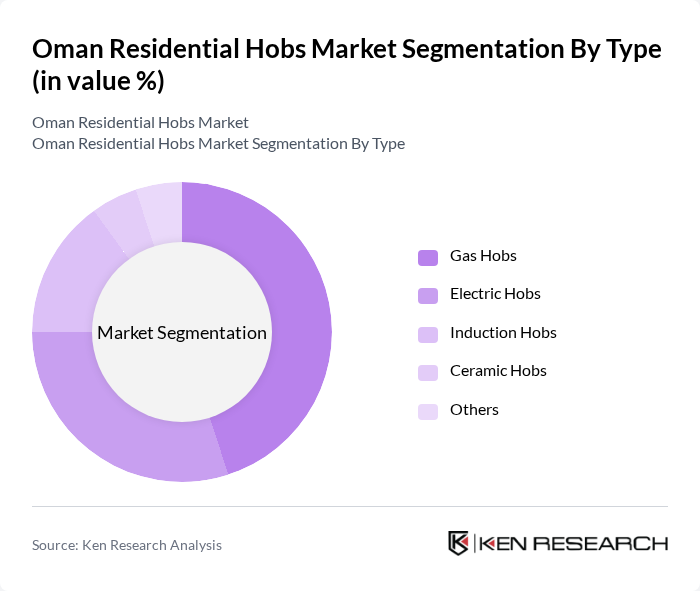
Oman Residential Hobs Market segmentation by Type.

By End-User:The residential segment dominates the market, driven by increasing urbanization and a growing middle class that seeks modern kitchen solutions. The commercial segment is also significant, as restaurants and hotels invest in high-quality cooking appliances to enhance their service offerings. Industrial and government sectors contribute to the market, but to a lesser extent, as their needs are often met through bulk purchases and specialized equipment.
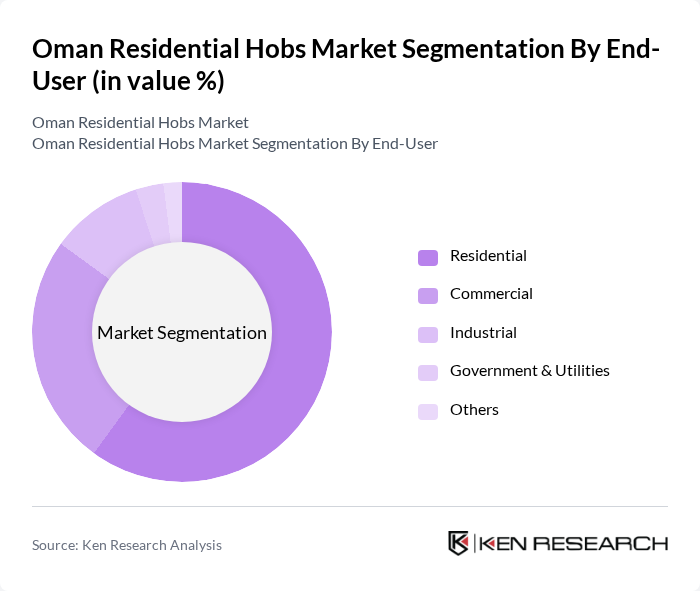
Oman Residential Hobs Market segmentation by End-User.

Oman Residential Hobs Market Competitive Landscape

The Oman Residential Hobs Market is characterized by a dynamic mix of regional and international players. Leading participants such as Al-Futtaim Group, Al-Muhaidib Group, Eros Group, LG Electronics, Samsung Electronics, Bosch, Siemens, Whirlpool, Midea Group, Electrolux, Panasonic, Haier, Gorenje, Beko, Sharp contribute to innovation, geographic expansion, and service delivery in this space.

LG Electronics

1958

Seoul, South Korea

Samsung Electronics

1969

Seoul, South Korea

Whirlpool

1911

Benton Harbor, Michigan, USA

Bosch

1886

Gerlingen, Germany

Electrolux

1919

Stockholm, Sweden

Company

Establishment Year

Headquarters

Group Size (Large, Medium, or Small as per industry convention)

Revenue Growth Rate

Market Penetration Rate

Customer Retention Rate

Pricing Strategy

Product Innovation Rate

Oman Residential Hobs Market Industry Analysis

Growth Drivers

  • Residential Appliances Market Size:The Major Appliances market in Oman generated revenue of USD 428.30 million in future, with an average per household revenue of USD 464.68. This substantial spending on residential appliances indicates a strong consumer capacity, suggesting a favorable environment for growth in the hobs segment. As disposable incomes rise, consumers are likely to invest in modern kitchen appliances, including hobs, enhancing market potential.
  • Rising Urban Construction and Modular Kitchen Adoption:The kitchen hood market in Oman is estimated to reach USD 24 million in future, driven by urbanization and the increasing popularity of modular kitchens. This trend reflects a shift in consumer preferences towards modern kitchen designs, which often include integrated hobs. As urban areas expand, the demand for residential hobs is expected to grow, aligning with the broader construction and renovation activities in the region.
  • Expanding Non-Oil Sector Output:In future, Oman’s non-oil sectors are projected to grow significantly, with manufacturing increasing by 8.3%, services by 5.3%, and transport and storage by 4%. This growth contributes to a real GDP increase of 1.6%. The expansion of these sectors indicates rising consumer purchasing power and infrastructure development, which are likely to boost demand for home appliances, including residential hobs, as households invest in modern cooking solutions.

Market Challenges

  • Moderate Overall Economic Growth:Oman’s real GDP growth was only 1.6% in future, reflecting a sluggish economic environment. This moderate growth can temper household spending, particularly on discretionary items like high-end residential hobs. As consumers prioritize essential expenditures, the demand for premium kitchen appliances may face limitations, impacting market dynamics negatively.
  • Hydrocarbons Sector Volatility:The hydrocarbons sector in Oman experienced a decline of 3.6% in real terms in future, despite growth in non-oil sectors. This volatility exposes the economy to fluctuations in oil prices, which can adversely affect consumer sentiment and spending. As a result, the residential hobs market may encounter challenges in maintaining consistent demand amid economic uncertainties linked to the oil sector.

Oman Residential Hobs Market Future Outlook

The future of the Oman residential hobs market appears promising, driven by increasing consumer awareness of energy-efficient appliances and a growing preference for smart technology in kitchens. As the government emphasizes sustainability and digital transformation under Vision 2040, manufacturers are likely to innovate and introduce advanced hobs that align with these trends. Additionally, urban expansion in cities like Muscat will create further opportunities for market growth, as new residential developments often incorporate modern kitchen solutions.

Market Opportunities

  • Energy-Efficient Appliance Demand:The demand for energy-efficient major appliances is on the rise, as consumers become more environmentally conscious. This trend presents an opportunity for manufacturers to innovate and develop eco-friendly hobs that meet consumer preferences, potentially capturing a significant share of the market as sustainability becomes a priority.
  • Urban Residential Expansion in Muscat & Other Cities:The urban housing market, particularly in Muscat, is expanding, with the kitchen hood market valued at USD 24 million. This growth indicates a parallel opportunity for residential hobs, as new housing developments often feature modern kitchens. Targeting these urban areas can enhance market penetration and drive sales.

Scope of the Report

SegmentSub-Segments
By Type

Gas Hobs

Electric Hobs

Induction Hobs

Ceramic Hobs

Others

By End-User

Residential

Commercial

Industrial

Government & Utilities

Others

By Price Range

Budget

Mid-Range

Premium

Others

By Brand

Local Brands

International Brands

Luxury Brands

Others

By Distribution Channel

Online Retail

Offline Retail

Direct Sales

Others

By Energy Source

Gas

Electricity

Hybrid

Others

By Features

Smart Features

Safety Features

Energy Efficiency Features

Others

Key Target Audience

Investors and Venture Capitalist Firms

Government and Regulatory Bodies (e.g., Ministry of Housing and Urban Planning, Public Authority for Consumer Protection)

Manufacturers and Producers

Distributors and Retailers

Real Estate Developers

Interior Designers and Architects

Home Improvement and Renovation Companies

Financial Institutions

Players Mentioned in the Report:

Al-Futtaim Group

Al-Muhaidib Group

Eros Group

LG Electronics

Samsung Electronics

Bosch

Siemens

Whirlpool

Midea Group

Electrolux

Panasonic

Haier

Gorenje

Beko

Sharp

Table of Contents

Market Assessment Phase

1. Executive Summary and Approach


2. Oman Residential Hobs Market Overview

2.1 Key Insights and Strategic Recommendations

2.2 Oman Residential Hobs Market Overview

2.3 Definition and Scope

2.4 Evolution of Market Ecosystem

2.5 Timeline of Key Regulatory Milestones

2.6 Value Chain & Stakeholder Mapping

2.7 Business Cycle Analysis

2.8 Policy & Incentive Landscape


3. Oman Residential Hobs Market Analysis

3.1 Growth Drivers

3.1.1 Increasing Urbanization
3.1.2 Rising Disposable Incomes
3.1.3 Growing Demand for Energy-Efficient Appliances
3.1.4 Expansion of the Real Estate Sector

3.2 Market Challenges

3.2.1 High Initial Costs
3.2.2 Limited Consumer Awareness
3.2.3 Supply Chain Disruptions
3.2.4 Regulatory Compliance Issues

3.3 Market Opportunities

3.3.1 Technological Advancements
3.3.2 Government Incentives for Energy Efficiency
3.3.3 Growing E-commerce Platforms
3.3.4 Increasing Focus on Sustainable Products

3.4 Market Trends

3.4.1 Shift Towards Smart Hobs
3.4.2 Integration of IoT in Kitchen Appliances
3.4.3 Preference for Built-in Hobs
3.4.4 Rise in Online Sales Channels

3.5 Government Regulation

3.5.1 Energy Efficiency Standards
3.5.2 Import Tariffs on Appliances
3.5.3 Safety Regulations for Kitchen Appliances
3.5.4 Environmental Compliance Requirements

4. SWOT Analysis


5. Stakeholder Analysis


6. Porter's Five Forces Analysis


7. Oman Residential Hobs Market Market Size, 2019-2024

7.1 By Value

7.2 By Volume

7.3 By Average Selling Price


8. Oman Residential Hobs Market Segmentation

8.1 By Type

8.1.1 Gas Hobs
8.1.2 Electric Hobs
8.1.3 Induction Hobs
8.1.4 Ceramic Hobs
8.1.5 Others

8.2 By End-User

8.2.1 Residential
8.2.2 Commercial
8.2.3 Industrial
8.2.4 Government & Utilities
8.2.5 Others

8.3 By Price Range

8.3.1 Budget
8.3.2 Mid-Range
8.3.3 Premium
8.3.4 Others

8.4 By Brand

8.4.1 Local Brands
8.4.2 International Brands
8.4.3 Luxury Brands
8.4.4 Others

8.5 By Distribution Channel

8.5.1 Online Retail
8.5.2 Offline Retail
8.5.3 Direct Sales
8.5.4 Others

8.6 By Energy Source

8.6.1 Gas
8.6.2 Electricity
8.6.3 Hybrid
8.6.4 Others

8.7 By Features

8.7.1 Smart Features
8.7.2 Safety Features
8.7.3 Energy Efficiency Features
8.7.4 Others

9. Oman Residential Hobs Market Competitive Analysis

9.1 Market Share of Key Players

9.2 Cross Comparison of Key Players

9.2.1 Company Name
9.2.2 Group Size (Large, Medium, or Small as per industry convention)
9.2.3 Revenue Growth Rate
9.2.4 Market Penetration Rate
9.2.5 Customer Retention Rate
9.2.6 Pricing Strategy
9.2.7 Product Innovation Rate
9.2.8 Distribution Efficiency
9.2.9 Brand Recognition Score
9.2.10 Customer Satisfaction Index

9.3 SWOT Analysis of Top Players

9.4 Pricing Analysis

9.5 Detailed Profile of Major Companies

9.5.1 Al-Futtaim Group
9.5.2 Al-Muhaidib Group
9.5.3 Eros Group
9.5.4 LG Electronics
9.5.5 Samsung Electronics
9.5.6 Bosch
9.5.7 Siemens
9.5.8 Whirlpool
9.5.9 Midea Group
9.5.10 Electrolux
9.5.11 Panasonic
9.5.12 Haier
9.5.13 Gorenje
9.5.14 Beko
9.5.15 Sharp

10. Oman Residential Hobs Market End-User Analysis

10.1 Procurement Behavior of Key Ministries

10.1.1 Ministry of Housing
10.1.2 Ministry of Commerce and Industry
10.1.3 Ministry of Environment and Climate Affairs
10.1.4 Others

10.2 Corporate Spend on Infrastructure & Energy

10.2.1 Residential Sector Investments
10.2.2 Commercial Sector Investments
10.2.3 Government Projects
10.2.4 Others

10.3 Pain Point Analysis by End-User Category

10.3.1 Residential Users
10.3.2 Commercial Users
10.3.3 Government Entities
10.3.4 Others

10.4 User Readiness for Adoption

10.4.1 Awareness Levels
10.4.2 Financial Readiness
10.4.3 Technical Readiness
10.4.4 Others

10.5 Post-Deployment ROI and Use Case Expansion

10.5.1 ROI Measurement Techniques
10.5.2 Use Case Scenarios
10.5.3 Customer Feedback Mechanisms
10.5.4 Others

11. Oman Residential Hobs Market Future Size, 2025-2030

11.1 By Value

11.2 By Volume

11.3 By Average Selling Price


Go-To-Market Strategy Phase

1. Whitespace Analysis + Business Model Canvas

1.1 Market Gaps Identification

1.2 Business Model Development


2. Marketing and Positioning Recommendations

2.1 Branding Strategies

2.2 Product USPs


3. Distribution Plan

3.1 Urban Retail Strategies

3.2 Rural NGO Tie-ups


4. Channel & Pricing Gaps

4.1 Underserved Routes

4.2 Pricing Bands


5. Unmet Demand & Latent Needs

5.1 Category Gaps

5.2 Consumer Segments


6. Customer Relationship

6.1 Loyalty Programs

6.2 After-sales Service


7. Value Proposition

7.1 Sustainability

7.2 Integrated Supply Chains


8. Key Activities

8.1 Regulatory Compliance

8.2 Branding

8.3 Distribution Setup


9. Entry Strategy Evaluation

9.1 Domestic Market Entry Strategy

9.1.1 Product Mix
9.1.2 Pricing Band
9.1.3 Packaging

9.2 Export Entry Strategy

9.2.1 Target Countries
9.2.2 Compliance Roadmap

10. Entry Mode Assessment

10.1 JV

10.2 Greenfield

10.3 M&A

10.4 Distributor Model


11. Capital and Timeline Estimation

11.1 Capital Requirements

11.2 Timelines


12. Control vs Risk Trade-Off

12.1 Ownership vs Partnerships


13. Profitability Outlook

13.1 Breakeven Analysis

13.2 Long-term Sustainability


14. Potential Partner List

14.1 Distributors

14.2 JVs

14.3 Acquisition Targets


15. Execution Roadmap

15.1 Phased Plan for Market Entry

15.1.1 Market Setup
15.1.2 Market Entry
15.1.3 Growth Acceleration
15.1.4 Scale & Stabilize

15.2 Key Activities and Milestones

15.2.1 Activity Planning
15.2.2 Milestone Tracking

Research Methodology

ApproachModellingSample

Phase 1: Approach1

Desk Research

  • Analysis of government housing reports and statistics from the Ministry of Housing in Oman
  • Review of industry publications and market reports focusing on residential construction trends
  • Examination of demographic data and urbanization trends from the National Centre for Statistics and Information

Primary Research

  • Interviews with real estate developers and construction firms operating in Oman
  • Surveys with homeowners and potential buyers to gauge preferences and purchasing behavior
  • Field interviews with local architects and urban planners regarding design trends and market needs

Validation & Triangulation

  • Cross-validation of findings through multiple data sources including government and private sector reports
  • Triangulation of insights from primary interviews with secondary data trends
  • Sanity checks conducted through expert panel discussions with industry veterans

Phase 2: Market Size Estimation1

Top-down Assessment

  • Estimation of total residential housing stock based on national housing policies and initiatives
  • Segmentation of the market by housing type (e.g., villas, apartments) and geographic distribution
  • Incorporation of projected population growth and urban migration patterns

Bottom-up Modeling

  • Collection of data on average construction costs per square meter from local contractors
  • Analysis of sales data from real estate transactions to establish pricing benchmarks
  • Volume estimates based on planned residential projects and their timelines

Forecasting & Scenario Analysis

  • Multi-factor regression analysis incorporating economic indicators such as GDP growth and employment rates
  • Scenario modeling based on potential changes in government housing policies and economic conditions
  • Development of baseline, optimistic, and pessimistic forecasts through 2030

Phase 3: CATI Sample Composition1

Scope Item/SegmentSample SizeTarget Respondent Profiles
Residential Property Developers100Project Managers, Business Development Heads
Homeowners and Prospective Buyers150Homeowners, First-time Buyers
Construction Firms80Site Managers, Operations Directors
Real Estate Agents70Sales Agents, Market Analysts
Urban Planners and Architects60Urban Designers, Architectural Consultants

Frequently Asked Questions

What is the current value of the Oman Residential Hobs Market?

The Oman Residential Hobs Market is valued at approximately USD 100 million, reflecting a five-year historical analysis. This valuation indicates a growing demand for modern kitchen solutions driven by urbanization and consumer preferences for energy-efficient appliances.

What factors are driving growth in the Oman Residential Hobs Market?

Which cities in Oman are leading in the demand for residential hobs?

What types of hobs are popular in Oman?

Other Regional/Country Reports

Indonesia Residential Hobs Market

Malaysia Residential Hobs Market

KSA Residential Hobs Market

APAC Residential Hobs Market

SEA Residential Hobs Market

Vietnam Residential Hobs Market

Why Buy From Us?

Refine Robust Result (RRR) Framework

What makes us stand out is that our consultants follow Robust, Refine and Result (RRR) methodology. Robust for clear definitions, approaches and sanity checking, Refine for differentiating respondents' facts and opinions, and Result for presenting data with story.

Our Reach Is Unmatched

We have set a benchmark in the industry by offering our clients with syndicated and customized market research reports featuring coverage of entire market as well as meticulous research and analyst insights.

Shifting the Research Paradigm

While we don't replace traditional research, we flip the method upside down. Our dual approach of Top Bottom & Bottom Top ensures quality deliverable by not just verifying company fundamentals but also looking at the sector and macroeconomic factors.

More Insights-Better Decisions

With one step in the future, our research team constantly tries to show you the bigger picture. We help with some of the tough questions you may encounter along the way: How is the industry positioned? Best marketing channel? KPI's of competitors? By aligning every element, we help maximize success.

Transparency and Trust

Our report gives you instant access to the answers and sources that other companies might choose to hide. We elaborate each steps of research methodology we have used and showcase you the sample size to earn your trust.

Round the Clock Support

If you need any support, we are here! We pride ourselves on universe strength, data quality, and quick, friendly, and professional service.

Why Clients Choose Us?

400000+
Reports in repository
150+
Consulting projects a year
100+
Analysts
8000+
Client Queries in 2022








