Region:Middle East
Author(s):Dev
Product Code:KRAB1927
Pages:83
Published On:January 2026
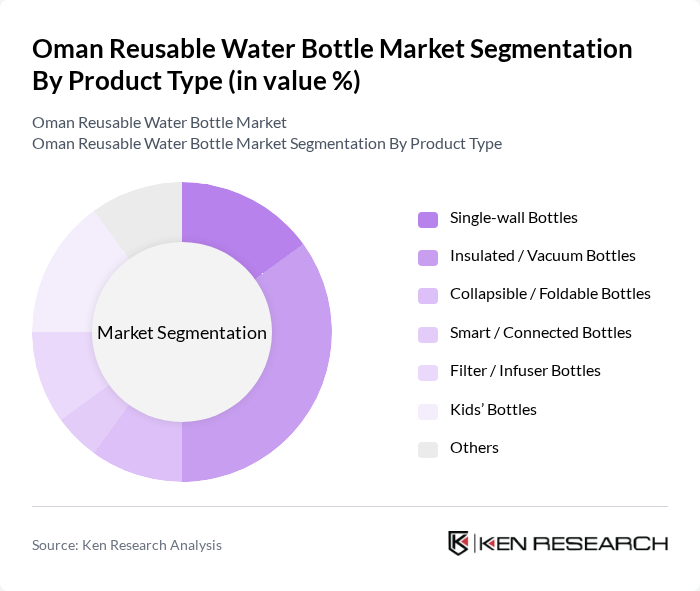
By Product Type:The product type segmentation includes various categories such as Single-wall Bottles, Insulated / Vacuum Bottles, Collapsible / Foldable Bottles, Smart / Connected Bottles, Filter / Infuser Bottles, Kids’ Bottles, and Others. Among these, Insulated / Vacuum Bottles are leading the market due to their ability to maintain temperature, durability in hot climates, and suitability for both indoor and outdoor use, making them popular among consumers who prioritize functionality and convenience. Rising interest in premium, design-led bottles and the influence of international brands in the Gulf region further supports the higher uptake of insulated formats.
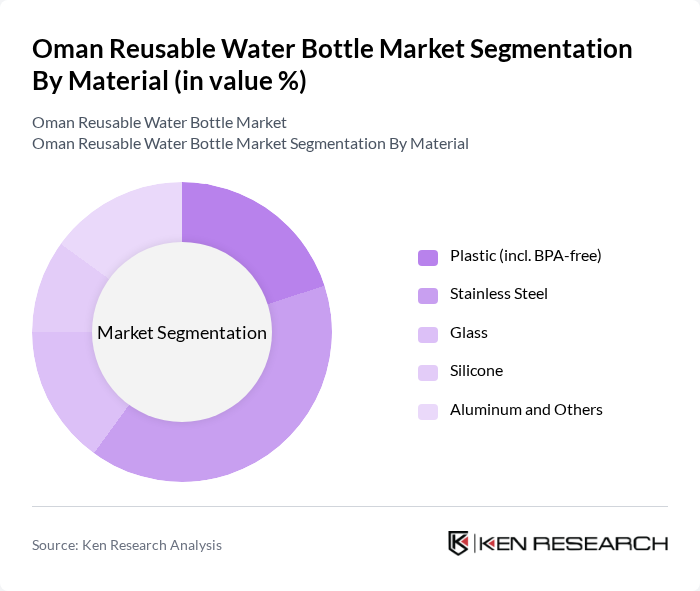
By Material:The material segmentation includes Plastic (incl. BPA-free), Stainless Steel, Glass, Silicone, and Aluminum and Others. Stainless Steel bottles dominate the market due to their durability, temperature retention, safety, and eco-friendliness, appealing to health-conscious consumers who prefer sustainable options over traditional plastic alternatives. Global and regional trends also indicate a gradual shift from conventional plastics to stainless steel and other high-performance materials, especially in warmer climates where insulation and robustness are key purchase criteria.
The Oman Reusable Water Bottle Market is characterized by a dynamic mix of regional and international players. Leading participants such as CamelBak, Nalgene, Hydro Flask, S'well, Klean Kanteen, Contigo, Takeya, Zojirushi, Thermos, Brita, OXO, Vapur, Mizu, Simple Modern, and leading local and regional Omani/GCC brands (e.g., Bahwan-led and Retail Private Labels) contribute to innovation, geographic expansion, and service delivery in this space.
The future of the reusable water bottle market in Oman appears promising, driven by increasing environmental awareness and government support for sustainable practices. As more consumers prioritize eco-friendly products, the market is likely to see a shift towards innovative designs and features that cater to health-conscious individuals. Additionally, the rise of e-commerce platforms will facilitate greater accessibility, allowing brands to reach a broader audience and enhance consumer engagement through personalized marketing strategies.
| Segment | Sub-Segments |
|---|---|
| By Product Type | Single-wall Bottles Insulated / Vacuum Bottles Collapsible / Foldable Bottles Smart / Connected Bottles Filter / Infuser Bottles Kids’ Bottles Others |
| By Material | Plastic (incl. BPA-free) Stainless Steel Glass Silicone Aluminum and Others |
| By Capacity | Up to 350 ml –600 ml –1,000 ml Above 1,000 ml |
| By End-User | Individual Consumers Corporate & Institutional (Gifting / Branding) Schools & Universities Sports & Fitness Centers / Clubs Hospitality & Tourism (Hotels, Resorts, Travel) Government & Public Sector Others |
| By Distribution Channel | Supermarkets & Hypermarkets Specialty & Sports Stores Department Stores Convenience Stores & Small Grocers Online Retail / E-commerce Corporate / Institutional Direct Sales Others |
| By Price Range | Economy (Mass Market) Mid-range Premium Luxury / Designer |
| By Brand Origin | Local Omani Brands Regional GCC Brands International Brands Private Labels / Retailer Brands Eco-focused / Sustainable Brands |
| Scope Item/Segment | Sample Size | Target Respondent Profiles |
|---|---|---|
| Consumer Preferences for Reusable Bottles | 150 | General Consumers, Eco-conscious Shoppers |
| Retail Insights on Reusable Water Bottles | 120 | Store Managers, Product Buyers |
| Manufacturers' Perspectives on Market Trends | 80 | Production Managers, Marketing Directors |
| Environmental Impact Awareness | 70 | Environmental Activists, Policy Makers |
| Distribution Channel Effectiveness | 90 | Logistics Coordinators, Supply Chain Analysts |
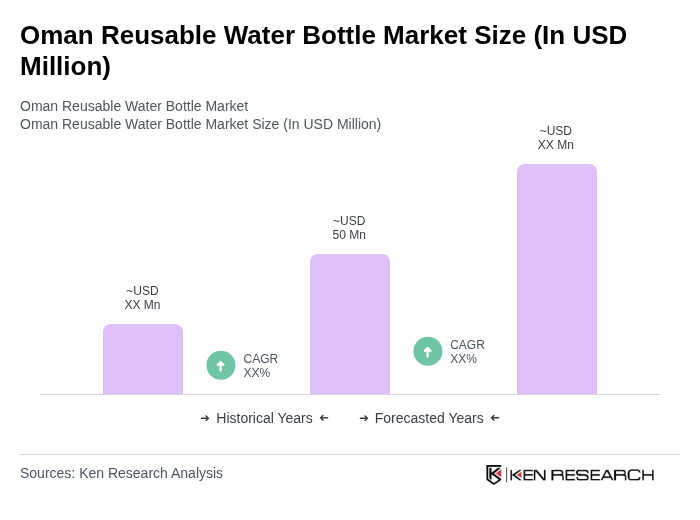
The Oman Reusable Water Bottle Market is valued at approximately USD 50 million, reflecting a growing demand for eco-friendly alternatives in the region, particularly in light of increasing environmental awareness and government initiatives promoting sustainability.

What makes us stand out is that our consultants follow Robust, Refine and Result (RRR) methodology. Robust for clear definitions, approaches and sanity checking, Refine for differentiating respondents' facts and opinions, and Result for presenting data with story.

We have set a benchmark in the industry by offering our clients with syndicated and customized market research reports featuring coverage of entire market as well as meticulous research and analyst insights.

While we don't replace traditional research, we flip the method upside down. Our dual approach of Top Bottom & Bottom Top ensures quality deliverable by not just verifying company fundamentals but also looking at the sector and macroeconomic factors.

With one step in the future, our research team constantly tries to show you the bigger picture. We help with some of the tough questions you may encounter along the way: How is the industry positioned? Best marketing channel? KPI's of competitors? By aligning every element, we help maximize success.

Our report gives you instant access to the answers and sources that other companies might choose to hide. We elaborate each steps of research methodology we have used and showcase you the sample size to earn your trust.

If you need any support, we are here! We pride ourselves on universe strength, data quality, and quick, friendly, and professional service.













