Philippines Actinic Keratosis Treatment Market Report Size, Share, Growth Drivers, Trends, Opportunities & Forecast 2025–2030

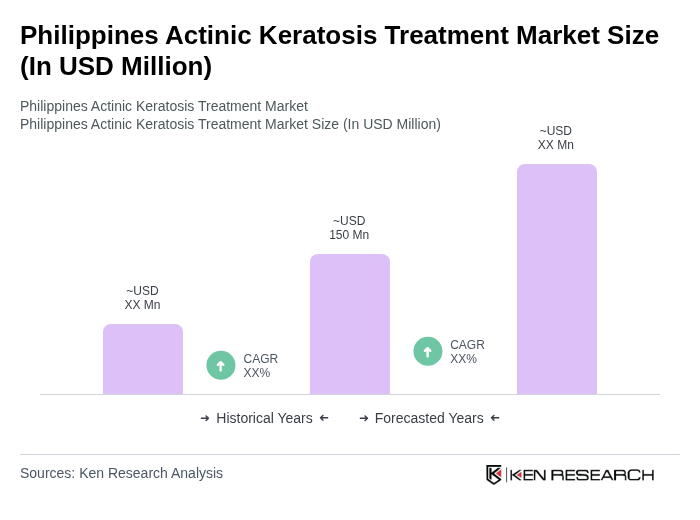
The Philippines actinic keratosis treatment market, valued at USD 150 million, grows due to sun exposure risks, health awareness, and improved dermatology access in urban areas.

Region:Asia

Author(s):Geetanshi

Product Code:KRAE1283

Pages:87

Published On:February 2026
About the Report

Base Year 2024

Philippines Actinic Keratosis Treatment Market Overview

  • The Philippines Actinic Keratosis Treatment Market is valued at USD 150 million, based on a five-year historical analysis. This growth is primarily driven by the increasing prevalence of skin disorders due to prolonged sun exposure, coupled with rising awareness about skin health and the availability of advanced treatment options. The market is also supported by the growing healthcare infrastructure and the increasing number of dermatology clinics across the country.
  • Metro Manila, Cebu, and Davao are the dominant cities in the Philippines Actinic Keratosis Treatment Market. Metro Manila leads due to its high population density and concentration of healthcare facilities, while Cebu and Davao benefit from increasing urbanization and improved access to dermatological services. The presence of specialized clinics and hospitals in these regions further enhances their market dominance.
  • In recent years, the Philippine government has implemented regulations to enhance the quality of dermatological care. The Department of Health has mandated that all dermatology clinics must be accredited and comply with specific standards to ensure patient safety and treatment efficacy. This regulation aims to improve the overall healthcare system and promote better treatment outcomes for conditions like actinic keratosis.
Philippines Actinic Keratosis Treatment Market Size

Philippines Actinic Keratosis Treatment Market Segmentation

By Treatment Type:The treatment type segmentation includes various methods used to address actinic keratosis, which are essential for understanding consumer preferences and market dynamics.
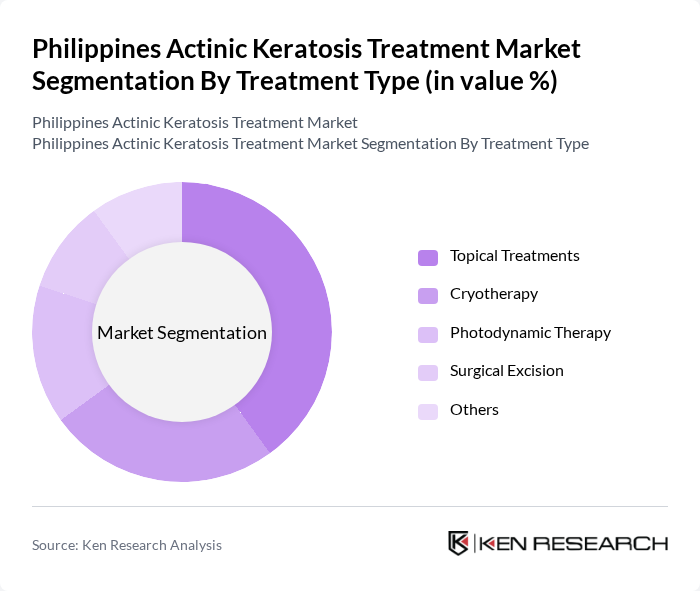
Philippines Actinic Keratosis Treatment Market segmentation by Treatment Type.

The treatment type segmentation reveals that topical treatments dominate the market, accounting for a significant share. This preference is driven by their ease of use, effectiveness, and the growing trend of self-treatment among patients. Cryotherapy follows as a popular choice due to its quick results and minimal recovery time. Photodynamic therapy is gaining traction as patients seek advanced and less invasive options. The surgical excision segment remains relevant for severe cases, while other treatments, including laser therapy, are emerging but still represent a smaller market share.

By Distribution Channel:This segmentation focuses on the various channels through which actinic keratosis treatments are made available to patients.
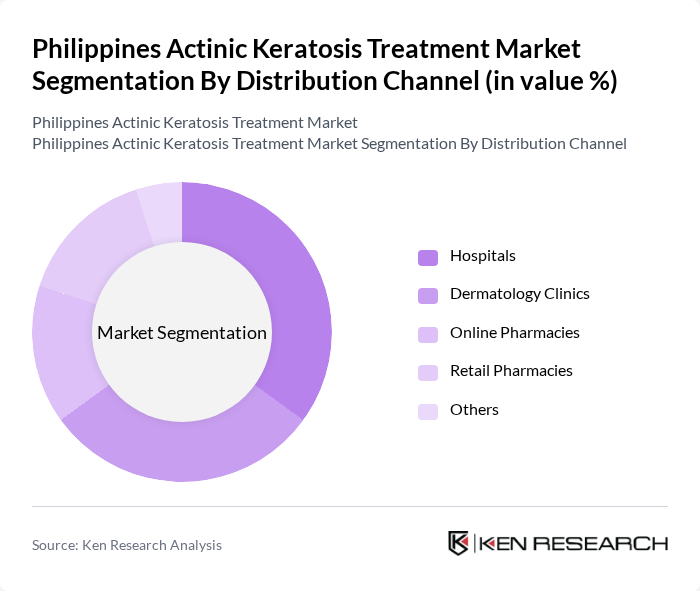
Philippines Actinic Keratosis Treatment Market segmentation by Distribution Channel.

In the distribution channel segmentation, hospitals and dermatology clinics are the leading channels for actinic keratosis treatments. Hospitals are preferred for their comprehensive care and access to advanced treatment options, while dermatology clinics offer specialized services tailored to skin conditions. Online pharmacies are gaining popularity due to the convenience of purchasing medications, especially topical treatments. Retail pharmacies also play a role in providing over-the-counter options, while other channels remain limited in market presence.

Philippines Actinic Keratosis Treatment Market Competitive Landscape

The Philippines Actinic Keratosis Treatment Market is characterized by a dynamic mix of regional and international players. Leading participants such as Galderma S.A., Merz Pharmaceuticals, Valeant Pharmaceuticals, Amgen Inc., Pfizer Inc., Novartis AG, AbbVie Inc., Johnson & Johnson, Sanofi S.A., Bausch Health Companies Inc., Sun Pharmaceutical Industries Ltd., Aclaris Therapeutics, Inc., Eucerin (Beiersdorf AG), LEO Pharma A/S, Dermira, Inc. contribute to innovation, geographic expansion, and service delivery in this space.

Galderma S.A.

1981

Lausanne, Switzerland

Merz Pharmaceuticals

1908

Frankfurt, Germany

Valeant Pharmaceuticals

1960

Quebec City, Canada

Amgen Inc.

1980

Thousand Oaks, California, USA

Pfizer Inc.

1849

New York City, New York, USA

Company

Establishment Year

Headquarters

Group Size (Large, Medium, or Small as per industry convention).

Revenue Growth Rate.

Market Penetration Rate.

Customer Retention Rate.

Treatment Efficacy Rate.

Pricing Strategy.

Philippines Actinic Keratosis Treatment Market Industry Analysis

Growth Drivers

  • Increasing Prevalence of Actinic Keratosis:The Philippines has seen a significant rise in actinic keratosis cases, with approximately 1.5 million individuals affected annually. This increase is attributed to the country's tropical climate, which exposes the population to high UV radiation levels. According to the Department of Health, skin cancer cases, including actinic keratosis, have risen by 20% over the past five years, highlighting the urgent need for effective treatment options and driving market growth.
  • Rising Awareness About Skin Health:Public awareness campaigns have significantly improved knowledge regarding skin health in the Philippines. The Department of Health reported that over 60% of the population is now aware of actinic keratosis and its potential progression to skin cancer. This heightened awareness has led to increased consultations with dermatologists, resulting in a 30% rise in treatment-seeking behavior among patients, thereby propelling the demand for actinic keratosis treatments.
  • Advancements in Treatment Technologies:The Philippines is witnessing rapid advancements in dermatological treatment technologies, including photodynamic therapy and topical chemotherapeutics. The introduction of new, less invasive treatment options has improved patient outcomes and satisfaction. In future, it is estimated that the adoption of these technologies will increase by 25%, driven by both healthcare providers and patients seeking effective and efficient treatment solutions for actinic keratosis.

Market Challenges

  • High Treatment Costs:The cost of actinic keratosis treatments in the Philippines can be prohibitive, with average treatment expenses ranging from PHP 5,000 to PHP 15,000 per session. This financial burden limits access for many patients, particularly in lower-income demographics. The Philippine Statistics Authority indicates that approximately 30% of the population lives below the poverty line, making it challenging for them to afford necessary dermatological care.
  • Limited Access to Healthcare Facilities:Access to specialized dermatological care remains a significant challenge in the Philippines, particularly in rural areas. According to the World Health Organization, there is only one dermatologist for every 100,000 people in the country. This shortage results in long wait times and inadequate treatment options for patients suffering from actinic keratosis, ultimately hindering market growth and patient outcomes.

Philippines Actinic Keratosis Treatment Market Future Outlook

The future of the actinic keratosis treatment market in the Philippines appears promising, driven by ongoing advancements in treatment technologies and increasing public awareness. As healthcare infrastructure expands, more patients will gain access to specialized dermatological care. Additionally, the integration of telemedicine is expected to facilitate consultations, making it easier for patients to receive timely treatment. These trends indicate a positive trajectory for the market, with enhanced patient outcomes and increased treatment adoption anticipated in the coming years.

Market Opportunities

  • Growth in Telemedicine for Dermatology:The rise of telemedicine presents a significant opportunity for the actinic keratosis treatment market. With an estimated 40% of Filipinos having access to smartphones, teledermatology can bridge the gap in healthcare access, allowing patients to consult specialists remotely. This trend is expected to enhance treatment adherence and patient engagement, ultimately improving health outcomes.
  • Development of Cost-Effective Treatment Options:There is a growing demand for affordable treatment alternatives for actinic keratosis in the Philippines. Pharmaceutical companies are increasingly focusing on developing cost-effective therapies, which could lower treatment costs by up to 30%. This shift will make treatments more accessible to a broader population, driving market growth and improving patient care.

Scope of the Report

SegmentSub-Segments
By Treatment Type

Topical Treatments

Cryotherapy

Photodynamic Therapy

Surgical Excision

Others

By Distribution Channel

Hospitals

Dermatology Clinics

Online Pharmacies

Retail Pharmacies

Others

By Patient Demographics

Age Group (Adults, Seniors)

Gender (Male, Female)

Socioeconomic Status (Low, Middle, High)

Others

By Geographic Region

Luzon

Visayas

Mindanao

Others

By Treatment Setting

Inpatient

Outpatient

Home Care

Others

By Insurance Coverage

Private Insurance

Public Insurance

Out-of-Pocket

Others

By Treatment Duration

Short-term Treatments

Long-term Treatments

Others

Key Target Audience

Investors and Venture Capitalist Firms

Government and Regulatory Bodies (e.g., Department of Health, Food and Drug Administration of the Philippines)

Pharmaceutical Manufacturers

Medical Device Manufacturers

Healthcare Providers and Clinics

Dermatology Associations

Health Insurance Companies

Pharmaceutical Distributors

Players Mentioned in the Report:

Galderma S.A.

Merz Pharmaceuticals

Valeant Pharmaceuticals

Amgen Inc.

Pfizer Inc.

Novartis AG

AbbVie Inc.

Johnson & Johnson

Sanofi S.A.

Bausch Health Companies Inc.

Sun Pharmaceutical Industries Ltd.

Aclaris Therapeutics, Inc.

Eucerin (Beiersdorf AG)

LEO Pharma A/S

Dermira, Inc.

Table of Contents

Market Assessment Phase

1. Executive Summary and Approach


2. Philippines Actinic Keratosis Treatment Market Overview

2.1 Key Insights and Strategic Recommendations

2.2 Philippines Actinic Keratosis Treatment Market Overview

2.3 Definition and Scope

2.4 Evolution of Market Ecosystem

2.5 Timeline of Key Regulatory Milestones

2.6 Value Chain & Stakeholder Mapping

2.7 Business Cycle Analysis

2.8 Policy & Incentive Landscape


3. Philippines Actinic Keratosis Treatment Market Analysis

3.1 Growth Drivers

3.1.1 Increasing prevalence of actinic keratosis
3.1.2 Rising awareness about skin health
3.1.3 Advancements in treatment technologies
3.1.4 Government initiatives for skin cancer prevention

3.2 Market Challenges

3.2.1 High treatment costs
3.2.2 Limited access to healthcare facilities
3.2.3 Lack of trained dermatologists
3.2.4 Patient resistance to treatment

3.3 Market Opportunities

3.3.1 Growth in telemedicine for dermatology
3.3.2 Expansion of healthcare infrastructure
3.3.3 Development of cost-effective treatment options
3.3.4 Increasing investment in dermatological research

3.4 Market Trends

3.4.1 Shift towards minimally invasive procedures
3.4.2 Rise in demand for personalized medicine
3.4.3 Growing popularity of home-based treatment options
3.4.4 Increased focus on preventive care

3.5 Government Regulation

3.5.1 Regulatory approvals for new treatments
3.5.2 Guidelines for dermatological practices
3.5.3 Policies promoting skin cancer awareness
3.5.4 Funding for dermatological research initiatives

4. SWOT Analysis


5. Stakeholder Analysis


6. Porter's Five Forces Analysis


7. Philippines Actinic Keratosis Treatment Market Market Size, 2019-2024

7.1 By Value

7.2 By Volume

7.3 By Average Selling Price


8. Philippines Actinic Keratosis Treatment Market Segmentation

8.1 By Treatment Type

8.1.1 Topical Treatments
8.1.2 Cryotherapy
8.1.3 Photodynamic Therapy
8.1.4 Surgical Excision
8.1.5 Others

8.2 By Distribution Channel

8.2.1 Hospitals
8.2.2 Dermatology Clinics
8.2.3 Online Pharmacies
8.2.4 Retail Pharmacies
8.2.5 Others

8.3 By Patient Demographics

8.3.1 Age Group (Adults, Seniors)
8.3.2 Gender (Male, Female)
8.3.3 Socioeconomic Status (Low, Middle, High)
8.3.4 Others

8.4 By Geographic Region

8.4.1 Luzon
8.4.2 Visayas
8.4.3 Mindanao
8.4.4 Others

8.5 By Treatment Setting

8.5.1 Inpatient
8.5.2 Outpatient
8.5.3 Home Care
8.5.4 Others

8.6 By Insurance Coverage

8.6.1 Private Insurance
8.6.2 Public Insurance
8.6.3 Out-of-Pocket
8.6.4 Others

8.7 By Treatment Duration

8.7.1 Short-term Treatments
8.7.2 Long-term Treatments
8.7.3 Others

9. Philippines Actinic Keratosis Treatment Market Competitive Analysis

9.1 Market Share of Key Players

9.2 Cross Comparison of Key Players

9.2.1 Company Name.
9.2.2 Group Size (Large, Medium, or Small as per industry convention).
9.2.3 Revenue Growth Rate.
9.2.4 Market Penetration Rate.
9.2.5 Customer Retention Rate.
9.2.6 Treatment Efficacy Rate.
9.2.7 Pricing Strategy.
9.2.8 Brand Recognition Score.
9.2.9 Customer Satisfaction Index.
9.2.10 Innovation Rate.

9.3 SWOT Analysis of Top Players

9.4 Pricing Analysis

9.5 Detailed Profile of Major Companies

9.5.1 Galderma S.A.
9.5.2 Merz Pharmaceuticals
9.5.3 Valeant Pharmaceuticals
9.5.4 Amgen Inc.
9.5.5 Pfizer Inc.
9.5.6 Novartis AG
9.5.7 AbbVie Inc.
9.5.8 Johnson & Johnson
9.5.9 Sanofi S.A.
9.5.10 Bausch Health Companies Inc.
9.5.11 Sun Pharmaceutical Industries Ltd.
9.5.12 Aclaris Therapeutics, Inc.
9.5.13 Eucerin (Beiersdorf AG)
9.5.14 LEO Pharma A/S
9.5.15 Dermira, Inc.

10. Philippines Actinic Keratosis Treatment Market End-User Analysis

10.1 Procurement Behavior of Key Ministries

10.1.1 Budget Allocation for Dermatological Treatments
10.1.2 Decision-Making Processes
10.1.3 Preferred Treatment Options
10.1.4 Evaluation Criteria for Providers

10.2 Corporate Spend on Infrastructure & Energy

10.2.1 Investment in Dermatology Clinics
10.2.2 Funding for Research and Development
10.2.3 Partnerships with Healthcare Providers
10.2.4 Others

10.3 Pain Point Analysis by End-User Category

10.3.1 Access to Treatment
10.3.2 Affordability of Treatments
10.3.3 Awareness and Education
10.3.4 Others

10.4 User Readiness for Adoption

10.4.1 Awareness of Actinic Keratosis
10.4.2 Willingness to Seek Treatment
10.4.3 Acceptance of New Treatment Methods
10.4.4 Others

10.5 Post-Deployment ROI and Use Case Expansion

10.5.1 Cost Savings from Early Treatment
10.5.2 Improved Patient Outcomes
10.5.3 Expansion of Treatment Offerings
10.5.4 Others

11. Philippines Actinic Keratosis Treatment Market Future Size, 2025-2030

11.1 By Value

11.2 By Volume

11.3 By Average Selling Price


Go-To-Market Strategy Phase

1. Whitespace Analysis + Business Model Canvas

1.1 Market Gaps Identification

1.2 Business Model Development


2. Marketing and Positioning Recommendations

2.1 Branding Strategies

2.2 Product USPs


3. Distribution Plan

3.1 Urban Retail vs Rural NGO Tie-ups


4. Channel & Pricing Gaps

4.1 Underserved Routes

4.2 Pricing Bands


5. Unmet Demand & Latent Needs

5.1 Category Gaps

5.2 Consumer Segments


6. Customer Relationship

6.1 Loyalty Programs

6.2 After-sales Service


7. Value Proposition

7.1 Sustainability

7.2 Integrated Supply Chains


8. Key Activities

8.1 Regulatory Compliance

8.2 Branding

8.3 Distribution Setup


9. Entry Strategy Evaluation

9.1 Domestic Market Entry Strategy

9.1.1 Product Mix
9.1.2 Pricing Band
9.1.3 Packaging

9.2 Export Entry Strategy

9.2.1 Target Countries
9.2.2 Compliance Roadmap

10. Entry Mode Assessment

10.1 JV

10.2 Greenfield

10.3 M&A

10.4 Distributor Model


11. Capital and Timeline Estimation

11.1 Capital Requirements

11.2 Timelines


12. Control vs Risk Trade-Off

12.1 Ownership vs Partnerships


13. Profitability Outlook

13.1 Breakeven Analysis

13.2 Long-term Sustainability


14. Potential Partner List

14.1 Distributors

14.2 JVs

14.3 Acquisition Targets


15. Execution Roadmap

15.1 Phased Plan for Market Entry

15.1.1 Market Setup
15.1.2 Market Entry
15.1.3 Growth Acceleration
15.1.4 Scale & Stabilize

15.2 Key Activities and Milestones

15.2.1 Milestone Planning
15.2.2 Activity Tracking

Research Methodology

ApproachModellingSample

Phase 1: Approach1

Desk Research

  • Analysis of published reports from dermatological associations in the Philippines
  • Review of market data from health and pharmaceutical industry publications
  • Examination of government health statistics and treatment guidelines for actinic keratosis

Primary Research

  • Interviews with dermatologists specializing in skin cancer and actinic keratosis treatments
  • Surveys with healthcare providers and clinics offering dermatological services
  • Focus groups with patients undergoing treatment for actinic keratosis

Validation & Triangulation

  • Cross-validation of findings through multiple expert interviews
  • Triangulation of data from clinical studies and market reports
  • Sanity checks through feedback from a panel of dermatology experts

Phase 2: Market Size Estimation1

Top-down Assessment

  • Estimation of the total addressable market based on national health expenditure data
  • Segmentation of the market by treatment type (e.g., topical, procedural)
  • Incorporation of demographic data to assess prevalence rates of actinic keratosis

Bottom-up Modeling

  • Collection of treatment volume data from leading dermatology clinics
  • Cost analysis of various treatment modalities available in the market
  • Estimation of market share based on clinic and hospital treatment capacities

Forecasting & Scenario Analysis

  • Multi-variable forecasting using trends in skin cancer awareness and prevention
  • Scenario analysis based on potential changes in healthcare policies and insurance coverage
  • Development of baseline and optimistic growth projections through 2030

Phase 3: CATI Sample Composition1

Scope Item/SegmentSample SizeTarget Respondent Profiles
Dermatology Clinics100Dermatologists, Clinic Managers
General Practitioners80Family Physicians, Health Care Providers
Patient Focus Groups60Patients with Actinic Keratosis, Caregivers
Pharmaceutical Distributors50Sales Representatives, Product Managers
Health Insurance Providers40Policy Analysts, Claims Managers

Frequently Asked Questions

What is the current value of the Philippines Actinic Keratosis Treatment Market?

The Philippines Actinic Keratosis Treatment Market is valued at approximately USD 150 million, reflecting a significant growth driven by the rising prevalence of skin disorders and increased awareness about skin health and treatment options.

Which cities dominate the Actinic Keratosis Treatment Market in the Philippines?

What are the main treatment types for actinic keratosis in the Philippines?

How has the Philippine government influenced dermatological care?

Other Adjacent Reports

GCC Pacific Dermatology Devices Market Report Size Share Growth Drivers Trends Opportunities & Forecast 2025–2030

Bahrain Skin Cancer Treatment Market

South Africa Sunscreen Products Market

South Africa Topical Dermatologicals Market

Oman Cryotherapy Equipment Market

Belgium Photodynamic Therapy Market

KSA Laser Skin Treatment Market

Kuwait Aesthetic Medicine Market Report Size Share Growth Drivers Trends Opportunities & Forecast 2025–2030

Mexico Telemedicine Services Market

Saudi Arabia Pharmaceutical Distribution Market Size, Share, Growth Drivers, Trends, Opportunities & Forecast 2025–2030

Why Buy From Us?

Refine Robust Result (RRR) Framework

What makes us stand out is that our consultants follow Robust, Refine and Result (RRR) methodology. Robust for clear definitions, approaches and sanity checking, Refine for differentiating respondents' facts and opinions, and Result for presenting data with story.

Our Reach Is Unmatched

We have set a benchmark in the industry by offering our clients with syndicated and customized market research reports featuring coverage of entire market as well as meticulous research and analyst insights.

Shifting the Research Paradigm

While we don't replace traditional research, we flip the method upside down. Our dual approach of Top Bottom & Bottom Top ensures quality deliverable by not just verifying company fundamentals but also looking at the sector and macroeconomic factors.

More Insights-Better Decisions

With one step in the future, our research team constantly tries to show you the bigger picture. We help with some of the tough questions you may encounter along the way: How is the industry positioned? Best marketing channel? KPI's of competitors? By aligning every element, we help maximize success.

Transparency and Trust

Our report gives you instant access to the answers and sources that other companies might choose to hide. We elaborate each steps of research methodology we have used and showcase you the sample size to earn your trust.

Round the Clock Support

If you need any support, we are here! We pride ourselves on universe strength, data quality, and quick, friendly, and professional service.

Why Clients Choose Us?

400000+
Reports in repository
150+
Consulting projects a year
100+
Analysts
8000+
Client Queries in 2022








