About the Report
Base Year 2024Listen to the audio summary
Philippines Anime Merchandising Market Overview
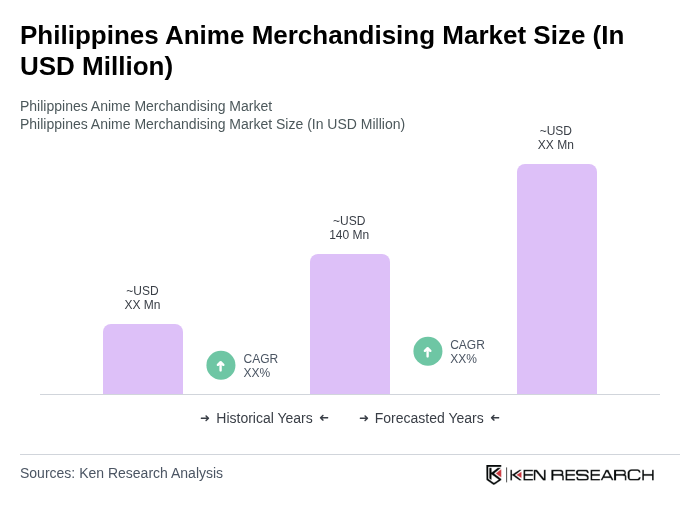
- The Philippines Anime Merchandising Market is valued at USD 140 million, based on a five-year historical analysis and benchmarking against regional anime and anime?merchandising revenues in Asia Pacific. This growth is primarily driven by the increasing popularity of anime culture, fueled by social media engagement on platforms such as Facebook and TikTok and by the rise of streaming services (including Netflix, Crunchyroll, and local OTT platforms) that make anime more accessible to a wider audience. The demand for various merchandise types, including apparel, collectibles, and accessories, has surged as fans seek to express their passion for their favorite series and characters through both everyday wear and display items.
- Metro Manila, Cebu, and Davao are the dominant cities in the Philippines Anime Merchandising Market. Metro Manila, being the capital and the country’s main retail and events hub, has a higher concentration of anime events, conventions, and specialty stores, making it a primary hub for anime enthusiasts. Cebu and Davao also have growing communities of anime fans, supported by local pop?culture events, university?based fan groups, and increasing online shopping options through major e?commerce platforms, which collectively contribute to their prominence in the market.
- The Philippines government has implemented regulations to protect intellectual property rights, which significantly impacts the anime merchandising market. The Intellectual Property Code of the Philippines (Republic Act No. 8293), issued by the Congress of the Philippines in 1997 and enforced by the Intellectual Property Office of the Philippines (IPOPHL), sets out the legal framework for copyright, trademarks, and enforcement against infringement, covering imported and locally produced merchandise. This framework requires rights holders or their authorized licensees to secure appropriate permissions and protects officially licensed anime merchandise, thereby encouraging legitimate sales and supporting measures against counterfeit products in the market through customs enforcement, administrative actions, and civil and criminal remedies.
Philippines Anime Merchandising Market Segmentation
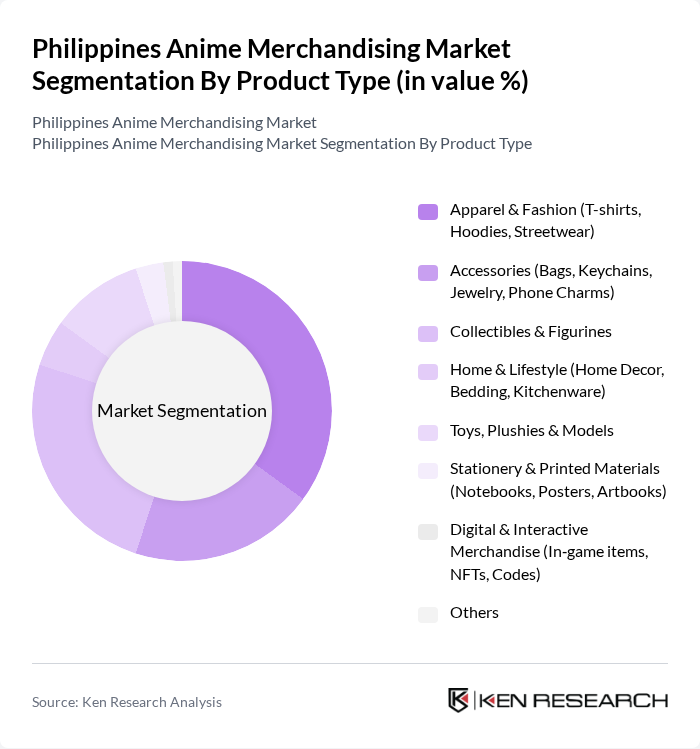
By Product Type:The product type segmentation includes various categories that cater to the diverse preferences of anime fans. The most popular subsegments are apparel and fashion, which includes T-shirts, hoodies, and streetwear, as fans often wear clothing that reflects their favorite characters or series; this aligns with regional trends where clothing and figurines are among the top revenue?generating categories in anime merchandising. Collectibles and figurines also dominate the market, as many fans enjoy displaying their favorite characters in their homes or workspaces, mirroring the strong figurine share seen in broader Asia Pacific and Japan anime merchandising markets. Accessories, such as bags and keychains, are also popular due to their practicality, relatively lower price points, and ability to showcase fandom in everyday life, while emerging categories like home décor and digital items (codes, in?game items) are gradually gaining traction alongside the global shift toward lifestyle and digital collectibles.
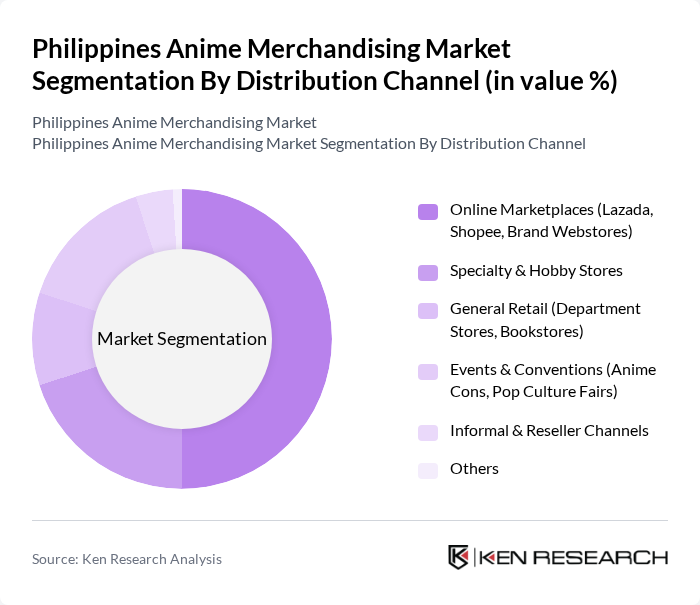
By Distribution Channel:The distribution channels for anime merchandise are diverse, with online marketplaces being the most significant due to the convenience they offer and the rapid expansion of e?commerce across Asia Pacific. Platforms like Lazada and Shopee have become popular among consumers, allowing easy access to a wide range of products from both international brands and local resellers. Specialty and hobby stores also play a crucial role, as they provide a physical space for fans to explore high?quality licensed merchandise, participate in community activities, and access limited or exclusive items. Events and conventions are vital for direct sales and community engagement, allowing fans to connect with each other and the brands they love, and often serving as launchpads for limited?run merchandise, collaborations, and creator signings in line with broader anime industry trends.
Philippines Anime Merchandising Market Competitive Landscape
The Philippines Anime Merchandising Market is characterized by a dynamic mix of regional and international players. Leading participants such as Bandai Namco Holdings Inc., Good Smile Company, Inc., Aniplus Asia, Cosplay.ph, Otaku Asia Anime Store, Toy Kingdom, Hobby Stock, Game One PH, Anime Alliance Philippines, Kawaii PH Store, Anime Merchandise PH, Manga Manila, Cosplay Central, Anime Hub Philippines, The Otaku Box contribute to innovation, geographic expansion, and service delivery in this space.
Philippines Anime Merchandising Market Industry Analysis
Growth Drivers
- Increasing Popularity of Anime Culture:The anime culture in the Philippines has seen a significant rise, with over 50% of the youth population aged 15-30 identifying as anime fans. This demographic shift is supported by the Philippine Statistics Authority, which reported that approximately 34 million individuals fall within this age group. The growing interest in anime series and films has led to a surge in demand for related merchandise, driving sales in the anime merchandising sector.
- Rise of Online Shopping Platforms:The e-commerce sector in the Philippines is projected to reach $24 billion in future, according to Statista. This growth is fueled by increased internet penetration, which stands at 76% as of future. Online shopping platforms have made anime merchandise more accessible, allowing consumers to purchase products from local and international sellers. This convenience has significantly contributed to the growth of the anime merchandising market, as consumers prefer the ease of online transactions.
- Expansion of Anime Conventions and Events:The number of anime conventions in the Philippines has increased from 10 in the past to over 30 in future, according to industry reports. These events attract thousands of attendees, providing a platform for merchandise sales and brand exposure. The Philippine Convention and Visitors Corporation noted that these conventions generate approximately $6 million annually in revenue, highlighting their role in promoting anime culture and boosting merchandise sales.
Market Challenges
- Competition from Counterfeit Products:The prevalence of counterfeit anime merchandise poses a significant challenge, with estimates suggesting that counterfeit goods account for 22% of the total market. This not only undermines brand integrity but also affects sales of legitimate products. The Intellectual Property Office of the Philippines has reported a 17% increase in counterfeit cases in the past year, indicating a growing concern for authentic merchandise producers.
- Limited Distribution Channels:Many anime merchandise retailers face challenges in distribution, with only 32% of stores having access to major retail chains. This limitation restricts market reach and affects sales potential. According to the Department of Trade and Industry, only 27% of small businesses in the anime sector have established online presence, further complicating their ability to compete effectively in a growing market.
Philippines Anime Merchandising Market Future Outlook
The future of the Philippines anime merchandising market appears promising, driven by the increasing integration of technology and consumer engagement strategies. As the youth demographic continues to embrace anime culture, businesses are likely to innovate their product offerings. The rise of digital platforms and social media marketing will further enhance brand visibility, while collaborations with local artists may create unique merchandise that resonates with consumers, fostering loyalty and expanding market reach.
Market Opportunities
- Collaborations with Local Artists:Partnering with local artists can create unique merchandise that appeals to the Filipino market. This strategy not only supports local talent but also enhances brand authenticity, potentially increasing sales by 18% as consumers seek culturally relevant products.
- Expansion into Emerging Markets:Targeting emerging markets in Southeast Asia presents a significant opportunity for growth. With a combined population of over 650 million, these markets offer a vast customer base. Companies can leverage regional trade agreements to facilitate entry, potentially increasing revenue by 22% within the next few years.
Scope of the Report
| Segment | Sub-Segments |
|---|---|
| By Product Type | Apparel & Fashion (T-shirts, Hoodies, Streetwear) Accessories (Bags, Keychains, Jewelry, Phone Charms) Collectibles & Figurines Home & Lifestyle (Home Decor, Bedding, Kitchenware) Toys, Plushies & Models Stationery & Printed Materials (Notebooks, Posters, Artbooks) Digital & Interactive Merchandise (In?game items, NFTs, Codes) Others |
| By Distribution Channel | Online Marketplaces (Lazada, Shopee, Brand Webstores) Specialty & Hobby Stores General Retail (Department Stores, Bookstores) Events & Conventions (Anime Cons, Pop Culture Fairs) Informal & Reseller Channels Others |
| By Consumer Demographics | Age Group (Children, Teens, Young Adults, Adults) Gender (Male, Female, Unisex/All?gender) Income Level (Mass, Mid, Premium/High) Otaku/Anime Engagement Level (Casual Fans, Core Fans, Collectors) Others |
| By Price Tier | Budget/Mass Mid?Range Premium & Limited Edition Others |
| By Licensing Status | Officially Licensed Merchandise Fan?Made / Doujin & Indie Products Unlicensed / Grey Market Others |
| By Product Origin | Imported (Japan, Rest of Asia, Rest of World) Locally Manufactured / Printed Others |
| By Use Case / Occasion | Everyday Wear & Use Collecting & Display Gifts & Souvenirs Event?Specific / Limited Drops Others |
Key Target Audience
Investors and Venture Capitalist Firms
Government and Regulatory Bodies (e.g., Department of Trade and Industry, National Commission for Culture and the Arts)
Manufacturers and Producers
Distributors and Retailers
Anime Convention Organizers
Online Marketplaces and E-commerce Platforms
Content Creators and Influencers
Licensing and Merchandising Agencies
Players Mentioned in the Report:
Bandai Namco Holdings Inc.
Good Smile Company, Inc.
Aniplus Asia
Cosplay.ph
Otaku Asia Anime Store
Toy Kingdom
Hobby Stock
Game One PH
Anime Alliance Philippines
Kawaii PH Store
Anime Merchandise PH
Manga Manila
Cosplay Central
Anime Hub Philippines
The Otaku Box
Table of Contents
Market Assessment Phase
1. Executive Summary and Approach
2. Philippines Anime Merchandising Market Overview
2.1 Key Insights and Strategic Recommendations
2.2 Philippines Anime Merchandising Market Overview
2.3 Definition and Scope
2.4 Evolution of Market Ecosystem
2.5 Timeline of Key Regulatory Milestones
2.6 Value Chain & Stakeholder Mapping
2.7 Business Cycle Analysis
2.8 Policy & Incentive Landscape
3. Philippines Anime Merchandising Market Analysis
3.1 Growth Drivers
3.1.1 Increasing Popularity of Anime Culture
3.1.2 Rise of Online Shopping Platforms
3.1.3 Growing Youth Demographic
3.1.4 Expansion of Anime Conventions and Events
3.2 Market Challenges
3.2.1 Competition from Counterfeit Products
3.2.2 Limited Distribution Channels
3.2.3 Fluctuating Consumer Spending
3.2.4 Regulatory Hurdles
3.3 Market Opportunities
3.3.1 Collaborations with Local Artists
3.3.2 Expansion into Emerging Markets
3.3.3 Development of Exclusive Merchandise
3.3.4 Leveraging Social Media for Marketing
3.4 Market Trends
3.4.1 Increased Demand for Eco-Friendly Products
3.4.2 Growth of Subscription Box Services
3.4.3 Rise of Digital Collectibles
3.4.4 Integration of Augmented Reality in Merchandise
3.5 Government Regulation
3.5.1 Intellectual Property Rights Enforcement
3.5.2 Import Tariffs on Merchandise
3.5.3 Consumer Protection Laws
3.5.4 Tax Incentives for Local Producers
4. SWOT Analysis
5. Stakeholder Analysis
6. Porter's Five Forces Analysis
7. Philippines Anime Merchandising Market Size, 2019-2024
7.1 By Value
7.2 By Volume
7.3 By Average Selling Price
8. Philippines Anime Merchandising Market Segmentation
8.1 By Product Type
8.1.1 Apparel & Fashion (T-shirts, Hoodies, Streetwear)
8.1.2 Accessories (Bags, Keychains, Jewelry, Phone Charms)
8.1.3 Collectibles & Figurines
8.1.4 Home & Lifestyle (Home Decor, Bedding, Kitchenware)
8.1.5 Toys, Plushies & Models
8.1.6 Stationery & Printed Materials (Notebooks, Posters, Artbooks)
8.1.7 Digital & Interactive Merchandise (In?game items, NFTs, Codes)
8.1.8 Others
8.2 By Distribution Channel
8.2.1 Online Marketplaces (Lazada, Shopee, Brand Webstores)
8.2.2 Specialty & Hobby Stores
8.2.3 General Retail (Department Stores, Bookstores)
8.2.4 Events & Conventions (Anime Cons, Pop Culture Fairs)
8.2.5 Informal & Reseller Channels
8.2.6 Others
8.3 By Consumer Demographics
8.3.1 Age Group (Children, Teens, Young Adults, Adults)
8.3.2 Gender (Male, Female, Unisex/All?gender)
8.3.3 Income Level (Mass, Mid, Premium/High)
8.3.4 Otaku/Anime Engagement Level (Casual Fans, Core Fans, Collectors)
8.3.5 Others
8.4 By Price Tier
8.4.1 Budget/Mass
8.4.2 Mid?Range
8.4.3 Premium & Limited Edition
8.4.4 Others
8.5 By Licensing Status
8.5.1 Officially Licensed Merchandise
8.5.2 Fan?Made / Doujin & Indie Products
8.5.3 Unlicensed / Grey Market
8.5.4 Others
8.6 By Product Origin
8.6.1 Imported (Japan, Rest of Asia, Rest of World)
8.6.2 Locally Manufactured / Printed
8.6.3 Others
8.7 By Use Case / Occasion
8.7.1 Everyday Wear & Use
8.7.2 Collecting & Display
8.7.3 Gifts & Souvenirs
8.7.4 Event?Specific / Limited Drops
8.7.5 Others
9. Philippines Anime Merchandising Market Competitive Analysis
9.1 Market Share of Key Players
9.2 Cross Comparison of Key Players (KPIs)
9.2.1 Company Name
9.2.2 Group Size (Large, Medium, or Small as per industry convention)
9.2.3 Annual Philippines Anime Merchandise Revenue (PHP / USD)
9.2.4 3?Year Revenue CAGR in Philippines Anime Merchandise
9.2.5 EBITDA Margin from Anime Merchandise (%)
9.2.6 Market Share in Philippines Anime Merchandising (%)
9.2.7 Average Order Value (AOV) – Online Channels
9.2.8 Sales Mix by Channel (Online vs Offline, % of Revenue)
9.2.9 Same?Store Sales Growth (for Physical Stores, %)
9.2.10 Customer Acquisition Cost (CAC)
9.2.11 Customer Lifetime Value (CLV)
9.2.12 Repeat Purchase Rate / Loyalty Program Penetration (%)
9.2.13 Inventory Turnover for Key Product Categories
9.2.14 SKU Count / Product Diversification Index
9.2.15 Social Media Reach & Engagement (Followers, Engagement Rate)
9.3 SWOT Analysis of Top Players
9.4 Pricing Analysis
9.5 Detailed Profile of Major Companies
9.5.1 Bandai Namco Holdings Inc.
9.5.2 Good Smile Company, Inc.
9.5.3 Aniplus Asia
9.5.4 Cosplay.ph
9.5.5 Otaku Asia Anime Store
9.5.6 Toy Kingdom
9.5.7 Hobby Stock
9.5.8 Game One PH
9.5.9 Anime Alliance Philippines
9.5.10 Kawaii PH Store
9.5.11 Anime Merchandise PH
9.5.12 Manga Manila
9.5.13 Cosplay Central
9.5.14 Anime Hub Philippines
9.5.15 The Otaku Box
10. Philippines Anime Merchandising Market End-User Analysis
10.1 Procurement Behavior of Key Ministries
10.1.1 Budget Allocation for Anime Events
10.1.2 Partnerships with Local Merchants
10.1.3 Support for Cultural Events
10.1.4 Others
10.2 Corporate Spend on Infrastructure & Energy
10.2.1 Investment in Anime Conventions
10.2.2 Sponsorship of Anime-related Events
10.2.3 Collaborations with Local Artists
10.2.4 Others
10.3 Pain Point Analysis by End-User Category
10.3.1 Availability of Authentic Merchandise
10.3.2 Pricing Concerns
10.3.3 Quality of Products
10.3.4 Others
10.4 User Readiness for Adoption
10.4.1 Awareness of Anime Merchandise
10.4.2 Willingness to Pay for Quality
10.4.3 Engagement in Online Communities
10.4.4 Others
10.5 Post-Deployment ROI and Use Case Expansion
10.5.1 Customer Feedback Mechanisms
10.5.2 Repeat Purchase Rates
10.5.3 Expansion into New Product Lines
10.5.4 Others
11. Philippines Anime Merchandising Market Future Size, 2025-2030
11.1 By Value
11.2 By Volume
11.3 By Average Selling Price
Go-To-Market Strategy Phase
1. Whitespace Analysis + Business Model Canvas
1.1 Market Gaps Identification
1.2 Business Model Development
2. Marketing and Positioning Recommendations
2.1 Branding Strategies
2.2 Product USPs
3. Distribution Plan
3.1 Urban Retail vs Rural NGO Tie-ups
4. Channel & Pricing Gaps
4.1 Underserved Routes
4.2 Pricing Bands
5. Unmet Demand & Latent Needs
5.1 Category Gaps
5.2 Consumer Segments
6. Customer Relationship
6.1 Loyalty Programs
6.2 After-sales Service
7. Value Proposition
7.1 Sustainability
7.2 Integrated Supply Chains
8. Key Activities
8.1 Regulatory Compliance
8.2 Branding
8.3 Distribution Setup
9. Entry Strategy Evaluation
9.1 Domestic Market Entry Strategy
9.1.1 Product Mix
9.1.2 Pricing Band
9.1.3 Packaging
9.2 Export Entry Strategy
9.2.1 Target Countries
9.2.2 Compliance Roadmap
10. Entry Mode Assessment
10.1 JV
10.2 Greenfield
10.3 M&A
10.4 Distributor Model
11. Capital and Timeline Estimation
11.1 Capital Requirements
11.2 Timelines
12. Control vs Risk Trade-Off
12.1 Ownership vs Partnerships
13. Profitability Outlook
13.1 Breakeven Analysis
13.2 Long-term Sustainability
14. Potential Partner List
14.1 Distributors
14.2 JVs
14.3 Acquisition Targets
15. Execution Roadmap
15.1 Phased Plan for Market Entry
15.1.1 Market Setup
15.1.2 Market Entry
15.1.3 Growth Acceleration
15.1.4 Scale & Stabilize
15.2 Key Activities and Milestones
15.2.1 Milestone Tracking
15.2.2 Activity Scheduling
Research Methodology
Phase 1: Approach1
Desk Research
- Analysis of industry reports from local and international market research firms
- Review of online sales data from major e-commerce platforms in the Philippines
- Examination of social media trends and consumer engagement metrics related to anime merchandise
Primary Research
- Interviews with key stakeholders in the anime merchandising industry, including retailers and distributors
- Surveys targeting anime fans to understand purchasing behavior and preferences
- Focus group discussions with collectors and enthusiasts to gauge market trends and product demand
Validation & Triangulation
- Cross-validation of findings through multiple data sources, including sales figures and consumer feedback
- Triangulation of insights from industry experts, retailers, and consumer surveys
- Sanity checks through expert panel reviews to ensure data accuracy and relevance
Phase 2: Market Size Estimation1
Top-down Assessment
- Estimation of total market size based on national consumer spending on entertainment and merchandise
- Segmentation of the market by product categories such as figures, apparel, and accessories
- Incorporation of growth rates from related sectors, such as gaming and streaming services
Bottom-up Modeling
- Collection of sales data from leading anime merchandise retailers in the Philippines
- Estimation of average transaction values and purchase frequency among consumers
- Analysis of inventory turnover rates to project future sales volumes
Forecasting & Scenario Analysis
- Development of market forecasts using historical sales data and growth trends
- Scenario analysis based on potential shifts in consumer preferences and economic conditions
- Creation of baseline, optimistic, and pessimistic projections through 2030
Phase 3: CATI Sample Composition1
| Scope Item/Segment | Sample Size | Target Respondent Profiles |
|---|---|---|
| Retail Sales of Anime Merchandise | 120 | Store Managers, Retail Buyers |
| Consumer Purchase Behavior | 150 | Anime Fans, Collectors |
| Online Sales Channels | 100 | E-commerce Managers, Digital Marketing Specialists |
| Event Participation and Conventions | 80 | Event Organizers, Attendees |
| Anime Merchandise Production | 70 | Manufacturers, Product Designers |
Frequently Asked Questions
What is the current value of the Philippines Anime Merchandising Market?
The Philippines Anime Merchandising Market is valued at approximately USD 140 million, reflecting significant growth driven by the rising popularity of anime culture and increased accessibility through streaming services and social media engagement.
Which cities are the main hubs for anime merchandising in the Philippines?
What types of products are most popular in the Philippines Anime Merchandising Market?
How has the rise of online shopping impacted the anime merchandising market?
Other Regional/Country Reports
Malaysia Anime Merchandising Market
KSA Anime Merchandising Market
Other Adjacent Reports
UAE Manga Publishing Market
Mexico Video Game Merchandising Market
Mexico Collectible Figurines Market
Belgium Pop Culture Apparel Market
Brazil Streaming Services Market
Brazil E-commerce Platforms Market
Philippines Intellectual Property Licensing Market
Bahrain Fan Convention Market
UAE Digital Collectibles Market
Why Buy From Us?

What makes us stand out is that our consultants follow Robust, Refine and Result (RRR) methodology. Robust for clear definitions, approaches and sanity checking, Refine for differentiating respondents' facts and opinions, and Result for presenting data with story.

We have set a benchmark in the industry by offering our clients with syndicated and customized market research reports featuring coverage of entire market as well as meticulous research and analyst insights.

While we don't replace traditional research, we flip the method upside down. Our dual approach of Top Bottom & Bottom Top ensures quality deliverable by not just verifying company fundamentals but also looking at the sector and macroeconomic factors.

With one step in the future, our research team constantly tries to show you the bigger picture. We help with some of the tough questions you may encounter along the way: How is the industry positioned? Best marketing channel? KPI's of competitors? By aligning every element, we help maximize success.

Our report gives you instant access to the answers and sources that other companies might choose to hide. We elaborate each steps of research methodology we have used and showcase you the sample size to earn your trust.

If you need any support, we are here! We pride ourselves on universe strength, data quality, and quick, friendly, and professional service.