Region:Asia
Author(s):Geetanshi
Product Code:KRAC8347
Pages:100
Published On:November 2025
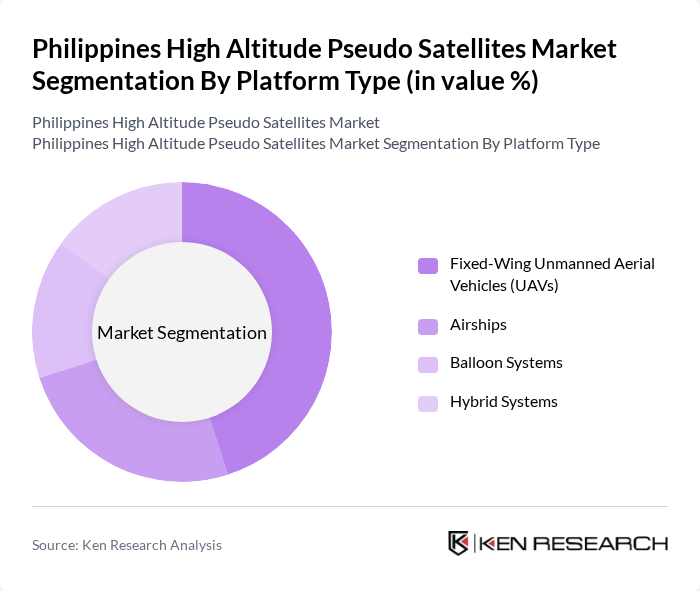
By Platform Type:The platform type segmentation includes various technologies utilized in high altitude pseudo satellites. The subsegments are Fixed-Wing Unmanned Aerial Vehicles (UAVs), Airships, Balloon Systems, and Hybrid Systems. Each platform type offers unique advantages in terms of operational capabilities, endurance, and application suitability. Among these, Fixed-Wing UAVs are currently leading the market due to their versatility, high endurance, and efficiency in long-duration missions, especially for persistent surveillance and wide-area communications.
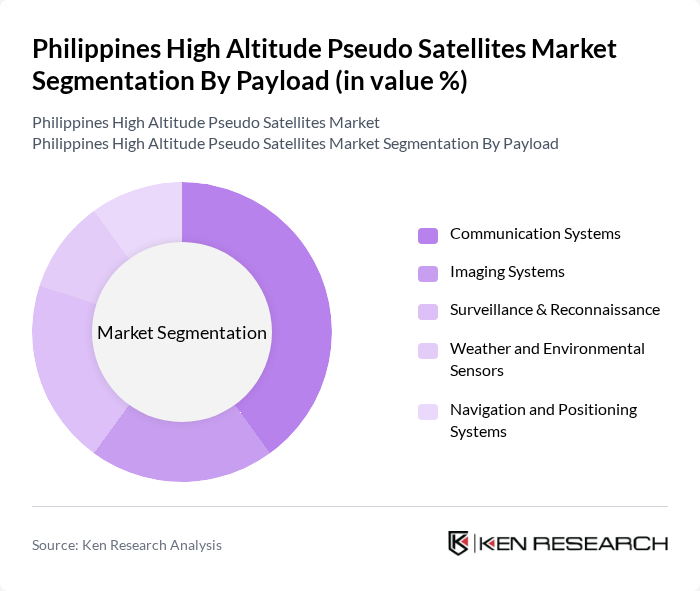
By Payload:The payload segmentation encompasses the various systems carried by high altitude pseudo satellites, including Communication Systems, Imaging Systems, Surveillance & Reconnaissance, Weather and Environmental Sensors, and Navigation and Positioning Systems. Communication Systems are the dominant payload type, driven by the increasing need for reliable connectivity and data transmission in remote and disaster-prone areas, making them essential for both military and civilian applications. Imaging and surveillance payloads are also significant, supporting environmental monitoring, security, and disaster response.
The Philippines High Altitude Pseudo Satellites Market is characterized by a dynamic mix of regional and international players. Leading participants such as Airbus Defence and Space, Boeing, Northrop Grumman, Lockheed Martin, Thales Group, Raytheon Technologies, L3Harris Technologies, AeroVironment, General Atomics, Stratobus (Thales Alenia Space), Skydweller Aero, Prismatic Ltd (BAE Systems), SoftBank HAPSMobile, Sceye Inc., Philippine Space Agency (PhilSA) contribute to innovation, geographic expansion, and service delivery in this space.
The future of the Philippines high altitude pseudo satellites market appears promising, driven by technological advancements and increasing government support. As the demand for remote sensing and connectivity solutions grows, investments in innovative applications will likely rise. The integration of artificial intelligence and IoT technologies will enhance data analysis capabilities, making pseudo satellites more efficient. Additionally, the focus on sustainable technologies will align with global environmental goals, positioning the Philippines as a leader in this emerging sector.
| Segment | Sub-Segments |
|---|---|
| By Platform Type | Fixed-Wing Unmanned Aerial Vehicles (UAVs) Airships Balloon Systems Hybrid Systems |
| By Payload | Communication Systems Imaging Systems Surveillance & Reconnaissance Weather and Environmental Sensors Navigation and Positioning Systems |
| By Application | Defense & Security Civilian Government Commercial Disaster Management Environmental Monitoring Others |
| By End-User | Government & Defense Telecommunications Providers Agriculture Sector Research Institutions Others |
| By Operational Altitude | –20 km –25 km –30 km Others |
| By Technology | Solar-Powered Hybrid-Powered Others |
| By Market Segment | Commercial Government Research Institutions Others |
| Scope Item/Segment | Sample Size | Target Respondent Profiles |
|---|---|---|
| Telecommunications Sector HAPS Utilization | 60 | Network Engineers, Product Managers |
| Aerospace Industry Insights | 50 | Project Managers, Aerospace Engineers |
| Government Regulatory Perspectives | 40 | Policy Makers, Regulatory Analysts |
| Environmental Monitoring Applications | 45 | Environmental Scientists, Data Analysts |
| Disaster Management Agencies | 40 | Emergency Response Coordinators, Program Directors |
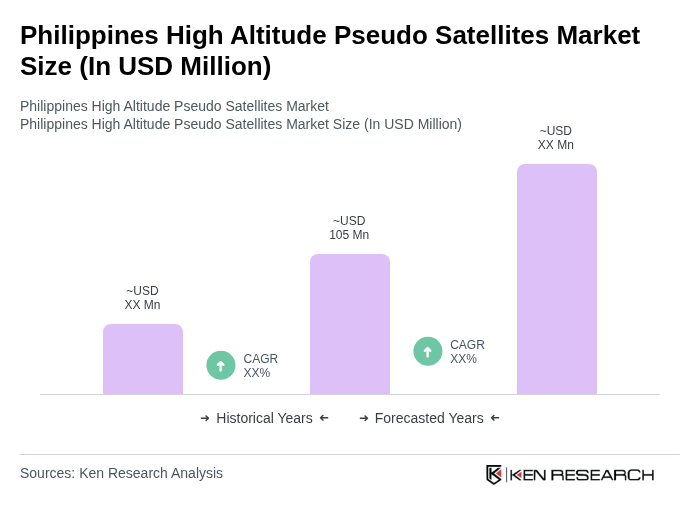
The Philippines High Altitude Pseudo Satellites Market is valued at approximately USD 105 million, reflecting a five-year historical analysis driven by advancements in aerospace technology and increasing demand for surveillance and communication capabilities.

What makes us stand out is that our consultants follow Robust, Refine and Result (RRR) methodology. Robust for clear definitions, approaches and sanity checking, Refine for differentiating respondents' facts and opinions, and Result for presenting data with story.

We have set a benchmark in the industry by offering our clients with syndicated and customized market research reports featuring coverage of entire market as well as meticulous research and analyst insights.

While we don't replace traditional research, we flip the method upside down. Our dual approach of Top Bottom & Bottom Top ensures quality deliverable by not just verifying company fundamentals but also looking at the sector and macroeconomic factors.

With one step in the future, our research team constantly tries to show you the bigger picture. We help with some of the tough questions you may encounter along the way: How is the industry positioned? Best marketing channel? KPI's of competitors? By aligning every element, we help maximize success.

Our report gives you instant access to the answers and sources that other companies might choose to hide. We elaborate each steps of research methodology we have used and showcase you the sample size to earn your trust.

If you need any support, we are here! We pride ourselves on universe strength, data quality, and quick, friendly, and professional service.













