Region:Middle East
Author(s):Geetanshi
Product Code:KRAD3871
Pages:81
Published On:November 2025
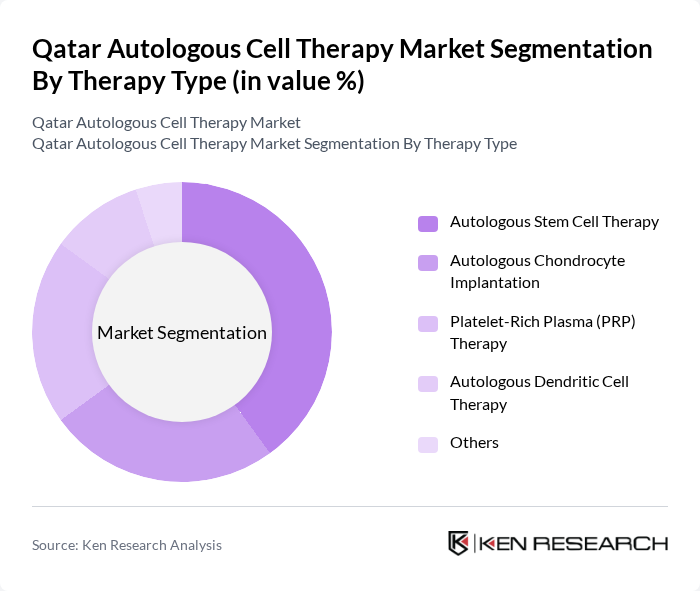
By Therapy Type:The autologous cell therapy market is segmented into Autologous Stem Cell Therapy, Autologous Chondrocyte Implantation, Platelet-Rich Plasma (PRP) Therapy, Autologous Dendritic Cell Therapy, and Others. Autologous Stem Cell Therapy is the leading segment, attributed to its broad application in treating cancers, degenerative conditions, and genetic disorders. The segment’s dominance is reinforced by increasing clinical adoption, ongoing research into efficacy, and technological advances in cell isolation and processing. The rising use of CAR-T and other personalized oncology treatments further strengthens this segment’s leadership.
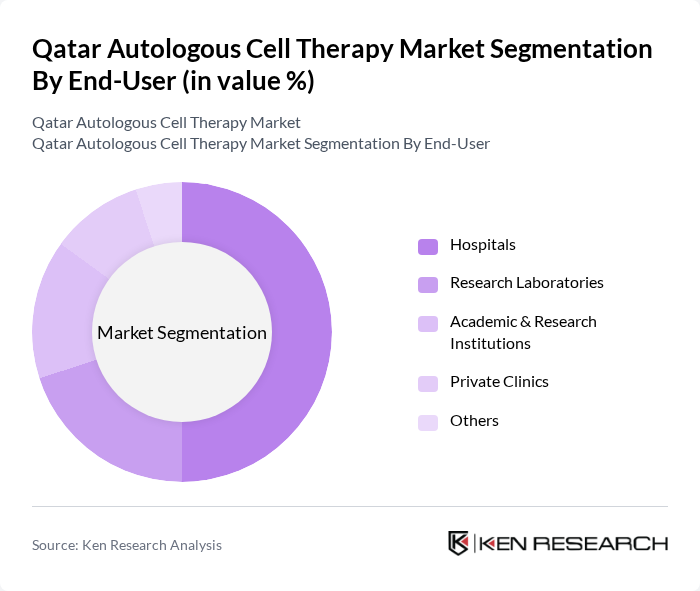
By End-User:The end-user segmentation of the autologous cell therapy market includes Hospitals, Research Laboratories, Academic & Research Institutions, Private Clinics, and Others. Hospitals are the primary end-users, equipped with advanced infrastructure and multidisciplinary expertise required for complex therapies. The proliferation of specialized treatment centers, integration of personalized medicine, and expansion of clinical trial networks in hospitals contribute to their leading position. Research laboratories and academic institutions play a key role in innovation and translational research, while private clinics are increasingly adopting autologous therapies for outpatient care.
The Qatar Autologous Cell Therapy Market is characterized by a dynamic mix of regional and international players. Leading participants such as Qatar Biomedical Research Institute, Hamad Medical Corporation, Sidra Medicine, Qatar University, Doha Clinic Hospital, Al Ahli Hospital, Qatar Red Crescent Society, Qatar Medical Center, Qatar Biobank, Weill Cornell Medicine–Qatar, Qatar Foundation, National Center for Cancer Care and Research (NCCCR), Aspetar Orthopaedic and Sports Medicine Hospital, Qatar Genome Programme, Ministry of Public Health (Qatar) contribute to innovation, geographic expansion, and service delivery in this space.
The future of the autologous cell therapy market in Qatar appears promising, driven by ongoing advancements in technology and increasing healthcare investments. As the government continues to prioritize healthcare innovation, the integration of cutting-edge therapies into clinical practice is expected to accelerate. Additionally, the growing collaboration between healthcare providers and research institutions will likely enhance the development of novel therapies, ensuring that Qatar remains at the forefront of regenerative medicine in the region.
| Segment | Sub-Segments |
|---|---|
| By Therapy Type | Autologous Stem Cell Therapy Autologous Chondrocyte Implantation Platelet-Rich Plasma (PRP) Therapy Autologous Dendritic Cell Therapy Others |
| By End-User | Hospitals Research Laboratories Academic & Research Institutions Private Clinics Others |
| By Application | Oncology (Cancer) Orthopedics & Musculoskeletal Disorders Cardiovascular Diseases Neurological Disorders Autoimmune Diseases Others |
| By Source of Cells | Bone Marrow Peripheral Blood Adipose Tissue Others |
| By Delivery Method | Intraoperative Delivery Postoperative Delivery Intravenous Administration Local Injection Others |
| By Regulatory Approval Status | Approved Therapies Therapies Under Review Investigational Therapies Others |
| By Geographic Distribution | Doha Al Rayyan Al Wakrah Others |
| Scope Item/Segment | Sample Size | Target Respondent Profiles |
|---|---|---|
| Orthopedic Cell Therapy Providers | 60 | Orthopedic Surgeons, Clinic Administrators |
| Cardiovascular Regenerative Medicine | 50 | Cardiologists, Research Scientists |
| Dermatological Applications of Cell Therapy | 40 | Dermatologists, Aesthetic Medicine Practitioners |
| Patient Experience with Autologous Therapies | 50 | Patients, Caregivers |
| Regulatory Insights and Compliance | 40 | Regulatory Affairs Specialists, Compliance Officers |
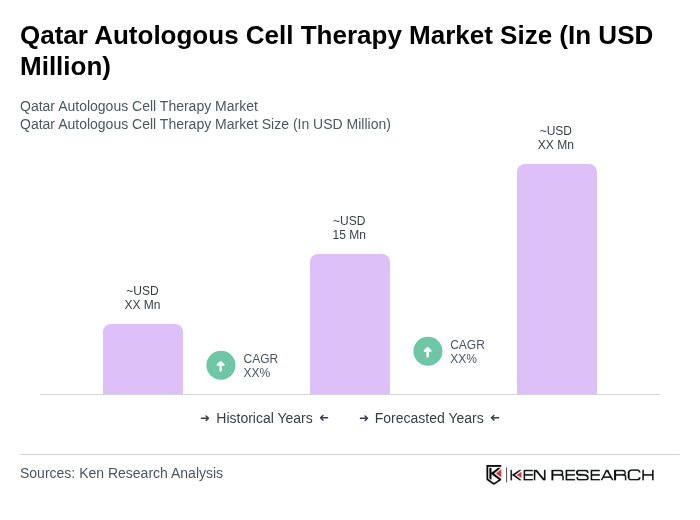
The Qatar Autologous Cell Therapy Market is valued at approximately USD 15 million, driven by advancements in medical technology, increasing chronic disease prevalence, and the adoption of personalized medicine.

What makes us stand out is that our consultants follow Robust, Refine and Result (RRR) methodology. Robust for clear definitions, approaches and sanity checking, Refine for differentiating respondents' facts and opinions, and Result for presenting data with story.

We have set a benchmark in the industry by offering our clients with syndicated and customized market research reports featuring coverage of entire market as well as meticulous research and analyst insights.

While we don't replace traditional research, we flip the method upside down. Our dual approach of Top Bottom & Bottom Top ensures quality deliverable by not just verifying company fundamentals but also looking at the sector and macroeconomic factors.

With one step in the future, our research team constantly tries to show you the bigger picture. We help with some of the tough questions you may encounter along the way: How is the industry positioned? Best marketing channel? KPI's of competitors? By aligning every element, we help maximize success.

Our report gives you instant access to the answers and sources that other companies might choose to hide. We elaborate each steps of research methodology we have used and showcase you the sample size to earn your trust.

If you need any support, we are here! We pride ourselves on universe strength, data quality, and quick, friendly, and professional service.













