About the Report
Base Year 2024Listen to the audio summary
Qatar Pulmonary Drug Delivery Systems Market Overview
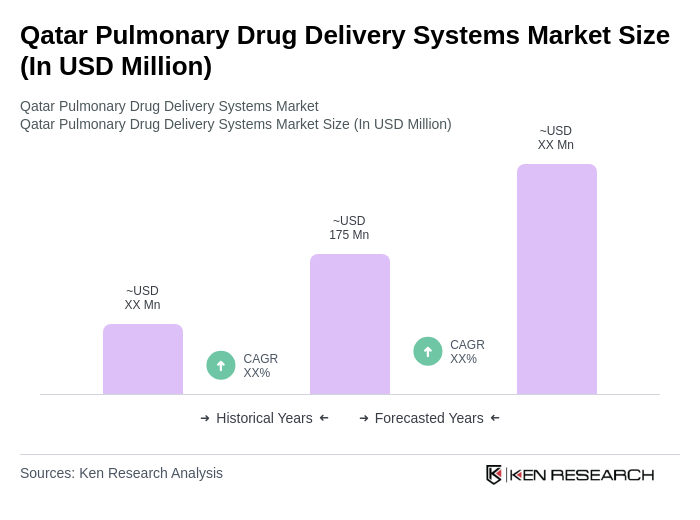
- The Qatar Pulmonary Drug Delivery Systems Market is valued at USD 175 million, based on a five-year historical analysis. This growth is primarily driven by the increasing prevalence of respiratory diseases such as asthma and Chronic Obstructive Pulmonary Disease (COPD), rising healthcare expenditure across the Middle East region, and advancements in drug delivery technologies. The demand for effective pulmonary drug delivery systems has surged due to the growing awareness of respiratory health and the need for efficient treatment options. Technological innovations including smart connected respiratory health devices and digital inhaler solutions are transforming patient care delivery.
- Key cities such as Doha and Al Rayyan dominate the market due to their advanced healthcare infrastructure and high population density. The concentration of healthcare facilities and specialized clinics in these urban areas facilitates the adoption of innovative pulmonary drug delivery systems, making them pivotal in the overall market landscape. The expansion of home healthcare services and remote patient monitoring capabilities is further accelerating market penetration in urban centers.
- The Ministry of Public Health in Qatar enforces the Healthcare Facilities Licensing Standards, 2021, which mandates comprehensive patient education protocols for respiratory medication devices distributed through licensed healthcare facilities and pharmacies. This regulation requires healthcare providers to implement structured training programs for patients using inhalers, nebulizers, and other pulmonary drug delivery systems, with specific provisions for demonstrating proper device usage techniques, maintenance procedures, and adherence monitoring. The standards establish minimum competency requirements for healthcare professionals dispensing these devices and mandate follow-up assessments to verify patient understanding and compliance.
Qatar Pulmonary Drug Delivery Systems Market Segmentation
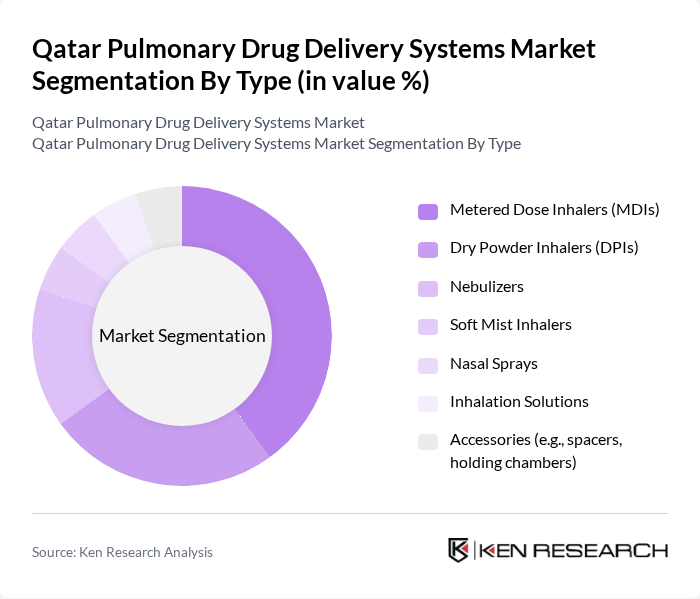
By Type:The market is segmented into various types of pulmonary drug delivery systems, including Metered Dose Inhalers (MDIs), Dry Powder Inhalers (DPIs), Nebulizers, Soft Mist Inhalers, Nasal Sprays, Inhalation Solutions, and Accessories (e.g., spacers, holding chambers). Among these, Metered Dose Inhalers (MDIs) are the most widely used due to their convenience and effectiveness in delivering medication directly to the lungs. The growing prevalence of asthma and Chronic Obstructive Pulmonary Disease (COPD) has further propelled the demand for MDIs, making them a dominant force in the market. The integration of digital tracking capabilities and smart sensors into traditional MDI devices is enhancing medication adherence monitoring and patient outcomes.
By End-User:The end-user segmentation includes Hospitals, Homecare Settings, Clinics, Long-term Care Facilities, Pharmacies, and Others. Hospitals are the leading end-user segment, driven by the high volume of patients requiring respiratory treatments and the availability of advanced medical technologies. The increasing number of hospital admissions for respiratory diseases has significantly contributed to the demand for pulmonary drug delivery systems in this sector. The expansion of homecare settings is experiencing accelerated growth as patients and healthcare systems increasingly adopt remote patient monitoring and telehealth platforms for respiratory therapy management.

Qatar Pulmonary Drug Delivery Systems Market Competitive Landscape
The Qatar Pulmonary Drug Delivery Systems Market is characterized by a dynamic mix of regional and international players. Leading participants such as GlaxoSmithKline plc, AstraZeneca plc, Boehringer Ingelheim GmbH, Novartis AG, Teva Pharmaceutical Industries Ltd., Merck & Co., Inc., Sanofi S.A., Pfizer Inc., Hikma Pharmaceuticals PLC, Viatris Inc., Chiesi Farmaceutici S.p.A., Otsuka Pharmaceutical Co., Ltd., Sun Pharmaceutical Industries Ltd., Cipla Limited, Sandoz International GmbH, AptarGroup, Inc., Philips Respironics (Koninklijke Philips N.V.), PARI GmbH contribute to innovation, geographic expansion, and service delivery in this space.
Qatar Pulmonary Drug Delivery Systems Market Industry Analysis
Growth Drivers
- Increasing Prevalence of Respiratory Diseases:The World Health Organization reported that respiratory diseases affect approximately 1.2 million people in Qatar, with asthma and chronic obstructive pulmonary disease (COPD) being the most common. This rising prevalence drives the demand for effective pulmonary drug delivery systems, as healthcare providers seek innovative solutions to manage these conditions. The increasing burden of respiratory diseases necessitates advanced treatment options, thereby propelling market growth in the region.
- Advancements in Drug Formulation Technologies:In future, the global investment in drug formulation technologies is projected to reach $50 billion, with a significant portion allocated to pulmonary delivery systems. Innovations such as nanotechnology and targeted delivery methods enhance the efficacy of medications, making them more appealing to healthcare providers. These advancements not only improve patient outcomes but also stimulate market growth as pharmaceutical companies invest in developing new formulations tailored for respiratory diseases.
- Rising Demand for Patient-Friendly Drug Delivery Systems:A recent survey indicated that 70% of patients prefer drug delivery systems that are easy to use and enhance adherence to treatment regimens. This trend is particularly evident in Qatar, where the healthcare system emphasizes patient-centered care. The demand for user-friendly inhalers and nebulizers is increasing, prompting manufacturers to innovate and design devices that cater to patient needs, thus driving market expansion in the pulmonary drug delivery sector.
Market Challenges
- High Cost of Advanced Pulmonary Drug Delivery Systems:The average cost of advanced inhalation devices in Qatar can exceed QAR 1,500, which poses a significant barrier to widespread adoption. Many healthcare facilities face budget constraints, limiting their ability to procure these systems. This high cost can deter both healthcare providers and patients from utilizing advanced pulmonary drug delivery options, thereby hindering market growth and accessibility to effective treatments.
- Regulatory Hurdles in Product Approval:The regulatory landscape in Qatar can be complex, with the Ministry of Public Health imposing stringent guidelines for the approval of medical devices. The average time for product approval can extend up to 18 months, delaying market entry for innovative pulmonary drug delivery systems. These regulatory challenges can discourage investment and slow the pace of technological advancements, ultimately impacting the growth of the market.
Qatar Pulmonary Drug Delivery Systems Market Future Outlook
The future of the Qatar pulmonary drug delivery systems market appears promising, driven by technological advancements and a growing focus on patient-centric solutions. As healthcare providers increasingly adopt smart inhalers and integrate digital health technologies, the market is expected to evolve significantly. Additionally, the emphasis on preventive healthcare measures will likely lead to increased investments in innovative drug delivery systems, enhancing treatment efficacy and patient adherence in managing respiratory diseases.
Market Opportunities
- Expansion of Telemedicine and Remote Patient Monitoring:The rise of telemedicine in Qatar, with over 30% of consultations now conducted remotely, presents a unique opportunity for pulmonary drug delivery systems. This trend allows for better patient monitoring and adherence to treatment plans, enhancing the effectiveness of drug delivery systems and improving health outcomes for patients with respiratory conditions.
- Development of Personalized Medicine Approaches:The global market for personalized medicine is projected to reach $2 trillion by future, with significant implications for pulmonary drug delivery systems. Tailoring treatments to individual patient profiles can enhance therapeutic efficacy and minimize side effects, creating a demand for innovative delivery systems that cater to personalized medicine approaches in Qatar's healthcare landscape.
Scope of the Report
| Segment | Sub-Segments |
|---|---|
| By Type | Metered Dose Inhalers (MDIs) Dry Powder Inhalers (DPIs) Nebulizers Soft Mist Inhalers Nasal Sprays Inhalation Solutions Accessories (e.g., spacers, holding chambers) |
| By End-User | Hospitals Homecare Settings Clinics Long-term Care Facilities Pharmacies Others |
| By Application | Asthma Treatment Chronic Obstructive Pulmonary Disease (COPD) Cystic Fibrosis Respiratory Infections Allergic Rhinitis Others |
| By Distribution Channel | Retail Pharmacies Online Pharmacies Hospital Pharmacies Direct Sales Others |
| By Region | Doha Al Rayyan Umm Salal Al Wakrah Al Khor Others |
| By Price Range | Low Price Mid Price High Price Premium Price |
| By Regulatory Approval Status | Approved Products Pending Approval Discontinued Products Others |
Key Target Audience
Investors and Venture Capitalist Firms
Government and Regulatory Bodies (e.g., Qatar Ministry of Public Health)
Manufacturers and Producers of Pulmonary Drug Delivery Systems
Distributors and Retailers of Pharmaceutical Products
Healthcare Providers and Hospitals
Pharmaceutical Research Organizations
Industry Associations (e.g., Qatar Pharmaceutical Association)
Financial Institutions and Banks
Players Mentioned in the Report:
GlaxoSmithKline plc
AstraZeneca plc
Boehringer Ingelheim GmbH
Novartis AG
Teva Pharmaceutical Industries Ltd.
Merck & Co., Inc.
Sanofi S.A.
Pfizer Inc.
Hikma Pharmaceuticals PLC
Viatris Inc.
Chiesi Farmaceutici S.p.A.
Otsuka Pharmaceutical Co., Ltd.
Sun Pharmaceutical Industries Ltd.
Cipla Limited
Sandoz International GmbH
AptarGroup, Inc.
Philips Respironics (Koninklijke Philips N.V.)
PARI GmbH
Table of Contents
Market Assessment Phase
1. Executive Summary and Approach
2. Qatar Pulmonary Drug Delivery Systems Market Overview
2.1 Key Insights and Strategic Recommendations
2.2 Qatar Pulmonary Drug Delivery Systems Market Overview
2.3 Definition and Scope
2.4 Evolution of Market Ecosystem
2.5 Timeline of Key Regulatory Milestones
2.6 Value Chain & Stakeholder Mapping
2.7 Business Cycle Analysis
2.8 Policy & Incentive Landscape
3. Qatar Pulmonary Drug Delivery Systems Market Analysis
3.1 Growth Drivers
3.1.1 Increasing prevalence of respiratory diseases
3.1.2 Advancements in drug formulation technologies
3.1.3 Rising demand for patient-friendly drug delivery systems
3.1.4 Government initiatives to improve healthcare infrastructure
3.2 Market Challenges
3.2.1 High cost of advanced pulmonary drug delivery systems
3.2.2 Regulatory hurdles in product approval
3.2.3 Limited awareness among healthcare professionals
3.2.4 Competition from alternative drug delivery methods
3.3 Market Opportunities
3.3.1 Expansion of telemedicine and remote patient monitoring
3.3.2 Development of personalized medicine approaches
3.3.3 Collaborations with research institutions for innovation
3.3.4 Growing market for home healthcare solutions
3.4 Market Trends
3.4.1 Increasing adoption of smart inhalers
3.4.2 Focus on biodegradable and eco-friendly materials
3.4.3 Integration of digital health technologies
3.4.4 Shift towards preventive healthcare measures
3.5 Government Regulation
3.5.1 Stricter quality control measures for drug delivery devices
3.5.2 Enhanced guidelines for clinical trials
3.5.3 Policies promoting local manufacturing of medical devices
3.5.4 Incentives for research and development in healthcare
4. SWOT Analysis
5. Stakeholder Analysis
6. Porter's Five Forces Analysis
7. Qatar Pulmonary Drug Delivery Systems Market Market Size, 2019-2024
7.1 By Value
7.2 By Volume
7.3 By Average Selling Price
8. Qatar Pulmonary Drug Delivery Systems Market Segmentation
8.1 By Type
8.1.1 Metered Dose Inhalers (MDIs)
8.1.2 Dry Powder Inhalers (DPIs)
8.1.3 Nebulizers
8.1.4 Soft Mist Inhalers
8.1.5 Nasal Sprays
8.1.6 Inhalation Solutions
8.1.7 Accessories (e.g., spacers, holding chambers)
8.2 By End-User
8.2.1 Hospitals
8.2.2 Homecare Settings
8.2.3 Clinics
8.2.4 Long-term Care Facilities
8.2.5 Pharmacies
8.2.6 Others
8.3 By Application
8.3.1 Asthma Treatment
8.3.2 Chronic Obstructive Pulmonary Disease (COPD)
8.3.3 Cystic Fibrosis
8.3.4 Respiratory Infections
8.3.5 Allergic Rhinitis
8.3.6 Others
8.4 By Distribution Channel
8.4.1 Retail Pharmacies
8.4.2 Online Pharmacies
8.4.3 Hospital Pharmacies
8.4.4 Direct Sales
8.4.5 Others
8.5 By Region
8.5.1 Doha
8.5.2 Al Rayyan
8.5.3 Umm Salal
8.5.4 Al Wakrah
8.5.5 Al Khor
8.5.6 Others
8.6 By Price Range
8.6.1 Low Price
8.6.2 Mid Price
8.6.3 High Price
8.6.4 Premium Price
8.7 By Regulatory Approval Status
8.7.1 Approved Products
8.7.2 Pending Approval
8.7.3 Discontinued Products
8.7.4 Others
9. Qatar Pulmonary Drug Delivery Systems Market Competitive Analysis
9.1 Market Share of Key Players
9.2 Cross Comparison of Key Players
9.2.1 Company Name
9.2.2 Group Size (Large, Medium, or Small as per industry convention)
9.2.3 Revenue Growth Rate (Qatar-specific or regional)
9.2.4 Market Penetration Rate (Qatar market share or installed base)
9.2.5 Product Portfolio Breadth (number of pulmonary drug delivery products)
9.2.6 Regulatory Approval Track Record (number of Qatari/MENA approvals)
9.2.7 Distribution Network Strength (number of Qatari distribution partners/coverage)
9.2.8 R&D Investment in Pulmonary Drug Delivery (as % of revenue)
9.2.9 Local Partnerships/Presence (Qatar-based alliances, JVs, or offices)
9.2.10 Customer Satisfaction Score (Qatar/end-user feedback)
9.3 SWOT Analysis of Top Players
9.4 Pricing Analysis
9.5 Detailed Profile of Major Companies
9.5.1 GlaxoSmithKline plc
9.5.2 AstraZeneca plc
9.5.3 Boehringer Ingelheim GmbH
9.5.4 Novartis AG
9.5.5 Teva Pharmaceutical Industries Ltd.
9.5.6 Merck & Co., Inc.
9.5.7 Sanofi S.A.
9.5.8 Pfizer Inc.
9.5.9 Hikma Pharmaceuticals PLC
9.5.10 Viatris Inc.
9.5.11 Chiesi Farmaceutici S.p.A.
9.5.12 Otsuka Pharmaceutical Co., Ltd.
9.5.13 Sun Pharmaceutical Industries Ltd.
9.5.14 Cipla Limited
9.5.15 Sandoz International GmbH
9.5.16 AptarGroup, Inc.
9.5.17 Philips Respironics (Koninklijke Philips N.V.)
9.5.18 PARI GmbH
10. Qatar Pulmonary Drug Delivery Systems Market End-User Analysis
10.1 Procurement Behavior of Key Ministries
10.1.1 Ministry of Public Health
10.1.2 Ministry of Education and Higher Education
10.1.3 Ministry of Defense
10.1.4 Ministry of Interior
10.2 Corporate Spend on Infrastructure & Energy
10.2.1 Healthcare Infrastructure Investments
10.2.2 Energy Efficiency Initiatives
10.2.3 Technology Upgrades
10.3 Pain Point Analysis by End-User Category
10.3.1 Hospitals
10.3.2 Homecare Providers
10.3.3 Clinics
10.4 User Readiness for Adoption
10.4.1 Training and Support Needs
10.4.2 Technology Acceptance Levels
10.5 Post-Deployment ROI and Use Case Expansion
10.5.1 Performance Metrics
10.5.2 Future Use Cases
11. Qatar Pulmonary Drug Delivery Systems Market Future Size, 2025-2030
11.1 By Value
11.2 By Volume
11.3 By Average Selling Price
Go-To-Market Strategy Phase
1. Whitespace Analysis + Business Model Canvas
1.1 Market Gaps Identification
1.2 Business Model Framework
2. Marketing and Positioning Recommendations
2.1 Branding Strategies
2.2 Product USPs
3. Distribution Plan
3.1 Urban Retail Strategies
3.2 Rural NGO Tie-ups
4. Channel & Pricing Gaps
4.1 Underserved Routes
4.2 Pricing Bands
5. Unmet Demand & Latent Needs
5.1 Category Gaps
5.2 Consumer Segments
6. Customer Relationship
6.1 Loyalty Programs
6.2 After-sales Service
7. Value Proposition
7.1 Sustainability Initiatives
7.2 Integrated Supply Chains
8. Key Activities
8.1 Regulatory Compliance
8.2 Branding Efforts
8.3 Distribution Setup
9. Entry Strategy Evaluation
9.1 Domestic Market Entry Strategy
9.1.1 Product Mix
9.1.2 Pricing Band
9.1.3 Packaging
9.2 Export Entry Strategy
9.2.1 Target Countries
9.2.2 Compliance Roadmap
10. Entry Mode Assessment
10.1 Joint Ventures
10.2 Greenfield Investments
10.3 Mergers & Acquisitions
10.4 Distributor Model
11. Capital and Timeline Estimation
11.1 Capital Requirements
11.2 Timelines
12. Control vs Risk Trade-Off
12.1 Ownership vs Partnerships
13. Profitability Outlook
13.1 Breakeven Analysis
13.2 Long-term Sustainability
14. Potential Partner List
14.1 Distributors
14.2 Joint Ventures
14.3 Acquisition Targets
15. Execution Roadmap
15.1 Phased Plan for Market Entry
15.1.1 Market Setup
15.1.2 Market Entry
15.1.3 Growth Acceleration
15.1.4 Scale & Stabilize
15.2 Key Activities and Milestones
15.2.1 Milestone Planning
Research Methodology
Phase 1: Approach1
Desk Research
- Analysis of market reports from health authorities and pharmaceutical associations in Qatar
- Review of published academic articles and journals on pulmonary drug delivery systems
- Examination of government publications and healthcare policies related to respiratory diseases
Primary Research
- Interviews with pulmonologists and respiratory therapists in leading hospitals
- Surveys with pharmaceutical companies involved in drug delivery technologies
- Focus groups with patients using pulmonary drug delivery systems
Validation & Triangulation
- Cross-validation of findings through multiple expert interviews
- Triangulation of data from healthcare providers, manufacturers, and regulatory bodies
- Sanity checks through feedback from industry experts and stakeholders
Phase 2: Market Size Estimation1
Top-down Assessment
- Estimation of market size based on national healthcare expenditure and respiratory disease prevalence
- Segmentation of the market by product type, including inhalers, nebulizers, and dry powder inhalers
- Incorporation of demographic data to assess potential market growth
Bottom-up Modeling
- Collection of sales data from major pharmaceutical companies in the pulmonary drug delivery sector
- Estimation of market share based on product sales volume and pricing strategies
- Analysis of distribution channels and their impact on market penetration
Forecasting & Scenario Analysis
- Utilization of historical growth rates to project future market trends
- Scenario analysis based on potential regulatory changes and technological advancements
- Development of baseline, optimistic, and pessimistic forecasts through 2030
Phase 3: CATI Sample Composition1
| Scope Item/Segment | Sample Size | Target Respondent Profiles |
|---|---|---|
| Healthcare Providers | 60 | Pulmonologists, Respiratory Therapists |
| Pharmaceutical Manufacturers | 40 | Product Managers, R&D Directors |
| Patients Using Inhalation Devices | 80 | Chronic Asthma and COPD Patients |
| Regulatory Bodies | 40 | Health Policy Analysts, Regulatory Affairs Managers |
| Market Analysts | 50 | Healthcare Market Researchers, Industry Consultants |
Frequently Asked Questions
What is the current value of the Qatar Pulmonary Drug Delivery Systems Market?
The Qatar Pulmonary Drug Delivery Systems Market is valued at approximately USD 175 million, reflecting a significant growth driven by the rising prevalence of respiratory diseases and advancements in drug delivery technologies.
What are the main factors driving the growth of the Qatar Pulmonary Drug Delivery Systems Market?
Which cities in Qatar are leading in the Pulmonary Drug Delivery Systems Market?
What types of pulmonary drug delivery systems are available in Qatar?
Other Regional/Country Reports
Indonesia Pulmonary Drug Delivery Systems Market
Malaysia Pulmonary Drug Delivery Systems Market
KSA Pulmonary Drug Delivery Systems Market
APAC Pulmonary Drug Delivery Systems Market
SEA Pulmonary Drug Delivery Systems Market
Vietnam Pulmonary Drug Delivery Systems Market
Other Adjacent Reports
Qatar Respiratory Inhalers Market
South Africa Nebulizers Market
Philippines Asthma Therapeutics MarketGermany COPD Treatment Market
South Korea Respiratory Devices Market
Malaysia Home Healthcare Equipment Market
Bahrain Telemedicine Services Market
Global Pharmaceutical Packaging Market Size, Share & Forecast, By Packaging Type, Material & Drug Delivery Mode, 2025-2032Oman Biopharmaceutical Delivery Market
Indonesia Medical Device Manufacturing Market
Why Buy From Us?

What makes us stand out is that our consultants follow Robust, Refine and Result (RRR) methodology. Robust for clear definitions, approaches and sanity checking, Refine for differentiating respondents' facts and opinions, and Result for presenting data with story.

We have set a benchmark in the industry by offering our clients with syndicated and customized market research reports featuring coverage of entire market as well as meticulous research and analyst insights.

While we don't replace traditional research, we flip the method upside down. Our dual approach of Top Bottom & Bottom Top ensures quality deliverable by not just verifying company fundamentals but also looking at the sector and macroeconomic factors.

With one step in the future, our research team constantly tries to show you the bigger picture. We help with some of the tough questions you may encounter along the way: How is the industry positioned? Best marketing channel? KPI's of competitors? By aligning every element, we help maximize success.

Our report gives you instant access to the answers and sources that other companies might choose to hide. We elaborate each steps of research methodology we have used and showcase you the sample size to earn your trust.

If you need any support, we are here! We pride ourselves on universe strength, data quality, and quick, friendly, and professional service.