Region:Middle East
Author(s):Shubham
Product Code:KRAC2125
Pages:96
Published On:October 2025
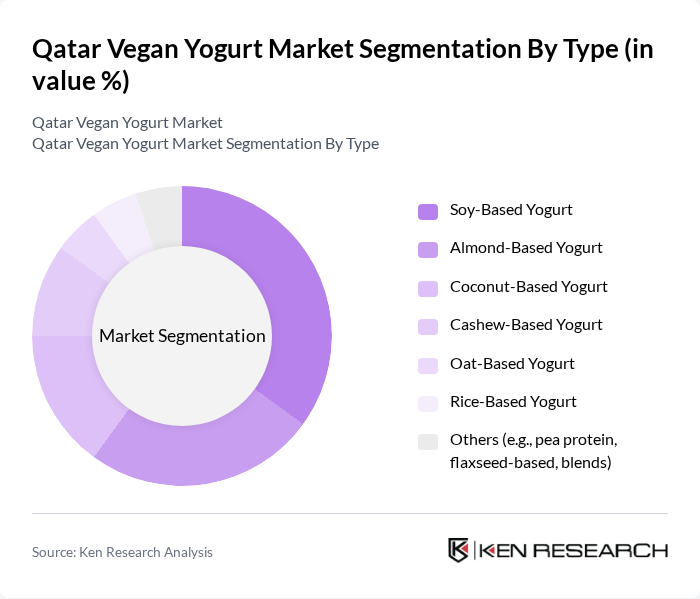
By Type:The market is segmented into various types of vegan yogurt, including soy-based, almond-based, coconut-based, cashew-based, oat-based, rice-based, and others. Among these, soy-based yogurt is currently the leading sub-segment due to its high protein content and versatility in culinary applications. Almond-based yogurt is also gaining traction, particularly among health-conscious consumers seeking low-calorie options. The increasing availability of diverse flavors and formulations is further driving consumer interest in these products.
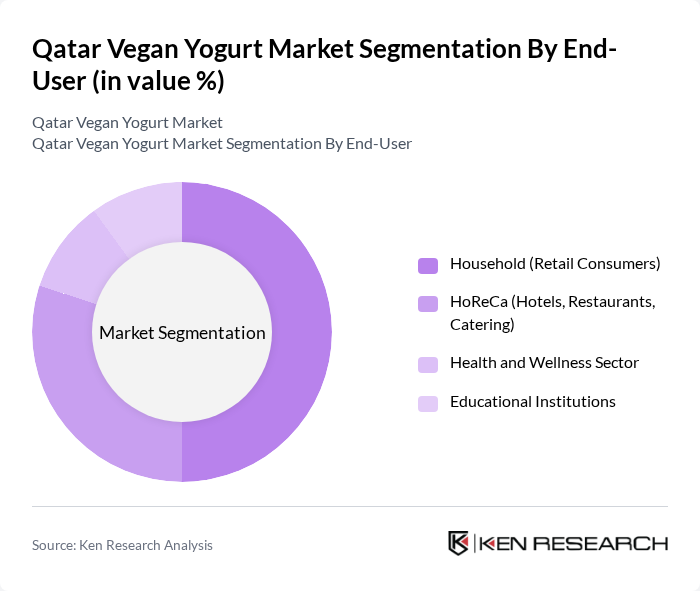
By End-User:The end-user segmentation includes households, HoReCa (Hotels, Restaurants, Catering), the health and wellness sector, and educational institutions. Households represent the largest segment, driven by the increasing trend of home cooking and the demand for healthy snack options. The HoReCa sector is also expanding, as more establishments incorporate vegan options into their menus to cater to a growing customer base seeking plant-based alternatives.
The Qatar Vegan Yogurt Market is characterized by a dynamic mix of regional and international players. Leading participants such as Alpro (Danone S.A.), Oatly AB, So Delicious Dairy Free (The WhiteWave Foods Company/Danone North America), Kite Hill, Chobani LLC, Silk (Danone S.A.), Tofutti Brands Inc., Daiya Foods Inc., COYO Pty Ltd., Vitasoy International Holdings Ltd., Rebel Kitchen (Nurture Brands Ltd.), Good Karma Foods Inc., Nush Foods Ltd., Forager Project LLC, Epigamia (Drums Food International Pvt. Ltd.) contribute to innovation, geographic expansion, and service delivery in this space.
The future of the Qatar vegan yogurt market appears promising, driven by increasing health consciousness and a growing vegan population. As more consumers seek dairy alternatives, the market is expected to witness innovative product developments, including fortified options and diverse flavors. Additionally, the expansion of distribution channels, particularly in health-focused retail outlets, will enhance accessibility. Collaborations with health institutions may further validate the benefits of vegan yogurt, fostering consumer trust and driving market growth in the coming years.
| Segment | Sub-Segments |
|---|---|
| By Type | Soy-Based Yogurt Almond-Based Yogurt Coconut-Based Yogurt Cashew-Based Yogurt Oat-Based Yogurt Rice-Based Yogurt Others (e.g., pea protein, flaxseed-based, blends) |
| By End-User | Household (Retail Consumers) HoReCa (Hotels, Restaurants, Catering) Health and Wellness Sector Educational Institutions |
| By Distribution Channel | Supermarkets/Hypermarkets Online Retail/E-commerce Health Food Stores Specialty Stores |
| By Packaging Type | Plastic Containers Glass Jars Tetra Packs Pouches |
| By Flavor | Plain/Unsweetened Fruit-Flavored Chocolate/Exotic Flavors Sweetened |
| By Price Range | Economy Mid-Range Premium |
| By Region | Doha Al Rayyan Al Wakrah Others |
| Scope Item/Segment | Sample Size | Target Respondent Profiles |
|---|---|---|
| Health Food Retailers | 50 | Store Owners, Category Managers |
| Vegan Yogurt Consumers | 150 | Health-Conscious Shoppers, Vegan Diet Adopters |
| Food Industry Experts | 50 | Nutritionists, Food Scientists |
| Distribution Channels | 50 | Logistics Managers, Supply Chain Coordinators |
| Market Analysts | 40 | Market Researchers, Industry Analysts |
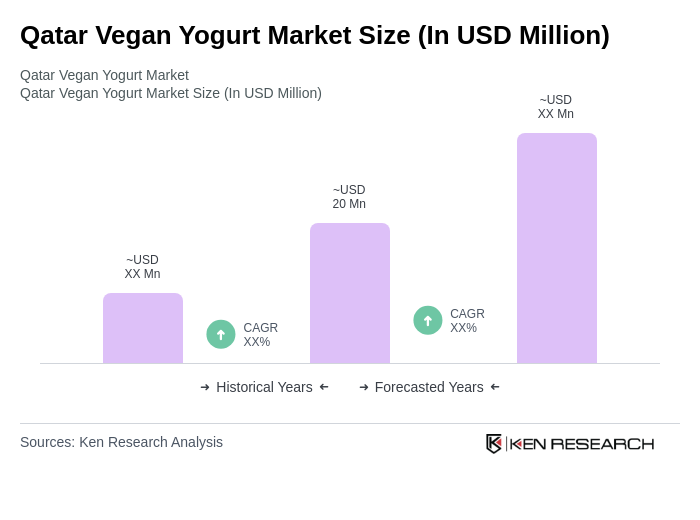
The Qatar Vegan Yogurt Market is valued at approximately USD 20 million, reflecting a growing trend towards health consciousness, veganism, and the demand for dairy alternatives among consumers in the region.

What makes us stand out is that our consultants follow Robust, Refine and Result (RRR) methodology. Robust for clear definitions, approaches and sanity checking, Refine for differentiating respondents' facts and opinions, and Result for presenting data with story.

We have set a benchmark in the industry by offering our clients with syndicated and customized market research reports featuring coverage of entire market as well as meticulous research and analyst insights.

While we don't replace traditional research, we flip the method upside down. Our dual approach of Top Bottom & Bottom Top ensures quality deliverable by not just verifying company fundamentals but also looking at the sector and macroeconomic factors.

With one step in the future, our research team constantly tries to show you the bigger picture. We help with some of the tough questions you may encounter along the way: How is the industry positioned? Best marketing channel? KPI's of competitors? By aligning every element, we help maximize success.

Our report gives you instant access to the answers and sources that other companies might choose to hide. We elaborate each steps of research methodology we have used and showcase you the sample size to earn your trust.

If you need any support, we are here! We pride ourselves on universe strength, data quality, and quick, friendly, and professional service.













