Region:Middle East
Author(s):Rebecca
Product Code:KRAE3964
Pages:82
Published On:March 2026
By Type:
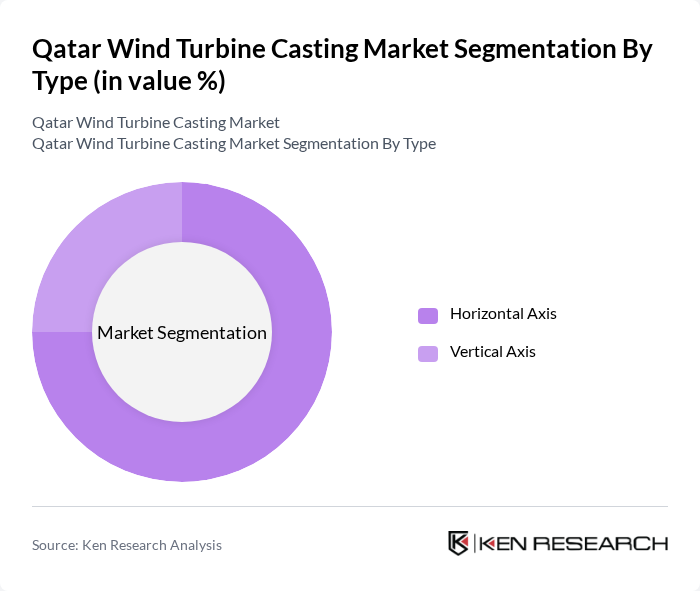
The market is segmented into two main types: Horizontal Axis and Vertical Axis wind turbines. Among these, Horizontal Axis wind turbines dominate the market due to their higher efficiency and energy output compared to Vertical Axis turbines. The preference for Horizontal Axis turbines is driven by their widespread adoption in large-scale wind farms, where they can harness wind energy more effectively. This trend is supported by advancements in technology that enhance the performance and reliability of Horizontal Axis designs, making them the preferred choice for both onshore and offshore applications.
By Material:
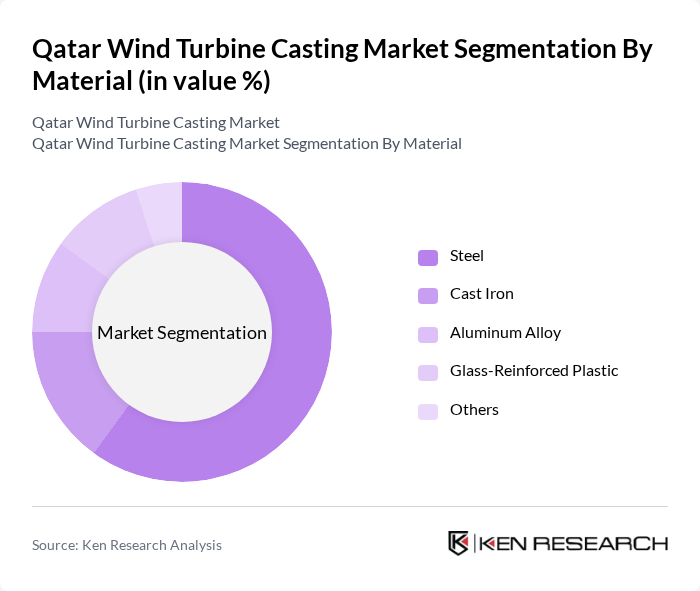
The materials used in wind turbine casting include Steel, Cast Iron, Aluminum Alloy, Glass-Reinforced Plastic, and Others. Steel is the leading material in the market due to its strength, durability, and cost-effectiveness, making it ideal for the structural components of wind turbines. The increasing demand for lightweight and corrosion-resistant materials has also led to a growing interest in Aluminum Alloy and Glass-Reinforced Plastic, particularly for specific applications where weight reduction is critical. However, Steel remains the dominant choice for most manufacturers, given its proven performance in various environmental conditions.
The Qatar Wind Turbine Casting Market is characterized by a dynamic mix of regional and international players. Leading participants such as Siemens Gamesa, GE Renewable Energy, Vestas Wind Systems, Nordex SE, Suzlon Energy, Acciona Energy, Enel Green Power, Senvion, Goldwind, Mingyang Smart Energy, EDP Renewables, RWE Renewables, Orsted, Brookfield Renewable Partners, Innergex Renewable Energy contribute to innovation, geographic expansion, and service delivery in this space.
The future of the Qatar wind turbine casting market appears promising, driven by increasing investments in renewable energy and supportive government policies. As the country aims to diversify its energy sources, the wind sector is expected to expand significantly. The integration of smart technologies and larger turbine models will likely enhance efficiency and reduce costs, positioning Qatar as a competitive player in the regional renewable energy landscape. Continued collaboration with international firms will further bolster local capabilities and innovation.
| Segment | Sub-Segments |
|---|---|
| By Type | Horizontal Axis Vertical Axis |
| By Material | Steel Cast Iron Aluminum Alloy Glass-Reinforced Plastic Others |
| By Application | Onshore Offshore Others |
| By Component | Rotor Hubs Main Carriers Axle Pins Others |
| By Casting Process | Sand Casting Investment Casting Die Casting Others |
| Scope Item/Segment | Sample Size | Target Respondent Profiles |
|---|---|---|
| Wind Turbine Manufacturers | 100 | Production Managers, Technical Directors |
| Casting Material Suppliers | 75 | Sales Managers, Product Development Engineers |
| Energy Policy Makers | 50 | Government Officials, Regulatory Analysts |
| Renewable Energy Consultants | 60 | Industry Analysts, Market Strategists |
| Academic Researchers in Wind Energy | 40 | Professors, Research Scientists |
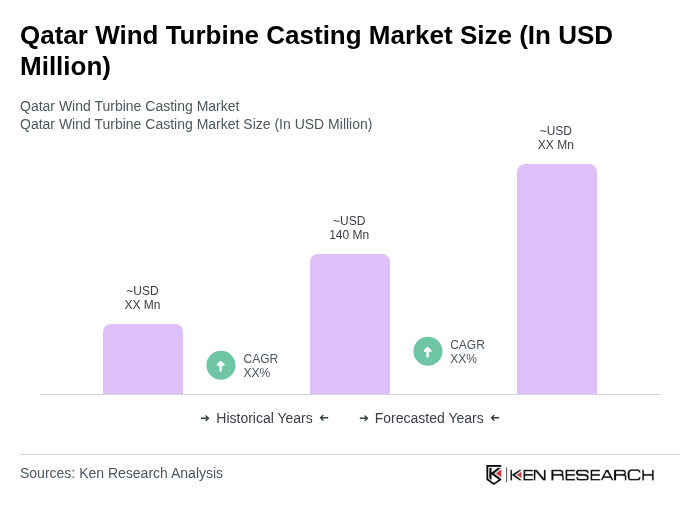
The Qatar Wind Turbine Casting Market is valued at approximately USD 140 million, reflecting a significant growth driven by the country's commitment to renewable energy and sustainability initiatives aimed at reducing carbon emissions.

What makes us stand out is that our consultants follow Robust, Refine and Result (RRR) methodology. Robust for clear definitions, approaches and sanity checking, Refine for differentiating respondents' facts and opinions, and Result for presenting data with story.

We have set a benchmark in the industry by offering our clients with syndicated and customized market research reports featuring coverage of entire market as well as meticulous research and analyst insights.

While we don't replace traditional research, we flip the method upside down. Our dual approach of Top Bottom & Bottom Top ensures quality deliverable by not just verifying company fundamentals but also looking at the sector and macroeconomic factors.

With one step in the future, our research team constantly tries to show you the bigger picture. We help with some of the tough questions you may encounter along the way: How is the industry positioned? Best marketing channel? KPI's of competitors? By aligning every element, we help maximize success.

Our report gives you instant access to the answers and sources that other companies might choose to hide. We elaborate each steps of research methodology we have used and showcase you the sample size to earn your trust.

If you need any support, we are here! We pride ourselves on universe strength, data quality, and quick, friendly, and professional service.













