About the Report
Base Year 2024Saudi Arabia Bubble Food Beverages Market Overview
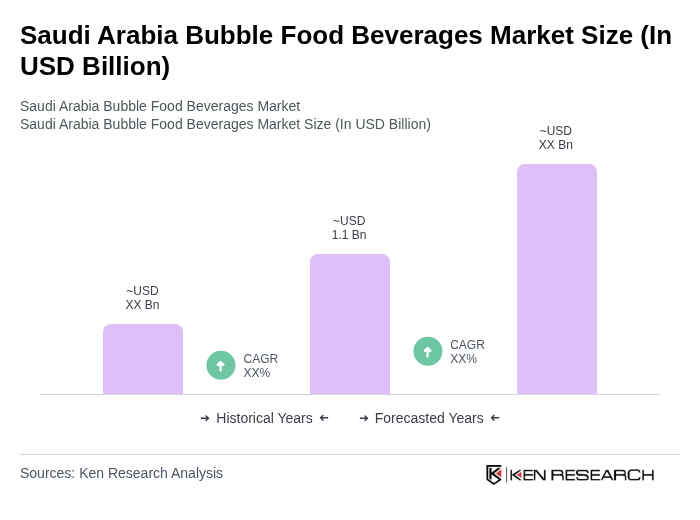
- The Saudi Arabia Bubble Food Beverages Market is valued at USD 1.1 billion, based on a five-year historical analysis. This growth is primarily driven by the increasing popularity of bubble tea and innovative beverage concepts among the youth, coupled with a rising trend of social media influence on consumer choices, surging demand for flavored bubble tea, increasing disposable income, and changing lifestyles. The market has seen a surge in demand for unique flavors and customizable options, which has further propelled its expansion.
- Key cities dominating the market include Riyadh, Jeddah, and Dammam. Riyadh, as the capital, serves as a cultural and economic hub, attracting a diverse population that drives demand for trendy food and beverage options. Jeddah, with its coastal appeal and tourism, also plays a significant role, while Dammam benefits from its strategic location and growing urbanization.
- The Saudi Food and Drug Authority (SFDA) enforces the Gulf Cooperation Council (GCC) Standard No. GSO 9:2013 issued by the Gulf Standardization Organization in 2013 for non-alcoholic beverages. This standard requires all beverage manufacturers, including bubble beverage producers, to comply with microbiological, chemical, and physical safety limits, labeling requirements for ingredients and nutritional information, and maximum thresholds for additives, preservatives, and sugars to ensure product safety and quality.
Saudi Arabia Bubble Food Beverages Market Segmentation
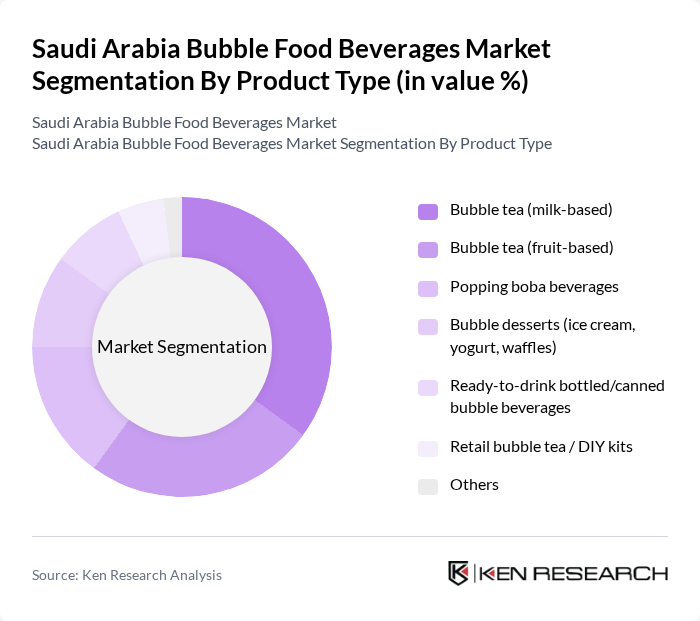
By Product Type:The product type segmentation includes various categories such as bubble tea (milk-based), bubble tea (fruit-based), popping boba beverages, bubble desserts (ice cream, yogurt, waffles), ready-to-drink bottled/canned bubble beverages, retail bubble tea / DIY kits, and others. Among these, bubble tea (milk-based) has emerged as the leading subsegment due to its rich flavor profile and widespread popularity among consumers, particularly the younger demographic. The trend of customization and the introduction of innovative flavors have further solidified its market position.
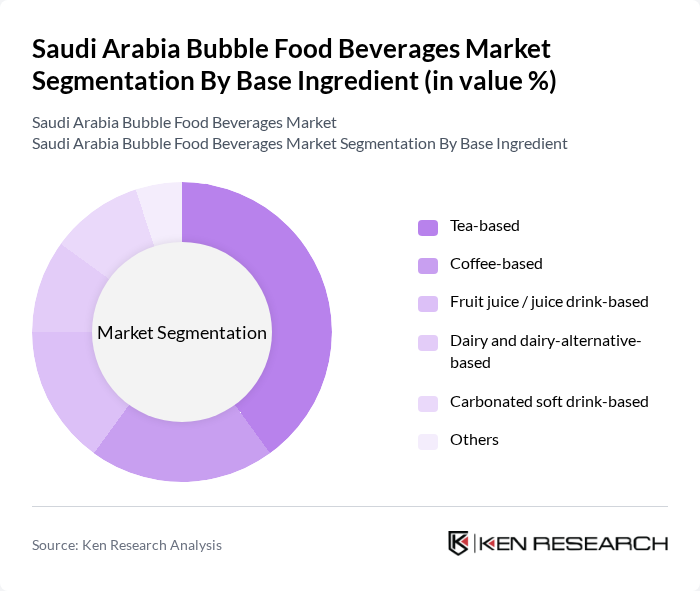
By Base Ingredient:The base ingredient segmentation includes tea-based, coffee-based, fruit juice / juice drink-based, dairy and dairy-alternative-based, carbonated soft drink-based, and others. The tea-based subsegment dominates the market, primarily due to the traditional roots of bubble tea in tea culture, with black tea holding the highest share for its authentic flavor and health benefits such as reducing blood sugar and cholesterol. The increasing health consciousness among consumers has also led to a preference for tea-based beverages, which are perceived as healthier alternatives compared to sugary drinks.
Saudi Arabia Bubble Food Beverages Market Competitive Landscape
The Saudi Arabia Bubble Food Beverages Market is characterized by a dynamic mix of regional and international players. Leading participants such as Gong cha Saudi Arabia, Sharetea Saudi Arabia, Tiger Sugar Saudi Arabia, Chatime Saudi Arabia, CoCo Fresh Tea & Juice (Saudi Arabia), Presotea Saudi Arabia, The Alley Saudi Arabia, Bobabox Saudi Arabia, Bubbles & Boba (Saudi local brand), Tapioca House (Saudi Arabia), Almarai Company, PepsiCo (Saudi snack & beverage portfolio including bubble concepts), Coca-Cola Bottling Company of Saudi Arabia, Saudi Ice Cream Factory (Baskin-Robbins Saudi master franchise – bubble-inspired desserts), Local specialty dessert cafés offering popping boba and bubble desserts contribute to innovation, geographic expansion, and service delivery in this space.
Saudi Arabia Bubble Food Beverages Market Industry Analysis
Growth Drivers
- Increasing Consumer Demand for Innovative Beverages:The Saudi Arabian beverage market is witnessing a surge in consumer interest, with the sector projected to reach SAR 22 billion in future. This growth is driven by a shift towards unique and innovative beverage options, particularly among younger demographics. The rise of social media platforms has amplified this trend, with over 75% of consumers actively seeking out new flavors and experiences, indicating a robust appetite for novelty in beverage choices.
- Rising Health Consciousness Among Consumers:Health awareness is significantly influencing beverage choices in Saudi Arabia, with a reported 65% of consumers prioritizing health-oriented products. The demand for low-sugar and functional beverages is on the rise, as consumers increasingly seek products that align with their wellness goals. The market for health-focused beverages is expected to grow, supported by government initiatives promoting healthier lifestyles, which are projected to reduce healthcare costs by SAR 6 billion annually in future.
- Expansion of Retail Channels and E-commerce:The retail landscape in Saudi Arabia is evolving, with e-commerce sales in the food and beverage sector expected to exceed SAR 12 billion in future. This growth is fueled by increased internet penetration, which reached 99% in recent periods, and the proliferation of online grocery platforms. Traditional retail channels are also expanding, with over 1,800 new stores opening in the last year, providing consumers with greater access to bubble food beverages and enhancing market visibility.
Market Challenges
- Regulatory Hurdles and Compliance Issues:The beverage industry in Saudi Arabia faces stringent regulatory requirements, which can hinder market entry and expansion. Compliance with food safety standards and labeling regulations is mandatory, and failure to meet these can result in fines exceeding SAR 1.2 million. Additionally, the complexity of navigating these regulations can deter new entrants, limiting competition and innovation within the bubble food beverages market.
- High Competition Among Beverage Brands:The bubble food beverages market is characterized by intense competition, with over 250 brands vying for market share. This saturation leads to aggressive pricing strategies, which can erode profit margins. In recent periods, the top five brands accounted for only 28% of the market, indicating a fragmented landscape. This competitive pressure necessitates continuous innovation and marketing efforts to maintain brand loyalty and consumer interest.
Saudi Arabia Bubble Food Beverages Market Future Outlook
The future of the bubble food beverages market in Saudi Arabia appears promising, driven by evolving consumer preferences and technological advancements. As health-conscious trends continue to shape product offerings, brands are likely to innovate with functional ingredients and sustainable practices. Additionally, the integration of technology in beverage preparation and customization will enhance consumer engagement, creating a dynamic market environment. The anticipated growth in e-commerce will further facilitate access to diverse beverage options, catering to the increasing demand for convenience and variety.
Market Opportunities
- Introduction of New Flavors and Product Variations:There is a significant opportunity for brands to introduce unique flavors and product variations, catering to local tastes. With over 65% of consumers expressing interest in trying new flavors, innovative offerings can capture market share and drive sales, potentially increasing revenue by SAR 2.5 billion in future.
- Development of Health-Oriented Bubble Beverages:The demand for health-oriented beverages presents a lucrative opportunity for market players. By developing products that incorporate functional ingredients, brands can tap into the growing health-conscious consumer base. This segment is projected to grow by SAR 1.8 billion in future, driven by increasing awareness of health benefits associated with bubble beverages.
Scope of the Report
| Segment | Sub-Segments |
|---|---|
| By Product Type | Bubble tea (milk-based) Bubble tea (fruit-based) Popping boba beverages Bubble desserts (ice cream, yogurt, waffles) Ready-to-drink bottled/canned bubble beverages Retail bubble tea / DIY kits Others |
| By Base Ingredient | Tea-based Coffee-based Fruit juice / juice drink-based Dairy and dairy-alternative-based Carbonated soft drink-based Others |
| By End-User / Serving Format | On-trade cafés and bubble tea shops Quick-service restaurants and dessert parlors Hotels and specialty foodservice Home consumption (retail & DIY kits) Events and catering services |
| By Packaging Type | On-premise cups and takeaway cups PET bottles Cans Cartons (e.g., Tetra Pak) Pouches and sachets Others |
| By Distribution Channel | On-trade (cafés, QSRs, dessert shops) Supermarkets and hypermarkets Convenience and neighborhood stores Online delivery platforms and e-grocery Specialty beverage and dessert outlets Others |
| By Consumer Demographics | Teenagers (13–19 years) Young adults (20–29 years) Adults (30–44 years) Adults 45 years and above |
| By Region | Riyadh & Central Region Makkah Region (including Jeddah) Eastern Province (including Dammam, Khobar, Dhahran) Madinah Region Other regions |
Key Target Audience
Investors and Venture Capitalist Firms
Government and Regulatory Bodies (e.g., Saudi Food and Drug Authority, Ministry of Commerce)
Manufacturers and Producers
Distributors and Retailers
Food and Beverage Importers
Marketing and Advertising Agencies
Industry Associations (e.g., Saudi Arabian Beverage Association)
Financial Institutions
Players Mentioned in the Report:
Gong cha Saudi Arabia
Sharetea Saudi Arabia
Tiger Sugar Saudi Arabia
Chatime Saudi Arabia
CoCo Fresh Tea & Juice (Saudi Arabia)
Presotea Saudi Arabia
The Alley Saudi Arabia
Bobabox Saudi Arabia
Bubbles & Boba (Saudi local brand)
Tapioca House (Saudi Arabia)
Almarai Company
PepsiCo (Saudi snack & beverage portfolio including bubble concepts)
Coca-Cola Bottling Company of Saudi Arabia
Saudi Ice Cream Factory (Baskin-Robbins Saudi master franchise bubble-inspired desserts)
Local specialty dessert cafes offering popping boba and bubble desserts
Table of Contents
Market Assessment Phase
1. Executive Summary and Approach
2. Saudi Arabia Bubble Food Beverages Market Overview
2.1 Key Insights and Strategic Recommendations
2.2 Saudi Arabia Bubble Food Beverages Market Overview
2.3 Definition and Scope
2.4 Evolution of Market Ecosystem
2.5 Timeline of Key Regulatory Milestones
2.6 Value Chain & Stakeholder Mapping
2.7 Business Cycle Analysis
2.8 Policy & Incentive Landscape
3. Saudi Arabia Bubble Food Beverages Market Analysis
3.1 Growth Drivers
3.1.1 Increasing consumer demand for innovative beverages
3.1.2 Rising health consciousness among consumers
3.1.3 Expansion of retail channels and e-commerce
3.1.4 Influence of social media and trends on beverage choices
3.2 Market Challenges
3.2.1 Regulatory hurdles and compliance issues
3.2.2 High competition among beverage brands
3.2.3 Fluctuating raw material prices
3.2.4 Limited consumer awareness of bubble food beverages
3.3 Market Opportunities
3.3.1 Introduction of new flavors and product variations
3.3.2 Collaborations with local influencers and brands
3.3.3 Expansion into untapped regional markets
3.3.4 Development of health-oriented bubble beverages
3.4 Market Trends
3.4.1 Growing popularity of plant-based ingredients
3.4.2 Increased focus on sustainability in packaging
3.4.3 Rise of customizable beverage options
3.4.4 Integration of technology in beverage preparation
3.5 Government Regulation
3.5.1 Food safety standards and regulations
3.5.2 Labeling requirements for nutritional information
3.5.3 Import regulations for beverage ingredients
3.5.4 Taxation policies affecting sugary beverages
4. SWOT Analysis
5. Stakeholder Analysis
6. Porter's Five Forces Analysis
7. Saudi Arabia Bubble Food Beverages Market Market Size, 2019-2024
7.1 By Value
7.2 By Volume
7.3 By Average Selling Price
8. Saudi Arabia Bubble Food Beverages Market Segmentation
8.1 By Product Type
8.1.1 Bubble tea (milk-based)
8.1.2 Bubble tea (fruit-based)
8.1.3 Popping boba beverages
8.1.4 Bubble desserts (ice cream, yogurt, waffles)
8.1.5 Ready-to-drink bottled/canned bubble beverages
8.1.6 Retail bubble tea / DIY kits
8.1.7 Others
8.2 By Base Ingredient
8.2.1 Tea-based
8.2.2 Coffee-based
8.2.3 Fruit juice / juice drink-based
8.2.4 Dairy and dairy-alternative-based
8.2.5 Carbonated soft drink-based
8.2.6 Others
8.3 By End-User / Serving Format
8.3.1 On-trade cafés and bubble tea shops
8.3.2 Quick-service restaurants and dessert parlors
8.3.3 Hotels and specialty foodservice
8.3.4 Home consumption (retail & DIY kits)
8.3.5 Events and catering services
8.4 By Packaging Type
8.4.1 On-premise cups and takeaway cups
8.4.2 PET bottles
8.4.3 Cans
8.4.4 Cartons (e.g., Tetra Pak)
8.4.5 Pouches and sachets
8.4.6 Others
8.5 By Distribution Channel
8.5.1 On-trade (cafés, QSRs, dessert shops)
8.5.2 Supermarkets and hypermarkets
8.5.3 Convenience and neighborhood stores
8.5.4 Online delivery platforms and e-grocery
8.5.5 Specialty beverage and dessert outlets
8.5.6 Others
8.6 By Consumer Demographics
8.6.1 Teenagers (13–19 years)
8.6.2 Young adults (20–29 years)
8.6.3 Adults (30–44 years)
8.6.4 Adults 45 years and above
8.7 By Region
8.7.1 Riyadh & Central Region
8.7.2 Makkah Region (including Jeddah)
8.7.3 Eastern Province (including Dammam, Khobar, Dhahran)
8.7.4 Madinah Region
8.7.5 Other regions
9. Saudi Arabia Bubble Food Beverages Market Competitive Analysis
9.1 Market Share of Key Players
9.2 Cross Comparison of Key Players
9.2.1 Company name
9.2.2 Number of outlets in Saudi Arabia
9.2.3 Estimated annual revenue from bubble food & beverages (SAR)
9.2.4 Same-store sales growth (bubble portfolio, %)
9.2.5 Bubble product share in total beverage sales (%)
9.2.6 Average transaction value for bubble beverages (SAR)
9.2.7 Average selling price per bubble beverage (SAR)
9.2.8 Customer repeat-visit rate for bubble offerings (%)
9.2.9 Menu breadth (number of bubble SKUs / flavors)
9.2.10 Geographic coverage (number of cities / regions served)
9.2.11 On-trade vs off-trade revenue mix (%)
9.2.12 Marketing spend on bubble products as % of sales
9.2.13 New product launch frequency (bubble SKUs per year)
9.3 SWOT Analysis of Top Players
9.4 Pricing Analysis
9.5 Detailed Profile of Major Companies
9.5.1 Gong cha Saudi Arabia
9.5.2 Sharetea Saudi Arabia
9.5.3 Tiger Sugar Saudi Arabia
9.5.4 Chatime Saudi Arabia
9.5.5 CoCo Fresh Tea & Juice (Saudi Arabia)
9.5.6 Presotea Saudi Arabia
9.5.7 The Alley Saudi Arabia
9.5.8 Bobabox Saudi Arabia
9.5.9 Bubbles & Boba (Saudi local brand)
9.5.10 Tapioca House (Saudi Arabia)
9.5.11 Almarai Company
9.5.12 PepsiCo (Saudi snack & beverage portfolio including bubble concepts)
9.5.13 Coca-Cola Bottling Company of Saudi Arabia
9.5.14 Saudi Ice Cream Factory (Baskin-Robbins Saudi master franchise – bubble-inspired desserts)
9.5.15 Local specialty dessert cafés offering popping boba and bubble desserts
10. Saudi Arabia Bubble Food Beverages Market End-User Analysis
10.1 Procurement Behavior of Key Ministries
10.1.1 Ministry of Health
10.1.2 Ministry of Commerce
10.1.3 Ministry of Environment
10.1.4 Ministry of Education
10.2 Corporate Spend on Infrastructure & Energy
10.2.1 Investment in beverage production facilities
10.2.2 Expenditure on marketing and branding
10.2.3 Budget allocation for R&D
10.2.4 Spending on distribution networks
10.3 Pain Point Analysis by End-User Category
10.3.1 Retail consumers
10.3.2 Cafés and restaurants
10.3.3 Event organizers
10.3.4 Online platforms
10.4 User Readiness for Adoption
10.4.1 Awareness of bubble food beverages
10.4.2 Willingness to try new flavors
10.4.3 Acceptance of pricing strategies
10.4.4 Feedback on product quality
10.5 Post-Deployment ROI and Use Case Expansion
10.5.1 Measurement of sales growth
10.5.2 Customer satisfaction surveys
10.5.3 Analysis of repeat purchases
10.5.4 Expansion into new markets
11. Saudi Arabia Bubble Food Beverages Market Future Size, 2025-2030
11.1 By Value
11.2 By Volume
11.3 By Average Selling Price
Go-To-Market Strategy Phase
1. Whitespace Analysis + Business Model Canvas
1.1 Market gaps and opportunities
1.2 Business model components
2. Marketing and Positioning Recommendations
2.1 Branding strategies
2.2 Product USPs
3. Distribution Plan
3.1 Urban retail vs rural NGO tie-ups
4. Channel & Pricing Gaps
4.1 Underserved routes
4.2 Pricing bands
5. Unmet Demand & Latent Needs
5.1 Category gaps
5.2 Consumer segments
6. Customer Relationship
6.1 Loyalty programs
6.2 After-sales service
7. Value Proposition
7.1 Sustainability
7.2 Integrated supply chains
8. Key Activities
8.1 Regulatory compliance
8.2 Branding
8.3 Distribution setup
9. Entry Strategy Evaluation
9.1 Domestic Market Entry Strategy
9.1.1 Product mix
9.1.2 Pricing band
9.1.3 Packaging
9.2 Export Entry Strategy
9.2.1 Target countries
9.2.2 Compliance roadmap
10. Entry Mode Assessment
10.1 JV
10.2 Greenfield
10.3 M&A
10.4 Distributor Model
11. Capital and Timeline Estimation
11.1 Capital requirements
11.2 Timelines
12. Control vs Risk Trade-Off
12.1 Ownership vs Partnerships
13. Profitability Outlook
13.1 Breakeven analysis
13.2 Long-term sustainability
14. Potential Partner List
14.1 Distributors
14.2 JVs
14.3 Acquisition targets
15. Execution Roadmap
15.1 Phased Plan for Market Entry
15.1.1 Market Setup
15.1.2 Market Entry
15.1.3 Growth Acceleration
15.1.4 Scale & Stabilize
15.2 Key Activities and Milestones
15.2.1 Milestone tracking
15.2.2 Activity scheduling
Research Methodology
Phase 1: Approach1
Desk Research
- Analysis of market reports from industry associations and trade publications specific to bubble food beverages
- Review of government publications and statistics on beverage consumption trends in Saudi Arabia
- Examination of consumer behavior studies and market surveys focusing on bubble tea and similar beverages
Primary Research
- Interviews with key stakeholders in the bubble food beverage supply chain, including manufacturers and distributors
- Surveys conducted with consumers to gauge preferences, purchasing habits, and brand loyalty
- Focus group discussions with target demographics to explore flavor preferences and product innovations
Validation & Triangulation
- Cross-validation of findings through comparison with international market trends and local consumer insights
- Triangulation of data from primary interviews, consumer surveys, and secondary research findings
- Sanity checks through expert panel reviews involving industry veterans and market analysts
Phase 2: Market Size Estimation1
Top-down Assessment
- Estimation of the total addressable market based on national beverage consumption statistics
- Segmentation of the market by product type, including traditional bubble tea, fruit-infused beverages, and other variants
- Incorporation of demographic data to assess potential market growth among youth and urban populations
Bottom-up Modeling
- Collection of sales data from leading bubble food beverage retailers and cafes
- Estimation of average transaction values and frequency of purchases among consumers
- Analysis of distribution channels to determine market penetration rates across different regions
Forecasting & Scenario Analysis
- Multi-variable forecasting model incorporating economic indicators, consumer trends, and health consciousness
- Scenario analysis based on potential regulatory changes affecting beverage ingredients and marketing
- Development of baseline, optimistic, and pessimistic growth projections through 2030
Phase 3: CATI Sample Composition1
| Scope Item/Segment | Sample Size | Target Respondent Profiles |
|---|---|---|
| Consumer Preferences for Bubble Beverages | 120 | Young Adults (18-30 years), College Students |
| Retail Outlet Insights | 100 | Store Managers, Beverage Retailers |
| Market Trends in Urban Areas | 110 | Urban Consumers, Trendsetters |
| Health and Wellness Impact | 80 | Health-Conscious Consumers, Nutritionists |
| Brand Loyalty and Marketing Effectiveness | 90 | Frequent Buyers, Brand Advocates |
Frequently Asked Questions
What is the current value of the Saudi Arabia Bubble Food Beverages Market?
The Saudi Arabia Bubble Food Beverages Market is valued at approximately USD 1.1 billion, reflecting a significant growth trend driven by the popularity of bubble tea and innovative beverage concepts among consumers, particularly the youth.
What factors are driving the growth of the bubble food beverages market in Saudi Arabia?
Which cities are the main hubs for bubble food beverages in Saudi Arabia?
What are the main product types in the Saudi Arabia Bubble Food Beverages Market?
Other Regional/Country Reports
Indonesia Bubble Food Beverages Market
Malaysia Bubble Food Beverages Market
KSA Bubble Food Beverages Market
APAC Bubble Food Beverages Market
SEA Bubble Food Beverages Market
Vietnam Bubble Food Beverages Market
Other Adjacent Reports
Mexico Ready-to-Drink Tea Market
Brazil Flavored Milk Market
Oman Dairy Alternatives Market Report Size, Share, Growth Drivers, Trends, Opportunities & Forecast 2025–2030Middle East Bottled Water MarketGlobal Health Drinks Market Outlook to 2030KSA Cafe Chains Market
Philippines Food Delivery Services Market
Thailand Dessert Products Market
Why Buy From Us?

What makes us stand out is that our consultants follow Robust, Refine and Result (RRR) methodology. Robust for clear definitions, approaches and sanity checking, Refine for differentiating respondents' facts and opinions, and Result for presenting data with story.

We have set a benchmark in the industry by offering our clients with syndicated and customized market research reports featuring coverage of entire market as well as meticulous research and analyst insights.

While we don't replace traditional research, we flip the method upside down. Our dual approach of Top Bottom & Bottom Top ensures quality deliverable by not just verifying company fundamentals but also looking at the sector and macroeconomic factors.

With one step in the future, our research team constantly tries to show you the bigger picture. We help with some of the tough questions you may encounter along the way: How is the industry positioned? Best marketing channel? KPI's of competitors? By aligning every element, we help maximize success.

Our report gives you instant access to the answers and sources that other companies might choose to hide. We elaborate each steps of research methodology we have used and showcase you the sample size to earn your trust.

If you need any support, we are here! We pride ourselves on universe strength, data quality, and quick, friendly, and professional service.