Region:Middle East
Author(s):Shubham
Product Code:KRAB4990
Pages:97
Published On:October 2025
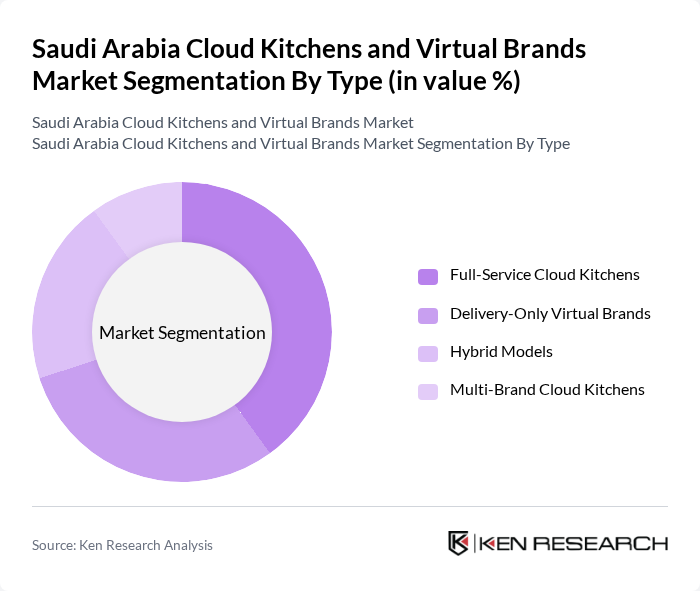
By Type:The market is segmented into various types, including Full-Service Cloud Kitchens, Delivery-Only Virtual Brands, Hybrid Models, and Multi-Brand Cloud Kitchens. Among these, Full-Service Cloud Kitchens are gaining traction due to their ability to offer a wide range of cuisines and services under one roof, catering to diverse consumer preferences. Delivery-Only Virtual Brands are also on the rise, driven by the increasing demand for convenience and the popularity of food delivery apps. The market is witnessing experimentation with technology such as robotics, drones, and AI to improve kitchen efficiency and delivery speed, with some players exploring autonomous delivery vehicles to further reduce costs and enhance customer experience.
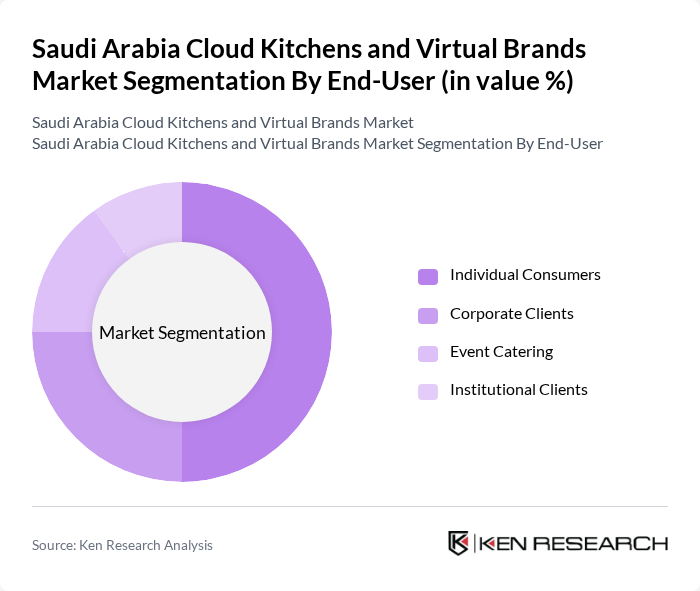
By End-User:The end-user segmentation includes Individual Consumers, Corporate Clients, Event Catering, and Institutional Clients. Individual Consumers represent the largest segment, driven by the growing trend of online food ordering and the convenience it offers. Corporate Clients and Event Catering are also significant, as businesses increasingly rely on cloud kitchens for catering services and meal provisions for employees. The rise of remote work and busy lifestyles, especially among millennials and Gen Z, has further boosted demand from individual and corporate segments.
The Saudi Arabia Cloud Kitchens and Virtual Brands Market is characterized by a dynamic mix of regional and international players. Leading participants such as Kitopi, Kaykroo, IKCON, Talabat, Kitchen Park, Matbakhi, Grubtech, Kook, Rebel Foods, Deliveroo, Uber Eats, Foodics, Al Baik, Shawarmer, Kudu contribute to innovation, geographic expansion, and service delivery in this space.
The future of the cloud kitchen and virtual brands market in Saudi Arabia appears promising, driven by technological advancements and evolving consumer preferences. As the market matures, operators are likely to adopt more sophisticated data analytics and AI tools to enhance customer experiences and streamline operations. Additionally, the increasing focus on health-conscious food options will likely shape menu offerings, catering to the growing demand for nutritious meals among consumers, particularly in urban areas.
| Segment | Sub-Segments |
|---|---|
| By Type | Full-Service Cloud Kitchens Delivery-Only Virtual Brands Hybrid Models Multi-Brand Cloud Kitchens |
| By End-User | Individual Consumers Corporate Clients Event Catering Institutional Clients |
| By Cuisine Type | Middle Eastern Asian Western Fusion & Specialty |
| By Sales Channel | Online Delivery Platforms Direct Orders via Websites Mobile Applications Aggregator Partnerships |
| By Pricing Strategy | Premium Pricing Competitive Pricing Value Pricing Promotional Pricing |
| By Location | Urban Areas Suburban Areas Rural Areas Industrial Zones |
| By Delivery Model | Third-Party Delivery Services In-House Delivery Click and Collect Autonomous Delivery (Drones/Robotics) |
| Scope Item/Segment | Sample Size | Target Respondent Profiles |
|---|---|---|
| Cloud Kitchen Operators | 100 | Founders, Operations Managers |
| Food Delivery Platforms | 80 | Business Development Managers, Marketing Heads |
| Consumer Preferences | 150 | Frequent Food Delivery Users, Young Professionals |
| Regulatory Insights | 40 | Food Safety Inspectors, Regulatory Affairs Managers |
| Market Analysts | 60 | Industry Analysts, Research Consultants |
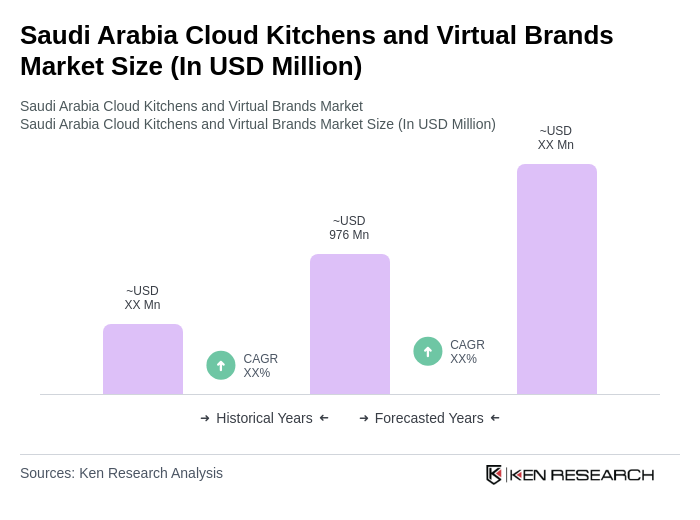
The Saudi Arabia Cloud Kitchens and Virtual Brands Market is valued at approximately USD 976 million, reflecting significant growth driven by increasing demand for food delivery services and changing consumer preferences towards convenience and digital ordering platforms.

What makes us stand out is that our consultants follow Robust, Refine and Result (RRR) methodology. Robust for clear definitions, approaches and sanity checking, Refine for differentiating respondents' facts and opinions, and Result for presenting data with story.

We have set a benchmark in the industry by offering our clients with syndicated and customized market research reports featuring coverage of entire market as well as meticulous research and analyst insights.

While we don't replace traditional research, we flip the method upside down. Our dual approach of Top Bottom & Bottom Top ensures quality deliverable by not just verifying company fundamentals but also looking at the sector and macroeconomic factors.

With one step in the future, our research team constantly tries to show you the bigger picture. We help with some of the tough questions you may encounter along the way: How is the industry positioned? Best marketing channel? KPI's of competitors? By aligning every element, we help maximize success.

Our report gives you instant access to the answers and sources that other companies might choose to hide. We elaborate each steps of research methodology we have used and showcase you the sample size to earn your trust.

If you need any support, we are here! We pride ourselves on universe strength, data quality, and quick, friendly, and professional service.













