Region:Middle East
Author(s):Geetanshi
Product Code:KRAC3757
Pages:97
Published On:October 2025
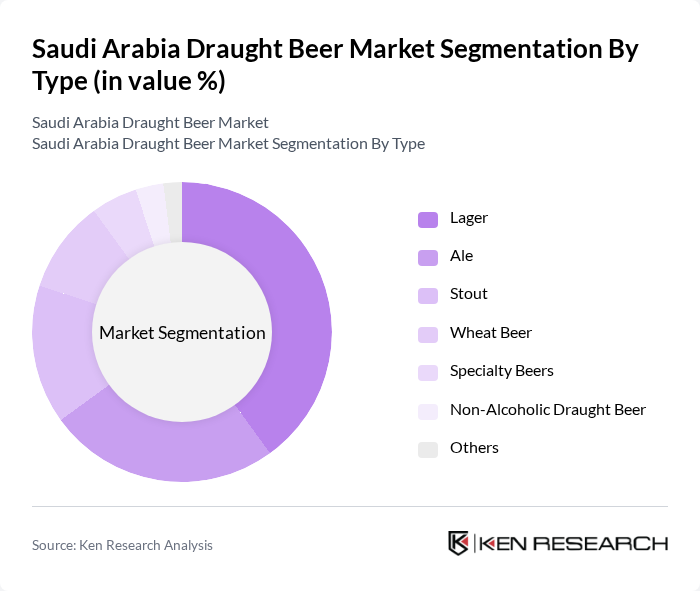
By Type:The draught beer market is segmented into Lager, Ale, Stout, Wheat Beer, Specialty Beers, Non-Alcoholic Draught Beer, and Others. Lager remains the most popular type, favored for its refreshing taste and versatility. Ale and Stout have significant followings, particularly among craft beer enthusiasts. The rise of health-conscious consumers and regulatory support for non-alcoholic beverages have led to increased demand for Non-Alcoholic Draught Beer, reflecting evolving consumer preferences .
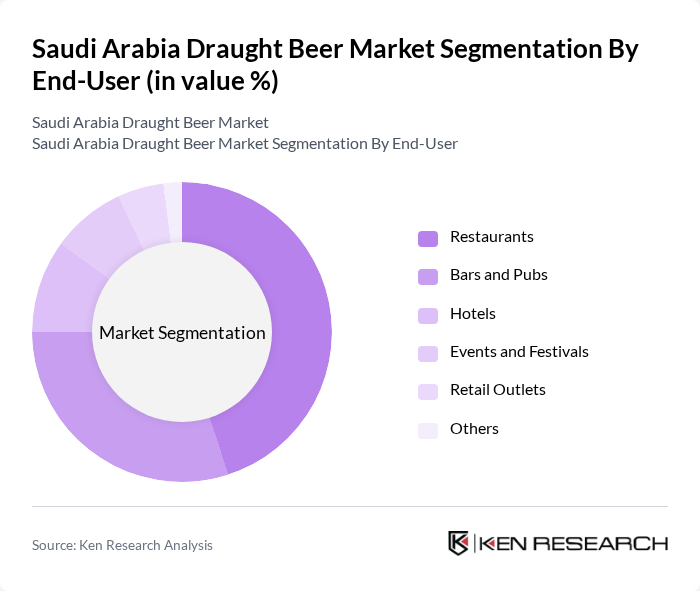
By End-User:End-user segmentation includes Restaurants, Bars and Pubs, Hotels, Events and Festivals, Retail Outlets, and Others. Restaurants are the leading segment, driven by the increasing trend of dining out and socializing. Bars and Pubs play a significant role, especially in urban areas with vibrant nightlife. Events and Festivals have become important venues for draught beer consumption, supported by commercial investments in hospitality infrastructure and the resurgence of on-premise consumption after pandemic slowdowns .
The Saudi Arabia Draught Beer Market is characterized by a dynamic mix of regional and international players. Leading participants such as Anheuser-Busch InBev, Heineken N.V., Carlsberg Group, Diageo plc, Molson Coors Beverage Company, Asahi Group Holdings, Ltd., AB InBev Saudi Arabia (local subsidiary), Saudi Brew (local craft brewery), Desert Brew (local craft brewery), Boston Beer Company, Inc., BrewDog plc, Stone Brewing Co., Dogfish Head Craft Brewery, Lagunitas Brewing Company, New Belgium Brewing Company contribute to innovation, geographic expansion, and service delivery in this space.
The future of the draught beer market in Saudi Arabia appears promising, driven by evolving consumer preferences and a burgeoning hospitality sector. As disposable incomes rise, consumers are likely to seek out premium and craft beer options. Additionally, the government's focus on tourism and entertainment will create more licensed venues, enhancing market accessibility. However, businesses must navigate regulatory challenges and cultural sensitivities to capitalize on these opportunities effectively.
| Segment | Sub-Segments |
|---|---|
| By Type | Lager Ale Stout Wheat Beer Specialty Beers Non-Alcoholic Draught Beer Others |
| By End-User | Restaurants Bars and Pubs Hotels Events and Festivals Retail Outlets Others |
| By Distribution Channel | On-Trade (Restaurants, Bars, Hotels) Off-Trade (Retail, Supermarkets) E-commerce Direct Sales (Brewery Taprooms) Others |
| By Packaging Type | Kegs Cans Bottles Others |
| By Price Range | Premium Mid-Range Economy Others |
| By Brand Positioning | Local Brands (e.g., Saudi Brew, Desert Brew) International Brands (e.g., Heineken, Budweiser) Craft Brands (e.g., BrewDog, Boston Beer Company) Others |
| By Consumer Demographics | Age Group Gender Income Level Others |
| Scope Item/Segment | Sample Size | Target Respondent Profiles |
|---|---|---|
| Consumer Preferences for Draught Beer | 120 | Adult Consumers (Ages 21-45), Beverage Enthusiasts |
| Retail Insights on Draught Beer Sales | 70 | Retail Managers, Beverage Store Owners |
| Distribution Channels for Draught Beer | 50 | Distributors, Supply Chain Managers |
| Impact of Regulations on Draught Beer Market | 40 | Legal Experts, Industry Analysts |
| Market Trends and Future Outlook | 45 | Market Researchers, Beverage Industry Consultants |
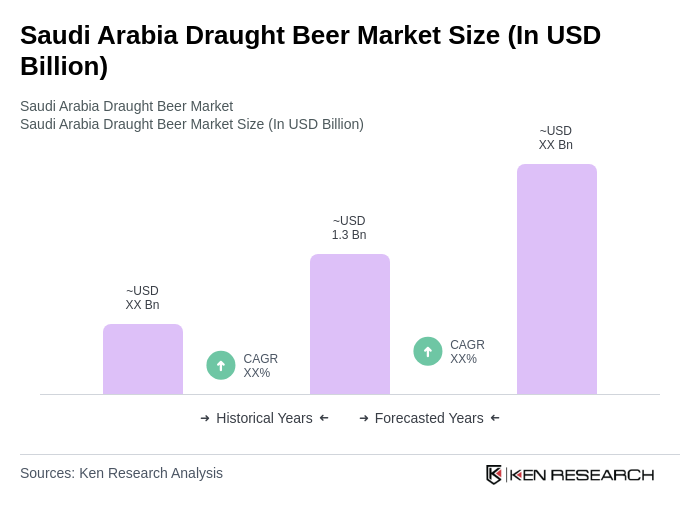
The Saudi Arabia Draught Beer Market is valued at approximately USD 1.3 billion, reflecting a significant growth driven by increasing demand for craft and premium beers, as well as a rise in non-alcoholic options and social drinking experiences.

What makes us stand out is that our consultants follow Robust, Refine and Result (RRR) methodology. Robust for clear definitions, approaches and sanity checking, Refine for differentiating respondents' facts and opinions, and Result for presenting data with story.

We have set a benchmark in the industry by offering our clients with syndicated and customized market research reports featuring coverage of entire market as well as meticulous research and analyst insights.

While we don't replace traditional research, we flip the method upside down. Our dual approach of Top Bottom & Bottom Top ensures quality deliverable by not just verifying company fundamentals but also looking at the sector and macroeconomic factors.

With one step in the future, our research team constantly tries to show you the bigger picture. We help with some of the tough questions you may encounter along the way: How is the industry positioned? Best marketing channel? KPI's of competitors? By aligning every element, we help maximize success.

Our report gives you instant access to the answers and sources that other companies might choose to hide. We elaborate each steps of research methodology we have used and showcase you the sample size to earn your trust.

If you need any support, we are here! We pride ourselves on universe strength, data quality, and quick, friendly, and professional service.













