Region:Middle East
Author(s):Dev
Product Code:KRAC4124
Pages:92
Published On:October 2025
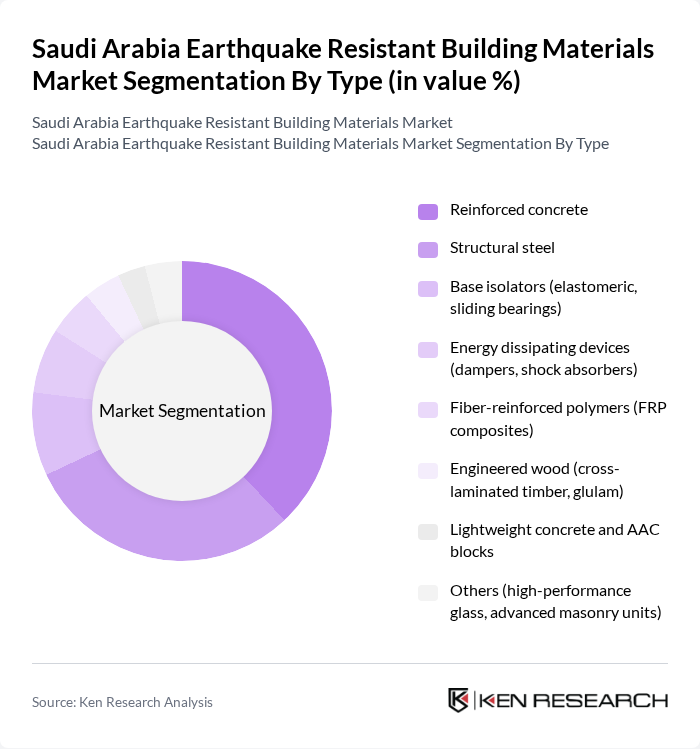
By Type:The market is segmented into various types of earthquake-resistant building materials, including reinforced concrete, structural steel, base isolators, energy dissipating devices, fiber-reinforced polymers, engineered wood, lightweight concrete, and others. Among these, reinforced concrete and structural steel are the most widely used due to their strength and durability. The increasing focus on safety and compliance with building codes has led to a growing preference for these materials in construction projects.
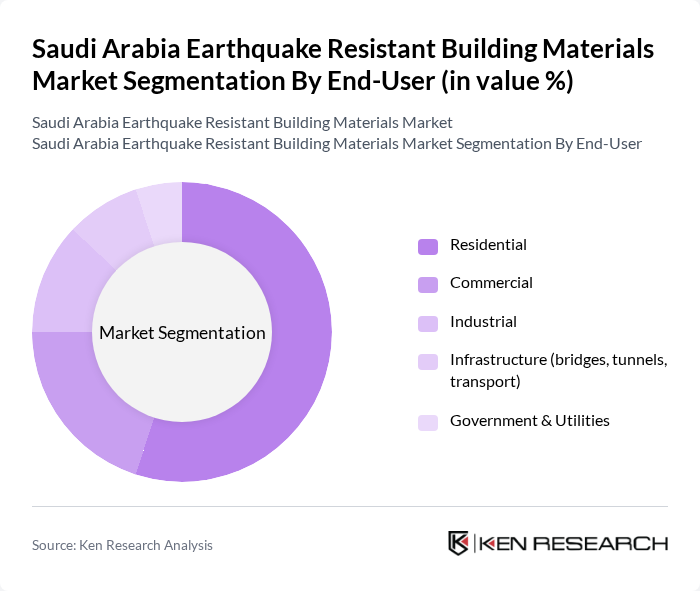
By End-User:The end-user segmentation includes residential, commercial, industrial, infrastructure, and government & utilities sectors. The residential sector is the largest consumer of earthquake-resistant materials, driven by increasing construction of homes in seismic zones and government regulations for safer housing. The commercial sector follows closely, with a growing emphasis on safety in office buildings and retail spaces. Infrastructure projects also contribute significantly, as they require robust materials to ensure longevity and safety.
The Saudi Arabia Earthquake Resistant Building Materials Market is characterized by a dynamic mix of regional and international players. Leading participants such as Saudi Cement Company, Al-Jazira Factory for Steel Products, Eastern Province Cement Company, Riyadh Cement Company, Al-Falak Construction, Al-Muhaidib Group, Saudi Readymix Concrete Company, Al-Babtain Group, Abdullah A.M. Al-Khodari Sons Company, Al-Rajhi Steel Industries Co., Al-Omran Group, Al-Mansouria Group, Al-Suwaidi Industrial Services Co. Ltd., Zamil Steel Holding Company Ltd., Sika Saudi Arabia Ltd. contribute to innovation, geographic expansion, and service delivery in this space.
The future of the Saudi Arabia earthquake-resistant building materials market appears promising, driven by ongoing urbanization and government initiatives aimed at enhancing safety standards. As the population continues to grow, the demand for resilient infrastructure will likely increase, prompting further investments in innovative materials and technologies. Additionally, collaboration with international firms for technology transfer is expected to accelerate the development of advanced building solutions, ensuring that new constructions meet the highest safety standards while addressing the challenges posed by seismic activity.
| Segment | Sub-Segments |
|---|---|
| By Type | Reinforced concrete Structural steel Base isolators (elastomeric, sliding bearings) Energy dissipating devices (dampers, shock absorbers) Fiber-reinforced polymers (FRP composites) Engineered wood (cross-laminated timber, glulam) Lightweight concrete and AAC blocks Others (high-performance glass, advanced masonry units) |
| By End-User | Residential Commercial Industrial Infrastructure (bridges, tunnels, transport) Government & Utilities |
| By Application | New construction Retrofitting & strengthening Infrastructure projects (roads, bridges, airports) Emergency repairs & disaster recovery |
| By Distribution Channel | Direct sales (project contracts) Distributors & wholesalers Online platforms (B2B marketplaces) Retail outlets |
| By Material Source | Local manufacturers International suppliers Recycled & sustainable materials |
| By Price Range | Low-cost options Mid-range options Premium options |
| By Policy Support | Subsidies Tax exemptions Grants for research Others |
| Scope Item/Segment | Sample Size | Target Respondent Profiles |
|---|---|---|
| Construction Firms Specializing in Seismic Design | 60 | Project Managers, Structural Engineers |
| Suppliers of Earthquake-Resistant Materials | 40 | Sales Managers, Product Development Heads |
| Government Regulatory Bodies | 30 | Policy Makers, Building Code Officials |
| Academic Institutions Conducting Research on Seismic Safety | 20 | Researchers, Professors in Civil Engineering |
| Construction Project Stakeholders | 40 | Investors, Architects, Urban Planners |
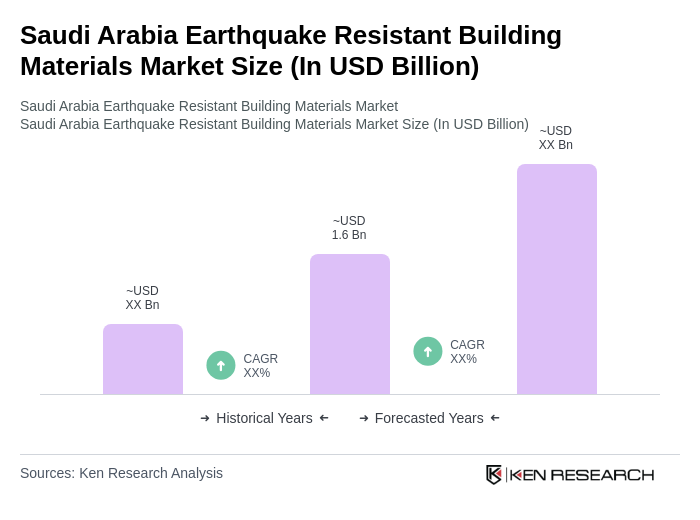
The Saudi Arabia Earthquake Resistant Building Materials Market is valued at approximately USD 1.6 billion, reflecting a significant increase driven by heightened awareness of seismic safety, government initiatives, and rapid urbanization in high-risk zones.

What makes us stand out is that our consultants follow Robust, Refine and Result (RRR) methodology. Robust for clear definitions, approaches and sanity checking, Refine for differentiating respondents' facts and opinions, and Result for presenting data with story.

We have set a benchmark in the industry by offering our clients with syndicated and customized market research reports featuring coverage of entire market as well as meticulous research and analyst insights.

While we don't replace traditional research, we flip the method upside down. Our dual approach of Top Bottom & Bottom Top ensures quality deliverable by not just verifying company fundamentals but also looking at the sector and macroeconomic factors.

With one step in the future, our research team constantly tries to show you the bigger picture. We help with some of the tough questions you may encounter along the way: How is the industry positioned? Best marketing channel? KPI's of competitors? By aligning every element, we help maximize success.

Our report gives you instant access to the answers and sources that other companies might choose to hide. We elaborate each steps of research methodology we have used and showcase you the sample size to earn your trust.

If you need any support, we are here! We pride ourselves on universe strength, data quality, and quick, friendly, and professional service.













