Region:Middle East
Author(s):Shubham
Product Code:KRAD3651
Pages:95
Published On:November 2025
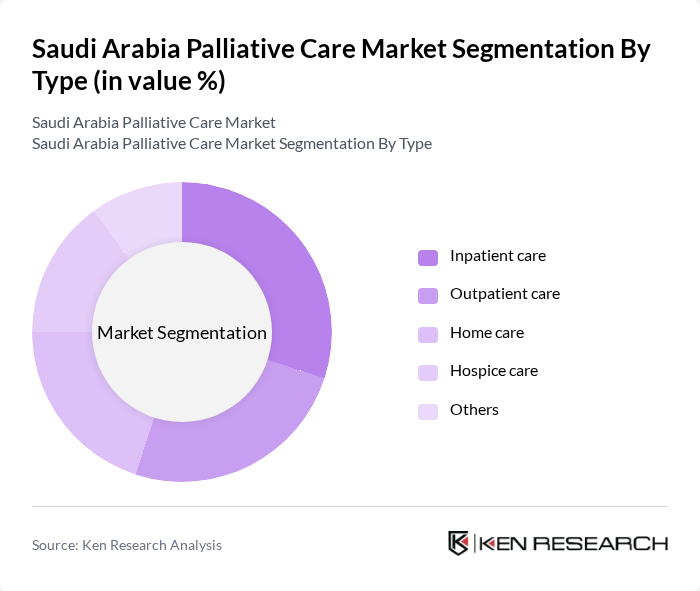
By Type:The market is segmented into various types of palliative care services, including inpatient care, outpatient care, home care, hospice care, and others. Among these, inpatient care is currently the leading segment due to the high demand for specialized medical attention in hospital settings. Patients requiring intensive symptom management and support often prefer inpatient services, which provide comprehensive care and access to multidisciplinary teams. Outpatient care is also gaining traction as it allows patients to receive treatment while maintaining their daily routines .
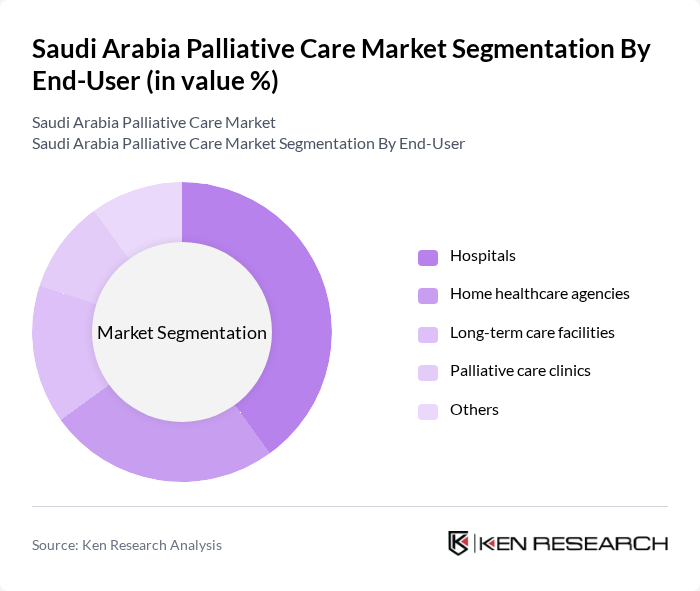
By End-User:The end-user segmentation includes hospitals, home healthcare agencies, long-term care facilities, palliative care clinics, and others. Hospitals are the dominant end-user segment, as they provide a wide range of palliative care services and have the necessary infrastructure to support complex cases. The increasing number of hospitals equipped with specialized palliative care units is driving this segment's growth. Home healthcare agencies are also witnessing growth as more patients prefer receiving care in the comfort of their homes .
The Saudi Arabia Palliative Care Market is characterized by a dynamic mix of regional and international players. Leading participants such as King Faisal Specialist Hospital & Research Centre, Saudi German Hospitals Group, Dr. Sulaiman Al Habib Medical Group, Dallah Hospital, King Abdulaziz Medical City, International Medical Center, Al Nahda Medical Center, Al Hayat Medical Center, Al Salam International Hospital, Al Faisal Hospital, Al Muhtadi Hospital, Al Noor Hospital, Al Mashfa Hospital, Al Muhaidib Medical Group, Al Jazeera Hospital contribute to innovation, geographic expansion, and service delivery in this space.
The future of palliative care in Saudi Arabia appears promising, driven by ongoing government initiatives and increasing public awareness. The integration of technology, such as telehealth, is expected to enhance service delivery, making care more accessible. Additionally, the focus on holistic, patient-centered approaches will likely lead to improved patient satisfaction and outcomes. As the healthcare landscape evolves, collaboration between public and private sectors will be crucial in addressing existing challenges and expanding service availability.
| Segment | Sub-Segments |
|---|---|
| By Type | Inpatient care Outpatient care Home care Hospice care Others |
| By End-User | Hospitals Home healthcare agencies Long-term care facilities Palliative care clinics Others |
| By Patient Demographics | Age groups (children, adults, elderly) Gender Socioeconomic status Others |
| By Disease Type | Cancer Neurological disorders Cardiovascular diseases Respiratory diseases Others |
| By Service Model | Direct patient care Consultation services Educational services Others |
| By Geographic Distribution | Urban areas Rural areas Regional healthcare facilities Others |
| By Funding Source | Government funding Private insurance Out-of-pocket payments Charitable donations Others |
| Scope Item/Segment | Sample Size | Target Respondent Profiles |
|---|---|---|
| Palliative Care Facilities | 100 | Healthcare Administrators, Palliative Care Specialists |
| Patient and Family Experiences | 70 | Patients receiving palliative care, Family Caregivers |
| Healthcare Policy Makers | 40 | Government Health Officials, Policy Advisors |
| NGO and Community Organizations | 50 | NGO Directors, Community Health Workers |
| Healthcare Providers and Practitioners | 90 | Nurses, Social Workers, Physicians |
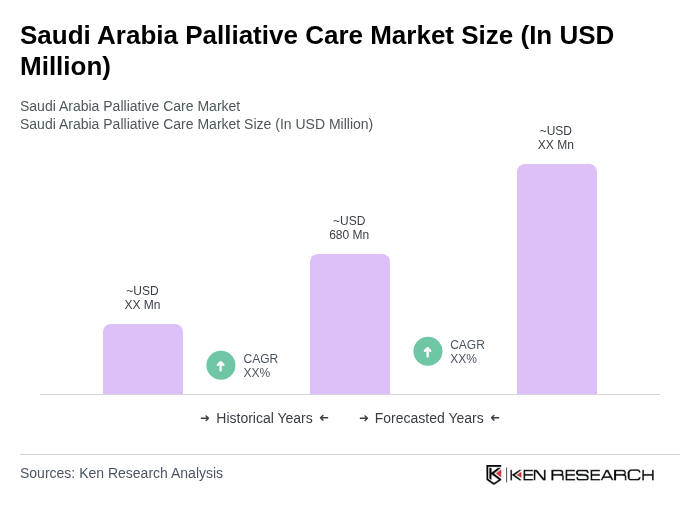
The Saudi Arabia Palliative Care Market is valued at approximately USD 680 million. This valuation reflects the growing demand for specialized care driven by an aging population and the increasing prevalence of chronic diseases.

What makes us stand out is that our consultants follow Robust, Refine and Result (RRR) methodology. Robust for clear definitions, approaches and sanity checking, Refine for differentiating respondents' facts and opinions, and Result for presenting data with story.

We have set a benchmark in the industry by offering our clients with syndicated and customized market research reports featuring coverage of entire market as well as meticulous research and analyst insights.

While we don't replace traditional research, we flip the method upside down. Our dual approach of Top Bottom & Bottom Top ensures quality deliverable by not just verifying company fundamentals but also looking at the sector and macroeconomic factors.

With one step in the future, our research team constantly tries to show you the bigger picture. We help with some of the tough questions you may encounter along the way: How is the industry positioned? Best marketing channel? KPI's of competitors? By aligning every element, we help maximize success.

Our report gives you instant access to the answers and sources that other companies might choose to hide. We elaborate each steps of research methodology we have used and showcase you the sample size to earn your trust.

If you need any support, we are here! We pride ourselves on universe strength, data quality, and quick, friendly, and professional service.













