Region:Middle East
Author(s):Geetanshi
Product Code:KRAA8977
Pages:81
Published On:November 2025
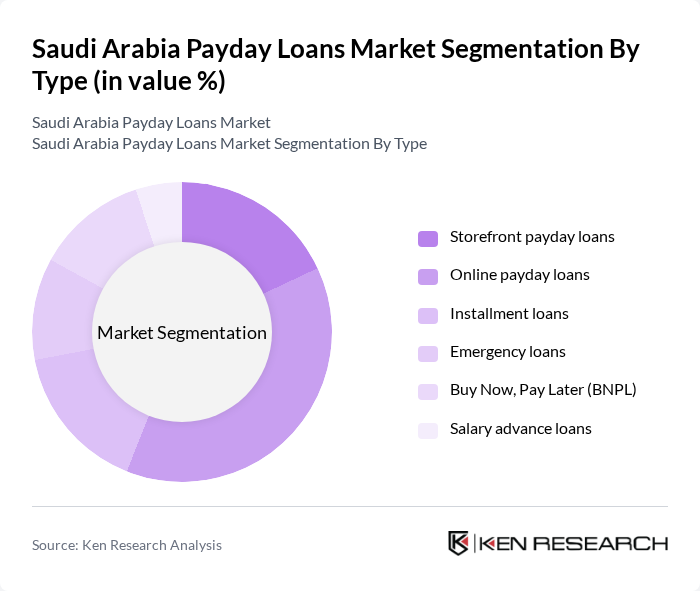
By Type:The payday loans market is segmented into storefront payday loans, online payday loans, installment loans, emergency loans, Buy Now, Pay Later (BNPL), and salary advance loans. Among these, online payday loans and BNPL solutions have experienced the fastest growth, driven by the convenience of digital onboarding and high smartphone penetration. The rapid adoption of fintech platforms and digital payment solutions has further propelled the online segment, while BNPL offerings are increasingly integrated into e-commerce and retail channels .
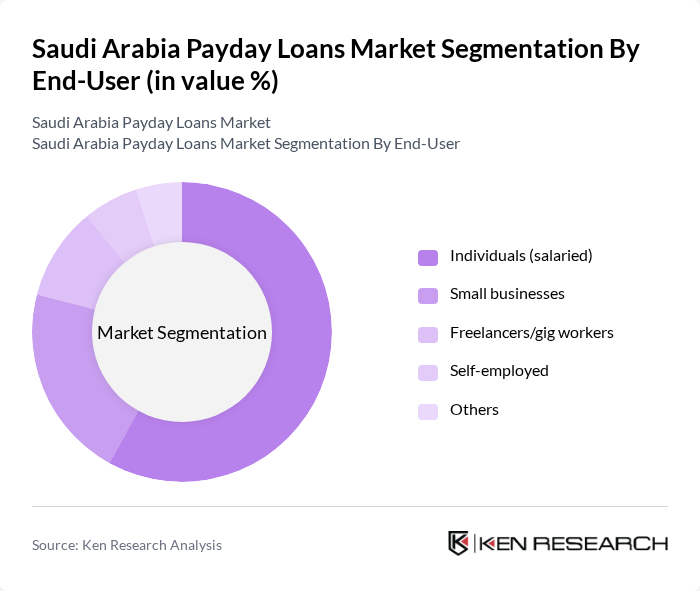
By End-User:The end-user segmentation includes individuals (salaried), small businesses, freelancers/gig workers, self-employed individuals, and others. The individuals (salaried) segment remains dominant, reflecting the high demand for rapid, short-term liquidity solutions among working professionals. Small businesses and gig workers increasingly utilize payday and alternative loans to manage cash flow volatility, while fintech platforms are expanding access for self-employed and freelance populations .
The Saudi Arabia Payday Loans Market is characterized by a dynamic mix of regional and international players. Leading participants such as Tamara, Tabby, STC Pay, Lean Technologies, Rasan, Alinma Bank, Al Rajhi Bank, Saudi National Bank (SNB), Arab National Bank, Banque Saudi Fransi, Riyad Bank, Saudi Investment Bank, Bank Aljazira, SABB (Saudi British Bank), and Alawwal Bank contribute to innovation, geographic expansion, and service delivery in this space.
The future of the payday loans market in Saudi Arabia appears promising, driven by technological advancements and evolving consumer preferences. The increasing integration of artificial intelligence in lending processes is expected to enhance risk assessment and streamline approvals. Additionally, as financial literacy initiatives gain traction, consumers are likely to become more informed about their borrowing options. This shift could lead to a more responsible borrowing culture, ultimately benefiting both lenders and borrowers in the long term.
| Segment | Sub-Segments |
|---|---|
| By Type | Storefront payday loans Online payday loans Installment loans Emergency loans Buy Now, Pay Later (BNPL) Salary advance loans |
| By End-User | Individuals (salaried) Small businesses Freelancers/gig workers Self-employed Others |
| By Demographics | Age groups (e.g., <21, 21–30, 31–40, 41–50, 51+) Income levels (low, middle, high) Employment status (employed, unemployed, self-employed) Marital status (single, married) Others |
| By Loan Amount | Low-value loans ( |
| By Repayment Period | Weekly repayment Bi-weekly repayment Monthly repayment Flexible/other periods |
| By Distribution Channel | Online platforms Physical branches Mobile applications Embedded finance/third-party platforms Others |
| By Customer Segment | First-time borrowers Repeat borrowers High-risk borrowers Gig economy workers Others |
| Scope Item/Segment | Sample Size | Target Respondent Profiles |
|---|---|---|
| Consumer Insights on Payday Loans | 120 | Individuals who have taken payday loans in the last 12 months |
| Industry Expert Opinions | 40 | Financial analysts, economists, and regulatory officials |
| Payday Loan Provider Feedback | 40 | Executives and managers from payday loan companies |
| Consumer Financial Behavior | 100 | General consumers aged 18-60 in urban areas |
| Regulatory Impact Assessment | 40 | Legal experts and compliance officers in the financial sector |
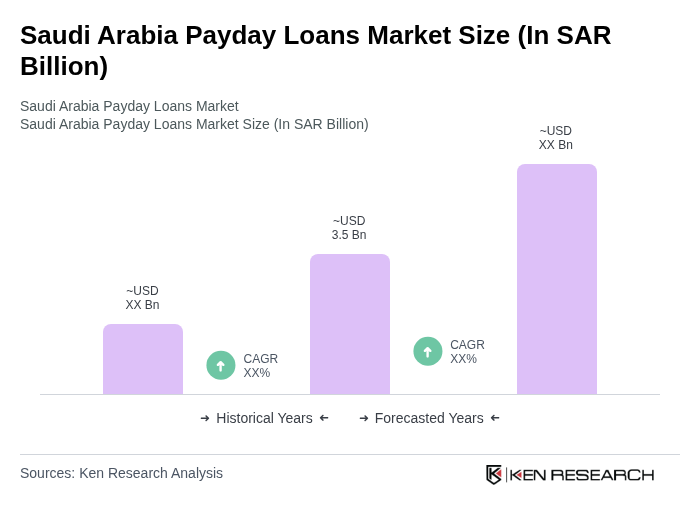
The Saudi Arabia payday loans market is valued at approximately SAR 3.5 billion, reflecting significant growth driven by increasing consumer demand for quick financial solutions, particularly among individuals facing unexpected expenses.

What makes us stand out is that our consultants follow Robust, Refine and Result (RRR) methodology. Robust for clear definitions, approaches and sanity checking, Refine for differentiating respondents' facts and opinions, and Result for presenting data with story.

We have set a benchmark in the industry by offering our clients with syndicated and customized market research reports featuring coverage of entire market as well as meticulous research and analyst insights.

While we don't replace traditional research, we flip the method upside down. Our dual approach of Top Bottom & Bottom Top ensures quality deliverable by not just verifying company fundamentals but also looking at the sector and macroeconomic factors.

With one step in the future, our research team constantly tries to show you the bigger picture. We help with some of the tough questions you may encounter along the way: How is the industry positioned? Best marketing channel? KPI's of competitors? By aligning every element, we help maximize success.

Our report gives you instant access to the answers and sources that other companies might choose to hide. We elaborate each steps of research methodology we have used and showcase you the sample size to earn your trust.

If you need any support, we are here! We pride ourselves on universe strength, data quality, and quick, friendly, and professional service.













