Region:Middle East
Author(s):Geetanshi
Product Code:KRAD3865
Pages:82
Published On:November 2025
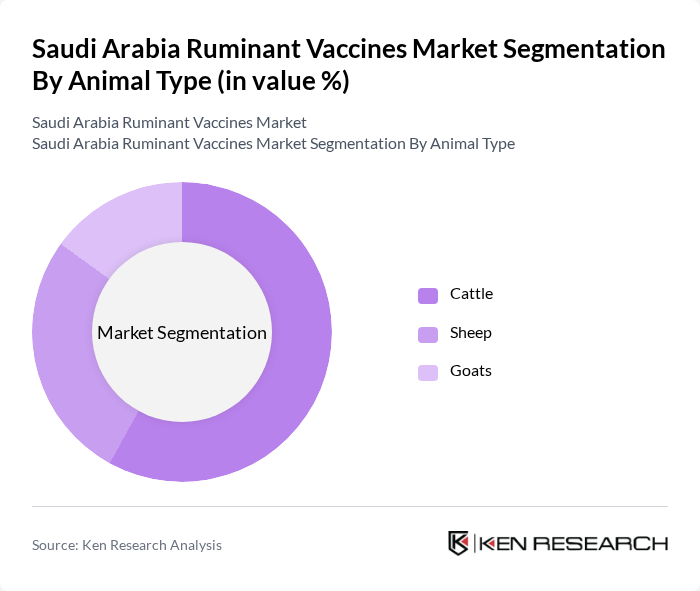
By Animal Type:The market is segmented into three primary animal types: Cattle, Sheep, and Goats. Cattle vaccines account for the largest share due to the higher population of cattle in the region, which are primarily raised for both dairy and meat production. Sheep and goats also play significant roles in the agricultural landscape, particularly in rural and mountainous areas where they are raised for meat, milk, and wool. The increasing focus on livestock health, government support programs, and productivity enhancement drives the demand for vaccines across all animal types .
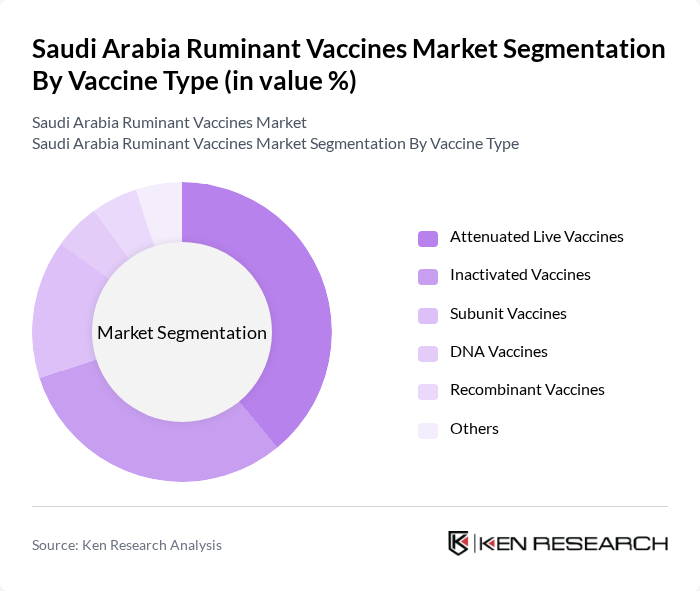
By Vaccine Type:The vaccine type segmentation includes Attenuated Live Vaccines, Inactivated Vaccines, Subunit Vaccines, DNA Vaccines, Recombinant Vaccines, and Others. Attenuated Live Vaccines remain the most widely used due to their effectiveness in providing long-lasting immunity. Inactivated Vaccines are also prevalent, especially for diseases requiring controlled immune responses. The market is witnessing a growing trend toward innovative vaccine technologies, such as DNA and recombinant vaccines, driven by the need for improved efficacy and safety profiles .
The Saudi Arabia Ruminant Vaccines Market is characterized by a dynamic mix of regional and international players. Leading participants such as Zoetis Inc., Merck Animal Health, Boehringer Ingelheim, Elanco Animal Health, Ceva Santé Animale, Virbac, Hipra, Vetoquinol, Phibro Animal Health, Neogen Corporation, IDT Biologika, Saudi Vaccine and Biological Products Company (SVBP), Arab Pesticides & Veterinary Drugs Mfg. Co. (Mobedco), MSD Animal Health, Bioveta contribute to innovation, geographic expansion, and service delivery in this space.
The future of the ruminant vaccines market in Saudi Arabia appears promising, driven by increasing investments in veterinary healthcare and a shift towards preventive measures. With the government’s focus on enhancing livestock productivity and health, the market is expected to witness significant growth. Additionally, the integration of digital technologies in veterinary practices will facilitate better vaccine management and distribution, further supporting market expansion. The emphasis on sustainable livestock practices will also play a crucial role in shaping future trends.
| Segment | Sub-Segments |
|---|---|
| By Animal Type | Cattle Sheep Goats |
| By Vaccine Type | Attenuated Live Vaccines Inactivated Vaccines Subunit Vaccines DNA Vaccines Recombinant Vaccines Others |
| By Indication (Disease Targeted) | Bovine Viral Diarrhea (BVD) Bovine Respiratory Diseases (BRD) Foot and Mouth Disease (FMD) Clostridial Diseases Leptospirosis Diarrhea/Scours Others |
| By Route of Administration | Injectable Intranasal Oral Others |
| By End-User | Dairy Farmers Meat Producers Veterinary Clinics Government Agencies Others |
| By Distribution Channel | Direct Sales Veterinary Clinics Online Retail Distributors Others |
| By Region | Central Region Eastern Region Western Region Southern Region |
| By Packaging Type | Vials Ampoules Pre-filled Syringes Others |
| By Price Range | Low Price Mid Price High Price Others |
| Scope Item/Segment | Sample Size | Target Respondent Profiles |
|---|---|---|
| Veterinary Clinics | 60 | Veterinarians, Clinic Managers |
| Livestock Farms | 80 | Farm Owners, Livestock Managers |
| Veterinary Vaccine Distributors | 40 | Sales Managers, Distribution Coordinators |
| Government Agricultural Departments | 40 | Policy Makers, Agricultural Officers |
| Research Institutions | 40 | Researchers, Academics in Veterinary Science |
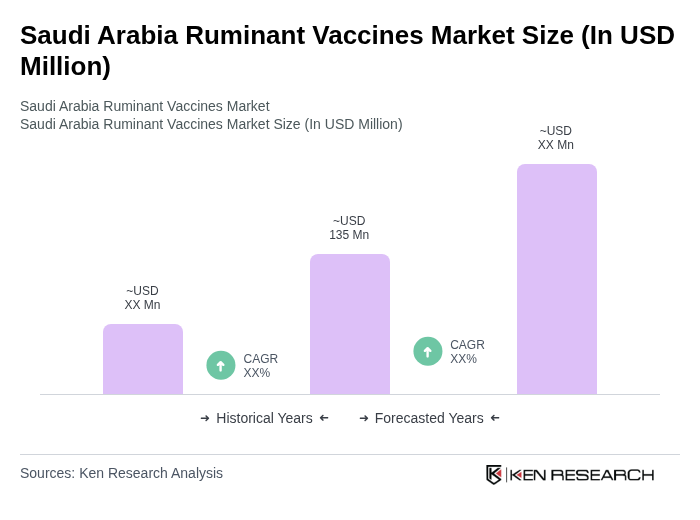
The Saudi Arabia Ruminant Vaccines Market is valued at approximately USD 135 million, reflecting a five-year historical analysis. This growth is attributed to the increasing livestock population and rising awareness about animal health.

What makes us stand out is that our consultants follow Robust, Refine and Result (RRR) methodology. Robust for clear definitions, approaches and sanity checking, Refine for differentiating respondents' facts and opinions, and Result for presenting data with story.

We have set a benchmark in the industry by offering our clients with syndicated and customized market research reports featuring coverage of entire market as well as meticulous research and analyst insights.

While we don't replace traditional research, we flip the method upside down. Our dual approach of Top Bottom & Bottom Top ensures quality deliverable by not just verifying company fundamentals but also looking at the sector and macroeconomic factors.

With one step in the future, our research team constantly tries to show you the bigger picture. We help with some of the tough questions you may encounter along the way: How is the industry positioned? Best marketing channel? KPI's of competitors? By aligning every element, we help maximize success.

Our report gives you instant access to the answers and sources that other companies might choose to hide. We elaborate each steps of research methodology we have used and showcase you the sample size to earn your trust.

If you need any support, we are here! We pride ourselves on universe strength, data quality, and quick, friendly, and professional service.













