Region:Middle East
Author(s):Shubham
Product Code:KRAB7110
Pages:98
Published On:October 2025
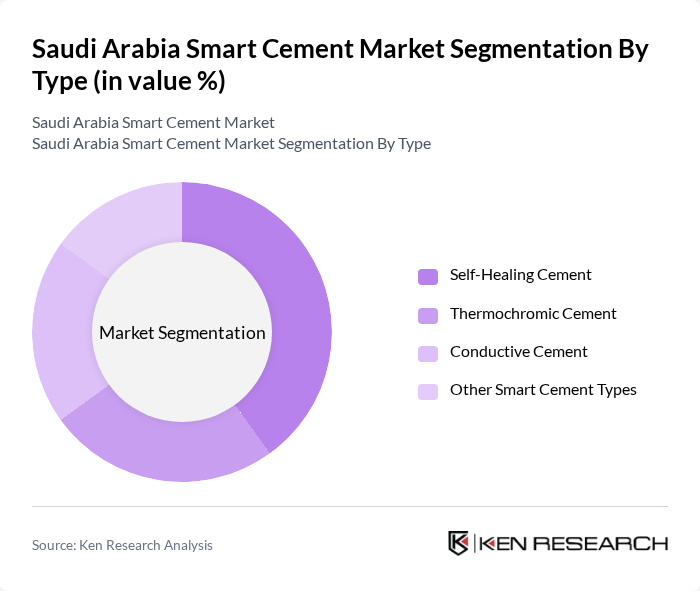
By Type:The market is segmented into various types of smart cement, including Self-Healing Cement, Thermochromic Cement, Conductive Cement, and Other Smart Cement Types. Self-Healing Cement is gaining traction due to its ability to autonomously repair cracks, thereby extending the lifespan of structures. Thermochromic Cement, which changes color with temperature variations, is increasingly used in energy-efficient buildings. Conductive Cement is utilized in smart infrastructure for its electrical properties, while Other Smart Cement Types encompass innovative solutions catering to specific construction needs.
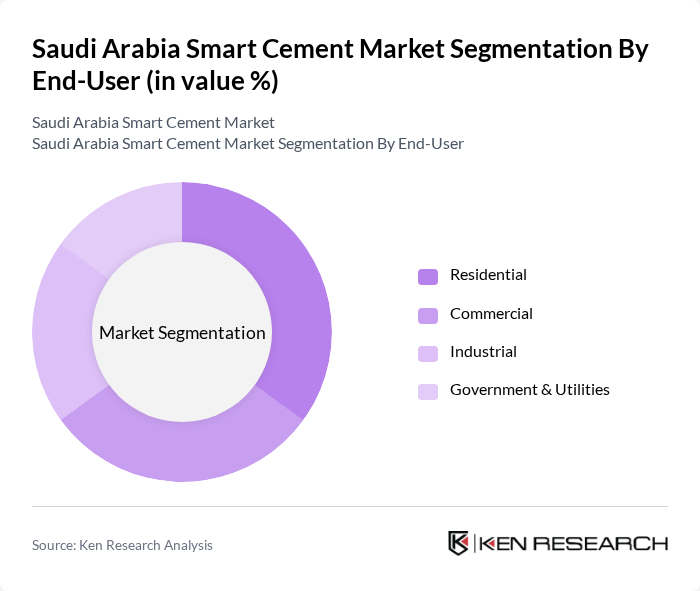
By End-User:The end-user segmentation includes Residential, Commercial, Industrial, and Government & Utilities sectors. The Residential segment is witnessing a surge in demand for smart cement due to the growing trend of sustainable housing. The Commercial sector is also expanding, driven by the need for energy-efficient buildings. Industrial applications are increasing as manufacturers seek innovative materials for enhanced operational efficiency, while Government & Utilities projects are adopting smart cement to meet regulatory standards and sustainability goals.
The Saudi Arabia Smart Cement Market is characterized by a dynamic mix of regional and international players. Leading participants such as Saudi Cement Company, Eastern Province Cement Company, Qassim Cement Company, Yanbu Cement Company, Al Jouf Cement Company, Tabuk Cement Company, Najran Cement Company, Riyadh Cement Company, Al Safwa Cement Company, Al Baha Cement Company, Al-Muhaidib Group, Al-Falak Cement Company, Al-Habib Cement Company, Al-Qassim Cement Company, Al-Mansour Cement Company contribute to innovation, geographic expansion, and service delivery in this space.
The future of the smart cement market in Saudi Arabia appears promising, driven by ongoing infrastructure projects and a strong governmental push towards sustainability. As urbanization accelerates, the integration of smart technologies in construction will likely become standard practice. Additionally, the increasing focus on reducing carbon footprints will further propel the demand for innovative materials. The market is expected to evolve with advancements in technology, leading to enhanced product offerings and greater acceptance among construction professionals.
| Segment | Sub-Segments |
|---|---|
| By Type | Self-Healing Cement Thermochromic Cement Conductive Cement Other Smart Cement Types |
| By End-User | Residential Commercial Industrial Government & Utilities |
| By Application | Infrastructure Projects Residential Buildings Commercial Buildings Road and Bridge Construction |
| By Distribution Channel | Direct Sales Distributors Online Sales |
| By Price Range | Low Price Mid Price High Price |
| By Region | Central Region Eastern Region Western Region Southern Region |
| Scope Item/Segment | Sample Size | Target Respondent Profiles |
|---|---|---|
| Construction Project Managers | 100 | Project Managers, Site Engineers |
| Smart Cement Manufacturers | 80 | Product Development Managers, Sales Directors |
| Construction Material Suppliers | 70 | Supply Chain Managers, Procurement Officers |
| Regulatory Bodies | 50 | Policy Makers, Compliance Officers |
| Academic Experts in Material Science | 60 | Researchers, Professors |
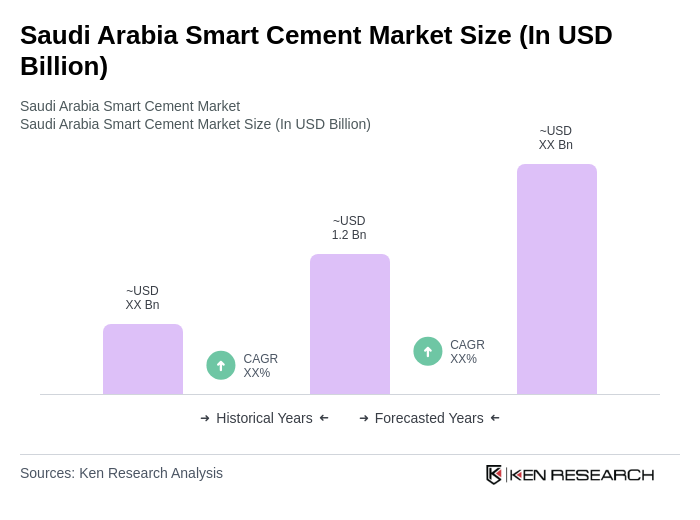
The Saudi Arabia Smart Cement Market is valued at approximately USD 1.2 billion, driven by the increasing demand for sustainable construction materials and advancements in smart technologies, particularly in urban centers like Riyadh, Jeddah, and Dammam.

What makes us stand out is that our consultants follow Robust, Refine and Result (RRR) methodology. Robust for clear definitions, approaches and sanity checking, Refine for differentiating respondents' facts and opinions, and Result for presenting data with story.

We have set a benchmark in the industry by offering our clients with syndicated and customized market research reports featuring coverage of entire market as well as meticulous research and analyst insights.

While we don't replace traditional research, we flip the method upside down. Our dual approach of Top Bottom & Bottom Top ensures quality deliverable by not just verifying company fundamentals but also looking at the sector and macroeconomic factors.

With one step in the future, our research team constantly tries to show you the bigger picture. We help with some of the tough questions you may encounter along the way: How is the industry positioned? Best marketing channel? KPI's of competitors? By aligning every element, we help maximize success.

Our report gives you instant access to the answers and sources that other companies might choose to hide. We elaborate each steps of research methodology we have used and showcase you the sample size to earn your trust.

If you need any support, we are here! We pride ourselves on universe strength, data quality, and quick, friendly, and professional service.













